Market Segments Division—Dry Cleaning And Laundry Facilities
(February 2023)
The Dry Cleaning and Laundry Facilities Program is an enhancement of the Commercial Package Policy. Any package written under the market segment division must be assembled according to the rules for all Market Segment policies.
Related Article: ISO Market Segment Overview
This article will discuss items specific to the Dry Cleaning and Laundry Facilities Program, including the eligibility, supplemental schedule, MS DC 01–Dry Cleaning and Laundry Facilities, and the special endorsements developed just for this program. In addition, there is a section on Underwriting and Rating.
This article is based on the 07 13 edition of this program. Changes from the prior edition are in bold print.
ELIGIBILITY
The classifications eligible for the Dry Cleaning and Laundry Facilities Program are:
· Laundries and Dry Cleaners – self-service
· Laundry and Dry Cleaning or Dyeing Receiving Stations
· Laundry Rental Service
· Laundries and Dry Cleaning Plants
If there are other general liability classifications applicable to a particular named insured, the operations remain eligible.
MS DC DS –DRY CLEANING AND LAUNDRY FACILITIES SUPPLEMENTAL SCHEDULE
What follows is a discussion of the specific information that must appear on a Supplemental Schedule for the Dry Cleaning and Laundry Facilities Program.
Changes in Limits
This section's only purpose is to increase insurance limits. If no limit is entered, the limits shown in the MS DC 01 apply. Any limit changes are effective on a per location basis. This allows protection for one or two locations to be increased without affecting the remaining locations.
Nine specific coverages are listed in this section. A tenth space is available for entering a coverage and limit of insurance.
- Money and Securities
- Money Orders and Counterfeit Money
- Forgery or Alteration
- Outdoor Signs
- Employee Dishonesty
- Personal Effects and Property of Others
- Valuable Papers & Records
- Property Off-Premises
- Accounts Receivable
- Other (specify)
Note: According to the coverage form, whatever limit is entered is a replacement (not an additional) limit. If an insured wants $5,000 in coverage and the existing limit is $2,500, a limit of $5,000 must simply be entered on the schedule to get the desired level of coverage.
Property in Transit
This extension of coverage is highlighted on the Supplemental Schedule because of the importance of the coverage. The limit of $10,000 granted in the MS DC 01 can be increased; the chosen limit must be entered on this Supplemental Schedule.
Customers’ Goods
This coverage is part of the MS DC 01, but there is no pre-established limit. In order for this coverage to apply the applicable premises must be described, one or more of the following sub-coverage boxes must be checked, and a limit must be entered.
- Other than Furs, Fur Garments or Garments Trimmed in Fur and Not In Storage (the “all other” category)
- Furs, Fur Garments or Garments Trimmed with Fur, and Not in Storage
- In Storage (this includes the “all other” garments and the fur related garments)
All three boxes can be checked, and a different limit can apply to each item at each premise.
If transit coverage is to apply, the in-transit box must be selected and a limit entered. This limit and coverage are not specific to a premises.
Forms Applicable
The final section of the Supplemental Schedule allows for the listing of specific endorsements by premises.
MS DC 01–DRY CLEANING AND LAUNDRY FACILITIES ANALYSIS
The Dry Cleaning and Laundry Facilities endorsement modifies the following coverages and property causes of loss form:
· CP 00 01–Building and Personal Property Coverage Form
· CP 10 30–Causes of Loss-Special Form
· CG 00 01 or CG 00 02–Commercial General Liability Coverage Part
The Dry Cleaning and Laundry Facilities endorsement is not a complete coverage part; it must be attached to a package containing all three of the above forms.
This means that if a CPP is issued with commercial property coverage, commercial crime, commercial inland marine, and equipment breakdown coverage but without a CGL, the Dry Cleaning and Laundry Facilities endorsement cannot be added.
When the Dry Cleaning and Laundry Facilities endorsement is attached, all the underlying terms, conditions, and provisions of the above three forms apply as they normally would, except those that are modified by the Dry Cleaning and Laundry Facilities endorsement.
Each of the modifications will be reviewed in the following analysis.
I. Modifications to CP 00 10– Building and Personal Property Coverage Form
A. Additional Coverages Changes
The Limit for Fire Department Service Charge is increased to $5,000.
B. Additional Coverages Additions
1. Customers Goods
a. This coverage is very similar to Bailees Customers Inland Marine Coverage. The coverage pays for the direct physical loss or damage to goods that belong to the named insured dry cleaners' customers. Any settlement is handled for the benefit of the actual owner of the property. The loss must be caused by or a result from a Covered Cause of Loss and the incident has to take place during the policy period.
|
Example:
Connie brought her coat to One-hour Dry Cleaning on 4/1/2022. A few weeks
later, a fire destroyed the building and its contents. One year later, Connie
stopped by to pick up her coat. When One-hour explains that the coat was
destroyed in the fire, Connie demands restitution. The insurance company that
had the coverage on 4/1/2022 responded by settling with Connie because the
loss is from a covered peril that occurred during the policy period. |
b. Payment for loss is based on the entries made in the Supplemental Schedule. The limit is a per occurrence limit, and there is no per garment limitation. The four categories are:
- Other than Furs, Fur Garments or Garments Trimmed in Fur and Not In Storage (this is an all other type category)
- Furs, Fur Garments or Garments Trimmed With Fur, and Not in Storage
- In transit
- In storage
- Coverage applies only to items in storage for which a customer has received a receipt.
c. In addition to the loss of the garments, the following items are provided.
· Charges that the named insured is unable to collect because of the physical damage to the customers’ goods. Loss under this provision is adjusted based on the actual loss sustained and supported by evidence.
|
Example: Mindy’s Dry Cleaning is damaged by smoke. She is unable to collect $5,000 in receipts for the smoke-damaged items that have been abandoned by their owners. |
· Any loss or damage that is a direct result of an inability to identify customers’ goods. The reason for the misidentification must be due to a Covered Cause of Loss. There is no limit specified for this coverage, so this is adjusted based on the actual loss sustained that is supported by evidence.
|
Example: Krispee Drykleenors, specializing in bridal apparel, suffers a small fire. While the customers’ clothes are unharmed, all of Krispee's records are destroyed. The store decides to return dresses without cleaning receipts, and it receives several claims from customers who complain about their gowns being given away. Krispee's owner can document a total loss of $4,800. Her insurer pays the amount because the misidentification was due to a covered cause of loss. |
· Whenever customers’ goods are temporarily kept at a premises separate from the one described in the Supplemental Schedule, there is $10,000 in coverage. The other location is not required to be owned or operated by the named insured.
|
Example: Gentry Only Dry Cleaners sends items needing mending to a piecework contractor named Sally. When a fire occurs at Sally’s home destroying $1,000 of Gentry Only Dry Cleaners customers’ goods, coverage is provided under this item. Note: If Sally is considered a bailee, based on the exclusion
below, coverage would not apply. |
d. There is no coverage for loss or damage to customers’ goods:
- If the named insured is providing service to the customers’ goods without a charge.
- If another bailee has control of the customers’ goods. This exclusion is not applicable when the goods are on the named insured’s premises or with a carrier for hire.
Note:
This could be viewed as in conflict with the $10,000 coverage provided in
item c. above when customers’ goods are temporarily at a premises not listed on
the schedule.
- If the loss is because of theft of an unattended vehicle. However, there is coverage if there are visible marks of forced entry and all of the windows, doors and compartments of the vehicle are closed and locked. This exclusion does not apply if the vehicle is a carrier for hire.
- If the reason for the loss is the actual processing or work being performed on the customers’ goods. However, if a resultant fire or explosion occurs, there is coverage for damage but only the damaged caused by the resultant fire or explosion.
|
Example: Madge is pressing a dress when she receives an emergency text message from her son. She rushes out the door without removing the dress. The press scorches the dress that begins to smolder. There is no coverage for the burnt dress because it was being processed at the time. |
|

e. The customers’ goods are valued as of the time of the loss based on the least expensive of the following valuation computation:
- The liability limitation applies because of a contract between the named insured and the customer
- The actual cash value of the property
- The cost to bring the property back to its condition prior to the loss
- The cost to replace the property with similar property
The value of the services, labor, and material provided by the named insured, even if supplied by others, is part of the valuation computed above, not in addition to it.
|
Example: Percy brought in two items for dry cleaning and repair. A fire occurred and destroyed all items. The value of the items is determined as follows:
|
f. Two items are added to the Additional Conditions section of the CP 00 10.
- If an item that is part of a pair or set of customers’ goods is damaged or lost, the item will be repaired or replaced to restore the value of the pair or set, or the customer will be paid the difference between that pair or set’s pre-loss and post-loss value.
|
Example: The jacket of a $1,000 suit is destroyed, but its matching trousers are undamaged. However, the value of the trousers is now only $150. The difference between the pre-loss and post-loss value of the suit is $850. |
· When a customers’ goods occurrence results in a loss equal to $500 or less, the named insured has permission to settle directly with its own customers. The named insured must abide by the terms of the policy in each settlement, must notify the company within 30 days of the payments, and must turn in a completed statement of loss forms to the insurer.
g. The following policy provisions do not apply to the Customers' Goods coverage:
- Personal Property of Others Coverage
- Personal Effects and Property Of Others and Property Off-Premises Coverage Extensions
- Deductible section - but only for customers’ goods in the care, custody and control of carriers for hire
- Coinsurance Additional Condition
- Property in Transit described in the Special Cause of Loss Form
h. This is a very broad coverage with limited exclusions. Therefore, the following Special Cause of Loss form exclusions do not apply for this particular Additional Coverage:
- Earth Movement
- Utility Services
- Water
- Fungus, Wet Rot, Dry Rot and Bacteria
- Settling, cracking, shrinking or expansion
- Atmospheric dampness or dryness
- Extreme or changes in temperature
- Marring or scratching
- The exclusion that describes steam boilers owned or controlled by the named insured
- Seepage/leakage of water over 14 days
- Water and other liquids that leak or flow caused by freezing
- Personal Property in the open loss caused by rain, snow, ice or sleet
- Collapse
- Faulty planning, zoning, design, material, maintenance
i. The following limitations described in the Special Cause of Loss form do not apply to this particular Additional Coverage:
- Steam boilers due to condition in the unit only
- Hot water boilers due to conditions in the unit only
- Interior damage due to various causes that are paid only if damage is first done to the exterior of the building or structure
- Theft of building materials
- $2,500 theft limit for furs
Prior to recommending changing from an Inland Marine coverage form to this new coverage, it is good to review the existing inland marine coverage and compare it with this coverage in order to identify potential coverage gaps.
Related Articles:
AAIS Bailee Customers Floater Coverage–Dry Cleaners and Laundry Form
ISO Bailees
Customers Coverage Form
2.
Money and Securities
Coverage is added for direct loss by theft, disappearance, or destruction of money and securities. This additional protection is effective if a loss occurs at a covered premises, a bank or savings institution, living quarters of the named insured, partner or employee and while the property is in transit between any of these locations. Coverage at employee living quarters applies only if that employee was given the covered property to use or hold on behalf of the named insured. The automatic amount of $5,000 applies and can be increased by an entry on the Supplemental Schedule.
The following three types of
loss are excluded:
·
Losses that result from errors or omissions in
accounting or arithmetic
· Losses that occur because the property was voluntarily given out in an exchange or purchase
· Any loss of covered property that is contained within any money-operated device (such as a vending machine). This exclusion does not apply if there is a continuous reading instrument that records all amounts that are deposited or stored in the device.
Occurrence is defined under this
segment as any loss that involves a single act or a series of related acts by
one or more individuals. The named insured is required to keep records of all
money and securities to verify any loss.
3.
Fire Extinguisher Systems Expense (07 13 change)
Up to $5,000 is available in any one occurrence to pay the cost of recharging or replacing fire extinguishing equipment and systems. Coverage applies only if the discharge is within 100 feet of a described building or within 100 feet of the premises. The greater of the two distances is used to determine if coverage applies.
In addition, if the covered property is damaged due to an accidental discharge, it is covered but subject to the same $5,000 limit. No deductible applies to this coverage.
There is no coverage if the system
is discharged during testing or installation.
4.
Reward Payment
Reward payments are available to assist in solving crimes related to covered losses. There are two reward categories. First, up to $5,000 is available for information that leads to the arrest and conviction of any party that commits a crime resulting in a covered property loss. However, the reward payment will be for no more than the least of the actual cash value of the damaged property at the time of the loss, the amount it takes to repair or replace the property, or the settlement value developed based on the policy’s conditions.
Second, rewards
up to $5,000 are paid for the return of stolen property. The reward is limited
on the same basis as above. Should more than one source provide information or
return stolen property, payment is made to the one that acts first.
|
Example: Aridkleen offers a reward for the return of some dry set vacuums and a puff iron that were stolen over the long New Year’s weekend. The police department receives a number of tips as follows: Party One - February 6 - The getaway driver came forward to the police with information. Party Two - February 9 - A neighboring business owner brought in video evidence of the crime. Party Three - March 4 – A fellow dry cleaner identified individuals who were trying to sell him the stolen items. All three provide information
that leads to a capture and conviction of the thieves and recovery of the
items, but the $1,000 reward goes only to Party Two because he was the first eligible
source to respond. |
Who is eligible to collect the award? Only one person can receive the reward. The first person, as determined by law enforcement, which voluntarily provides information to the police that leads to a conviction or leads to the stolen property, will receive the reward. However, that person cannot be any of the following:
· The named insured
· Family members of the named insured
· Employees
· Family members of employees
· Employees of law enforcement agencies
· Employees of a business engaged in property protection
· Any person having custody of the covered property at the time the theft was committed
· Any person involved in the crime
The reward is not paid until there
is a conviction or the property is returned.
5.
Money Orders and Counterfeit Money
If the named insured, in good faith,
provides services or hands over money or merchandise to another party who pays
with unrecoverable money orders or counterfeit money, coverage is provided for
the loss to the named insured. The maximum payout is $1,500, but it can be
increased on the Supplemental Schedule. There is a limitation that money orders
are covered only if they were issued by a post office, express company, or
bank. Counterfeit money is also restricted to only money accepted during the
course of business.
6.
Forgery or Alteration
Loss that occurs because of the forgery or alteration of checks, drafts, promissory notes, bills of exchange or any similar instruments is covered. Such instruments must be issued by the named insured, the named insured’s agent, or someone impersonating either of these parties. There is no coverage if the loss is for such instruments that are received by the named insured from other sources.
If the named insured realizes that an instrument has been forged or altered and refuses to honor it, this coverage also pays related and reasonable legal expenses that may ensue. The named insured is given written permission to go ahead with their own defense, and the named insured will be reimbursed for those expenses.
The $2,500 limit is the most that
will be paid under this coverage for a single loss. The amount may be exhausted
by the loss itself, the defense of a suit or a combination. The limit can be
increased on the Supplemental Schedule.
7.
Outdoor Signs
Direct damage to outdoor signs that are owned or under the control of the named insured is covered. This coverage supersedes any other coverage provided for signs elsewhere in the policy.
The any one-occurrence limit is $5,000. This limit can be increased in the declarations.
The causes of loss are very broad. All direct damage is covered except for the following:
- Wear and tear
- Hidden or latent defect
- Corrosion
- Rust
- Mechanical breakdown
Note: Later in this form, this list of excluded causes of loss is
increased to also exclude governmental action, nuclear hazard, and war. This could
be considered an ambiguity to the insured’s advantage.
8.
Employee Dishonesty (07 13 change)
Coverage is provided for employee dishonesty that results in the loss of money, securities, or business personal property. The employee may be working alone in committing dishonest act(s), or the employee may collude with other persons. However, if any of those other persons include the named insured or a partner, member or manager of the named insured, there is no coverage.
Coverage is also provided for loss or damage to money and securities or other property that belongs to a tenant. However, the coverage is only for theft committed by a named insured’s employee who is identified. The employee could have acted alone or may have acted in collusion with others. The tenant must own the property, be holding the property for another or be legally liable for the property. An important condition is that all settlements for any tenant property loss are between the named insured and the insurance company. The tenant cannot present the claim independently.
There is no coverage for indirect loss related to employee dishonesty, such as a business income loss, any costs to establish the existence or the amount of a loss or any legal liabilities. Related legal expenses are also ineligible for coverage.
No protection exists when the only proof a loss occurred or verification of the amount of the loss is a shortage as a result of an inventory computation or a profit and loss statement. In other words, there must be tangible evidence that a dishonest act occurred, and there must be a way to calculate the amount of that loss accurately.
A special exclusion applies to employees who have committed prior acts of dishonesty. If the named insured, any partner, trustee, member, manager, officer, or director of the named insured discovers that an employee was previously involved in a dishonest act, there is no coverage for any acts of that employee. It doesn’t matter whether the incident occurred before or after the named insured hired the employee—coverage ceases. The termination takes effect the moment the employee's prior act is discovered. There are no exceptions to this exclusion unless the insurer is willing to write a manuscript endorsement to document an exception.
The $5,000 limit in the form may be increased on the Supplemental Schedule. This limit is the total amount available to respond to a single occurrence. The limit of insurance is not cumulative from year to year, so the limit shown is the maximum that will be paid for any one occurrence of a dishonest act or event, regardless of how many years the policy has been in force or how much premium has been paid.
The dishonest
act or event must happen during the policy period to be covered.
|
Example:
Daisy’s Laundry suffers a loss when Sheila, its cashier, steals the office
computer. The theft occurred on 12/12/2022. Daisy’s policy dates were from 11/29/2021
to 11/29/2022, and the policy was not renewed. The loss is not covered. |
The act or event that causes a loss must have not only occurred during the policy period but must also be discovered no later than one year from the end of the policy period. There is an important exception. If the named insured suffers a loss that would have been eligible under a previous policy but was not discovered until after the one-year limitation expired, there may be coverage under this current policy. The old loss would have to meet two criteria. First, this current policy must be the replacement for the one in force when the loss actually occurred. Second, the loss would have to involve a loss that is eligible under this current policy’s provisions. In addition, any payment made is subject to the lesser of either the current policy term's limit or the prior term's limit.
|
Example:
Changing the scenario just slightly - Daisy’s Laundry suffers a loss when Sheila
decides to take a new but unused computer that was kept in the cleaners’
storeroom. The theft occurred on 11/27/2021 but wasn’t discovered until 7/12/2022.
Because the loss was discovered within 12 months of the policy expiration,
there is coverage. |
Possible Exclusion Ambiguity -
There is one more
exclusion that may be confusing. It states that loss or damage due to a
dishonest act performed by the named insured and any partner, member, officer,
manager, director, or trustee is ineligible for coverage. Up to this point, the
exclusion is similar to exclusions in the Commercial Crime Form. However, the
exclusion also bars loss for dishonest or criminal acts by authorized
representatives and by anyone to whom the named insured has entrusted
property. This part of the exclusion may be problematic. Doesn’t the named
insured entrust items to employees as part of their duties? Aren’t employees
authorized representatives? This wording is not used in the Commercial Crime policy
and could cause confusion after a loss.
Related Court
Case: Employee Dishonesty Exclusion Superseded Liability for
Negligent Supervision
9. Ordinance or Law – Equipment Coverage
Payment under this provision is only available when the covered property is subject to the replacement cost valuation, and the equipment is actually repaired or replaced.
This coverage was inspired by the dynamism surrounding environmental laws. Federal, state and community standards may require changes in equipment when it is replaced for any reason. If so, this coverage pays for the upgrade in addition to the standard replacement cost of like kind and quality, provided the equipment’s valuation is replacement cost. The total payment cannot exceed the limit of insurance on the declarations.
The policy will replace or repair equipment damaged or lost by a covered cause of loss as required by law.
Additional coverage is provided if the equipment is refrigeration equipment. The company will pay to:
- Reclaim refrigerant but only as required by law
- Retrofit the equipment so that it can use non-CFC refrigerant as required by the Clean Air Act
- Recharge the system with the non-CFC refrigerant
Coverage applies per piece of equipment.
This coverage does not pay for costs related to pollutant enforcement. In addition, if the named insured had an order to comply with an ordinance or law prior to the loss and failed to comply, there will be no payment for that previously neglected upgrade under this Additional Coverage.
When the equipment is actually repaired or replaced the payment is the lesser of:
- Actual amount spent to repair or replace (repair cost cannot exceed the cost to actually replace) – this includes the cost to upgrade to the ordinance or law.
- Limit on the Declarations for covered building or business personal property.
Note: Coinsurance does not apply to this Additional Coverage.
|
|
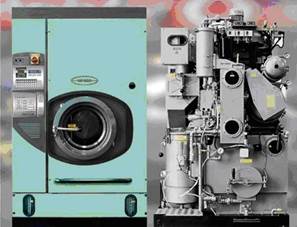
Example: A new type of dry cleaning
that utilizes ions rather than chemicals is now the requirement for all new
dry cleaners in Eco City. Dry cleaners are not required to use the new method
until their current equipment must be replaced. Paula’s One Hour has a fire
loss and must replace its three machines. The cost to replace the existing
equipment is $25,000 each, but the new ones cost $40,000. This coverage pays
the additional $15,000 per machine, but only after Paula actually purchases
the new equipment. |
10. Artificially Generated Electrical
Current
This coverage is applicable only to computers. When artificially generated electrical current damages or destroys computers, the insurance company will pay for that damage but only if one of the following applies:
- An occurrence that causes the loss or damage takes place within 1000 feet of a described premises
- Power surge, interruption of power, blackout, brownout is due to an occurrence that takes place within 1000 feet of the premises
Any loss payment is subject to the deductibles in the policy and the limit on the Declarations that applies to this (computer) equipment. When there is no limit on the schedule for this coverage, the coverage is subject to the policy limit.
C. Coverage Extensions Changes and Additions
1.
Newly Acquired or Constructed Property
The only change is for computers. Coverage at newly acquired or constructed property in the CP 00 01 ends at the earliest of when the policy expires, thirty days after the property is acquired or when the values are reported to the insurance company.
This coverage extension adds one additional time of coverage ending, but it applies only to computers. When ‘specific insurance’ is purchased at the newly acquired premises, coverage ends. The other times also continue to apply to computers.
Note: This extra item is confusing
because it doesn’t say that coverage specific to computers is purchased but instead
says only ‘specific insurance.’ This confusion could be an ambiguity to the
benefit of the insured.
2. Personal Effects and Property of Others
The limit is increased to $5,000
and, as an option, can be further increased on the Supplemental Schedule.3.
3. Valuable
Papers and Records (Other than Electronic Data)
The valuable papers and records coverage extension is increased from $2,500 to $10,000 for on-premises loss or damage. It also adds coverage when the valuable papers and records are off premises but only for $5,000. These limits can be increased for additional premium.
Coverage is expanded to include the cost to replace or restore the lost information and any physical loss or damage to the valuable papers and records owned by or in the named insured’s care, custody or control. The coverage extends to the cost of blank material and the labor necessary to transcribe any available records.
The covered cause of loss is more restricted and must be due to a specified cause of loss as defined in the CP 10 30–Causes of Loss - Special Form or due to collapse. Property held as samples or sold and waiting to be delivered is not covered. Any property that is being stored off premises is also not covered.
Note: If higher limits are needed, consider using one of the following forms because of causes of loss and coverage designed just for this exposure.
Related Articles:
AAIS Valuable Papers and Records Coverage Form
ISO Valuable Papers and
Records Coverage Form
4. Property Off-Premises
The Dry Cleaning and Laundry
Facilities Program enhances the off-premises property extension by increasing
the limit to $10,000 and adding coverage for computers while in transit. This limit
can be increased on the Supplemental Schedule.
5. Outdoor Property
The Dry Cleaners Program provides coverage for outdoor property for the following causes of loss:
- Fire
- Lightning
- Explosion
- Riot or civil commotion
- Aircraft
Nothing in this exception applies to property held for sale or trees, shrubs and plants that are considered stock.
Limits are based on the type of outdoor property.
- Fences and retaining walls are covered for up to $2,500 in any one occurrence provided they are not part of the building.
- Outdoor radio and television, satellite or other antennas are covered for up to $3,000 in a single occurrence. The coverage extends to masts, towers and lead-in and support wiring that are part of the covered items.
- Trees, shrubs, and plants are covered for up to $2,500 for any one occurrence, but there is a maximum of $500 for any one tree, shrub, or plant. The $2,500 limit must also cover any debris removal associated with the loss.
The expense to remove property of others consisting of trees, shrubs, and plants debris is covered under this item. The property of others cannot belong to the owner of the building when the named insured is a tenant.
Note: No limit is mentioned with the expense to remove property of other
items, although there is reference to the terms and conditions of the rest of the
extension. There could be an ambiguity as to what limit, if any, applies.
6. Accounts Receivable
The limit of insurance for business personal property may be extended to include direct loss or damage to accounts receivable from a covered cause of loss. Coverage applies to:
· The amounts the named insured is owed from customers but unable to collect
· Interest charges on loans the named insured obtains to offset collections while the insurer is handling the loss settlement
· Any additional collection expenses that were created by the loss or damage
· Other reasonable expenses incurred to re-establish accounts receivable records
The amount available is $5,000 for on-premises loss or damage and up to $2,500 for off-premises loss. The limit can be increased for additional premium, and the higher limit will be shown in the declarations.
Note: If higher limits are needed, consider using one of the following forms because the coverage is designed just for this exposure.
Related Articles:
AAIS Accounts Receivable Coverage
II. Modifications to CP10 30–Causes of Loss-Special Form
Several exclusions and limitations found in the Causes of Loss–Special Form are modified for some of the additional coverages and coverage extensions. The modifications are as follows:
A. Ordinance or Law (07 13 addition)
Because ordinance coverage is being provided in this form, the
ordinance or law exclusion does not apply to the Additional Coverage – Ordinance
or Law Equipment Coverage.
B. Mechanical Breakdown
Mechanical breakdown references in the Exclusions section do not apply to computers.
C. Dampness, Dryness, Changes in Temperature, Marring Or Scratching
The only change in the dampness, dryness, changes in temperature, marring or scratching exclusion subparts is the dampness or dryness of the atmosphere portion.
An exception is added so that when an air conditioning system used with the computer is damaged by a covered cause of loss, the resulting damage to a computer because of any dampness or dryness is covered.
D. Additional Exclusions for Computer Coverage Only
1. Loss or damage caused directly or indirectly by any of the following are excluded. The exclusion applies even if other causes of loss contribute either concurrently or in sequence.
Note: The reason these extra exclusions are needed is because MS DC 01 includes coverage for mechanical breakdown of computers that is not provided by the CP 10 30.
a.
Errors or Omission
There is no coverage for damage or loss caused by or resulting from errors or omissions in processing, recording, or storing of information on computers. There is an exception. Any resulting fire or explosion is covered if caused by a covered cause of loss.
b. Electrical Disturbance
There is no coverage for damage caused by electronic or magnetic injury, disturbance, or erasure of electronic recordings unless it is a result of direct loss or damage caused by lightning.
c. Computer-related Losses
There is no coverage for any loss or damage that is caused by or results from the failure, malfunction, or inadequacy of any of the following (regardless of who owns the property) because they cannot correctly recognize, process, distinguish, interpret, or accept dates or times:
- Micro-processors and any other computer hardware
- Software
- Operating system software
- Networks used by computers
- Equipment that is computer related or electronic and associated components
- Any other products that depend on the items listed immediately above in any manner.
d. Computer Advice or Consultation
Any of the following provided by the named insured or for the named insured is not covered when used to determine, test, or rectify potential or actual problems described in exclusion c. above.
· Advice
- Consultation
- Design
- Evaluation
- Inspection
- Maintenance
- Repair
- Replacement
- Supervision
2. When Electrical Disturbance, Computer-related Losses, and Computer Advice or Consultation excluded above result in a specified cause of loss or elevator collision, that resultant loss is covered. However, there is no payment to repair, replace, or modify any item listed in exclusion c. above.
The damage from an elevator collision must involve the elevator experiencing a mechanical breakdown.
E. Employee Dishonesty
The only exclusions in the Special Cause of Loss Form that applies to the Employee Dishonesty Coverage are Governmental Action, Nuclear Hazard, and War and Military Action. All other applicable exclusions are found in the wording of the Employee Dishonesty Additional Coverage.
Related Article: Basic, Broad and Special Causes Of Loss Forms Analysis
F. Outdoor Signs
The only exclusions that are applicable to Outdoor Signs under the Dry Cleaning and Laundry Facilities endorsement are:
- Governmental action
- Nuclear hazard
- War and military action
- Wear and tear
- Rust, corrosion, fungus, decay, deterioration, hidden or latent defect. A quality in the property that causes it to damage or destroy itself is also excluded.
- Mechanical breakdown, which includes the rupture or bursting caused by centrifugal force. Damage caused by elevator collision is not excluded.
Note: This is a much larger list of exclusions than the one provided in the outdoor sign coverage described earlier. The confusion will result in an ambiguous situation to the named insured’s advantage.
G. Valuable Papers and Records and Accounts Receivable
The only exclusions that apply to Valuable Papers and Records and Accounts Receivable are:
- Governmental action
- Nuclear hazard
- War and military action
- Computer-related losses
- Computer advice or consultation
- Continuous or repeated seepage or leakage of water—14 days or more
- Water, other liquids, powder or molten material that leak or flow from plumbing, heating, air conditioning or other equipment caused by or resulting from freezing
- The concurrent causation exclusions.
Note: This item is ambiguous because of the difference between the two coverages. Valuable Papers and Records coverage applies only for specified causes of loss and collapses, while accounts receivable coverage is subject to the CP 10 30 causes of loss. By combining the two coverages under this same modification would suggest that they, too, are covered for the same causes of loss when they are not.
H Accounts Receivable
The following exclusions apply in addition to the exclusions described in G. above:
1. Loss involving alteration, falsification, concealment, or destruction of accounts receivable records if these actions were meant to conceal another action such as giving, taking or withholding money, securities or other property.
2. Loss due to errors or omission in a covered operation's bookkeeping, accounting or billing functions.
3. Loss that is only found due to an audit or inventory. There must be some other outside evidence.
I. Property in Transit
The Special Cause of Loss Form Additional Coverage Extension of Property in Transit is increased to $10,000, but that limit can be increased if entered on the Supplemental Schedule.
III. Changes to the Commercial General Liability Coverage Part
A. Two New Coverages Are Added For Dry Cleaning and Laundry Facilities
DELIVERY
ERRORS AND OMISSIONS COVERAGE
1. Insuring Agreement
This is a separate Coverage Part with its own Insuring Agreement, Exclusions, and Supplementary Payments.
The coverage is for the failure to properly deliver items that the named insured holds for sale. A failed delivery may involve the named insured, employees of the named insured, or a concessionaire operating on behalf of the named insured. The error or failure must occur during the policy period and within the coverage territory. Payment is for sums the named insured becomes legally obligated to pay due to damage related to the failed delivery.
As with other liability insuring agreements, the insurance company has the right and duty to defend and investigate any suit or claim. There's no obligation for an insurer to continue to do so if the loss or claim is ineligible for coverage. All duty to defend ends when the limit is exhausted by payments.
|
Example: Max was a driver for To Your Door Dry Cleaning and was learning his new territory. While making multiple deliveries to customers along one of the city’s major roads, he confused the addresses, making several misdeliveries. He discovers his mistake, but he is unable to locate the items that he left at one address. Unfortunately, that delivery consisted of several expensive, tailored suits. To Your Door’s insurer paid the customer $1,250 for the lost items and related expenses. |
Note: The coverage wording may create ambiguity. The form refers to “items the named insured holds for sale.” Dry Cleaners and Laundries don’t sell items, they sell service, and the wording should be consistent with dry cleaner and laundry operations.
A $5,000 annual per premises limit is applicable. A deductible of $250 per occurrence applies. This means that if a delivery van picks up from multiple premises, there could be a single deductible of $250, but multiple premises limits of insurance.
|
Example:
High and Dry Cleaners has five locations. There is one delivery driver who
picks up from all locations to deliver to clients throughout the city. Barney
becomes very confused and delivers three batches of items to a single wrong
location, and the goods cannot be recovered. Each batch was from a different
premise. Batch one was $1,500, Batch two was $3,000, and Batch three was
$4,000. The loss is settled for $8,500 less the $250 per occurrence
deductible. |
2. Exclusions
There are three exclusions under this coverage part:
- When the misdelivery or failure to deliver is intentional, there is no coverage. This applies no matter who was involved in the intentional action.
|
Example: Kelly dropped her clothes at Jillian’s Dry Cleaners and requested that they be delivered to her office the next day. Scenario 1: Lillian, the store clerk, was upset with how Kelly treated her and intentionally wrote the wrong office address. Scenario 2: Pete, the delivery driver, used to date Kelly and decided to lose her clothes as revenge for her dumping him. Scenario 3: Jillian, the owner, was upset at a prior encounter with Kelly and intentionally mislabeled the items so they would be dropped at the wrong location. If a claim is presented in any of these situations, it would be denied. |
- Bodily injury, property damage, and personal and advertising injury is not covered because this is an errors or omission coverage. Bodily injury, property damage and personal or advertising injury are covered under the CGL.
- Any type of a long list of discriminatory actions starting with race and ending with residence location.
3. Supplementary Payments
The supplementary payments section that is applicable to bodily injury,
property damage and personal advertising injury also applies to this coverage
part.
4. Duties in the Event of a Delivery Error or Omission replaces the Duties in the Event of Occurrence, Offense, Claim or Suit condition as follows:
- The named insured must make the effort to quickly notify the insurer that a potential claim has occurred. The notification should include sufficient details to identify it, such as name and address of the customers, how, when and where the situation occurred.
- If a claim or suit is actually presented, the named insured must record all of the information and notify the insurance company as soon as it is practical, including providing the insurer with all relevant written notices and materials.
- All insureds who may be involved in an occurrence must send the insurance company all legal papers, authorize the insurance company to obtain information, cooperate with the insurance company, and assist in enforcing (the insurer's) rights, particularly the right to subrogate.
- No insured has the right or authority to make any payment unless it is made voluntarily with no anticipation that the insurance company will provide reimbursement. The insured cannot act on behalf of the insurance company. It is always important to realize that any payment could be construed as an admission of guilt which could violate the insurer's rights and endanger policy coverage.
SALE
AND DISPOSAL LIABILITY COVERAGE
1. Insuring Agreement
This Coverage Part has its own Insuring Agreement, Exclusions, and Supplementary Payments.
This involves the named insured exercising its rights to dispose of customer property. These actions occur when property has been unclaimed for a set amount of time. The coverage applies to sums that the named insured becomes legally obligated to pay due to damages. As with other liability insuring agreements, the insurance company has the right and duty to defend and investigate but is under no obligation if there is no coverage. Any act or error must occur within the policy term and in the coverage territory. All duty to defend ends when the limit is exhausted by payments. A limit of $5,000 annually per premises limit is applicable.
|
|
|
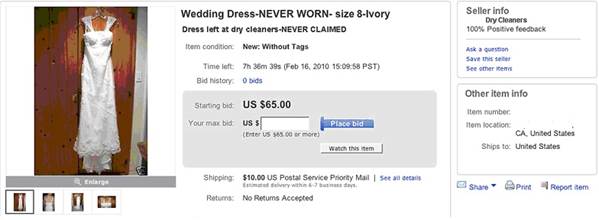
Example: My Dry Cleaner has a strict policy: "We reserve the right to sell any items that have been left at the store for more than three months.” The owner of My Dry Cleaner is sued by a customer who is upset because the wedding dress she had left was sold. The dress owner had notified the cleaners, in writing, that she would collect the dress one week prior to her wedding, but they had misplaced the note and sold the dress in error. The customer requested compensation
not only for the dress but also for expenses. |
|
2. Exclusions
There are only two exclusions under this coverage part:
- Liability because of assumptions of liability in a contract is not covered except for that liability that would have been in place without the contract
- Liability
due to dishonest acts by the named insured, employees of the named insured
or other persons the named insured entrusted with the client’s property is
not covered.
3.
Supplementary Payments
The supplementary payments section that is applicable to bodily injury, property damage and personal advertising injury is also applicable to this coverage part.
4.
Duties in the Event of A Claim Or Suit As A Result Of the Sale Or Disposal Of
Customers’ Goods
Replaces the Condition called Duties in the Event of Occurrence, Offense, Claim or Suit Is with the following terms:
- The named insured must make an effort to quickly notify the insurer that a potential claim has occurred. The notification should include sufficient details to identify it, such as name and address of the customers, how, when and where the situation occurred.
- If a claim or suit is actually presented, the named insured must record all of the information and provide the information to the insurance company as soon as practicable. The written notice must be sent to the insurance company as soon as practicable.
- The named insured and other insureds who may be involved must send the insurance company all legal papers, authorize the insurance company to obtain information, cooperate with the insurance company, and assist in enforcing rights.
- No insured has the right or authority to make any payment unless made voluntarily, with no anticipation that the insurance company will provide reimbursement. The insured cannot act on behalf of the insurance company.
IV. Definitions
The following definitions are added to the Commercial Package Policy via the Dry Cleaning and Laundry Facilities Program endorsement:
Computer
Programmable electronic devices used to work with data. While the definition does apply to peripheral equipment and to related air conditioning and fire suppression systems, it doesn’t apply to data or media.
Counterfeit money
An imitation of money that is meant to deceive.
Customers’
Goods
Property of the named insured’s customers, which the named insured has received and accepted. These goods are to be laundered, dry-cleaned, pressed, dyed, altered, repaired or have other similar types of services performed on them.
Employee
(07 13 change)
This term is
expanded beyond the full-time employee of a business. There are seven different
categories that qualify as employees:
a.
An actual person (not a corporation) who is
paid by the named insured and is under the control of the named insured with
respect to performing his or her duties. The person remains an employee for 30
days after termination, but only if
termination was not related to dishonest actions.
b.
A person who is a substitute for an employee
or is hired for short temporary work is considered an employee while under the
control of the named insured except when
caring for property off-premises.
c.
A
person leased to the named insured that is not a person described in a. or b.
above. There must be a contract and a labor-leasing firm involved.
d.
A
consultant for the named insured but only if that consultant was formerly an
employee, director, partner, member, trustee, or manager.
e.
A
guest student or intern but only while acting as a student or providing
services for the named insured. There is no coverage for loss of property off
premises.
f.
Any
employee of an entity that merged with the named insured or was acquired by it
prior to the policy effective date.
g.
Managers,
directors or trustees when acting as employees or while on a task-oriented
board.
An employee does not include independent contractors or similar type
individuals unless specifically described in the list above.
Forgery
When one person signs another person’s name with the intent to deceive. It does not include unauthorized signing by a person of his or her own name.
Manager
Any director in a limited liability company.
Member (07 13 addition)
One of the owners of a limited liability company
Money
All currency, coins and bank notes with a face value and in current circulation, plus money orders, travelers’ checks and similar items held for sale to the public.
Sale
and Disposal Operations
Any and all activities that the named insured takes when they sell or dispose of property that was brought to them by a client for service but is unclaimed.
Securities
Evidence of debt such as stock certificates, bonds, contracts, tokens, stamps, credit card evidence that can be used to collect from the credit card company, and other items that represent money but are not money.
ENDORSEMENTS
The forms and endorsements developed for the Market Segments series of programs carry the designation “MS.”
There are no unique endorsements for this Market Segment.
It is important to remember that all the endorsements available under the Property and General Liability Coverage Parts are available under this division.
Related Articles:
Commercial Property Program Available Endorsements and Their Uses
Commercial General Liability Available Endorsements and Their Uses
UNDERWRITING CONSIDERATIONS
Any program offered by an individual insurer will have its own set of eligibility guidelines. If the program is a generic or standard program, as in the case of ISO’s Market Segments Program, it normally has a set of qualifying criteria. Because there may be differences between the two sources of eligibility criteria, it is important for the insurance professional to be thoroughly familiar with the applicable new business and renewal qualifications. The following review of the underlying and eligibility requirements for the Dry Cleaning and Laundry Facilities Program is for the ISO generic program.
Specific Dry Cleaning and Laundry Operations
- Laundries and Dry Cleaners – self service
- Laundry and Dry Cleaning or Dyeing Receiving Stations
- Laundry Rental Service
- Laundries and Dry Cleaning Plants
While only operations with one or more of the above classifications are eligible, a risk engaged in operations in addition to one or more of these classifications is also eligible. The laundry or dry cleaning exposure is not required to be the primary classification.
Dry Cleaners and Laundries can involve small, one-location operations or be major industrial operations. They may serve only other businesses or may have multiple retail outlets of their own. The one constant is that they have a responsibility to process and return their customers' property in the same or better condition as when they were received. Such operations have a light on-premises liability exposure because customers do not linger; they leave as soon as they hand over their property for processing. Sidewalks and parking lots should be well maintained, but since many operations rent or lease their space, these exposures are often the responsibility of the building owner. Delivery operations should screen all drivers who will be interacting with customers to protect customers, particularly residential customers, from harm.
At one time, dry cleaning fluids were highly flammable. Today, the most commonly used cleaning fluid, while quite toxic, is not flammable. However, some of the pre-treating chemicals are considered hazardous. These chemicals must be stored and handled safely.
COVERAGE ISSUES
Commercial Property Coverages
Many of the issues related to the underwriting of commercial property insurance, such as construction, occupancy, physical characteristics, types of rates and so forth, are discussed in detail elsewhere.
Related Article: Commercial Property Underwriting Considerations
Commercial General Liability Coverages
Many of the issues related to the underwriting of commercial general liability insurance, such as claims-made versus occurrence coverage, limits, deductibles, and endorsements are discussed in detail elsewhere.
Related Article: Commercial General Liability Underwriting Considerations
Property Enhancements
Several property enhancements are added to the commercial property coverages via the Dry Cleaning and Laundry Facilities endorsement. Any increase in exposure presented by these coverage features should be identified. Once identified, all exposures should be evaluated to determine if they fit the coverage and rating intent of the program. The property enhancements with the most significant underwriting concerns are as follows:
Customers’ Goods are covered wherever the goods are located. It does not include a limitation on a per garment basis and there are no requirements that receipts be given. The only real limitation is the locked car warranty when the goods are in transit. Fur storage and fur cleaning is part of the endorsement without a limit or storage receipt rule. It is important that an insured have a way to substantiate any loss and to purchase sufficient coverage to protect any loss that may occur. Remember that the $2,500 special theft limit for furs is no longer applicable.
Related Article: AAIS Bailees Customer Coverage Form provides information on underwriting bailment situations.
Accounts receivables are covered up to the stated limits and conditions. The insured should have adequate back-ups and copies stored off-premises in a safe location. The same is true of valuable papers and records.
Ordinance or Law coverage extension responds to the expense created by an ordinance that requires old equipment to be updated or replaced. It is important to be aware of local regulations regarding the type of dry cleaning solvents permitted. This issue could significantly impact any loss settlement and future operations for the insured.
Property in Transit is increased to $10,000 and can be increased to higher limits. These types of limits should focus underwriting on the method of transport, types of items being transported, and safety controls in place.
Crime and Dishonesty Enhancements
The Dry Cleaning and Laundry Facilities Program endorsement adds coverage for money and securities, money orders and counterfeit money, forgery and alteration and employee dishonesty.
The insured should be evaluated for crime protection devices, including the type of device used and whether it is maintained. The evaluation should include alarms, locks, lighting, fencing, guards, or other security measures.
Procedures for handling money by delivery drivers should be carefully reviewed and considered since excessive cash with drivers can lead to employee injury in addition to crime-related losses. A procedure for advance payment or payment by account should be considered for regular customers.
Sound hiring procedures, background checks, and internal controls are necessary to minimize employee dishonesty losses.
Related Article: Commercial Crime Coverages Underwriting Considerations, for more information.
Liability Enhancements
Two enhancements are added.
Delivery Errors or Omissions – Coverage is provided because misdelivery can result in significant problems for a customer and potential loss of revenue due to delays. It is important that a regular procedure be established to carefully match orders with customers and take particular care when delivery deadlines are involved.
Sale or Disposal of Customers’ Goods – Losses can be prevented by clearly posting time frames for when customers’ goods will be disposed or sold. The information should also be included on any receipt. Receipts should be dated so that the number of days can be clearly calculated based on the length of time the items will be held. Prior to any sale or disposal all items must be checked against receipts to prevent error.
RATING CONSIDERATIONS
The rating for this product is the same as any other package product. All coverages must be rated in accordance with the Commercial Lines Manual for the specific coverage part. The basic MS DC 01 is rated based on the number of employees and whether Flood and/or Earthquake are provided in the underlying policies. In addition, charges apply to any increases in limits.