FINANCIAL INSTITUTION BOND–STANDARD FORM NO. 14
(September 2022)
|
Collapsible Menu Insuring Agreements |
INTRODUCTION
Financial Institution
Bond–Standard Form No. 14 is used to insure stockbrokers and investment bankers.
The form is similar to the Financial Institution Bond–Standard Form No. 24. It
has six primary insuring agreements designed to protect eligible property and
can be written with an aggregate limit or with a single limit to respond to individual
losses.
Standard Form No. 14 is
issued to stockbrokers whose principal business is dealing in securities listed
on such recognized stock exchanges. It is also available to stockbrokers who
deal in unlisted securities. It is also available for use by:
- Stock Exchanges
- Securities Investors Protection Corp. (SIPC)
- Investment bankers and investment trusts but not Real
Estate Investment Trusts (REITS) or companies licensed under the Small
Business Administration (SBA)
- Mutual Funds, Endowment Funds, or Foundations
- Stockbrokers that operate as a partnership. Coverage
for this arrangement is available by separate rider.
- Commodity brokers of a recognized stock exchange that
require all members to carry the same bond required of stockbrokers
This analysis is based on
the 05 11 edition. Changes from the previous edition are in bold print.
INSURING AGREEMENTS
A. Fidelity (05 11 change)
Insuring Agreement A.
covers loss that involves any dishonest or fraudulent act by any employee. These
losses are covered regardless of where they are committed and whether they
occur due to one employee who acts alone or who acts in collusion with others.
The employee must intend for both of the following two very specific results:
- The
insured sustains a loss
- The employee or another party obtains
an improper financial benefit
|
|
Example: Sam is employee of Securities, Inc. He is unhappy with
the company and takes the following actions: He goes to the mail
room and destroys all incoming mail for the day. This results in loss of
funds and other problems for Securities, Inc. but Sam does not obtain a
financial benefit. This loss is not covered. Sam sets up a
fictitious account and funnels securities to it. He sells them and retires.
This loss is covered when it is discovered because Securities, Inc. sustains
a loss and Sam benefits financially. |

This insuring agreement has two limitations:
- There is no coverage for any part of
an insured's loss due directly or indirectly to loans unless an employee colludes
with one or more other parties to the transaction and the employee
receives an improper financial benefit of at least $2,500.
- There is no coverage for a loss due to
trading unless an involved employee receives an improper financial
benefit.
When the term “improper financial
benefit” is used in this insuring agreement it does not include any employee
benefit earned by the employee such as salary, commission, promotion, awards,
or other benefits. Similarly, the term “loss” used in this insuring agreement
does not include any type of employee benefit paid to an employee by the
employer. Examples of employee benefits are commissions, fees, bonuses,
promotions, awards, profit sharing, pensions, and salaries, but the term is no
limited to only these.
Note: This insuring
agreement is identical to the corresponding insuring agreement in Standard Form
No. 24.
B. On Premises (05 11 change)
Insuring Agreement B
covers losses to certain types of property. Those types of property are listed
in a table in the definitions section of this bond. Other types of personal
property are not covered. The loss must be caused by robbery, burglary,
misplacement, mysterious disappearance, damage, or destruction.
Loss due to larceny,
theft, or false pretense is also covered but only when the person committing
such crimes is actually at an office or on the insured’s premises at the time
the property is handed over.
The losses described
above are covered only if the property is actually at or deposited in the
office or premises. The office or premises where the loss occurs can be
anywhere. This broad territory can be
reduced by making an entry under item 7. on the declarations that lists the
specific offices where coverage does not apply.
|
Example: The Better Stocks Company has 15 locations. Its underwriter
is concerned about three locations. Better Stocks decides to eliminate two of
the locations and assigns those employees elsewhere, but it must maintain one
of the problem locations. The underwriter will not change its mind so Better Stocks agrees to exclude that one
unacceptable location in order to receive a lower premium for the entire
account. It then places that location on in a surplus market at a higher
deductible. The premium for the two policies is less than the premium that
would have been charged under the single policy that covered all locations. |
This insuring agreement
also covers loss of or damage to the office itself as a result of actual or
threatened larceny, burglary, or robbery. The insured party must either own the
premises where the loss occurred or be legally liable for it. Losses that fire
causes are not covered.
|
|
Example: Ruraltowne Investors sustained a break-in and theft over
the weekend. Standard Bond No. 14 Insuring Agreement B covered the value of
the securities stolen from an office safe as well as damage to the building
as a result of the burglars tearing out a window casement to gain access to
the premises and commit the crime. |

Note: This
insuring agreement is identical to the corresponding insuring agreement in
Standard Form No. 24.
C. In Transit
Insuring Agreement C is
the off-premises version of Insuring Agreement B. It insures against robbery,
larceny, theft, misplacement, mysterious disappearance, damage, or destruction
of the defined property while being transported.
Coverage applies only if
the property is in the custody of one or more of the following:
- A messenger
- An armored car service
- A conveyance other than an armored car. This option applies
only to records, certificated securities issued in registered form and not
endorsed, and negotiable instruments not payable to the bearer or not
endorsed. This applies only for only physical transport, not electronic.
Coverage begins when the
messenger or transportation company receives the property. It ends immediately
when it is delivered to the designated recipient.
Note: This
insuring agreement is identical to the corresponding insuring agreement in
Standard Form No. 24.
D. Forgery or Alteration (Optional)
This optional insuring agreement
covers loss that results from forgery or alteration of any of the following:
- Negotiable instruments
- Signed instructions or advice for the insured from a customer
- Withdrawal orders
- Receipts given when property is withdrawn
- Certificates of deposit
- Letters of credit
Standard Form No. 14
covers the loss when the insured pays money or transfers property because it
accepted written originals of the items listed above as true. The document must
contain a forged handwritten signature or an alteration. Coverage is limited to
only the amount of loss caused by the forgery or alteration.
The insured must have
physical possession of the listed items as a precondition to it relying on the
signature.
A reproduction is treated
the same as a handwritten signature. However, electronic
or digital signatures are not.
|
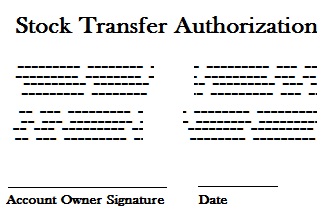
Example: Joey sends instructions to his stockbroker at Big Time
Stocks to transfer part of his stock portfolio to Marissa. Big Time documents
the request and follows the instructions. At the end of the year Joey demands
to know why his stock value has decreased so dramatically. Big Time produces
the letter requesting the transfer and Joey denies having made such a
request. Investigation reveals that Joey’s signature was forged and also
reveals that Marissa’s account was emptied and closed and she cannot be
found. Big Time Stock’s Forgery and Alteration coverage will respond. |
|
Note: This
insuring agreement is identical to the corresponding insuring agreement in
Standard Form No. 24.
E. Securities (Optional)
Listed Securities:
·
Certificated securities
·
Deeds, mortgages, or other instruments that
grant title to, create, or discharge liens on real property
·
Evidences of debt
·
Certificates of Deposit
This optional insuring
agreement applies to any of the following three types of losses that occur but
only if the insured was acting in good faith at the time of the loss. The loss
can be for the insured’s account or for the account of others.
1. A loss occurs when the insured has
faith in the written original of any of the listed securities so that they were
acquired, sold, delivered, credit was extended, or liability was assumed and
one or more of the following happens:
- The securities are lost or stolen
- The handwritten signature of a person who would make the security
valid or enforceable is a forgery
- The security(ies) is altered or forged and a financial loss results
2. A loss occurs because the insured provided
a written guarantee or a witness of signature on any of the listed securities
or on any other transfer, assignment, bill of sale, power of attorney,
guarantee, or endorsement.
3. A loss occurs when one or more of
the listed securities above are counterfeit. The insured must sustain the loss
because it acquires sells, delivers, gives value to, extends credit, or assumes
liability believing that the security is real. The loss is limited to the
extent of the financial loss resulting from the item being counterfeit. This
coverage does not apply to the corporate, partnership, or personal guarantee, evidences of debt, or to the security agreement securities.
In
order for coverage to apply, the insured must have actually possessed the
listed securities that result in the loss. This proves that the insured was
involved in a good faith transaction.
A
reproduction is treated the same as a handwritten signature. However, electronic or digital signatures are not.
Note: It is important to realize that
any coverage involves either original or certificated documents. There is no
coverage if the documents are reproductions, copies, or counterfeits.
Note:
This insuring agreement is identical to the corresponding insuring
agreement in Standard Form No. 24 except that Standard Form 14 does not cover
the following:
·
Documents of title
·
Certificates of origin or title
·
Security agreements
·
Corporate, partnership, or personal guarantees
F. Counterfeit Currency
Insuring Agreement F
covers loss caused by an insured that accepts in good faith counterfeit money
of the United States or Canada. However, there is no coverage for loss because
it accepted counterfeit money from any other country. The one exception to this
limitation is when the insured the insured maintains a branch office in another
country. In that situation, the counterfeit money from that country is covered.
Note: This
insuring agreement is identical to the corresponding insuring agreement in
Standard Form No. 24.
|
Example: Yankee Securities reports a loss to Financial
Institution Bond Company after discovering that the $37,000 in Mexican
currency it accepted was counterfeit. Financial denies the loss because
Yankee is based in and has operations in only the United States and does not
have any Mexican branch offices or operations. |
GENERAL AGREEMENTS
A. Nominees (05 11 change)
Only the insured named on
the declarations is covered. This means that a partnership, corporation, or
proprietorship not named on the declarations is not an insured even if the
insured owns, controls, or operates it. There is one exception. If the
insured’s employees make up the partnership, corporation, or proprietorship in
its entirety and its only purpose is to handle certain of its business
transactions, it is covered provided it
is not a holding company.
B. Additional Offices or Employees–Consolidation, Merger, or Purchase of
Assets–Notice
An insured can grow by
adding new offices or by merging with other entities. The method of growth
determines the amount of insurance available.
Additional offices the
insured gains are covered from the date they are added
and coverage applies for the remaining premium period. There is no additional
premium charged and the insured is not required to notify the underwriter.
However, the insured may
grow through merger or acquisition. When this occurs, there is no coverage for
those mergers or acquisitions unless and until the underwriter is notified.
Once notified, the underwriter must agree to cover the entity that was acquired and the insured must pay any additional premium.
Note: This
difference in approaches is justified. In the first situation, growth involves
the party the underwriter originally evaluated and accepted. Unless the new
office added is unusual or extraordinarily large, the nature of the insured's
operations does not usually change. In cases of merger or acquisition, the
insured's operations now include the operations of another distinct and
separate entity that the underwriter has not yet examined. It is reasonable to
require notification, written authorization, and additional premium charges in
cases of merger or acquisition.
C. Change of Ownership–Notice (05 11 change)
Underwriting is based
largely on the insured's management. Therefore, any time there is a significant
change in management, the underwriter must be notified. The policy requires
that when10% or more of stock ownership or partner/member
ownership interest changes hands, written notification must be provided
within 30 days of the change or coverage ceases for that new interest holder.
D. Representation of Insured (05 11 change)
The application the
insured completes is attached to the bond and coverage is written based on that
information. The insured represents that all information on the application is
true, complete, and correct. The bond may be rescinded if there is any
concealment, incorrect statement, or omission of information considered
material.
Note: The prior edition stated that a misrepresentation, concealment,
incorrect statement, or omission had to be intentional in order to rescind the
bond. The 05 11 edition eliminates the words intentional and representation.
E. Joint Insured
If the bond covers two or
more insureds, the first named insured acts for all others. Payments the
underwriter makes to the first named insured fully release the underwriter. If
the first named insured is no longer covered for any reason, the next named
insured assumes the position of first named insured. This provision makes
working with more than one insured more practical. Having multiple insureds on
the bond does not increase the underwriter's liability. However, having multiple
insureds can result in unintended consequences.
|
Example: Jared, Preston and Grange were insureds under the same
bond. A loss involving one of Preston’s customers occurred. Jared handled all
actions required of the first named insured. The underwriter issued a check
to Jared to satisfy the loss. Ten days after the settlement, Preston
contacted the underwriter regarding its status. Preston was very disappointed
when he learned that Jared had left the country with the settlement and even
more disappointed when he learned that the underwriter would not be issuing
any additional funds. |
F. Notice of Legal Proceeding Against Insured–Election to Defend
The insured must notify
the underwriter of any legal proceedings against it related to an incident that
may result in a covered loss as soon as practicable. The notification can be no
later than 30 days after the insured knows about a legal action. The insured
must give the underwriter copies of all information that relate to legal proceedings.
Note: While this provision requires notifying the underwriter as
soon as practicable, it does not allow the insured the latitude to freely
interpret what that really means.
The underwriter can
assert its right to handle the legal defense that involves a legal proceeding
that may affect coverage (including choosing attorneys) but is not obligated to
do so. If the underwriter decides to provide a legal defense, the coverage
provided includes all related costs. The insured must cooperate with the
underwriter in any defense. Failing to do so could result in the underwriter
terminating any defense.
When the insured does not
provide the underwriter with notice of a claim or an event within the 30-day
time period, the underwriter is not obligated to do anything with respect to the
claim or event that binds it in any way. A settlement agreement the insured
enters into is not binding on the underwriter. If the insured defends the claim
or event, the underwriter is not liable for any of the defense costs and is
also not bound for any judgment made against the insured.
In addition, the
underwriter may decide to not defend against any claim or event, even though
the insured provided the appropriate notices. If the insured elects to defend
and assume all attorney fees and other costs associated with the defense the
costs of the defense are the insured’s responsibility and the underwriter does
not pay. Any settlement the insured makes and any judgment against it is not
binding on the underwriter.
If the insured settles or
a judgment is entered against it, it has up to six months after the settlement
to file a complete proof of loss with the underwriter. It also must file any
claims against the underwriter within 24 months of that date.
Note: This
insuring agreement is identical to the corresponding insuring agreement in
Standard Form No. 24.
G. Insured's ERISA Plans (05 11 addition)
If the insured is
required to provide ERISA bond coverage for any plan, the plan subject to ERISA
can be added to this bond as an insured. This is permitted only if the majority
of the ERISA beneficiaries are the insured’s employees or former employees. The
plan is an insured for only Insuring Agreement A. Because ERISA has its own
rules with respect to bonds, there are certain specific conditions that apply to
these ERISA plans.
1. ERISA
does not permit deductibles on its required limits. The required limit is the
lesser of $500,000, or 10% of the plan assets when the plan does not hold employer securities and the lesser of $1,000,000
or 10% of the plan assets when the plan does hold employer securities. If
an ERISA loss that involves Insuring Agreement A occurs, the deductible applies
once the insurance company pays the minimum amount ERISA requires.
2. A
loss discovered during the bond’s term or within one year after it ends is
covered under this bond. However, if a loss is discovered in the year following
the end of the term, any loss payable is reduced by the amount payable under
the bond for the current policy term.
3. If
the financial institution has two or more plans subject to ERISA, the limit of
coverage purchased must be sufficient to cover the sum of the minimum required
limits of all plans.
Note: This
insuring agreement is identical to the corresponding insuring agreement in
Standard Form No. 24.
CONDITIONS AND LIMITATIONS
Section 1. Definitions (05 11 changes)
The terms defined in
Financial Institutions Bond–Standard Form No. 14 are in alphabetical order.
Most were modeled on definitions in the Uniform Commercial Code.
Certificate of Deposit
Any written
acknowledgement from a financial institution that it received money from a
depositor that it is formally obligated to repay.
Certificated Security
A written document that provides evidence of ownership or participation
in an enterprise or of an obligation of the enterprise. It must be issued in a
registered or bearer form. The instrument must be a type commonly traded in
securities exchanges or markets and be part of a class or series.
Change in Control (05 11 change)
When ownership of 50% or
more of the voting stock of the insured, the parent company, or the holding
company changes. This term also applies
when 50% or more of the ownership interest of the insured, its parent company,
or its holding company changes.
Counterfeit
A written imitation of an original intended to deceive and to be
accepted as an original
Employee (05 11 change)
Each of the following is considered an employee:
- A natural person who provides services to the insured, is under
the insured’s direction, and who the insured pays a salary or commission
- A
natural person who works at the insured’s office or in its premises and is
under the insured’s direction but is supplied and paid by an employment
agency.
- A member of the insured’s board of directors or similar type board
who acts as an employee described above
- A member of the board when that member is a part of a task-oriented
committee instead of a directorial only committee
- An employee of an institution that merged or consolidated with the
Insured prior to the effective date of this bond for actions that occurred
prior to the merger but that were not discovered until afterwards
- An electronic data processor. It is important to note that such
processors are considered one employee even when a number of individuals are
involved in the activity. However, when one employee is terminated under
Section 13, the termination applies to only that specific employee.
- A partner or member of the insured, unless excluded as stated
in Item 4 on the declarations
Note: Under the prior edition, attorneys the insured retained and guest student interns were considered employees
while performing services for the insured. The 05 11 edition removed this
provision.
Evidence of Debt
A written instrument a
customer executes to document its debt obligation to the insured. It includes
Negotiable Instruments.
Financial interest in the insured (05 11 change)
The financial interest in
the insured of a general partner is much more difficult to determine than that
of a limited partner or a member of an
LLC because of the relationship and
intertwining assets. The general partner’s financial interest is established as
of the date on which the loss is discovered. It is the general partner’s net
worth plus money, securities, and other property in which it has an interest.
The paragraph explains in detail how the net worth is established.
The limited partner's
interest or the interest of a member of
an LLC is limited to only the
value it invested in the insured.
This definition is used
on within exclusion y. No loss committed by a partner or member is paid until
the loss exceeds the financial interest that partner
or member has in the insured.
|
Example: Macruber embezzles $1,250,000 from Ace, Ace and
Macruber, LLP. Macruber’s financial interest in the insured is $500,000 so
the loss payable under this Bond is $1,250,000 - $500,000 = $750,000. |
Forgery
When one party signs the name of another party without that other
party’s authorization but only if there is intent to deceive. The party can be
a person or an organization. This definition does not treat electronic or
digital signatures as signatures. When a person places his or her own signature
on a document that he or she whether or not authorized to do so, it is not a forgery
even if the intent was to deceive.
|
Example: Michael signs his name on a check from Gramling Inc.
Iggy's Investment Bank accepts the check and gives Michael the requested
funds. The check is rejected when it is presented to Gramling as a paid item
because Michael was not authorized to sign Gramling’s checks. Michael’s act
was fraudulent but it was not a forgery. |
Guarantee
Any written undertaking where one party agrees to pay the debt
another party owes if that other party does not pay based on the terms of its
obligation. The debt can be to the insured financial institution, an assignee
of the insured, or to an institution from which the insured purchased a
participation in the debt.
Letter of Credit (05 11 change)
A written arrangement between a bank and its customer whereby the
bank honors drafts and other demands for cash based on that arrangement. The
customer must request the letter of credit. The letter must include conditions
required for the bank to comply.
Note: The prior edition used the term “bank or other person.” The
05 11 edition deletes the term “other person.”
Loan (05 11 addition)
Any and all extensions of credit the insured makes. It
also includes transactions whereby the insured establishes a creditor
relationship, even those where the insured purchases another’s creditor
relationship.
Member (05 11 addition)
Any natural person who has an ownership interest in a limited liability
company
Messenger (05 11 addition)
Any employee of the insured who has the
insured’s property off premises. If that employee becomes incapacitated, any
natural person who assumes custody of that property is also considered a
messenger.
Money
A medium of exchange a
foreign or domestic government authorizes or adopts as part of its currency. It
must be in in current use.
Negotiable Instrument
Any type of writing that
meets all of the following criteria:
- Signed
by the person who makes the instrument
- Contains
an unconditional promise to pay a certain amount of money
- Does not
contain any other promises, orders, obligations, or powers
- Pays
either on demand or at a specific time
- Pays to
the person who bears the instrument or to the party named on the
instrument
Original (05 11 addition)
The first rendering of a document. A photocopy
or a printed version of an electronic document is not considered an original.
Partner
A natural person who is
either a general partner or a limited partner. The limited partner must also be
an employee who provides services to the insured, is under the insured’s direction,
and receives a salary from the insured.
Property (05 11
changes)
All of the following are
considered property:
|
Money |
Certificated Securities
|
Negotiable Instruments |
Certificates of Deposit
|
|
Documents of Title |
Evidences
of Debt |
Security Agreements |
Withdrawal Orders |
|
Certificates of Origin
or Title |
Letters of Credit |
Insurance Policies |
Abstracts of Title |
|
Deeds and Mortgages on
Real Estate |
Revenue and other
Stamps |
Tokens |
Unsold state lottery
tickets |
|
Books of Account |
Hard copy or electronic
financial records |
Gems |
Jewelry |
|
Precious metals in bars
or ingots |
|
|
|
Other tangible Personal
Property not listed in the table is also property. However, it is not covered
in the same way as the property listed in the table.
Notes:
The table no longer lists United States Federal Reserve Uncertificated
Securities and Acceptances.
In the first part of the
On Premises coverage only “enumerated items of property” are covered. Those are
the items listed in the table above. When term “property” is used, it means all
items in the table plus the other tangible personal property.
Security Agreement (05 11 addition)
A written agreement that
has two purposes:
·
It creates an interest in personal property or fixtures.
·
It
secures payment or performance of an obligation.
Transportation Company
Any organization that
uses it’s owned or leased vehicles to transport its customers' property. It may
also arrange for freight forwarding or air express services for its customers'
property.
Withdrawal Order
A non-negotiable
instrument the customer signs that authorizes the insured to debit its account
for the amount on the instrument
Written (05 11 addition)
Three criteria must be met for something to be considered written:
- There must be marks or letters.
- The marks or letters must be on paper.
- The marks or letters on the paper must
be visible.
Section 2. Exclusions
Despite Standard Form No.
14's very broad coverage, there are exclusions. Coverage for some of excluded
items can be purchased by using a rider or the coverage may have to be
purchased under another form of insurance such as a property coverage form.
Standard Form No. 14 contains 29 exclusions.
Related Article: Financial Institution Bonds Available
Riders and Their Uses
Editorial Note: The exclusion titles in this section are not part
of the bond. They are provided as an aid to understanding.
a. Forgery or alteration
Loss
due to forgery or alteration is excluded. The exceptions are when Insuring Agreements, A, D, or E provide coverage.
b. War, riot, or civil commotion
Loss caused by riot or civil commotion is
excluded but only when it occurs outside the United States and Canada.
Loss due to warlike action anywhere is
excluded. There is an exception when Insuring
Agreement C applies. However, the exception is in effect only if nobody knew
about such events taking place at the time the property started in transit.
c. Nuclear
fission, fusion, or radioactivity (05 11 change)
There is no coverage for any loss due to
nuclear fission, nuclear fusion, radioactivity, or any chemical or biological
contamination. This applies to both direct and indirect loss. There are
no exceptions.
Note: The 05 11 edition does not have the
exception for industrial use of nuclear energy that was in the prior edition.
d. Acts of members of management board (05
11 change)
Losses caused by acts of a member of the
board of directors or any similar type board are
excluded. The only exception is the coverage that Insuring Agreement A provides
for such persons.
e. Loan transaction (05 11 change)
There
is no coverage for any direct or indirect loss caused by complete or partial
non-payment or default of a loan or transaction that involves the insured as a
lender, borrower, or extender of credit. The only exception is the coverage
that Insuring Agreements A and E provide.
Note: The 05 11 edition does not have the
exception for Insuring Agreement D that was in the prior edition.
f. Securities/Investment Laws
Any
loss that is caused when an insured or its employees violate a securities or
investment regulation law or any of that law’s rules and regulations. An
exception applies to fraudulent or dishonest actions that the insured can prove
would have caused the same amount of loss if the laws, rules, or regulations
were not in place.
g.
Failure of a financial or depository institution to pay or deliver funds
Any loss that occurs because of a financial
or depository institution failure resulting in the insured not being able to
obtain insured deposited funds or property is excluded. This exclusion does not
apply to Insuring Agreements A. or B. 1. a.
h. Employee actions
There
is no coverage for direct loss caused by an employee except under the following Insuring Agreements:
·
Insuring Agreement A.
·
Insuring Agreements B or C but only when property
is misplaced, destroyed, or mysteriously disappears because of an employee’s
unintentional act.
i.
Transactions to a customer's account
Losses
that result directly or indirectly from transactions to a customer's account are
excluded. However, Insuring Agreement A has an exception for cases where an
employee illegally converts money, securities, or precious metals.
j. Racketeering activity
Loss
due to any racketeering activity is excluded. Racketeering activity is defined
in the United States code.
This
exclusion does not apply to Insuring Agreement A if the racketeering damages
were caused by an employee.
k.
Credit, debit, charge, access, convenience, or other cards
There
is no coverage for any loss that involves any transactions through any device
that involves any of these types of cards. The use may be actual or implied.
This exclusion does not apply to Insuring Agreement A losses.
l.
Automated mechanical devices
Losses
involving automated teller machines and
similar devices that handle funds are excluded, except when Insuring Agreement, A provides coverage.
m. Surrender
of property
There
is no coverage when property is surrendered due to a kidnapping or a ransom
payment. There is also not coverage when property is provided in response to a threat
of bodily harm except when it is an immediate threat to the person in control
of the property. Property that is intended to be given as ransom or in response
to exhortation is also not covered if it is destroyed, disappears or stolen.
This
exclusion does not apply to Insuring Agreement A.
n. Erroneous credits (05 11 change)
Any
loss resulting from erroneous credits to a depositor’s account is excluded.
This exclusion does not apply to Insuring Agreement A.
Note: The 05 11 edition deletes the exception
for payments or withdrawals that take place in the insured’s office that was in
the prior edition.
o. Forgery
or any other fraud
Any loss resulting from deposits not being
paid into a depositor’s account are not covered even if forgery or fraud is involved.
This exclusion does not apply to Insuring Agreement A.
|
Example: Patrick opens an account at Magnificent Stock Brokerage
with a $25,000 bonus check from Easy Deals. He withdraws funds over the next
few days through a series of ATM transactions. At the end of the week,
Magnificent discovers that the Easy Deals check is fraudulent and
uncollectible. Patrick is nowhere to be found. This loss is not covered. |
|

p. Counterfeiting
Any loss related to counterfeiting is
excluded. This exclusion does not apply to Insuring Agreements A, D, E and F.
q. Loss of tangible personal property
Loss to “Other Tangible Personal
Property not listed in the table” in
the definition of Property is excluded when the insured has other insurance to
cover the property. Even if such other insurance is not available, loss to such
property is excluded 60 days the insured is aware that it owns or is
responsible to insure it. This exclusion does not apply to Insuring Agreements
A. and B. 2.
r. Loss of property (05 11 change)
Loss of
property that is in the mail, in the custody of any transportation company, or while on premises of a messenger or
transportation company is excluded.
This
exclusion does not apply to Insuring Agreement A.
When
the property is in the custody of a transportation company, this exclusion does
not apply to Insuring Agreement C.
s. Potential income
There is no coverage for potential income that
the insured may have earned if there had been no loss. Examples of
sources of potential income are dividends or interest.
t. Legal liability
There is no coverage for damages to property
for which the insured is legally liable. The only exception is when the insured
can show that the loss to such property would have damaged the insured’s
property for the same amount if it had not damaged the property for which the
insured was legally liable.
|
Example: Kyle’s briefcase contains securities that
Little Security Brokerage owns and securities that clients of Little Security
Brokerage own. Kyle runs to catch a taxi and the briefcase flies open and the
securities scatter. He stops and collects as many as he can
but others are lost. Little Security gains coverage for some of the securities
it was legally liable for when it shows that some were owned
and some were the other. Because the property for which it was legally liable
was lost, owned property worth approximately the same amount was not lost. |
u. Fees, costs, and expenses
The
fees, costs, or expenses the insured incurs to establish a claim or the claim’s
amount are excluded. Coverage also does not apply to fees, costs, or expenses
associated with any legal proceedings.
v. Indirect or consequential losses
Indirect or consequential losses of any kind are
excluded. Examples of such losses are fines, penalties, multiple, or punitive
damages.
w. Erroneous deposits (05 11 addition)
Any
loss that is the result of accepting a check that is payable to an organization
and placing it for deposit in a natural person’s account is excluded.
Note: The 05 11 edition deletes the
exclusion of uncertificated securities that was in the prior edition. The 05 11
edition also deletes all reference to uncertificated securities throughout the
form.
x. Dishonest or fraudulent acts
Coverage does not apply to any loss that
results directly or indirectly from any dishonest or fraudulent act by any
non-employee broker or agent engaged in any of the practices the exclusion
lists.
y. Partners
Loss caused directly or indirectly by one of
the insured's partners or by a member of an LLC is excluded. An exception provides
coverage when the amount of loss exceeds the sum of the partner's “financial
interest in the insured” plus the deductible. The term “financial interest in
the insured” is defined in the definition section.
z. Representation, advice, warranty, or
guarantee
There is no coverage for a loss that is based
on representation, advice, warranty, or guarantee with respect to performance
of any investment.
aa. Unlawful disclosure of non-public
material information
Any
liability that is imposed on the insured because an employee or the insured
discloses non-public material is not covered. In addition, liability based on
any actions an employee takes based on such material is also not covered. This
exclusion applies to employees regardless of whether or not the insured
authorized their actions.
|
Example: Harry is a mail clerk. He overhears conversations
concerning a merger for which his firm is a consultant. He purchases some
stock in advance of the merger and sells his information to others who also
purchase stock. The stock price spikes prior to the merger and costs the firm
part of its value of the transaction. Because of the rise in the stock value
before the merger, the Securities and Exchange Commission (SEC) investigates
the firm for insider trading. This bond does not cover any of the losses or
costs associated with Harry’s actions. |
bb.
Confidential information (05 11 addition)
Any type of loss that results from any
theft, destruction, or disappearance of confidential information is excluded.
Examples of confidential information are intellectual property, customer lists,
and trade secrets.
cc. Employee (05 11 addition)
Loss
caused by any employee with a history of fraudulent or dishonest activities at either
this insured or any other business is excluded. This exclusion
applies only when the insured, an officer, or director knew about the history
of activities. The knowledge of the history must be gained prior to the date of
loss. If property is in transit with that employee at the time the history
knowledge is obtained, loss of that property would be covered.
This
exclusion does not apply if the officer or director who knew about the
background colluded with the employee to commit a dishonest act.
Section 3. Discovery
Similar to other bonds,
Standard Form No. 14 covers only losses discovered during the bond period. This
is like the Commercial General Liability (CGL) Claims-Made Coverage Form.
Discovery occurs when the insured first
becomes aware of facts that should lead it to assume that a loss has
occurred. The bond in effect when the loss is discovered is the one that
provides coverage, not the one written by another surety or even the same
surety that was in effect when the loss occurred.
|
Example: Mildred substituted her name for a client’s on stock
certificates purchased in 2004. She is no longer with the firm but has been
collecting the client’s dividend since that substitution. The client suddenly
dies in 2022 and all records are frozen for probate. During the records review,
Mildred’s substitution is revealed and a claim is presented
to all bond underwriters who provided coverage over those years. However,
only the current bond underwriter will respond. |
Discovery also occurs
when the insured first receives notice or becomes aware of an actual or
potential claim where it is alleged that the insured is liable to a third party
under circumstances that would constitute a bond loss.
Note: This bond does not define an insured. This therefore leads to
the question as to who at the insured must discover the loss. In order to avoid
disputes that involve discovering a loss, the discovery clause should be
modified to state that only a senior officer or the insured's risk manager can
discover a loss. Without this documentation, it could be asserted that any employee who knew about a loss
triggers discovery and the 30-day notice period begins.
Section 4. Limit of Liability
Aggregate Limit of Liability
The underwriter's total
liability for all losses discovered during the bond period in Item 2. on the
declarations is the Aggregate Limit of Liability in Item 3. on the
declarations. It is reduced by the amount of any payments made. The Aggregate
Limit of Liability may be written for a larger amount than the single loss
limit.
The insurance company
does not make any additional payments once the Aggregate Limit of Liability is
used up paying losses. Its obligation to defend also ends. The insured must
then defend at its own expense.
Any recovery received
reinstates the Aggregate Limit of Liability but only if it is received before
the limit is used up.
Reinsurance recovery by
the underwriter is not considered a recovery that reinstates the aggregate.
When the underwriter uses
a Lost Instrument Bond to settle a property loss, there is no loss to the
aggregate until the Lost Instrument Bond makes a payment.
Single Loss Limit of Liability
The underwriter's
liability for a single loss is the applicable Single Loss Limit of Liability in
Item 4. on the declarations. If more than one insuring agreement or coverage
insures a single loss, the most paid does not exceed the largest Single Loss
Limit of Liability that applies.
The Single Loss Limit of
Liability for the optional insuring agreements may not be higher than the basic
bond limits.
Any payment under the
single loss limit of liability is subject to the aggregate limit of liability.
Single Loss Defined
Single loss means all
covered losses associated with a single act or series of related acts,
including costs and attorneys’ fees.
Related Court Case: "Series of Related Acts" in Employee Dishonesty Coverage Held to
Encompass Continuous Embezzlement Scheme
Section 5. Notice/Proof–Legal Proceedings Against Underwriter
The insured must contact
the insurance company within 30 days after discovering a loss
but this is the maximum time limit. The insured is obligated to notify the
insurance company as soon as practicable. This is later than "as soon as
possible" but earlier than "at its earliest convenience."
The insured has six months
after discovering the loss (not six months from notice) to provide the company
with a sworn proof of loss including all details it knows of. If lost
certificated securities are involved, the proof of loss must include their
numbers.
The insured has only a
limited time period to sue the company to recover the loss. The suit cannot be
filed sooner than 60 days after the proof of loss is filed or more than 24
months after discovering the loss.
Note: It is very
important to be aware of the time limits and how they are established.
Time limits are amended
if they are different than or conflict with any state or federal statutes that
apply. In those cases, the minimum time limits that such statutes provide apply
in place of those stated above.
A bond is for only the
insured.
Only the first named
insured is authorized to bring any legal proceedings against the underwriter.
Section 6. Valuation (05 11 change)
Losses are valued as the insured's net loss after credits for any receipts,
payments, or recoveries. This means that in transactions where the insured
receives an item of value, its value is deducted from the loss amount. If a
loan is involved, interest from the loan is also deducted.
Money
Any loss of money,
currency, or funds of any country is paid in that country's money, currency, or
funds. The insured has the option to have foreign country losses paid in
dollars based on the rate of exchange of United States dollar equivalents on
the date the loss is paid.
Securities
The underwriter settles its
obligation to pay an eligible loss of any securities in kind. As an option (but
only if the insured prefers), the underwriter pays the insured the cost to
replace the securities. The replacement value is determined by the market value
of the securities at the time of settlement and not on the date of discovery.
If the lost securities cannot be replaced or do not have a quoted market value,
their value is determined by agreement or arbitration.
When a deductible applies
to the loss or if the loss exceeds the limit of insurance available, the underwriter
is responsible to duplicate only the amount of
securities within the available limits.
Books of Account and Other Records
In case of loss or damage
to books of account or other records, the bond obligates the underwriter to pay
only if the books or records are reproduced. Payment is not for more than the
cost of blank books, blank pages, or other materials plus the cost of labor to
transcribe or copy data.
Property Other Than Money, Securities, or Records
When a loss involves
insured property other than money, securities, or records, the underwriter must
settle according to the property's actual cash value, the cost to repair it, or
the cost to replace it with similar property. This settlement option also
applies to damage to the insured's offices and furnishings, fixtures,
equipment, safes, and vaults contained in those offices.
If the insured and the
company cannot agree on a settlement, arbitration determines the final settlement
amount.
Set-Off
The amount of loss the
underwriter pays for a loss under Insuring Agreement A is reduced by a set-off.
This set-off is the amount of money owed to the named insured by the employee
who caused the loss.
|
Example: Kensington Stockbrokers discovers that Rick, one of its
best brokers, embezzled $275,000 from it. Before it submits the loss to the
insurance company, Kensington realizes Rick's commission account is worth
$250,000. Because Kensington owes Rick the $250,000, it is deducted from the
loss and the total value of the bond loss is reduced to $25,000. |
Section 7. Assignment–Subrogation–Recovery (05 11 change)
The insured assigns all
its rights of recovery for losses the underwriter paid to the underwriter. The
insured agrees to cooperate and assist the underwriter in any attempt to
recover payment from any other party responsible for the loss. If a recovery is
made the money is distributed in the following order:
1. The insured is paid the amount of
loss in excess of the amount it received from the underwriter.
2. The underwriter is reimbursed for
the amount of the loss it paid to the insured.
3. The insured is paid for the amount
of deductible.
4. The
insured is paid for any loss that this bond did not cover. (05 11 addition)
The insured agrees not to
do anything to prejudice or inhibit any right of action by the underwriter
against other parties responsible for the loss.
|
Example: Petra embezzled $750,000 from Trusted Securities.
Trusted Securities was responsible for the $100,000 deductible. The underwriter
paid its limit of $500,000. Trusted Securities incurred $25,000 to establish
the loss and was not reimbursed for those expenses. Through a variety of
actions, $300,000 is recovered from Petra for the benefit of Trusted Securities.
The $300,000 is divided as follows: 1. Trusted Securities
received $150,000 because that is the amount of covered loss that exceeds the
amount the underwriter paid. 2. The Underwriter receives
the $150,000 to offset the $500,000 it paid. |
Note: The 05 11 edition removes Section 8. Limit of Liability under This
Bond and Prior Insurance that was in the previous edition.
Section 8. Cooperation (05 11 addition)
The insured agrees to submit to examination by the underwriter, to
produce all pertinent records, and to cooperate fully in all matters that
relate to the loss.
Section 9. Anti-Bundling (05 11 addition)
If an insuring agreement states that a specific type of instrument must
be forged, altered, or fraudulent in order for coverage to apply, that
statement applies to only that instrument. There is no coverage if other papers
within the document are forged, altered, or fraudulent when the specific
instrument itself is valid.
Section 10. Other Insurance or Indemnity
If other insurance in force
applies to the same loss, this bond contributes to the loss on an excess basis.
Section 11. Ownership
This bond applies to the
insured's owned property, property it holds in any capacity, and also property
that is owned and held by others but, prior to the loss, the insured became
responsible for it. However, the bond is for the benefit of the insured named
on the declarations and not for other parties, even in cases where that other party
also owns the covered property.
Section 12. Deductible Amount
The underwriter does not
pay any loss until the amount of loss exceeds the deductible on the declarations
that applies to a single loss.
The insured is still obligated to notify the underwriter of a loss even
if the underwriter is not responsible to pay it. Similarly, if the underwriter
wants more loss details, the insured must provide them. The primary reason for
this requirement is for the underwriter to become aware of situations that
could result in a covered loss at a later date, investigate the problem early,
and prevent a more serious loss later.
Section 13. Termination or Cancellation (05 11 change)
This section deals with
two different types of termination. The first is termination of the insured’s
bond. The second is termination of coverage for acts of specific individuals.
A bond terminates on the
earliest date on which any of the following occurs:
- 60 days after the insured receives the underwriter's
written notice of its intent to cancel
- The underwriter receives the insured's written notice
of its intent to cancel
- The insured is placed in receivership, is liquidated,
or is taken over by state or federal officials
- Another institution takes over the insured
- The Aggregate Limit of Liability is exhausted
- The Bond Period in Item 2 on the declarations expires
When there is a change in control to any insured other than the first
named insured, this bond is terminated with respect to only that insured.
The bond does not cover
losses caused by any employee, partner, officer of the insured, or employee of
any electronic data processor after any of the following occurs:
- Any insured director or officer learns of any
dishonest or fraudulent act committed by the person at any time. This
applies only if that the director or officer is not in collusion with the
individual
- Fifteen days after the insured receives written
notice from the underwriter that such a person is to be excluded from the
bond
The type of act and the
time frame of the act are irrelevant. All that is required is that the act was
dishonest or fraudulent. The only exception is when the particular employee is
transporting property at the time the information becomes known, losses that
occur in the course of transit continue to be covered.