MEDIA/COMMUNICATIONS LIABILITY COVERAGE ANALYSIS
(March 2023)
|
Collapsible Menu I. Insuring
Agreement IV. Limit Of
Liability, Retention, Related Claims And Non-Stacking Of Limits |
CLAIMS MADE NOTICE
This is a notice to
policyholders that the coverage described in the policy applies solely to
claims that are made against the named insured and, according to policy
provisions, are reported to the given insurer. Such claims must be made during
the applicable policy (or extended reporting) period. When applicable, such
notices also advise the policyholder that legal defense costs are part of the
policy’s applicable limits.
COVERAGE A–BODILY INJURY AND
PROPERTY DAMAGE LIABILITY
I. Insuring Agreement
A. Media Liability
Under this portion of the policy, the insurer obligates itself to
indemnify the named insured against claims when they involve activities that
qualify as wrongful acts. However, such incidents must be reported during the
defined policy period or any applicable extended reporting period. Such acts
must not have taken place before the policy’s defined retroactive date.
Eligible incidents are those for which an insured either bears legal
responsibility or for those that were assumed. Eligible incidents include the
following:
1.
Defamation–Circulating
false information that damages a person's reputation or business. Allegations
typically include libel (traditionally defamation via print or by broadcast,
but can include comments from an email, chatroom or website); slander
(defamation via oral communication); and trade libel (any form of defamation of
a business product or service). Both outrageous conduct and infliction
of emotional distress (overt actions that result in another party's public
humiliation) are considered forms of defamation.
|
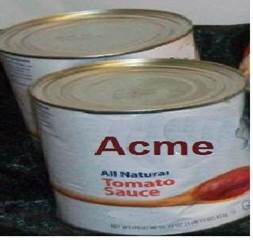
Example: A local newspaper's
cartoonist is angered when he and his friends weren't able to get a
reservation at the town's most popular Italian restaurant. The cartoonist
publishes a caricature of the restaurant's owner pushing a grocery cart
overflowing with jars of a store brand tomato sauce and bargain-priced pasta.
The restaurant owner sues for defamation. |
|
2. Right of Privacy violations – A person has a right not to have details
of his or her private life and activities made available to the public when the
availability is not justified. In other words, when the public does NOT have
the “right to know.”
|
Example: A newspaper’s website runs a popular
online contest that results in gaining names and email addresses of hundreds
of new site subscribers. The paper is sued when it’s discovered that they,
later, sold this information to a variety of area businesses who contact the
subscribers with ads and service offers. |
Invasion, infringement of or interference
with the right of privacy or publicity includes:
·
Disclosure
of private facts–Harm arising out of a party's sensationalized disclosure
of sensitive information without the consent of the individual who was the
subject of the disclosure.
|
Example: A mega-church’s minister has
a very popular blog on his church’s website. His writing includes a series
called “They’ve Sinned Too!” The minister shares a story of a former
classmate who now heads his own large church in another town. The blog
reveals that, one evening during high school, they got drunk, picked up girls
and vandalized several homes and cars. The friend’s congregation becomes
outraged when they read the story. The other pastor sues. |
·
False
light–Presenting a person to the public in a manner that strongly implies
that the party is associated with a set of beliefs or activities when the
implication is not true (e.g., investigative reports or docudramas).
|
Example: During an interview with a mayoral
candidate, a reporter notices an old photo of the candidate with a notorious
businessman who was imprisoned for embezzlement. The article published in the
newspaper refers to the candidate’s close ties with the dishonest businessman. |
·
Intrusion–Usually
associated with newsgathering activities involving the use of recorders,
microphones, cameras, or other electronic devices to record a person's private
activities.
|
Example: A reporter rudely and
aggressively questions the motives of a local philanthropist, who finally
loses his temper. He orders the reporter to leave using a long string of
loud, profane language. The reporter, who has secretly taped the
conversation, later airs selected excerpts of the conversation on TV. |
·
Unwarranted
or wrongful publicity–A broadcast or publication that casts an individual
into the public eye without reason or justification.
|
Example: John is waiting in line to
make his car payment when a group of masked men enter and rob the bank. The
robbery is caught on tape by the bank’s security system. Later that night, as
the tape is broadcast on television, a reporter’s voice-over ominously asks
whether John was acting as a lookout for the bank robbers. |
·
Plagiarism
or misappropriation – Unauthorized use of materials, information or ideas
without permission or acknowledgement that the material originated elsewhere.
|
Example: In a bind to get content up
for his company’s website, Acme’s webmaster visits several competitors’
sites, copies information verbatim from their various service tips sections
and posts them on the Acme site. |
3.
Infringement of title, slogan, trademark, trade name, service mark, or service
name, or using a trademarked name or likeness for profit–Unauthorized use of property (names, logos,
slogans, icons) that are identified with a particular product or service.
|
|
Example: The owner of Yards of Fun, a
fabric and craft supply shop makes a costume that strongly resembles a famous
cartoon character. An employee is paid to wear the costume while attending a
series of local craft fairs, handing out flyers promoting the store. |

4.
Copyright infringement–An
allegation that material protected by copyright has been copied, reproduced,
distributed, or performed without the permission of the owner.
|
Example: The website for the Comfy
Mattress Company features a video clip of a popular band singing their latest
hit. The video clip was downloaded from a music website without permission. |
Copyright infringement
also includes piracy (reproducing or copying) and using original material
without authorization.
It also includes
plagiarism or misappropriation (unauthorized use of materials, information or
ideas without permission or acknowledgement that the material originated
elsewhere) which is also considered copyright infringement.
5. Unfair competition–The invasion,
misuse, misappropriation, or infringement of literary, artistic or musical
property rights of another. This could include any allegation that one's
business reputation suffered harm because of another party being guilty of some
form of plagiarism or other infringement. The term is especially pertinent to
broadcasting and advertising.
|
Example: Happy Home Appliances Shop
learns that their chief rival is planning to reduce the cost of kitchen
appliances by 20% for the upcoming holiday period. Happy Home publishes
advertisements undercutting the rival’s price by 30% more, even though doing
so will force them to sell the product at a price lower than what they paid
for it. |
Related Court Case:
"Unfair Competition" Allegation Held To Be Covered As
"Advertising Injury" Only When Competitor Is Affected
However, in order
to qualify for coverage, the above wrongful acts (as defined by the policy)
must occur while the insured is performing either multimedia activities or
advertising, on a compensated basis and for a business client.
B. Personal Injury
Under this portion of the policy, the insurer obligates itself to
indemnify the named insured against claims when they involve activities that
qualify as wrongful acts. However, such incidents must be reported during the
defined policy period or any applicable extended reporting period. Such acts
must not have taken place before the policy’s defined retroactive date.
Eligible incidents are those that an insured either bears legal responsibility
or for those that were assumed. Eligible incidents include the following:
1.
Defamation–Circulating
false information that damages a person's reputation or business. Allegations
typically include libel (traditionally defamation via print or by broadcast,
but can include comments from an email, chatroom or website); slander (defamation
via oral communication); and trade libel (any form of defamation of a business
product or service). Both outrageous conduct and infliction of emotional
distress (overt actions that result in another party's public humiliation) are
considered forms of defamation.
2.
Right of Privacy violations–A
person has a right not to have details of his or her private life and
activities made available to the public when the availability is not justified.
In other words, when the public does NOT have the “right to know,” invasion,
infringement of or interference with the right of privacy or publicity
includes:
·
Disclosure
of private facts–Harm arising out of a party's sensationalized disclosure
of sensitive information without the consent of the individual who was the
subject of the disclosure.
·
False
light–Presenting a person to the public in a manner that strongly implies
that the party is associated with a set of beliefs or activities when the
implication is not true (e.g., investigative reports or docudramas).
·
Intrusion
·
Plagiarism
or misappropriation
3. Private occupancy
violations (including wrongful entry or eviction, trespass or
eavesdropping).
4. Personal injury liability perils–Refers to allegations of harm
stemming from detention, false arrest, imprisonment, malicious prosecution.
However, in order
to qualify for coverage, the above wrongful acts (as defined by the policy)
must occur while the insured is performing either multimedia activities or
advertising, on a compensated basis and for a business client.
Regardless whether
any wrongful act under Parts A or B above is reported in the correct timeframe
(earliest effective date or retroactive date), it is ineligible if any insured
had prior knowledge of either a given wrongful act or of circumstances that were
likely to lead to a claim submitted under this policy.
II. DEFINITIONS
Media/Communications Liability
policies commonly employ specialized terms that are highlighted in bold face
type or set apart in quotation marks within the policy and defined. The following,
with some language variation, are special terms used by various media
professional liability insurers:
A. Advertising–Activities which
publicize or promote another party’s products or services.
B. Application–Refers to applications (which are signed) as well as
any other documents that are attached to or sent in to supplement an
application for this policy. It also refers to such documents to secure a
policy from the insurance company’s affiliates when such a policy is for
renewal or replacement coverage. Finally, such documents are deemed part of the
policy.
C. Affiliate of the insurer–Refers to another insurance company
more than 50% owned by and controlled by the insurance company issuing this
policy.
D. Claim–Also called "each loss"
or “each claim” in some policies. This term refers to demands received by a
named insured for various forms of relief because of allegations of injury or
damage (may be in form of either monetary or non-monetary). It also refers to
civil judicial proceedings (complaints, pleadings, injunctions) including their
appeals. Criminal proceedings are NOT considered claims.
E. Defense Costs–Besides the costs
(fees, expenses) to a named insured to handle a defense against claims, this
term extends to also refer to proceedings-related bond premiums (appeal bonds,
attachment bonds, etc.) but not to a named insured’s employee, directors’ or
officers’ wages/salaries (including overtime), fees incurred by an insured’s
directors or officers or any costs involving the use of independent adjusters.
F. Insured–Refers to the named insured
and any subsidiary or affiliate owned and controlled by the named insured at
the beginning of the policy period. The term includes directors, officers,
trustees, partners, stockholders, and employees acting within the scope of
their duties. It also refers to a subsidiary acquired during the policy period
(provided notice is given within a specified number of days). An agent or
independent contractor who provides services for or information to the named insured
also qualifies as an insured. However, this status only applies when, BEFORE an
event occurs, the insured has a written agreement to cover such persons.
|
Example: Jodi Koverwell has just
delivered an Acme Insurance Media and Professional Liability Policy to
General News and Publications Corp. Jodi explains that the policy's $12
million limit also applies to the corporation's photographers, free-lance
writers, and correspondents because the company uses contracts that grant
them coverage. |
G. Internet–Refers to the global
network of computer connections and facilities as well as intranets, extranets
or virtual private networks.
H. Loss–Refers to judgments, awards,
and settlements an insured has to pay due to a claim (as defined by the policy).
Loss also extends to any Defense Costs (again as defined). If a claim occurs in
a jurisdiction which permits insurance for punitive or exemplary awards, then
such amounts also qualify as a loss.
However, loss does
NOT include costs of producing, reproducing or reprinting content (defined
under this policy as matter), including costs of recall, correction, returns or
losses of profit. Amounts levied by law or licensing organizations (taxes,
fines, or penalties) are ineligible to be considered as part of a loss. Returns
(of fees, expenses, charges or royalties) as well as restitution are not
treated as losses and neither is any situation that qualifies as being
uninsurable.
I. Matter–Refers to, essentially,
content in the form of writings, photos, paintings, music, statistical, audio
or audio-visual.
J. Multimedia Activities–Refer to:
·
Efforts relating to handling specified media
including research, editing, releasing, publishing, producing (including
serially), exhibiting or distribution.
·
Public transmission of information defined as
specified media
·
Website service in the form of website creation,
planning, building, hosting or maintaining
K. Named Insured–Party that appears in
this policy’s declarations.
L. Policy Period–The beginning and
ending coverage dates that appear on the declarations unless an earlier ending
date applies due to policy termination.
M. Pollutants–Include
irritants and contaminants such as smoke, vapor, soot, fumes, acids, alkalis,
chemicals, and waste of a solid, liquid, gaseous, or thermal nature. Waste
includes property to be disposed of, as well as property to be recycled,
reconditioned, or reclaimed. The term also refers to any substances deemed
hazardous by the U.S. Environmental Protection Agency or any other related
federal, state or local authority. It also includes air emissions, oil, oil
product, infection waste, medical waste and asbestos materials.
N. Related Claims–This term treats all
defined claims which stem from either one or a series of related, defined
wrongful acts as a single claim. This single status is unaffected when such a
claim is filed against more than one of the policy’s insureds.
O. Retroactive Date–Date designated as
such in the policy’s declarations.
P. Specified Media–The form or forms of
media that are designated in the policy’s declarations.
Q. Subsidiary–Any corporation which, at
the beginning of the applicable policy’s effective date, is owned or controlled
by the Named Insured. Ownership refers to a named insured holding more than 50%
of another companies voting stock, even when such stock is held by another
subsidiary.
R. Terrorism–Refers to threatening use
of force or committing acts of violence against entities or property,
committing dangerous acts (including threats) and interfering or disrupting systems
(communication, electronic or mechanical), but only when the threat or act is
meant to coerce or intimidate a government, civilians or an economy. Such acts
against a government which are to promote various objectives (economic,
ideological, political, religious or social) as well as acts to promote or
oppose a given philosophy or ideology also qualify as terrorism.
Note: Acts to defend against or to
minimize terrorist acts also qualify as terrorism.
S. War–Broadly extends to any military
or similar activity regardless whether formally declared. Efforts to defend
against such activities also meet the definition of war.
T. Wrongful Act–Mistakes,
misstatements, misleading statements, acts, omissions or misrepresentations that
are negligent and which involve the name insured (including such activities
done on insured’s behalf or with permission).
III. EXCLUSIONS
Media/Communications Liability is
not written on a standard form. Instead, the specialty carriers who offer this
coverage develop proprietary forms, which can vary tremendously from one
carrier to another. When a Media Liability Policy is delivered to an insured,
potential problems and disputes can be avoided or minimized by stressing the
importance of reviewing and understanding the exclusions, which may not be
familiar to some insureds.
As most Media/Communications
Liability Policies are written on a named perils basis, there are, generally,
few exclusions. These exclusions primarily involve:
A. Disqualifying any incident that was
documented, reported or had a claim filed against any named insured prior to
the current policy’s effective dates or prior to any coverage initially issued
by this insurance carrier, whichever is earliest. No coverage applies to any
litigation that was pending prior to the current policy’s effective dates or
prior to any coverage initially issued by this insurance carrier, whichever is
earliest. Further, coverage is barred for similar circumstances that are
related to and which has created any prior or pending litigation.
B. Judicially determined dishonest,
fraudulent or criminal acts or criminal fines or penalties. In such instances,
the named insured is obligated to reimburse the insurance company for all costs
it expended in legal defense.
C. No coverage exists for any form of
bodily injury (including disease or death), property damage (including loss of
use) or emotional or mental harm. An exception for such losses exists. Coverage
may be provided when such losses are directly related to a covered, wrongful
act when no other source of coverage exists.
D. No protection applies to wrongful
acts (as defined) that stem from either employment-related liability or to
discrimination as defined by either federal, state or local laws or rules.
Related Article: Employment-Related Practices
Liability Coverage Form Analysis
E. Employee benefit and pension plan
losses are ineligible for coverage under this policy. This exclusion extends to
losses which violate local, state or federal laws, particularly Acts such as:
·
Employee Retirement Income Security Act
(original act and amendments)
·
Laws and rules related to ERISA
·
Securities Act or Securities Exchange Act
(original acts and amendments)
·
Laws and rules related to the federal securities
acts
·
Racketeer Influenced and Corrupt Organizations
Act (original act and amendments) including allegations of violations
·
Laws and rules related to the RICO Act
F. No coverage is provided for any
claim brought by an entity that meets the definition of an insured. Nor will a
claim be eligible when it is filed by any entity that owns or controls an
insured, which is owned or controlled by an insured, nor an entity consisting
of common ownership in which an insured is among the owners. Finally, no claim
is eligible when filed by any form of government agent or official. The policy
specifically mentions the FTC and FCC, but the exclusion applies to any and all
agencies and officials.
G. Loss involving a breach of contract
does not qualify for protection. An exception is made for instances that meet
the definition of a wrongful act, but only when liability for such an act is
due to an insured being held responsible under a contract.
|
Example: Johnny-On-The-Spot
Printing contracts to design, print, and mail a promotional brochure
for Brad's Bowling Bonanza. The project is date sensitive. Johnny drops the
ball and misses the mailing date by several days. Brad sues for breach of
contract. There is no coverage. |
H. Theft or intentional disclosure of
proprietary information, such as trade secrets.
I. Losses related to the named
insured’s income collection activities are ineligible.
J. No coverage applies to losses caused
by promotional activities (including, but not limited to awards, coupons,
discounts, prizes) which result in redeeming or paying out amounts that exceed totals
that were either contractually designated or expected.
|
Example: A television
station runs a contest in which winners must solve a puzzle posted on a
website in order to qualify for cash prizes. A person publishes the answer on
a blog and hundreds of persons submit “winning” answers. The contest rules
did not prohibit this outcome, so the station has to pay out tens of
thousands more than they had planned. This loss is not covered. |
K. Loss related to a named insured’s
self-advertising (whether its own product or service) does not qualify for
coverage.
L. Coverage does not apply to any infringement of patent. It also does not
apply to software technology-related copyright, trademark or service mark infringement.
Note: There is no requirement that the named
insured, an insured, or even someone acting on behalf of either does the
infringing. All infringement described above is excluded.
Related Court
Case: Insurer Is Obligated To Defend Copyright Infringement Claim
M. This policy does not respond to loss
when it is triggered by the insured’s noncompliance with either antitrust or
restraint of trade laws.
N. Coverage is barred for many losses
that are related to Internet activity. Specifically, no coverage is available
for loss due to the following:
·
Any form of breakdown (including mechanical) or
failure that results in preventing Internet use. Examples include power failure
(blackouts or brownouts), power surges, power interruption (such as insufficient
or inconsistent power supply), failed telephone or data transmission lines
(such as cables or wireless interference), etc.
·
Existence of any computer virus
·
Any circumstances that prevent a legitimate
party’s access to an Internet web site
·
Use of a computer system by a person who does not
have permission or rights to do so, as well as use by authorized persons in a
manner NOT permitted by their employment or responsibilities
·
Any form of unauthorized entry to a computer
system
O. War
There is no coverage
for bodily injury or property damage caused directly or indirectly in any way
by war, undeclared war, and civil war, including warlike action by a military
force. This exclusion also applies to actions a government takes to prevent or
defend against an expected or actual attack by any government or other
authority that uses military personnel or agents. It also applies to rebellion,
revolution, insurrection, or unlawful seizure of power, and the action the
government takes to prevent or defend against any of these.
P. Pollution
Related
Coverage does not
apply to any loss, cost, or expense that arises out of:
- Any request,
demand, order, or statutory or regulatory requirement that any insured or
others test for, clean up, treat, respond to, or assess the effects of
pollutants in any way
- Any claim or
suit by or on behalf of a governmental authority because of testing for,
cleaning up, treating, responding to, or assessing the effects of
pollutants in any way
Note:
There have been numerous
attempts to cover various types of pollution losses because of the personal
injury liability coverage wording in previous editions. These attempts were
disguised as trespass, wrongful entry, or invasion of the right of private
occupancy. Personal and advertising injury coverage was never intended to pay for
any pollution damages or cleanup costs. This exclusion clarifies that there is
no coverage for any pollution exposure that may arise out of this coverage
form’s personal and advertising injury wording.
IV. LIMIT OF LIABILITY, RETENTION, RELATED CLAIMS AND NON-STACKING OF
LIMITS
A. Limit of Liability
1. This policy’s declarations provides
a per claim limit of liability. That amount acts as the maximum available
coverage for a single given claim and any claim related to it.
2. This policy’s declarations provides
a policy period aggregate limit of liability. That amount acts as the maximum
available coverage for all claims that are legitimately first reported during
the policy period. If the policy includes an extended reporting period, the
aggregate extends through that additional period.
B. The Retention
This amount, which
appears in the policy’s declarations, represents the portion of any given claim
that is the sole responsibility of the named insured to pay. Any claim or
related claims (as defined) payment made under this policy will always be in
excess of this, retained, amount.
C. Related Claims
This
term refers to the policy treating all claims that, essentially, arise from the
same set of circumstances, as a single claim. The date of related claims is the
date on which the initial loss is reported (first claim made against an
insured) during an applicable policy period.
|
Example: The television
station with the flawed contest argues that each contestant with a winning
submission is an individual loss. The station’s insurer sues over the issue
and a court rules that it is a single claim. The television station loses
again when the courts also rule that the single claim is not a covered loss. |
D. Non-stacking of limits
Depending upon
circumstances, a given claim may be eligible for coverage under more than one
policy. It could be due to multiple policies being issued to a named insured or
due to issuance to an entity that’s an affiliate of the named insured. In such cases,
coverage will be apportioned among the policies that provide coverage and
protection will be capped at an amount equal to the policy with the highest
limit of liability.
V. EXTENDED REPORTING PERIOD
A. Since this is a claims made policy, an insurer that terminates
coverage (via cancellation or non-renewal) incurs a specific obligation. In
such cases the company must offer the named insured an opportunity to buy
protection for an extended reporting period.
The named insured can purchase
this coverage for an additional premium, but only if the insurance company is
told of the intent to buy it no later than 10 days after coverage has
terminated. The ability to report claims only applies to incidents that meet
the policy’s definition of wrongful acts. Unlike other premium payments, premiums
for an extended reporting period are deemed immediately earned (so no amount
qualifies for refund).
Note: Under this policy, the length of the reporting period
extension and the accompanying premium are both determined at the time the
decision to purchase the coverage is made.
B. The option to buy extended reporting period protection is
forfeited if policy coverage has terminated due to nonpayment of premium. The
option is also lost if the named insured fails to comply with other required
policy provisions and conditions.
C. When a policy terminates because the insurance company and
policyholder fail to agree upon a change in premiums, retentions, liability
limits or conditions, the situation is not treated as a termination that
triggers the right to purchase extended reporting period coverage.
D. Use of the extended reporting period option has no effect on the
available policy limits nor on the policy period. Whatever limits exists as of
the date that an extension is purchase carries over.
E. Claims which are first reported during the extended period are
treated as if they were made as of the last day of the defined policy period.
|
Example: Giant Web
Publishing Inc. is nonrenewed by Carrier A, but easily replaces coverage with
Carrier B. It buys a two-year extended reporting period from Carrier A. at
the same time that begins at the end of its policy period. Eight months
later, Giant is sued by a former client for defamation. The incident that
triggered the claim took place before the retroactive date of its new policy,
so the claim is legitimately made under Carrier A’s extended reporting
period. |
VI. CONDITIONS
A. Notice and Cooperation
Every insured
involved in or with the claim must:
- Immediately send copies of demands, notices, summonses, and legal documents
it receives in conjunction with the claim or suit to the insurance company
- Authorize and grant approval for the insurance company to obtain
records and other needed information
- Cooperate with the insurance company as it investigates or settles
the claim or defends against the suit
- The denial of an insured to reveal the name of a confidential source
is not considered to be a lack of cooperation.
- When the insurance company requests, assist it to enforce any right
against any person or organization that may be liable to the insured for
injury or damage that this insurance covers
In addition to the above, all
documents must be sent to the insurance carrier to the mailing location
specifically referenced in the policy.
B. Notice of Circumstances Giving Rise to Claim
The named insured
has a number of duties to perform if there is a wrongful act-related claim. The
named insured must inform the insurance company of any occurrence or offense
(wrongful act) that may result in a claim. The notification has to occur before
the applicable policy period’s expiration. At a minimum, the notice should
include information concerning how, when, and where the event took place and
the names and addresses of all possible claimants, all persons involved in
committing the wrongful act, a complete description of the wrongful act and how
the named insured gained knowledge of the possible loss.
Note: After a given situation is reported, any
other related claims are treated as having been reported at the same time.
Related Court Case: Ten Year Delay
of Claim Relieved Insurer of Defense and Indemnification of Housing Authority
C. Retractions and Corrections
Most policies
permit an insured to decide whether to make a retraction or correction of media
content. This is especially significant for publishers and broadcasters. The
insurer provides the named insured with the discretion to decide when
retractions and corrections related to content it issued are prudent.
D. Defense and Settlement
With the approval
of the insurer, an insured is responsible for handling a lawsuit. It may
generally use its own legal counsel and make necessary filings in defense of a
lawsuit. The insurer may choose to join the insured in the defense, in which
case the two parties must fully cooperate with each other.
The insured, in
general, has the right to settle a claim or suit if the amount of a settlement
or judgment and defense costs does not exceed the remaining retention under the
policy. The insurer cannot settle any claim without the consent of the insured
when the total amount exceeds the retention.
Related Court
Case: Attorney Accepts Settlement Without Client's Consent
While it is
important that the insured notify the insurer promptly of a claim, it is
essential for a claim in excess of the insured's retention to be reported to
the insurer without delay, along with copies of pertinent documents.
The named insured
has a couple of options when there’s a dispute between it and the insurance
company.
1. When the named insured is willing to
accept either a claimant’s settlement or decides not to appeal a trial court
decision, the insurance company has the option to continue to litigate the
matter. However, the insurer must, first, get permission to continue with a
suit or to file an appeal from any excess insurers. Further, any related costs
(including additional judgment interest as well as additional trial costs) are
then assumed by the insurance company. Any portion of resultant settlement
amount or judgment paid in excess of the amount in which the named insured had
agreed to accept will be the financial responsibility of the insurer alone.
Such amounts will NOT be applied to the applicable policy limit.
2. When it is the insurance company
that wishes to accept either a claimant’s settlement or decides not to appeal a
trial court decision, the insurance company has the option to pay the
applicable amount of difference between the retention and the settlement or
judgment to the insured. At that point, it is the financial responsibility of
the named insured to continue litigation and to handle all work and costs
since, after such payment, the insurance company’s settlement and defense
obligations are terminated.
E. Misrepresentations in the Application
By accepting this coverage form as issued, the
named insured agrees that the statements on the declarations are complete and
accurate and are based on its representations. It further agrees that the
coverage that the insurance company issues is based on those representations.
Note:
This is very important
because these statements allow the insurance company to use inaccurate
statements in any application to void coverage.
F. Territory
The policy responds to eligible
allegations of wrongful acts that occur anywhere in the world, but only when suit
is filed in the United States of America (including territories or possessions)
or in Canada.
G. Other Insurance
The insurance company's obligations to pay
is limited to apply on an excess basis whenever there are other sources of
valid and collectible insurance available that applies to the loss. This
policy’s excess status is not affected by any method of sharing that exists in
other insurance. However, this insurance applies on a primary basis when this
coverage is expressly written as primary protection and the other source is
expressly written as an excess level over the coverage provided by this policy.
H. Subrogation
Any rights the
insured has against others to recover all or part of any payment the insurance
company makes are transferred to the insurance company. The insured must
preserve those rights and not do anything after the loss occurs to impair them.
The company can request that the insured bring suit or transfer those rights to
it and help it enforce them.
Related
Court Case: Insured's Waiver Affects Insurer's Subrogation Rights
In the event of
recovering sums from other parties, any amounts that exceed the total costs
experienced by the insurance company (payments plus recovery expenses) shall be
paid to the named insured.
I. Changes
This provision
informs that the policy is changed ONLY by a proper endorsement. No other
circumstances affect the policy as written.
J. Action
Against the Insurer
Nobody has the right to join the insurance company in any way, bring it
into a suit that claims damages from an insured, or sue it unless all of the
coverage form’s terms and conditions are completely met and complied with.
The insurance company can be sued to recover on an agreed settlement or
on a final judgment against the insured. However, its liability does not go
beyond what is available in this coverage form's terms. That liability is also
limited to this coverage form’s limit of insurance.
An agreed settlement is a settlement and release of liability that the
insured, the insurance company, and the claimant or its legal representative
signs.
K. Assignment
of Interest
Without the
insurance company’s written permission, the policy’s rights cannot be assigned
to another party. The assignment has to be transacted via a proper policy endorsement.
L. Cancellation
a. The named insured on the declarations can cancel
at any time by giving the insurance company advance notice of its intent to do
so.
b. The insurance company can cancel at any time by
giving written notice of cancellation to the named insured, the contractor, and
any governmental authority or contracting party on the declarations at their
last known mailing address. It must be mailed or delivered at least 60 days
before cancellation takes effect.
In case of cancellation, the insurance company refunds any
unearned premium. Refunds on cancellations it initiates are pro rata. Refunds
on cancellations the named insured initiates may be less than pro rata. In any
case, cancellation is effective even if a refund has not been offered or made.
M. Transactions
Changing Coverage
Change of
Control of the Named Insured–If during a given policy period, another entity or
group gains any form of controlling interest in the ownership or board of the
named insured, the policy’s coverage will continue, but only as of the date of
the change in control. The named insured is obligated to tell the insurance
company of such events no later than 30 days from the change in control’s
effective date.
Acquisition or
Creation of a subsidiary–If during a given policy period, the named insured
either acquires or creates a subsidiary, that subsidiary is also covered for
the occurrence of wrongful acts. However, the coverage only applies to such
acts that occur as of the date of the subsidiary’s existence as such and only
when its operation is similar to the named insured.
When a subsidiary’s value equals or exceeds 10% of the original named
insured’s (plus any covered subsidiary’s) total assets, the acquisition of the
subsidiary must be reported as quickly as possible. In order for coverage to
continue, the named insured is obligated to pay any requested additional
premium as well as comply with any policy changes that are made to accommodate
the subsidiary’s presence.
Cessation of
Subsidiaries–If during a given policy period, a covered entity ceases to be
subsidiary, then coverage under the policy applies only up to the date that
subsidiary status ends.
N.
Authorization Clause
Once this policy
takes effect, the first named insured that appears on the policy’s declarations
assumes certain, distinct obligations. It is responsible to act as a
representative for all other insureds, including making premium payments,
receiving refunds, handling all policy endorsements and acting as the party to
accept any termination notices.
O. Service of
Suit
This provision, essentially, binds the insurance company to participate
in any lawsuit filed against it when it is triggered by a claim that it has not
paid what was due under the policy’s provisions. The insurer states that:
- It will
cooperate with the lawsuit process as required by any valid, competent
jurisdiction located within the United States
- It will
accept any documents related to a suit brought against it that alleges it
has not made proper loss payment
- It will comply
with a court decision that is final (not subject to appeals)
·
Its participation in such a suit does not affect
its rights regarding seeking to have the action heard in a valid, United States
jurisdiction of its choice