TITLE INSURANCE COVERAGE ANALYSIS
(September 2023)
|
Collapsible Index |
A successful real
estate transaction requires that the buyer receive a valid, marketable title
when the deal is completed (closed). Mortgage companies that finance these
transactions require title insurance to protect against the many causes that
can create a defective title.
Related Court Case:
Title Insurer Held Liable For Loss Due to Land Use Restriction
The American Land
Title Association (ALTA) forms are almost universally used throughout the
United States. Some states, such as California, New York, and Texas, have modified
the basic ALTA forms to meet state regulatory requirements. Standardized
endorsements are available as well, such as policy wording covering
multi-family residences. Forms not developed by ALTA should be reviewed
carefully for their specific coverages, exclusions, and limitations.
Related Articles:
Title Insurance Optional Coverage Endorsements
American Land Title Association
Note: This is a review of the ATLA Homeowner’s Policy 12 13 Edition.
Related Article:
Title Insurance Coverage Program Archive – It contains and analysis of
an earlier edition (06 06)
OWNERS INFORMATION SHEET
The ALTA
Homeowner’s Policy of Title Insurance Policy includes an information sheet. The
document notifies the owner of the policy of a number of key issues, such as the
fact that no other premium is due, and that the policy, with coverage that is
restricted to a 1-4 family residence, should be kept even if the applicable
property is sold/transferred to another party.
Note: Keep in mind that title insurance is nontransferable, even when the
related property is transferred.
It also advises the
insured to contact the carrier immediately if the insured is NOT an eligible
entity (natural person or an entity acting as a trustee for residential
property). The sheet specifies where in the policy to seek information on:
1. Filing a claim
2. Provisions that affect coverage under schedule A
3. Exclusions that affect coverage
4. Conditions the affect coverage
5. Exceptions to the policy coverage
6. The insurer’s obligation on providing a legal defense
A table of contents
is included in the information sheet and it includes references to the policy’s
two schedules (A and B).
OWNER’S COVERAGE STATEMENT
The ALTA
Homeowner’s Policy of Title Insurance applies to a 1-4 family residence, but only
if each insured shown in the declarations is a natural person as described in
the “definitions” condition. Unless the coverage is terminated by the carrier
after payment of the policy proceeds under certain specific circumstances as
described in the policy, the coverage is in effect “forever” for the benefit
of the insured (not future property owners), even if title to the land is
later transferred to someone else.
|
|
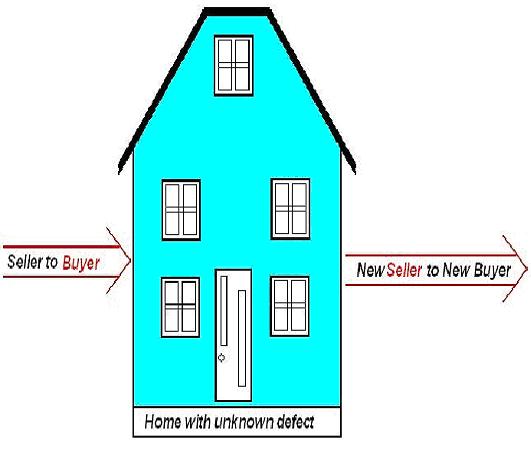
This coverage
feature is quite important since, even after an insured may end his possession
of some particular property, there is a separate, ongoing liability connected
to that property. A situation could occur in the near or remote future that
results in a party filing a lawsuit related to the insured’s involvement with
the property.
The opening of the
Coverage Statement advises that the insurance provided by this form is limited
by the applicable policy amount, any applicable deductibles, any applicable
maximum dollar limits found under Schedule A, the exceptions that appear in Schedule
B and any limits found in the policy’s sections on defense duty, exclusions and
conditions.
Note: This statement may create ambiguity or confusion as several items
under “Covered Risks” grant coverage even when limitations appear under Schedule
B.
Covered Risks
The policy covers
losses from 32 specified sources, up to the amount of insurance plus cost,
attorneys’ fees and expenses. These specified causes of loss are:
1. Someone else owning an interest in the insured’s title.
2. Someone else having rights affecting the
insured’s title arising out of leases, contacts, or options.
3. Someone else claiming to have rights affecting the insured’s title
arising out of forgery or impersonation.
4. Someone else having an easement on the land.
5. Someone else having a right to limit the
insured’s use of the land.
6. Defective title – the policy refers to six examples of policy defects
including invalid power of attorney signature or an errant administrative
proceeding. These examples are NOT inclusive.
7. Any of items 1-6 occurring above that occur after the policy date.
8. Someone else having a lien on the insured’s title. Examples of such
liens are:
·
A
mortgage
·
A
judgment, state, or federal tax lien
·
A
charge by a homeowner’s or condominium association
·
Lien,
occurring before or after the policy date, for labor and materials furnished
before the policy date
·
Unpaid
liens involving real estate taxes/assessments that were levied by some
government unit
9. Someone else having an encumbrance on the insured’s title.
|
Example: Bill and Molly Smith are selling their
home, which they have lived in for 25 years, to Sam and Lily Brown. A title
search required by the Browns’ mortgage company reveals that a mechanic’s
lien was placed against the Smith’s property four years ago. It was placed by
a subcontractor who alleged that he was not paid by the general contractor
the Smiths hired to replace their heating and air conditioning system. This
outstanding lien would need to be resolved before the title insurance company
would be willing to issue a new title insurance policy. Acceptable
resolutions might include:
|
|
10. Another entity claims rights that affect the insured’s title and the
claims arise out of fraud, duress, incompetency or incapacity.
11. The insured has no legal vehicular and pedestrian right of access to
or from the land.
12. The insured is forced to correct or remove an existing violation of
any covenant, condition or restriction affecting the land.
While this coverage overrides even any such exception found in Schedule
B, it does NOT extend to obligations involving maintenance, repairs or any form
or environmental protection or remediation.
13. The insured’s title is lost or taken because of a violation of any
covenant, condition or restriction which occurred before they acquired the
title.
14. Because of an existing violation of a subdivision law or regulation
affecting the land so that:
·
The
insured is unable to obtain a building permit.
·
The
insured is required to correct or remove the violation.
·
Someone
else has a legal right to, and does, refuse to perform
a contract to purchase the land, lease it or make a mortgage loan on it.
15. The insured is forced to remove or remedy existing structures or any
part of them – other than boundary walls or fences – because any portion was
built without obtaining a building permit.
|
Example: The Johnsons are extremely happy with the
luxury home they bought two months earlier. Mr. Johnson is particularly
pleased with their barn which the previous owners
had enlarged and customized as a basketball court and gym. However, they are
not so thrilled when they receive a notice that no building permit was provided
for the modified barn and it must be torn down. The title insurance policy
will cover this loss, but the Johnsons will still lose the coveted property. |
|

Note: Under items 13-15, when such instances
become liabilities due to appearance in Public Records, the insurer’s payment
is restricted to the total amount that appears in such records.
16. The insured is unable to secure a building permit or becomes
obligated to perform a remedy for a violation of a land subdivision law or
regulation. Protection extends when such a violation causes another party with
an interest in the covered land not to purchase, lease or secure a mortgage on
that land.
17. Title or any portion of the title is lost. The loss must be due to
an act of condemnation. This protection only applies when the action involves a
description of the land (or any portion of it) appearing in the public records
or when the action occurs both before the policy date and
the insured has no prior knowledge of the action.
18. The insured is forced to remove or remedy existing structures, or
any part of them, because of failing to secure a valid building permit.
Protection under this item is subject to both the deductible and maximum dollar
limit that appears in Schedule A.
Note: No protection extends to the impermissible construction
of encroaching boundary walls or fences.
19. The insured is forced to remove or remedy existing structures, or
any part of them, because they violate an existing zoning law or zoning
regulation. Protection under this item is subject to both the deductible and
maximum dollar limit that appears in Schedule A.
20. The insured cannot use the land because its use as a single-family
residence violates an existing zoning law or zoning regulation.
21. The insured is forced to remove existing structures because they
encroach onto a neighbor’s land.
|
Example: A family is in the midst of selling their
home. A survey finds that their large storage shed stretches six inches onto
a neighbor’s property. That neighbor (with whom they never got along) insists
that the shed be removed. The family is eligible for reimbursement for this
removal cost. |
22. Because the insured’s neighbor’s existing structures encroach onto
the land someone else with a legal right to do so refuses to honor its contract
regarding purchasing, leasing or providing a mortgage for the land.
23. The insured is forced to remove its existing structures because they
encroach onto an easement or over a building set-back line.
24. The insured’s existing structures are damaged because of the exercise
of a right to maintain or use any easement affecting
the land.
25. The insured’s existing improvements, including lawns, shrubbery, or
trees, are damaged because a right to use the surface of the land for the
extraction or development of minerals, water or any other substance is
exercised in the future.
Note: The protection in items 23, 24 and 25 apply
even when exceptions or reservations appear under Schedule B.
26. Someone else tries to enforce a discriminatory covenant (which is
based upon race, color, religion, sex, handicap, familial status or national
origin) condition or restriction that they claim affects the insured’s title.
27. Tax authorities levy additional, supplemental real estate taxes
against the land for any period before the policy date because of construction
or a change of ownership or use that also occurred before the policy date.
28. The insured’s neighbor builds, after the policy, structures which
encroach unto the land. This does not apply to
boundary walls or fences.
29. The insured’s title is invalid allowing someone else to refuse to
honor its contract regarding purchasing, leasing or providing a mortgage for
the land.
Related Court Case: Title Insurance Found Applicable To Defect
in Title - Not Defect In Marketability
30. Title to the property is lost when a previous property transfer is
invalidated. The invalidation could be created by exercise of several types of
law including federal bankruptcy, state insolvency or other laws related to
creditor rights to pursue debt obligations.
31. The described Land does not have a residence at address shown in the
schedule as of the date the effective date of the policy.
32. If attached, an applicable map fails to show the correct location of
the land as documented in public records.
DUTY TO DEFEND
This policy section
advises insureds that the carrier providing the coverage will only defend
against a situation that actually qualifies for coverage under the ALTA
Homeowner’s Policy of Title Insurance. It also refers to Condition 4. “Our
Choices When We Learn of A Claim,” with regard to terminating any defense
obligation.
|
Example: John is selling his home. Before a
pending sale is closed, John receives notice of a lawsuit. It was filed by
the son of a contractor who once did substantial renovation work on John’s
home 15 years earlier. The son has proof that the contractor
was never paid his bill of $7,200. The work was done for the home’s
previous owner and the son of the contractor just discovered the unpaid bill
while going through his deceased father’s papers. The Title insurer defends
John against the claim. |
|
EXCLUSIONS
The ALTA
Homeowner’s Policy of Title Insurance does not cover loss, costs, attorneys’
fees and expenses resulting from:
1. The police power of any governmental body and the existence or
violation of any law or government regulation. The only regulations are those
regarding the building, zoning, and land use, improvements on the land, land
division, or environmental protection. However, this exclusion does not apply
to the Covered Risks of 8.a., 14, 15, 16, 18, 19, 20, 23, or 27. shown above.
2. The failure of the insured’s existing structures, or any part of
them, to be constructed in accordance with applicable building codes.
|
Example: A home inspector finds that the home, when
built, was not properly reinforced to meet wind resistance standards (in an
area vulnerable to hurricanes). |
Note: This exclusion is inapplicable to Covered
Risk items 14 and 15
3. The right to take the land by condemning it unless a notice of
exercising the right appears in the public records at the policy date, or the
taking happened before the policy date and is binding on the insured if the
land was purchased without knowledge of the taking.
4. Risks:
·
The
insured has created, allowed, or agreed. This applies regardless of any
appearance in public records.
·
That,
unless they are recorded in the public record on or before the policy date, the
insured knew about but the insurer did not.
·
When
there is no loss to the insured.
·
That
occurs for the first time after the policy date. There are exceptions. This
exclusion does not limit covered risk 7, 8.e., 25, 26, 27, or 28.
5. When the value of the insured’s title is not paid.
6. Lack of a right:
a. To any land that is outside the area specifically described in the
schedule, and
b. That is in streets, alleys, or waterways that touch the land. There
are exceptions. This exclusion does not apply to covered risks 11 or 21.
7. Any title transfers that are prohibited under federal bankruptcy,
state insolvency or creditor rights laws. Preferable or fraudulent transfers
are also ineligible for coverage.
8. Property damage type losses of contamination, fire, flooding,
subsidence, earthquake, fracturing or vibrations.
9. Any party’s (person or entity) failure to property handle mineral,
water or substance rights of extraction and development.
CONDITIONS
1. Definitions
Easement
This is the right of someone else to use the covered land
for a special purpose, such as a utility easement (authorized assess to portion of property).
Related Court Case: Air Conditioner Triggers
Coverage Dispute – Illustrates the importance of how an easement is defined.
Estate Planning
Entity
Any entity that is created to handle the duties of estate
planning. The entity can be a trust. However, such entities have to be created
by a natural person.
Known
This refers to information about which the insured has
knowledge.
Land
The land or condominium unit described in the declarations,
plus any land (real property, as opposed to personal property) improvements,
such as a retaining wall.
Mortgage
This refers to a mortgage, deed of trust, trust deed or
other security instrument.
Natural person
A human being as well as any entity acting as a trustee.
Except for a trustee, a commercial or legal organization or entity is not
considered to be a natural person.
Policy date
The effective date shown in the declarations. However, if
the insured acquires an interest in the property covered after the effective
date shown in the declarations, the policy date is the date and time the
instrument was recorded.
Public records
This refers to records that give constructive notice of
matters affecting the insured’s title according to the statutes of the state
where the land is located.
Title
This is defined as the ownership of the insured’s interest
in the land.
Trust
This is limited to a living trust established by a human
being for estate planning purposes.
We/Our/Us
The insurance carrier issuing the policy.
You/Your
The insured shown on the declarations and any additional
insureds shown in a schedule attached to the policy.
2. Continuation of Coverage
a. The policy
covers the insured forever, even after that insured no longer holds title to
the property. However, the insured cannot assign the policy to other parties.
b. The policy
also covers the applicable entities described below:
·
Anyone who inherits the insured’s title upon the
death of the insured
·
The insured’s spouse who received the insured’s
title as part of a divorce settlement
·
A trustee or successor trustee of a trust to
whom the insured transferred title after the policy date
·
Those who are beneficiaries of the trust after
the insured’s death
·
Those who are authorized by law to receive the
insured’s title after the insured’s death
c. Any rights
and defenses that the insurer has against a previous insured under this policy
can also be asserted against the insureds listed in 2.b.above
|
Example: A daughter inherits a home from her
parents and a claim arises involving a title defect. The title insurer discovers
evidence of the parents’ material misrepresentation. It is serious enough to
void coverage. The Title insurer denies the claim and pursues a judgment to
have the coverage nullified. |
3. How to Make a Claim
a. Prompt written notice to the title
protection insurer is required when the insured becomes aware of a loss that
might be covered by the policy. That notice has to include the correct policy
number and the county and state where the land is located. A copy of the policy
is preferred and all information has to be sent to the insurer’s claims
department.
When the insured’s lack of prompt
notice results in the insurer not being able to adequately defend or resolve
the claim, the insured’s coverage may be ended or reduced. This is a substantial
penalty!
b. Proof of loss – The
insurer can require the insured to sign a written statement regarding the loss,
provide access to records that relate to the loss, or answer questions about
the claim under oath. Failure of the insured to comply
with these conditions could result in coverage being reduced or ended, but only
to the extent that the failure harms (prejudices) the insurer’s ability to
resolve the claim or defend the insured.
4. Our Choices When We Learn of a Claim
a. The carrier is in
control and can do one or more of the following:
1) Pay the claim as
presented.
2) Negotiate a
settlement with the appropriate parties.
3) Elect to take
some sort of legal action that is related to the claim.
4) Pay the insured
whatever the amount that is required by the policy.
5) End all coverage
by paying all of the following:
·
The actual loss that is the result of a covered
risk
·
Any attorney’s fees, costs, and expenses that
have been incurred up to the time that the coverage is ended but only those for
which the carrier is required to pay
6) This applies
only to coverage described in covered risks 16, 18, 19 or 21. This coverage is
ended by the paying of that coverage amount for that particular covered risk.
Attorney’s fees, costs and expenses incurred up to the time the coverage is
ended also must be paid by the carrier.
7) End all coverage
by paying all of the following:
·
The policy amount that is in force
·
Any attorney’s fees, costs, and expenses that
have been incurred up to the time that the coverage is ended but only those for
which the carrier is required to pay
8) Take other appropriate action.
b. The choice of 5),
6) or 7) above, ends all of the carriers obligations
for the claim. This means that the carrier will no longer defend the insured.
c. The carrier can
choose to take any action described above even if it does not believe there is
coverage. Doing so does not mean the carrier is giving up its right to deny
coverage.
5. Handling a Claim or Legal Action
Under a Title Insurance Policy, the
insured and insurer have the following obligations regarding claims and
lawsuits:
·
The
insured is required to cooperate with the carrier in handling any claim or
legal action, and must give the carrier all information
relevant to the claim. When the insured’s lack of cooperation results in the
carrier not being able to adequately defend of result
the claim, the insured coverage may be ended or reduced.
Related Court Case: “Insureds Fail To Submit To Examination
Under Oath”
·
The
carrier is required to reimburse the insured only for those settlement costs,
attorney’s fees and expenses for which it provided advance approval.
·
The
carrier is in charge when it brings or defends a legal action for the insured.
It chooses the attorney and decides how far it will appeal any decision. The
carrier is not required to pay any the claim until the legal action is
resolved.
Note: This could result in considerable delay and
hardship on the insured.
The carrier can choose to take legal or other action under this policy even it does not agree on the coverage issues. Doing so does
not mean the carrier is giving up its right to deny coverage.
6. Limitation of Our Liability
a. The insured must first pay any
deductible, if any, but then the carrier will pay but the payment will not exceed
the least of the following:
1) The insured’s actual loss.
2) When a claim is because of
covered risk 16, 18, 19 or 21, only the maximum dollar limit of liability for
that particular covered risk.
3) The in-force policy amount.
Costs, attorneys’ fees and
expenses which the carrier is obligated to pay are added to whichever of the
above are paid.
b. The policy’s coverage will be
increased by 10% of the applicable Policy Amount and the insured may use a
claim’s discovery date or final settlement date whenever, per Conditions
Sections 4.a.3) and 5.e.,if the insurer is unable to
establish a clear title.
c. If the carrier is notified of a
claim and removes the cause of the claim with reasonable diligence, the
carrier’s obligation for the claim ends, including any obligation for loss the
insured had while the carrier was removing the cause of the claim. If the
insured cannot use the land because of a covered claim, the carrier will
reimburse the insured for the rental cost of a substitute residence but only
one that is similar to the current one. This payment will be made until the
cause of the claim is removed or the carrier has paid the insured the amount
required by the policy. If the claim is covered only under covered risks 16,
18, 19 or 21, the payment required by the policy is the amount of insurance
then in force for that particular type of covered risk.
The carrier will also reimburse
the insured for the cost of relocating personal property as long as the cost is
reasonable. This reimbursement is limited to transporting the personal property
up to 25 miles from the land, and the repair of any damage to the personal
property as a result of its relocation. Reimbursement is limited to the value
of the personal property before it is relocated.
Note: The value will be its legal value which will be calculated on
an actual cash basis rather than replacement cost.
d. Any payment
made by the carrier reduces the amount of coverage. Payments made for covered
risks 16, 18, 19 and 21 reduce the carrier’s aggregate limit for those items.
However, costs, attorneys’ fees and expenses do not reduce any limit or amount.
e. If the
carrier issues or has issued a policy to the mortgage holder that is on the
insured’s title and the carrier did not issue a policy to the carrier against
the mortgageholder then all of the following apply:
1) The carrier has the right to pay
an amount due to the insured to the mortgage holder.
2) Any amount paid to the mortgage
holder will be subtracted from the policy amount.
3) Any amount paid to the mortgage
holder for claims under items 16, 18, 19 and 21 will reduce the aggregate limit
for each of these items.
f. If the
insured does anything to affect any right of recovery against someone else, the
carrier can subtract from payment the amount by which the insured reduced the
value of that right.
7. Transfer of the Insured’s Rights to the Carrier
a. When the
carrier settles a claim, the insured agrees to transfer all rights against any
person or property related to the claim to the carrier when asked. The insured
cannot do anything that would affect these rights, and
must allow the carrier to use their name in enforcing these rights.
b. The carrier
is not liable to the insured if the carrier opts not to pursue these rights or if
they do not recover any amount that might be recoverable from another party.
c. If the
carrier recovers money from another party, the money will be paid in the
following order:
1) The carrier
will be reimbursed for costs, attorneys’ fees and expenses the carrier made to
reinforce its rights.
2) The insured
will be paid for any loss that it has not already collected.
3) The carrier
will be paid for any money paid out because of the claim.
4) Any money
left after these payments goes to the insured.
d. If the insured
has rights from contracts from other sources to recover all or part of the
loss, then the carrier assumes those rights, even if those contracts provide
that those obligated have all of the insured’s rights. These other sources
could include indemnities, guaranties, bonds or other types of insurance
coverage.
Related Court
Case: Subrogation Upheld In Property-Liability Case
8. Entire Contract
The policy and its endorsements
constitute the entire contract between the carrier and the insured. To determine
the meaning of the policy, the insured must read the entire contract. The
carrier must agree in writing to any changes. If the insured makes a claim,
that claim is subject to all the terms of the policy.
9. Increased Policy Amount
The policy amount shown in the schedule
will be increased by 10% each year for the first five years following the
policy date, up to 150% of the policy amount. The increase takes effect each
year on the anniversary date of the policy.
Related Article: Increased Policy
Amount Provision
10. Severability
If any part of the title insurance
policy is held to be legally unenforceable, the carrier and the insured agree
that the rest of the policy remains enforceable.
Note:
This provision could have been written more clearly. Its intent is, in case one
or more parts turn out to be illegal or void in a given jurisdiction, any
remaining, legally valid parts remain in force. Without this provision, the
defect of a part could, potentially, render the entire
agreement void. On the other hand, a contract’s severability does not allow
contractual runarounds.
Related Court Case:
Severability Clause Could Not Serve To Avoid Policy Exclusions
11. Arbitration
Either the carrier or the insured can
demand arbitration if permitted in the state where the covered land is located.
The arbitration will decide any dispute between the carrier and the insured and
is binding on both. The arbitration shall be conducted according to the Title
Insurance Arbitration Rules of the American Arbitration Association, but the
insured may choose current Rules or those Rules in effect on the effective date
of the policy. The insured can get a copy of these Rules from the carrier. The
law used in the arbitration is the jurisdiction where the land is located. The
arbitration award may be entered as a judgment in the proper court.
Related Court Case: Arbitration Cannot Be Mandated
Where Policy Says "Optional" – Illustrates how the applicability of
arbitration depends on a given policy’s provision wording.
12. Choice of Law
This policy is governed by the state law applying to the
land insured under this policy.
SCHEDULE A
This schedule
documents the applicable policy premium, policy amount (at the time the policy
is issued) and the policy effective dates. The schedule also includes areas to
enter the covered property’s street address, insured’s name, that party’s
insurable interest in the covered property and a description of that property.
The schedule also
includes areas that apply to covered risks (see above) 16., 18., 19. and 21.
The information that appears in the schedule is the percentage or dollar
deductible (whichever is the lesser amount) that applies to each covered risk,
and the insurance company’s maximum dollar of coverage it will apply to each coverage
for a single, eligible loss.
SCHEDULE B
This schedule
documents any situations that, along with the policy’s separate exclusion
section, are ineligible for coverage under the title policy.
|
Example: June Smith has a
title policy with a Schedule B entry. It lists $3,500
lien for Jacoby Bros. Carpentry. A decade earlier, June refused to pay for
work from Jacoby Bros that she felt was substandard. After the dispute, the
concern went out of business. June’s attorney stated it would still be prudent
to document this item, even though the issue was likely dead. |
|