LAND SURVEYORS PROFESSIONAL LIABILITY COVERAGE ANALYSIS
(July 2024)
Land surveyors are highly educated, skilled professionals. They develop information, create reports and maps that others rely upon.
Their work is used to establish property boundaries, determine where to locate structures, and assist in assessing various land features. If the land surveyor’s computations are inaccurate any subsequent action taken by others because of that inaccurate information may need to be redone, which can be very costly and lead to lawsuits.
|
|
Example: Fred decides to add a luxury, in-ground pool to his
home's backyard. He lives in a very old, upscale and heavily-wooded
area in town. A builder tells Fred that he would need to clear out several
very large trees that are near the back of his lot. Fred hires Metro
Surveyors to verify his lot boundaries. Metro
surveys the lot and gives Fred a final report. Based on their report, Fred
has several very large evergreens cut down and removed. Two weeks later, Fred
is confronted by an irate neighbor. The neighbor hired his own surveyor who
was able to verify that the large trees were on the neighbor's property, not
Fred's. Fred was sued for the value of the loss of four Norway Spruce trees.
Fred settled the loss with his neighbor. He then sued Metro Surveyors. The
lawsuit was defended and settled by Metro's insurer. |
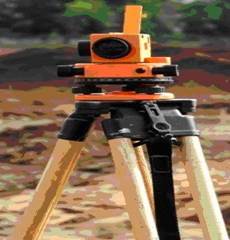
There is no standardized professional liability coverage form for land surveyors professional liability so the following analysis is based on forms from various markets that provide the coverage.
Related Court Case: A Game of Inches: A Surveyor’s Costly Mistake
INSURING AGREEMENT
The policy is a contract between the named insured and the insurance company. It is issued based on the application provided and representations the named insured has made. Premium payment is mandatory if this policy is to be in effect.
Note: Some carriers require that the application be treated as a part of the policy. This allows for any discrepancies to be used as warranties which may void coverage.
DEFINITIONS
The Definitions section of any policy must be carefully reviewed. A word or phrase is defined when the insurance carrier wants to control how the term is defined. This can clarify coverage, expand coverage, and restrict coverage. When comparing various policies, this is a very important section to consider. Here is a sampling of some of the more common definitions:
Circumstance
This might be called occurrence in other forms. It is an
error, omission, or negligent action which an insured could reasonably believe would
result in a claim for damages.
Claim
This is a very important definition because this is a claims-made policy. There are often multiple definitions for a claim.
· The actual suit or summons alleging an error, omission, or negligent act.
· An oral or written allegation that the named insured has committed an error, omission, or negligent act.
· A demand, of any type, that the named insured pay damages because of an error, omission, or negligent act.
· A circumstance (see above definition).
The earliest date on which any of these occurs is considered the first claim date. All subsequent actions resulting from that first claim date are given the same claim date.
|
Example: Benjamin receives an anonymous tip that Mark, who has
worked at Benjamin’s firm for two years as a land surveyor, is not licensed.
Benjamin reviews Mark’s personnel file and contacts the licensing board. The
tip is verified so Mark is released. On 4/15/24 Benjamin notifies his
insurance carrier of the incident. This is considered a claim. Benjamin then
begins reviewing all of Mark’s projects. If any suits, demands, or
allegations arise from Mark’s work, the claim date is 4/15/24. |
|

Claims Expenses
Fees charged by an attorney and other fees, costs or expenses directly related to the investigation, adjustment, defense, or settlement of a claim. This does not include any of the costs of the insurance company’s employees or its office expenses.
Claims expenses may be the responsibility of the insurance carrier or the insured.
Companion Claim
All claims related to a previously reported claim is considered a companion claim. Its reporting date is the
same as the initial claim and is combined with the initial claim when
developing a per claim limit.
Damages
These are judgments, awards, settlements, or moneys that are legally charged or assessed against the insured because of an error, omission, or negligent act. Not included are fees, charges, interest, or expenses.
Note: Some forms
also exclude exemplary/punitive awards from their definition of damages.
Insured
Besides the named insured, current and former partners, executive officers, directors, shareholders, and employees are insureds. The latter gain insured status only when the person’s acts relate to performing duties for the named insured.
Some policies extend this definition to include spouses, those persons or entities added by endorsement, leased professional staff, or co-venturers.
Note: It is very
important to pay attention to this definition because it does vary by carrier.
Policyholder
This is the insured named on the declarations.
Professional Services
These are only surveying services, performed by any insured while acting in the scope or capacity of a land surveyor.
Note: This means that professional engineering and architectural services would not be considered professional services under this policy.
We, us, and our
When any of these terms is used in the policy it refers to the insurance carrier providing the coverage.
Wrongful Act
Some carriers provide coverage for wrongful acts. These are
defined as any actual or alleged negligent act, any error or omission committed
by the insured during the performance of professional services.
You and Your
When any of these terms is used in the policy it refers to the named insured listed on the policy's declarations.
COVERAGE
Professional Liability
The insurance company agrees to pay on the insured’s behalf damages for which it becomes legally obligated to pay from a claim resulting from errors, omissions, or negligent acts. Those acts must be directly related to the performance of land surveyors professional services.
The error, omission or negligent act must take place in the coverage territory after the retroactive date but prior to the policy expiration date. The claim must be brought during the policy period or an extended reporting period.
Defense costs or claims expenses for such claims are paid by the insurer only until the limit of insurance is exhausted by payment or deposit with the court.
Related Article: Types of Surveys
Defense and Settlement
These costs may be shown on the declarations as a separate limit of insurance. This is very important. Defense protection that exists outside of the limits of insurance is preferable because it maintains the amount of insurance available to pay for the actual damages. If defense is provided at a set limit, when that limit is exhausted the insured must take over those expenses and they can become quite expensive. The insurance company normally requires that it continue to play a part in the defense even if it no longer is paying for it.
|
|
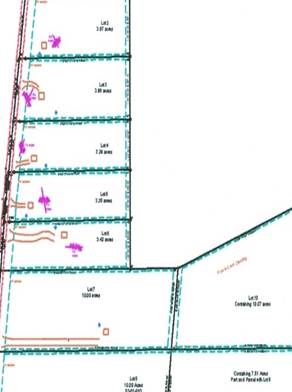
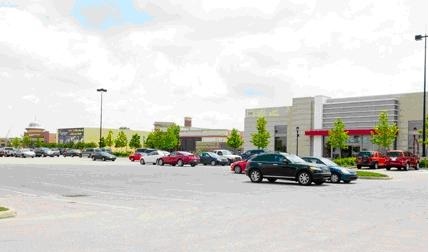
Example: Land Mappers, Inc. is sued by Mega Mall. Mega Mall built four structures on land that had been surveyed by Mappers. According to a neighboring landowner, one of the structures is encroaching on their property and they want it removed. Mega Mall sues Mappers for the cost of tearing down the structure, its legal expenses, and the cost of rebuilding the structure within the appropriate borders. Mappers has a professional liability limit of $3,000,000. The insurance company believes this is a defendable action. The cost to defend is $400,000 and the damages given to Mega Mall are $2,750,000.
|
The insurer is never obligated to defend, investigate, or adjust any claims under either of the following circumstances:
· The demand is within the amount of the deductible. (The insurer may require that they be kept informed of such cases in case they are brought into a case later.)
· The claim is excluded or not otherwise insured under the policy. The insurer will not pay expenses or costs incurred with respect to such claims.
Related Court Case: Defense Costs Incurred By Insured Before Reporting Claim Held Not Covered
Permission to Settle
Some insurers will provide a permission to settle condition or an option to purchase such an option. This condition restricts the insurer’s authority to settle or compromise any claim or suit only with the written consent of the insured. This provision exists because professional liability coverage insures against claims that may affect the reputation of the insured entity. An insured has a great deal at stake regarding how claims are handled.
Often these conditions have a penalty attached to encourage the insured to settle. If the insured disagrees with an insurer's desire to settle and, later, the claim or suit is settled for an amount greater than what the insurer originally offered, the insurer is obligated to pay only the amount of the original offer.
|
|
|
Example: Smith & Smythe Surveyors, Ltd. is a 45-year-old firm
that is insured by Expeediunt Specialty Insurance.
S&S is sued by Hyperville
General Contractors. Hyperville alleges that
S&S made gross blunders when it staked out a major site for the first
phase of a shopping and residential development.
S&S contends that Hyperville was at fault and
is just looking to set its firm up as scapegoats. Expeediunt
offers to settle with Hyperville for $495,000, but
S&S, concerned about its legal position and reputation, refuses
permission for the settlement. Six months later, S&S tires of the legal
wrangling and agrees to settle for $610,000. However, because of their
earlier settlement refusal, Expeediunt must pay
only its original offer while S&S must pay the excess $115,000 ($610,000
- $495,000). |
Exhaustion of Limits
Once the limit of insurance has been exhausted in the payment of damages, claims or settlements, the insurer’s obligations, and duties to defend are at an end.
Admission of Liability
The insured cannot admit any liability, make any payment, accept any obligation, incur any expense or in any other way settle or defend the claim or suit—except at the insured’s own expense.
Limits for Defense Expenses
Typically, there is a separate limit or amount for defense and defense expense. One policy limit will be set for claims or damages and a separate amount for defense costs. Another approach that has been noticed in relation to defense costs is a combined limit of insurance for the total of both damages and defense expense.
Both approaches pose significant limitations. Land surveyor claims are typically complicated and long term in nature. Defense costs may equal or even substantially exceed the amount of damages claimed. Provisions that cap the amount of defense costs pose a serious restriction on the insured's available protection and should be evaluated carefully.
CLAIMS-MADE PROVISIONS
The only damages covered are those that result from wrongful acts. The wrongful act cannot have occurred before the Retroactive Date shown in the declarations. In cases where no Retroactive Date is shown, the policy inception date becomes the retroactive date.
|
Example: A
policy is effective 2/1/24. The Retroactive Date is shown as 2/1/23. If a
wrongful act takes place on 3/1/23, after the Retroactive Date, but the claim
is first reported on 3/1/24, it is covered by the 2/1/24 policy. However, if
the policy does not have a Retroactive date, an offense that occurs 3/1/23,
prior to the policy inception, would not be covered. |
All claims for injury must first be made against an insured during the policy period or during the Extended Reporting Period if the Extended Reporting Period coverage option has been purchased.
A claim is considered to have been made when either the notice of the claim is received by an insured and reported to the insurer in writing or when a claim is made directly to the insurer in writing, whichever happens first.
If an insured is notified of a claim during the policy period, the insured has up to 30 days from the end of the policy period to report it to the insurer. The 30-day extension period for reporting does not apply to any claim that is covered by any renewal or subsequent coverage. Nor does the 30-day extension apply if the policy's limits have been exhausted. In that case, the reporting date is moot as no coverage would be available.
Automatic Extended Reporting Period
Generally, when an insurer terminates coverage, it allows an additional amount of time for an insured to report a claim that is eligible for coverage in the terminated policy period. Typically, the reporting extension is 30 to 60 days after the policy's expiration date.
Optional Extended Reporting Period
Insurers often allow an insured to purchase additional reporting period coverage from one year, up to three years. The premium charge is usually a percentage of the last annual premium of coverage and is also based on the insurer’s premiums effective as of the date of the expiring policy. When the optional, extended coverage is bought, it is:
· Subject to a new set of policy limits
· Requires separate payment to remain in force
· Subject to the same policy conditions and terms
· Cannot be cancelled once the premium is paid
In some instances, this policy provision MAY include information on the length and premium charge for the available extension options. Premiums for extensions are considered as immediately and fully earned.
Related Court Case: Retroactive Date Identical To First Day Of Policy Effectively Eliminated Coverage For Prior Acts
EXCLUSIONS AND LIMITATIONS
Exclusions and limitations vary widely between insurers. A thorough evaluation is required to ascertain their full impact on an insured's available coverage. The following (which are numbered only for sake of reference) are exclusions commonly appearing in land surveyors professional liability policies. In general, a land surveyor liability policy does not cover losses caused by the following:
1.
Other Professional Services
Loss involving the performance of services not customary to a land surveyor (such as design, architectural or construction work) is excluded. An endorsement may be added to provide such coverage. But often a separate professional liability policy must be purchased for that exposure.
2.
Types of Activities
Companies may limit exposure by excluding activities. These will vary by company but examples of such exclusions are:
· The making of, or absence of, surveys of the subsurface conditions or ground testing.
· Activities in connection with tunnels or bridges but only if the tunnel or bridge exceed a certain length.
· Coverage for excluded activities can often be bought back through endorsements. The construction, erection, fabrication, installation, manufacture or demolition of any building or structure is not covered.
· The manufacture or design of any product, equipment or goods supplied or sold by the insured or by licensees or representatives of the insured.
3.
Bankruptcy
If the insolvency or bankruptcy of the named insured results in a loss, there is no coverage.
4.
Advice
There is no coverage regarding advice either given or not given related to insurance, suretyship, or bonding.
5.
Missed Deadlines
The failure to complete surveys, drawings, specifications, or schedules of specifications on time, or the failure to act upon shop drawings on time is not covered. However, this exclusion does not apply if such failures are the result of an error, omission or negligent act in the surveys, drawings, plans, specifications, schedules of specifications or shop drawings.
6.
Owned or Rented Real or Personal Property
Any loss related to the ownership, maintenance, use or repair of any real or personal property owned by or rented to an insured is excluded.
7.
Insured's Own Work
Losses related to the performance of professional services on projects, properties or structures owned, managed, operated or controlled by the insured or in which the insured has an interest are not covered.
8.
Contractual Liability
The liability of others assumed by any insured under a contract or agreement is not covered. This coverage may be bought back on a separate endorsement.
Note: Coverage for contractual liability should be added separately, particularly when the insured has been a party to specific "hold harmless" agreements exposing the insured to specific consequences.
9.
Express warranties or guarantees
Any claim related to the insured exceeding its estimates of probable construction cost or cost estimates is not covered.
10.
Intentional Actions
Dishonest, fraudulent, criminal, or malicious errors or omissions, or those of a knowingly wrongful nature committed intentionally by, or at the direction of, any insured are not covered.
11.
Employee Injuries
Bodily injury due to sickness, disease, or death of any employee of any insured while working for any insured is not covered. The exclusion also applies to such incidents under which any insured (or his insurer) may be held liable under any workers compensation or disability benefits law or any similar law.
12.
Related Businesses
Claims made against an insured by a business enterprise (or its assignees) that is wholly or partly owned, operated, or managed by that insured are not covered. Claims by an employee (or assignees) of that business enterprise or by an employee (or assignees) of a contractor or subcontractor of that business enterprise are also not covered.
13.
Punitive or Exemplary Damages
Such endorsements would only be used in jurisdictions that permit insurance protection of disciplinary damages.
Related Court Case: Punitive Damages Sought In Underlying Action Not Insurable
14.
Nuclear Activities
Any damages resulting from any nuclear activities such as radiation, reaction, contamination, leakage, storage, transportation, or removal.
15.
Pollution
Any pollution exposure is not covered except when negligently caused during performance of covered duties.
16.
Prior Knowledge
Claims arising out of circumstances that were previously known to an insured (but not reported) are not covered if the insured had that knowledge prior to securing the coverage provided by this policy.
17. Employment-related Practices
Claims involving unfair hiring, firing or discrimination are not
covered. This exclusion applies if the claims regard potential employees,
active employees, or inactive employees.
18. Fines and Penalties
There is no coverage for any fines or penalties that may be imposed
against an insured.
DEFINITION OF INSURED
Generally, a Land Surveyor Professional Liability policy defines an insured as the named insured. Also qualifying as insureds is any partner, executive officer, director, stockholder, or employee of the named insured while performing their respective duties.
Some policies may provide a broader definition by including one or more of the following:
- Former partner, executive officer, director, stockholder, or employee of the named insured while performing their respective duties.
- The spouse of an insured but only if that spouse could be held legally liability for actions covered by this policy.
- Leased professional staff operating under the named insured’s guidance.
Note: Some policies define a named insured as a "policyholder." The distinction is generally regarding notification, termination and other provisions that address a policyholder’s specific duties.
LIMITS OF LIABILITY
Typically, two limits are shown in the declarations. The limit of liability available for an eligible loss is the amount stated as "limit of liability per claim." The company's limit of liability because of all claims made during the policy period may not exceed the amount stated in the declarations as the "aggregate limit of liability."
Related Court Case: Aggregate Limit Rather Than Each Claim Limit Ruled Applicable
Besides these limits, an applicable deductible also appears on the declarations. Two or more claims resulting from a single error, omission or negligent act are treated as a single claim. When such claims arise, they are all considered to have been made against the insured as of the date that the initial claim is made against the insured.
|
Example: Genericaville Surveyors Group is insured by a Land Surveyors Professional Liability policy from Insureland General Casualty. The policy, effective 2/10/24 to 2/10/25, has a $1,000,000 Limit of Liability Per Claim and a $2,000,000 Aggregate Limit of Liability. Genericaville
was sued by several parties connected with a local university's multi-million
dollar building expansion. Acme Builders sues Genericaville
for $530,000 on April 21, 2024, Piddly Development sues for $389,000 on May
23, 2024 and Meddlesome Mortgage Group sues for
$410,000 on June 9, 2024. Genericaville notifies Insureland of all the claims as soon as they receive the
paperwork, expecting their policy to respond to three different claims. Insureland says that it will handle the claims, but since
they arise out of the same building project and allege damages from the same
set of circumstances, they will be handled as a single claim, reported on
April 21. Although the three parties are claiming total damages of
$1,329,000, they will be subject to the individual loss limit of one million. |
|

The limits of liability and the policy provisions accompanying them should be reviewed very carefully. Many policies will include the cost to defend a claim within the liability limits. This means that every dollar spent on defending a case reduces the limits available to pay any awarded damages.
For those who have never dealt with this type of policy, it is important to understand that the limit shown is the maximum that will be paid for a claim.
Under a CGL where defense is unlimited, the defense costs can exceed the potential damages and the insurer must continue to defend a claim. Under the Land Surveyors Professional coverage, once the limit of liability is exhausted through the defense payments, the insurer is no longer obligated to continue defense or pay a judgment. At that point, the insurer must assist in transitioning the claim’s defense to the insured.
Setting a proper limit of liability is critical. The insured must understand the legal climate surrounding professional liability and errors and omissions issues. The agent/broker and insured should investigate the legal expenses involved in just one professional or E&O legal suit and factor in the frequency potential of the risk plus the amount of payment of the actual claim itself. Defense costs may be as great as or greater than the actual damages named in the claim. Some insurers provide a separate limit for defense. This can be very useful but review the wording carefully. Is it truly a separate limit or is it a sublimit? If it is a separate limit, it stands alone and does not impact the limit of liability available to pay damages. A sublimit defense amount sets a maximum amount of the limit of insurance that can be used for defense but every dollar spent on the defense reduces the limit available to pay any settlement.
|
|
|
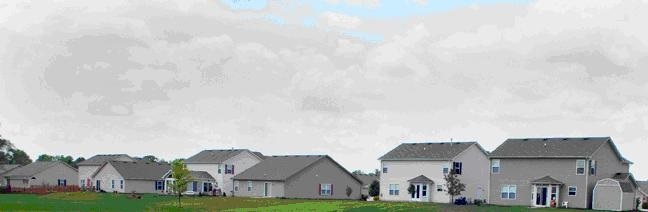
Example: Percy Surveyors provided all surveying services for a 125-unit housing development. The perimeter surveying has been called into question and all 25 homes on the perimeter have filed suit against Percy. Although there are 25 separate claimants, this is considered a single claim. Percy’s per claim limit is $1,000,000. When all the suits are finally settled the costs are as follows: Total defense costs: $750,000 Total award: $ 1,500,000 Scenario 1: All defense costs are included within the limits. The $750,000 defense costs are paid first so only $250,000 is left to pay the award. Percy must pay $1,250,000. Scenario 2: The sublimit for defense costs is $250,000. The insurer pays the $250,000 for defense and then Percy must take on the defense costs. He pays $500,000 for defense. The insurer then pays only $750,000 of the award. Percy must pay the remaining $750,000 award. Scenario 3: The defense cost limit is a separate limit of
$250,000. The insurer pays the $250,000 for defense and then Percy must take
on the defense costs. He pays $500,000 for defense. The insurer then pays
$1,000,000 of the award. Percy must pay the remaining $500,000 award. |
Like other policies, professional land surveyors professional liability policy limits are not affected by:
· The number of parties appearing (or qualifying) as insureds
· How many claims are submitted against an insured (related to a single, covered incident), including, if applicable, all companion claims
· The timing of such claims
· The number of entities claiming damages
DEDUCTIBLE
The deductible is applied to each claim. Only when the amount of the claim or damages exceeds the deductible is coverage under the insurance policy triggered.
In cases where the policy provides a per claim coverage that combines both damages and claims costs/expenses, the deductible is applied only to the amount of damages and so only when actual damages exceed the stated deductible amount is coverage triggered.
Some policies have a condition that requires the insured to make payment of any deductible within a stated period.
|
Example: Halcyon Surveyors Ltd. filed a claim with Pacificate Quality Assurors, Inc. Pacificate’s Surveyors policy contains a provision that the deductible must be paid within 15 days of getting a written, formal notification. A couple of months after filing their claim, Halcyon receives a request, dated 4/3. Halcyon must send in payment for its deductible to Pacificate by 4/18. |
The deductible amount does not reduce the limit of insurance available. So, if the policy is for $1,000,000 per claim and the deductible is $10,000, the entire $1,000,000 (if needed) is available after the payment by the insured of the deductible.
CONDITIONS
Insurers advise the policyholder of its right
to examine its books and records
as well as require reports regarding information used to secure the coverage.
The insured has a duty to promptly comply with such requests, whether they
occur during or after the policy period.
Insurer Notification
As soon as practicable, after receiving information as to an alleged error, omission or wrongful act, written notice must be given to the company, along with full explanation of any claim arising from the wrongful act, error, or omission. If suit is brought, the insured must immediately forward to the company every summons or other process received by the insured.
Note: Insurers typically include a current reporting address as part of their policy. This issue is so important that some forms may include a separate condition, specifically advising the policyholder of a duty NOT TO DELAY reporting.
Related Court Case: Late Notice Exclusion Did Not Require "Prejudice"
Cooperation
The insured shall cooperate with the company and, upon the company's request, attend hearings and trials and assist with settlements, securing and giving evidence, obtaining the attendance of witnesses, and participating in the conduct of suits. Except at the insured’s own expense, the insured may not voluntarily make any payment, assume any obligation, or incur any expense without, first, getting the insurer's express (typically written) approval.
Related Court Case: Insurer's Untimely Disclaimer Of Coverage Obligated It To Defend Or Indemnify Insured
Settlement
Some insurers agree not to settle any claim without the consent of the insured. However, there are consequences when an insured refuses to approve a settlement recommended by the company. After an insured chooses to contest the claim or continue legal proceedings, then the insurer's liability for the claim is financially capped at the amount that the claim could have been settled plus the costs and expenses incurred with its consent up to the date of the insured's refusal.
Legal Action Against Insurer
The insured cannot bring legal action against the insurer unless the insured has fully complied with all the provisions and conditions listed in the policy. If such an action is deemed necessary, it must be done within one year of such time as the insured has right to do so.
Fraudulent Claims and Misrepresentation
If the insured knowingly makes any claim that is false or fraudulent, coverage is voided. Coverage is also voided if statements on the application are false.
Other Insurance
The policy responds on an excess basis over all other valid and collectible insurance. It may not be called on to contribute with other policies. However, this coverage does not apply at all if the other insurance is for prior acts covered under a previously issued claims-made policy. There is also no coverage for a claim at a project if there is project-specific coverage for that project.
Changes
Modification of the policy (coverages or limitations) can only occur via an authorized endorsement and the insurance company must issue the endorsement.
Arbitration or Other Mediation
Some insurers include a policy provision concerning disputes between it and an insured. In such cases, the policy may require submitting the argument to an arbitration panel or other form of mediation. When the provision is used, the decision is usually binding on both parties.
Arbitration/Mediation Deductible Credit
Because of the high deductibles used in Land Surveyor coverage, some policies may offer a repayment or a credit for a policyholder’s deductible for a claim resolved through mediation.
Policyholder Actions
A policyholder is prohibited
from actions that may prejudice the insurer’s rights, including admitting to
liability, taking actions that could increase damages sought or harming efforts
by the insurer to seek contribution for damages from other parties.
Policy Assignment
A policy may not be assigned (transferred) to another entity without the express permission of the insurer.
Subrogation
When the insurer has paid a claim under this insurance policy, it is entitled to make recovery from any other negligent party. As such, the insured's rights of recovery are transferred to the insurer and the insured must do everything possible to secure those rights and assist and cooperate in the recovery efforts of the insurer.
Cancellation
If the policy is cancelled at the insured’s request, the computation is usually based on earned premium plus a short-rate penalty. The insurer may cancel on a pro-rate basis, usually with not less than 45 or 60 days written notice to the insured (or less than 10 days notice if cancelled for nonpayment of premium).
This is another area where lack of form standards requires a careful review. Individual company policies may vary substantially in the amount of advanced warning it provides an insured before terminating coverage. A form's cancellation provision should be discussed with an insured to be certain that the amount of notice is considered adequate.
Policy Period
The policy period is shown in the declarations. A claim may be considered for coverage if the wrongful act that triggered the claim occurs after the stated retroactive date and if the claim is first made during the policy period. If no retroactive date is shown, then the policy inception date is used.
If a prior policy existed, the period for making a claim against the prior policy must have expired. Another requirement is that no insured, at the effective date of this policy, had any knowledge of a pending claim or of any circumstances that might lead to a claim.
Territory
The policy territory is usually
defined as the
APPLICATION
The application is a very important part of a professional liability or errors and omissions policy. The document contains all the underwriting information needed to evaluate a risk and all of the information is deemed material to coverage. In other words, all statements and information provided by the applicant must be accurate and complete since it will comprise part of the policy. Misstatements and misrepresentations will be considered material and could result in terminated or voided coverage.
The application for land surveyors professional liability insurance must be completed and signed. It usually requires the following information:
· Name and address of the applicant
· Full names of all partners when they became qualified as land surveyors
· The length of time the applicant has been practicing as a principal
· Total number of field persons and the total number of office staff
· Date the firm was established
· Whether the applicant is licensed for surveying or civil engineering (including license number and date of issue)
· Whether the applicant engages in activities other than surveying or civil engineering - other activities must be thoroughly explained
· Whether any application for this form of insurance has ever been declined or any such insurance has ever been cancelled
· Whether any claims have been made during the past five years against the applicant or any of the present partners or, to the applicant's knowledge, against any past partner
· Whether the applicant anticipates any claim being brought against him/her in respect to any negligent act, error, or omission on the part of any partner or employee of the applicant or a predecessor in business
· Amount of insurance required
The insured's signature on the application certifies that the statements and information provided in the application are true and agrees that the declaration is the basis of the contract, if issued. The applicant also declares that no material facts have been suppressed or misstated.
OTHER LIABILITY EXPOSURES
The professional or errors and omissions policy does not cover the insured’s exposure to general liability from daily operations. That type of protection should be handled by other policies, such as a commercial general liability (CGL) policy. In addition, a commercial umbrella to protect against any gaps in coverage and to provide an extra layer of protection should be considered.
Related Articles:
ISO CG 00 01 and CG 00 02–Commercial General Liability Coverage Forms Analysis
AAIS Commercial Liability Coverage Form Analysis
CU 0002AAIS Commercial Umbrella Liability Coverage Analysis
CU 00 01–ISO Commercial Liability Umbrella Coverage Form Analysis