PERSONAL UMBRELLA LIABILITY PROGRAM UNDERWRITING CONSIDERATIONS
(July 2022)
OVERALL ELIGIBILITY
Vehicle/Craft
Most parties who qualify for underlying auto coverage, such
as the ISO Personal Auto Policy, are eligible for coverage under the ISO Personal
Umbrella Liability Policy Form. This is also true of operators who are insureds
in good standing under recreational vehicle, motor home and watercraft
liability policies. The DL 98 01–PUP Form is broadly designed to provide excess
coverage for most personal driving exposures such as:
·
Personal transportation (including cross-country
travel)
·
Commuting
·
Carpooling (though with restrictions on newer,
ridesharing trends)
·
Limited business use
·
Limited use of substitute vehicles
·
Personal use of recreational vehicles,
motorcycles, and motor homes
·
Other motorized methods of travel, including
certain types of boats.
Note: The types
of vehicles or craft that may be ineligible for coverage are, typically,
excluded by the applicable primary carrier's rules or forms.
Comprehensive Personal Liability (Homeowner Section II)
The DL 98 01–PUP is meant to provide excess coverage for
liability related to residential ownership and for loss involving personal
injury. Again, as the PUP is an excess policy, its scope of coverage is defined
by the exposure accepted by the underlying carrier. Its eligibility mirrors
what is permitted by the standard to preferred homeowner programs offered by
most insurance carriers. In other words, the PUP is intended to extend the
liability protection available for persons owning well-maintained residential
property which does not include any significant business or farm exposure. Of
course, the PUP could be exposed to a broader range of losses if the underlying
coverage has been endorsed to provide such coverage.
The PUP has its own set of exclusionary provisions and
endorsements to bar coverage for inappropriate exposures that would (and
should) be protected by commercial lines umbrellas or high-limit, specialty
policies. Carriers in both markets are better prepared to underwrite and rate
such risks.
If, in essence, an umbrella is an extension of underlying
coverage, is there any challenge in underwriting the exposure? Well, yes! The
underwriting of underlying coverage is dominated by evaluating the physical
risk (such as the size, and condition) of owned property. This creates the
potential that the liability side could be overlooked, vulnerable to the
assumption that a good risk written for lower limits is automatically a good
excess exposure. While this may apply to writing the same policy for different
limits, it is not a good assumption for writing two different liability
policies. Umbrellas (or excess policies) should not be equated merely with
increasing coverage limits.
AUTO LIABILITY UNDERWRITING
Which Autos/Crafts Are Covered
Generally, coverage is available for:
·
Private passenger automobiles
·
Pickups and vans with a gross vehicle weight no
greater than 10,000 pounds
·
Any private passenger auto, pickup truck or van
that an insured controls under a long-term (six months or longer) written lease
Note: It is likely that the reference to a longer-term lease means
the length of the original contract. It would not make sense for a leased
vehicle to fall outside of the definition merely because the remaining length
of the lease arrangement becomes shorter than six months.
·
Motorcycles
Related Article: Personal Motorcycle Program Underwriting Considerations
·
Private passenger motor vehicles
·
Mopeds
·
Motor homes
·
And, only while being towed by a private
passenger motor vehicle:
- Trailers,
- Farm wagons, and
- Farm implements
Operator Information
It is critical to have a complete list of all operators
including family members and relatives who are members of the insured’s
household who may be using the vehicles. Remember that family members include
wards and foster children. Besides listing all of the operators in a household,
it is also important to have the following information:
·
Where permitted, each driver’s gender and
marital status
·
Each driver’s name, date of birth, and driver's
license number
·
The vehicle/craft operated by person (on a
primary and secondary basis)
·
Each operator’s motor vehicle record:
o
existence of any accidents or violations
o
frequency of infractions
o
severity of infractions
·
Each operator’s level of experience
·
The existence of and reasons for any driving
restrictions
·
Where applicable, each driver’s occupation
The above factors are the minimal required to fully
evaluate the vehicle/craft related portion of a personal umbrella liability
exposure. When applicable, underwriters must gather additional information on
youthful and senior operators.
Related Article: Personal Auto Program
Underwriting Considerations
Attention to “Complete” Vehicle Exposure
When evaluating a PUP applicant, it is critical that the
underwriter gathers together and studies the application and any primary policy
underwriting files. It is important that, before deciding, the exposure to all
vehicles is understood.
Note: The PUP
uses a defined term, “auto,” in describing vehicles that are covered under the
PUP. This definition is broader than “private passenger automobile.” Therefore,
there may be situations where a vehicle that doesn’t qualify for underlying
coverage could be a “drop down” exposure under the PUP. Look for any indicators
of an increased exposure to non-owned vehicles or atypical vehicles. It may be
helpful to look for any information concerning hobbies or interests or, if this
information isn’t available on the application, to make a separate request. A
standard application may not include the necessary information to thoroughly
underwrite the exposure. It could well be an applicant’s hobbies and interests
that motivated him or her to apply for excess coverage.
|
|
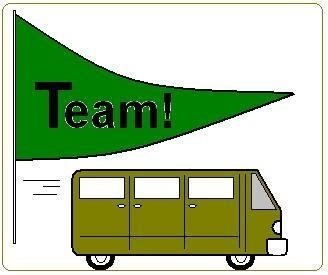
Example: Jerry
Greatfan has an RV policy which lists a motor home as well as a small bus as
the covered vehicles. Jerry applies for an umbrella policy from Unwilling
Motorists Insurance. The Unwilling underwriter approves an umbrella policy
after finding out that Jerry has a good driving record and the underwriting
file indicates that the vehicles are only used for personal trips and
vacations. If the underwriter had dug further, she would have
discovered that Jerry is an avid booster of |
PERSONAL LIABILITY UNDERWRITING
Generally, liability coverage is
available for the named insured, his or her spouse, and relatives who are
residents of the insured household. Coverage is extended for damages arising
out of the legal liability for causing bodily injury, property damages or
personal injury to others.
In order to qualify for personal
liability coverage, the damages have to be the result of a covered act by an
eligible insured. The Personal Umbrella Liability Policy Declarations page
includes a coverage limit that applies to bodily injury, property and personal
injury damages.
Related Article: ISO
Personal Umbrella Liability Policy Coverage Analysis
Personal Liability Information
The underwriting information
that is typically pertinent to the personal liability portion of a personal
umbrella exposure is a selected combination of the concerns found under the
residence/structure and applicant categories:
·
The applicant's occupation
·
Employer information
·
Number and type of additional or
"other" structures at the described location
·
The type of security and safety devices
installed in the structure
·
Number of household residents
·
General housekeeping
·
Existence of swimming pools and whether
they're in ground or above ground
·
Existence of any other attractive
nuisances
·
Information on additional insureds
·
Requests for additional coverages
Studying the above factors can
give an underwriter some insight regarding a particular exposure. Information
indicating very old premises and other structures may indicate a higher
probability of persons being injured on the insured property because of poorer
maintenance or general conditions such as old pathways or walks.
Employer and occupation
information may provide clues to unacceptable situations or ones that bear
additional scrutiny. Self-employed persons may have an unacceptable in-home
business exposure. Celebrities, athletes or public figures may present higher
than desired exposures to liability.
|
Example: Sarah Graffix just had her homeowners, auto and umbrella
policy approved by Understaffed Mutual Insurance. Unfortunately, the
underwriter took no special notice of the fact that Sarah is an independent
Website Developer who works from her home. Besides routinely seeing clients,
Sarah constantly works with Internet Service Providers (ISPs) to arrange for
Websites for her customers. Two months after she gets her umbrella coverage,
Sarah is sued because of her 'blog." At her site, Sarah complains that
the management of a new ISP is incompetent and inefficient. The ISP sues
Sarah for slander, alleging they suffered loss of subscribers and several key
accounts after her comments spread around the "Net." |
|
Related Court Case: Defamation Is Not an Occurrence
LOSS AND VIOLATION HISTORY
A driving household’s loss and violation history is quite
important in underwriting a personal umbrella liability account. Loss history
should include the date, time of day, driver, vehicle identification,
description of the accident or loss, and the final amount of the settlement.
Naturally, considering that we’re discussing excess coverage, the focus on
losses may involve loss severity. However, loss frequency involving minor
losses may be just as important as severe losses; it depends upon the loss
circumstances. In fact, it is the loss details that bear the most scrutiny when
considering a request for umbrella coverage. A severe loss due to some freak
occurrence should be less of an underwriting concern than a smaller loss that
might indicate factors that could contribute to a future, severe loss.
|
Example: Let’s
use Jerry Greatfan again. In this instance, instead of a clear driving
record, his application includes a $2,790 loss in 2018 and a $32,000 loss in
2020. On the surface, the greater underwriting concern should be the $32,000
loss, with the smaller loss appearing to be a minor affair. However, should
the underwriter’s interest change by the following loss details? ·
The larger loss was an uninsured motorists
claim where a drunken driver of an uninsured pickup truck ran a red light and
savagely broad-sided Jerry’s motor home while he was going through an
intersection. ·
The smaller loss involved a single vehicle
collision. Jerry’s bus, while transporting a dozen GCU fans to a December
basketball game, slid off the interstate and the bus exterior was scraped by
a metal median barrier. |
OTHER CONSIDERATIONS
Gathering detailed information may be even more important
for evaluating umbrella business than for writing underlying coverage. However,
the effort has to be balanced against the rights of the applicant (new
business) and insured (renewal business). Individual insurers must be certain
that their procedures for collecting underwriting information comply with any
regulations for securing it. Insurers must stay informed about legal
developments concerning individual privacy rights. Further, they must be sure
that vendors who provide them with supplemental underwriting information
operate in a manner that respects individual privacy. Compliance with
regulations is especially critical whenever a company includes health or
personal finances as part of its underwriting criteria.
CUSTOMIZING UMBRELLA LIABILITY COVERAGE
Because of the broader nature of the Personal Umbrella
Liability Policy, underwriting considerations must include whether the basic
policy coverages are too broad or too narrow for a specific applicant or
insured. While, in some instances, the umbrella policy may be endorsed to
modify coverage, the breadth of coverage provided by such policies may best be
controlled by adding wording or eliminating exclusions in underlying policies.
This policy activity may result in additional premium at the discretion of the
insurer.
Since the need to modify coverage may be addressed by
endorsing underlying coverage, options for making direct changes to the
umbrella are fairly limited. Specifically, there are options to eliminate
coverage for indicated persons, vehicles or crafts. An insurer also has the
ability to convert the umbrella policy to, basically, an extension of existing
coverage by use of a “following form” endorsement.
Related Article: Personal Umbrella Available
Endorsements
SCRUTINY OF UNDERLYING ENDORSEMENTS
If the umbrella policy is not a “following form,” an
underwriter must look at the underlying coverage with fresh eyes or an
investigator’s care, especially if the umbrella carrier is different from the
carrier writing the underlying coverage. Besides having complete information on
the underlying insurance, it may be prudent to request a copy of the underlying
declarations pages. The declarations should contain full details about any
endorsements attached to the policy. A careful underwriter will take the
additional step of examining all of the form numbers shown in the underlying
policy declarations and requesting an explanation of each form. If the
explanation is unsatisfactory, a copy of the actual endorsement should be
requested. Steps should be taken to be certain which coverage is granted by the
underlying policies. Once this is done, the underwriter should make the
decision to provide excess coverage over the underlying policies or restrict
coverage as necessary.
Related Article: Personal Umbrella Liability
Endorsements
DEDUCTIBLES
Another important topic to consider in any underwriting
evaluation of the PUP program is the need for deductibles. The Personal
Umbrella Liability Policy, depending upon loss circumstances, applies either a
conventional deductible or a self-insured retention. Unlike conventional
deductibles, self insured retentions can be substantial, perhaps up to $10,000,
so they may act as a valid method to control losses. At the very least, they
may be effective in controlling the instances when the umbrella has to respond
on a primary basis.