HO 0004–AAIS CONTENTS BROAD FORM HOMEOWNERS ANALYSIS
(May 2024)
Note: This analysis is based on the January 2008 edition of the form.
The homeowners program offered by the American Association
of Insurance Services (AAIS) is simply and logically structured insurance
document. Like its peers, the Contents Broad Form policy begins with a table of
contents.
TABLE OF CONTENTS
The table of contents that appears in this policy also
appears above as this article’s index.
AGREEMENT
The policy's opening language states that the policy is
subject to all of its terms and will provide property, liability and other
insurance coverages that are described in the policy. These coverages are
provided for a specific policy period. In return for this protection the named insured
must pay a premium as required. Principal coverages apply only if a limit is
shown for them on the declarations.
DEFINITIONS
The
definitions section appears immediately after the Agreement.
1. You and Your
The
person(s) who appear on the declarations as insured(s). The named insured’s
spouse is also defined as you, but ONLY if he or she lives in the insured's
household.
Note: Where possible, both spouses should
appear on the declarations. If not, a non-resident spouse could be denied
coverage under circumstances where coverage
should actually apply.
2. We, Us, and Our
The
company which supplies the homeowner's coverage.
3. Actual Cash Value
The
amount it takes to repair or replace property, but that amount includes
consideration of depreciation.
Note: The form does not address how
depreciation is determined.
Related Court Case: Loss
Settlement Delayed by Insurer – illustrates how a claim can be complicated due
to ACV considerations.
4. Aircraft
This
term is used only in the Liability section and refers to property made or used
for flying. If a model aircraft and model hovercraft are not designed or used
to carry people or cargo, they are not considered aircraft. Also, a hovercraft
is not considered aircraft. This definition should be given greater thought due
to the increased ownership of drones.
|
Example:
Theresa has become very skilled in operating the drone she received for her
last birthday. It is capable of carrying objects weighing up to 15 pounds.
One day, she was flying the drone to a neighbor living across the street. It
was carrying a six-pack of beer. The drone malfunctioned and the beer cans
were released. They fell and seriously injured the neighbor’s child. Her
insurer denied the loss. |
5. Bodily injury
Actual or physical harm to a
person. Harm includes sickness, disease, or death. Any required care and loss
of services also qualifies as bodily injury. Unless a person has a physical
injury first, there is no coverage for harm such as injury, illness or death
that comes from an emotional or mental injury.
|
Example: The
apartment building where Mary was living burned down in a terrible fire. At
the time, Mary was pet sitting a friend’s dog and,
sadly, the dog perished in the fire. Her friend is absolutely devastated and
she had to seek treatment for severe depression. She sues Mary for the cost
of her treatment. This treatment cost is not eligible as bodily injury. |
6. Business
A trade, profession or occupation
including farming, even if only occasionally practiced. This term includes the
rental of property to others but does not include the occasional rental for
residential purposes of the part of the covered location that is normally
occupied solely by persons in the named insured’s household.
Note: If more than two roomers or boarders are involved, the
exception does not apply.
If an insured receives money for
an activity, it is considered a business. There are exceptions though. If an
insured is caring for a relative, it is not a business even if money is
exchanged. When an insured cares for a person, other than a relative, and, in
exchange, receives like services, it is not a business.
|
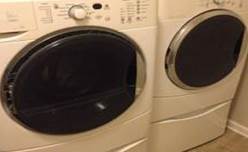
Example: Jerry
and Marnie are neighbors who trade services. Since Jerry does not own a
washer-dryer set, Marnie does his laundry in exchange for Jerry cooking meals
for Marnie, who hates cooking. While this is an exchange of services, a
problem may arise if a loss occurs since they are not similar services. |
|
Volunteer activities are also not
a business even if the insured receives reimbursement for expenses. However, if
compensation is provided, the activity no longer qualifies for an exception and
the activity is considered a business. Other activities the insured may engage in
are not considered business as long as in the 12-month period prior to the
policy inception the total compensation for the particular activity did not
exceed $2,500.
7. Declarations
This term refers to any document
that is related to the homeowner policy and which may be called Declarations,
Supplemental Declarations, or Schedule.
Related Article: AAIS
Homeowners Policy Declarations Page
8. Described Location
A house (up to a four-family
structure), townhouse or row house that is used by the insured for residential
purposes provided it is described in the policy (schedule/declarations). The
term also refers to related structures (such as garages, sheds, etc.) and
grounds.
Private structures related to row
houses and town houses qualify as described locations only if solely
residential and used exclusively by the insured’s household.
|
Example: Melanie’s
application for a tenant’s policy is rejected by an insurance company. She is
renting a two-room unit within a home that was converted for use as a dental
clinic. |
9. Domestic employee
A person employed or leased under
contract by an insured, to perform duties that are connected to the use and
care of the described location such as a butler, housekeeper, or gardener.
Included are persons who perform duties of a similar nature elsewhere for an
insured provided the duties do not include business related
functions.
A person who is furnished to the
insured as a temporary substitute or to meet seasonal or short-term needs, is
not a domestic employee.
10. Employee
Refers to a party who is employed
in the business of an insured. The term includes persons who are hired via a
labor leasing arrangement. The duties of such persons have to involve an
insured’s business and not the residential or personal-oriented activities
performed by a domestic employee.
11. Fungi
Any fungus (including but not
limited to mildew and mold) as well as any substances released or created by
such matter qualifies as fungi.
12. Hovercraft
This term is used only in the
Liability section and refers to machines (including property called flarecraft)
that are capable of traveling over the ground or water via the use of a
compressed air cushion. The term does not apply to motor vehicles, aircraft, or
watercraft. It also does not refer to models of hovercrafts, aircraft or
watercraft that are neither designed nor used for moving people or property.
13. Insured
Insured is the
person or persons named in the declarations (named insured) and that person’s
relatives who live in the household. In addition, there are a number of persons
who are insured based on conditions and circumstances:
·
Relatives of the named insured who are under the
age of 25, enrolled in school fulltime, are still financially dependent on the
named insured and lived in the household prior to moving out to attend school
·
Non-relatives of the named insured under the age
of 21 who live in the household and are in the named insured’s care or in the
care of a relative of a named insured who also lives in the household. These
non-relatives are also covered while away from the household attending school
full-time, provided they continue to be under the care of the named insured or
a relative resident and had lived in the household prior to moving out to
attend school.
Insured is further expanded but
only for the Liability section of the policy:
·
The named insured’s real estate manager but only
within the scope of his or her duties that are related to the described
location
·
Any person employed by any of the insureds
described in the first grouping of insureds is an
insured but only for incidents involving a motorized vehicle that is covered by
this policy. The insured status is limited to when that person is performing
the duties for which he or she was employed.
·
Any person that is using a covered motorized
vehicle on the insured premises is an insured but only if the named insured had
given that person permission to use the vehicle. The insured status applies
only to liability resulting from the use of the vehicle.
·
Other parties also qualify as insureds, but on a
more limited basis. If a loss situation involves an eligible owned watercraft,
golf cart or animal (usually a pet), coverage extends to persons/organizations that,
with the insured’s knowledge/permission, have some related responsibility for
the loss. This applies only if an insured, as defined in the first grouping of
insured, owns the watercraft, golf cart or animal. The policy grants insured
status for such parties but only to the extent that they are liable for injury
or harm involving such insured property. This applies only if the insured gave
permission for the watercraft, golf cart or animal use. Entities that are
liable for watercraft or animal incidents are not insured if the use or control
of either was business related.
|
|
Example:
Rhoda rents the upstairs of a two-family home. The home is owned by Pete, a
retiree. Pete helps Rhoda by walking her German Shepherd while Rhoda is
working. One day, the dog pulls away from Pete, runs to and knocks down a child
who was eating a burger. Later, the child’s parents send a bill to Pete for
reimbursement for the child’s medical treatment. Pete would be eligible for
coverage under Rhoda’s policy. |

Finally, any policy
reference to “insured” also applies to more than one person who qualifies for
coverage.
14. Insured premises
The described location (as defined
above) is an insured premises. In addition, any premises that is listed on the
declarations as an insured premises and is used by the named insured as a
residence is an insured premises.
A premises acquired during the
policy term and that a named insured uses as a residence, is also an insured
premises. Finally, if there are premises that are used by the named insured in
connection with any of the above-described insured premises, they are also
insured premises.
The next grouping of insured
premises applies to insureds, not just the named insured.
Cemetery and burial plots of an
insured, regardless of location, are insured premises. An insured’s temporary
residence that is within a structure not owned by an insured and premises
rented occasionally, for non-business reasons, to an insured qualify as insured
premises.
Vacant land owned or rented to an
insured, including land being developed to be an insured’s residence is an
insured residence. However, vacant land and farmland is not the same. Farmland
is not insured premises.
15. Limit
The policy merely defines this as
the amount of insurance.
16. Motorized vehicle
Land or amphibious vehicles that
are self-propelled are defined as motorized vehicles. Exceptions are
hovercrafts, (actual or model) and watercraft (actual or model). In addition,
any trailer or semitrailer attached to or carried on a vehicle described
earlier is also a motorized vehicle even if it becomes detached. By model, it
is meant to apply only to those that are incapable of moving either persons or
goods.
17. Occurrence
There are three specific
requirements for an occurrence. First, there must be an accident. This means
that the incident(s) cannot have been planned. There can be repeated accidents
and still be the same occurrence. Second, bodily injury or property damage must
result from the accident(s). Last, the bodily injury or property damage must
happen during the policy period.
18. Pollutant
Any solid, liquid, gaseous,
thermal, or radioactive irritant or contaminant, including acids, alkalis,
chemicals, fumes, smoke, soot, vapor, and waste. Also, electrical, magnetic, or
electromagnetic particles or fields – visible or invisible plus sound.
Waste includes materials to be
recycled, reclaimed, reconditioned as well as disposed of. This is a very broad
definition.
Related Court Case: Candle
Soot Excluded As Pollutant
19. Property damage
Physical injury or destruction of
tangible property. It is also the loss of use of tangible property. The loss of
use can apply even if the property has not been physically damaged.
20. Terms
Refers to any written policy
components including exclusions, conditions, defined words, etc.
21. Vermin
Refers to a wide variety of
creatures that tend to be ideal candidates as pests that damage property
because of their tendency to infiltrate structures as a source for dining or
housing. Policy examples include raccoons, possums, skunks, porcupines, snakes,
armadillos, and bats but these are only examples.
22. Watercraft
This term
refers to items that are designed for traveling over water, whether powered by
engines, motors, or wind. There’s no reference to manually powered, small craft
(such as canoes, rafts, or rowboats). The term does not apply to motor
vehicles, aircraft, or hovercraft. The term also does not apply to models of
hovercrafts, aircraft or watercraft that are neither designed nor used for
moving people or property.
PROPERTY COVERAGES
PRINCIPAL PROPERTY
COVERAGES
1. Coverage C—Personal Property
a. What is covered
The AAIS Contents Broad Form policy
protects the following:
·
Personal property that belongs to or property that,
while not owned by an insured, is in the insured’s possession.
·
(At the named insured’s option) personal property
that belongs to guests, domestic workers, or other persons, but only when the
property is in the same residence as an insured
Coverage for damage to personal property
owned by a domestic employee or a guest may be covered at the option of the
insured. Why is an insured given the option to allow coverage? One situation
that comes to mind is the availability of other insurance and the seriousness
of a given loss. If there were a very large loss, the insured may wish to have
all available coverage for his or her own property. If there were no option,
the loss to a guest or domestic employee could be reimbursed and leave a
shortfall in coverage for an insured. Of course, the
insured would likely consider whether the guest or employee had their own
coverage available before exercising this option.
b.
Limitation on Property at Residential Premises Other Than the Described
Location
Under Coverage C, a
maximum of 10% of the policy’s Coverage C limit subject to a minimum of
$1,000 is available for losses involving an insured’s property that is
typically located at a residence that is NOT described on the policy (therefore
is not at a described location).
|
Example: Tammy likes her new
apartment, but she previously was renting the upper level of a two-family
home. With much less space, she has had to store nearly a third of her
belongings in her parent’s basement. She has a limit of $36,000 under her new
tenant’s policy. Unfortunately, that means that the stored property is only
protected for a maximum of $3,600. |
|
Note: There are exceptions. This limitation
doesn’t apply to property that is being moved to a newly acquired, primary
residence. Neither does it apply to property that is moved to another location
(either another residence or into storage) because the described location is,
temporarily, unfit for use (usually due to repairs, renovation, etc.). The full
Coverage C limit applies for 30 days from the date the named insured begins to
move. After that, coverage for personal property in a newly acquired principal
place of residence is limited to 10%, subject to a $1,000 minimum of the
Coverage C limit.
c. Coverage C—Limitations on Certain Property
Certain types of property are
subject to sub-limits. The special limits that apply do not increase the
Coverage C limit. The indicated limit is the total limit per occurrence for
all items in that class.
1) $250 limitation
·
Money
·
Bank notes
·
Bullion
·
Gold other than gold ware and gold-plated items
·
Silver other than silverware and silver-plated
items
·
Platinum other than platinum ware and
platinum-plated items
·
Stored value cards (including magnetic strip scrip
and gift cards)
·
Numismatic property (coins, currency, medals, and
similar property)
|
Example: Mitch and Brenda come
home from a weekend getaway to find their apartment was burglarized. Their
contents policy had a limit of $36,000. They reported a loss of $4,200
consisting of: $1,200 leather coats $1,700 silver $1,300 appliances All of the possessions were new as they were
acquired after their recent marriage. They receive a check for $2,750 since a
maximum of $250 applied to the $1,700 silver loss. |
|

2) $1,500 limitation
·
Securities
·
Stamps
·
Letters of credit
·
Notes other than bank notes
·
Personal records
·
Tickets
·
Accounts
·
Deeds
·
Evidence of debt
·
Passports
·
Manuscripts
Note: This special limit applies regardless of the medium on which these items exist and includes the cost of research
or other expenses necessary to reproduce, replace, or restore the item.
3) $1,500 limitation
·
Electronic devices
·
Accessories including films, tapes, wires,
discs, records, or other media for use with such devices
·
Antennas
Note: This limitation on electronic devices and accessories applies
while the devices are in or on a motorized vehicle or watercraft but only if
they can operate from the vehicle or watercraft’s electrical system and also
from another source of power.
4) $1,500 limitation
·
Electronic devices
·
Accessories including films, tapes, wires,
discs, records, or other media for use with such devices
·
Antennas
Note: This limitation on
electronic devices, accessories and antennas applies only if the items:
1. Are used away from the premises;
2. Are used mainly
for business purposes; and
3. Are not in or on a motorized
vehicle or watercraft if the devices can operate from the vehicle or
watercraft’s electrical system and also from another source of power.
5) $1,500 limitation
This limitation applies to watercraft, including their trailers, furnishings, equipment,
engines or motors and semi-trailers. This limitation is inapplicable to
hovercraft or to model watercraft as long as the models are not designed to
carry cargo or people.
6) $1,500 limitation
Trailers and semi-trailers not
mentioned above are subject to this limitation.
7) When the loss is due to THEFT
·
$2,500 for loss to:
o
Jewelry
o
Watches
o
Precious and semiprecious stones
o
Gems
o
Furs
·
$2,500 for loss to:
o
Silverware
o
Gold ware
o
Pewter ware
o
Items plated with gold or silver
·
$2,500 for loss to guns (and related equipment)
Related Article:
Firearms Glossary
|
Example: The Handys turn in a
claim to the insurer that writes their contents policy and the claim includes
$4,000 for lost jewelry: Scenario 1: The loss involved a short
circuit in an apartment complex’s master circuit board that caused a fire.
The Handys’ apartment was among those that were heavily damaged. The Handys
are reimbursed $4,000 for the lost jewelry. Scenario 2: The loss involved a break-in
that occurred while they were at work. The Handys are reimbursed $2,500 for
the lost jewelry. |
|

8) Personal property used
primarily for business purposes
Since the Contents Broad Form
policy is designed to cover personal, rather than business losses, the policy
restricts the amount of coverage available to protect business property to the
following:
·
$2,500 on property while on the insured premises
·
$500 on property while away from the insured
premises.
However, this special limit does
not apply to items described in the electronic devices limitations.
These special limits include the
cost of research or other expenses necessary to reproduce, replace, or restore
business data.
d. Coverage C—Personal Property Not Covered
There is no coverage in this policy
for any of the following:
1) Property covered by separate, including scheduled, insurance
The bar to
coverage is not affected by the amount of such coverage. If other coverage
exists, that coverage supplants any obligation for property coverage under the Contents
Broad Form policy.
2) Animals, birds, fish, or insects
3) Motorized vehicles, including their parts, equipment, and
accessories except for the items subject to the $1,500 limitation explained
earlier. Electronic devices, accessories, or antennas that can be operated only from the electrical system of a
motorized vehicle, including films, tapes, wires, discs, records, or other
media for use with such devices while in or on a motorized vehicle are also not
covered.
Related Court Case: ATV Injury
Not Covered By Homeowners Policy
Note: There is coverage for motorized vehicles that are not
required to be registered if they are designed and used to assist the
handicapped (motorized wheelchair) or used only to service the insured premises
or premises of another (riding lawn mower). These vehicles are covered only if
not used for business purposes.
|
Example: Jay moved into an
apartment after retiring. Later, infirmaries restrict his ability to walk and
he purchases a motorized wheelchair. This item is NOT subject to his content
policy’s motorized vehicle exclusion. When Jay turns in a claim after the
chair is stolen, it’s eligible for coverage. |
4) Aircraft is not a defined term so it includes any type of device
that is supposed to fly. Parts and equipment are also not covered even if not
attached to the aircraft. There is coverage for model aircraft provided it is
not designed or used to carry people or cargo.
5) Hovercraft: In this section, hovercraft refers to machines
(including property called flarecraft) that are capable of traveling over the
ground or water via the use of a compressed air cushion. Parts and equipment
are also not covered, even if not attached to the hovercraft. There is coverage
for model hovercraft provided it is not designed or used to carry people or
cargo.
Note: The hovercraft defined in the Definitions section is limited
to liability coverage only, so this is not a defined term in this section.
6) Property of roomers, boarders or tenants is not covered but the
property of an insured’s relative who is considered a boarder or roomer is
covered
7) Property that an insured makes available for rent to other
persons but there are exceptions. If the property is in a space that is part of
the described location occupied solely by the named insured’s household that is
only occasionally rented out and then only for residential purposes, there is
coverage. If it is located in part of the described location that is occupied
by the named insured’s household but also rented to one or two boarders, there
is coverage. Finally, if the property is in an apartment at the described
location that is rented out by an insured (doesn’t have to the named insured),
there is coverage. However, any coverage for the rental property is subject to
the Incidental Property Coverage.
|
Example: Jonas
rents a three-bedroom home that suffered a fire which destroyed the kitchen
and two bedrooms. His insurer reduces his claim by $5,000 when it discovers
that Jonas bought all of the furniture for one bedroom strictly to furnish a
room that he has rented to another couple for more than a year. |
|
8)
Loss involving credit cards, debit cards, and fund transfer cards (such
as ATM cards) except as provided under Incidental Property Coverages
9)
Quasi-structural property such as grave markers and mausoleums
Note: Limited coverage is available under
Incidental Property Coverage.
10) Land, including the land on which covered
property is located
11) Underground
or surface water
12) Trees, plants, shrubs, or lawns
Note: Limited
coverage is available under Incidental Property Coverage.
2. Coverage D—Additional Living Costs and Loss of Rent
a. The insurance
company is obligated to reimburse increased living costs that are paid by an
insured household to maintain its normal standard of living. This situation has
to be triggered by the described location becoming unlivable (or, in some
instances, inaccessible) because of a covered source of loss (such as fire,
windstorm, etc.). The increased costs will be paid for the time reasonably
required to make the described location fit for use or until the household is
permanently relocated, whichever occurs earliest. This period of time is not
limited by the policy period.
The next feature of Coverage D, Loss of Rent,
is to help persons whose rental income is affected by a covered cause of loss.
b. The insurance
company will pay for the rent or for the fair rental value that is lost when
part of the described location, which generates rental income, can’t be used
because of a covered loss. Expenses that do not continue are deducted from the
rental value in determining the loss payment. As it is with Additional Living
Costs, the lost rent will be paid for the time reasonably required to make the
rented part of the described location fit for use. This period of time is not
limited by the policy period. The key consideration is that a covered loss
first occurs at a premises that, at the time of loss,
was either being rented or was currently available for rent.
|
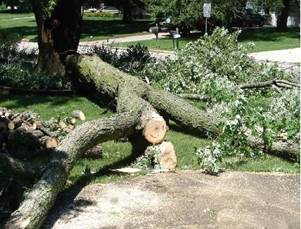
Example: Gloria,
since her rental agreement allows it, has rented out part of the home that
she, in turn, rents from a retired couple who live out of state. When a
severe storm causes an old tree to cave in one side of the home, both she and
her tenants have to find other lodging. The loss of rent portion of Gloria’s
claim is for $190 a week for nine weeks, the time it took to get back into
the repaired home. Her insurer only pays for six weeks. Gloria had fired the
initial company that was handling repairs. The insurer’s position was that
Gloria’s action delayed repairs by three weeks. |
|
c. The policy
also pays for increased living expenses and lost rental income for up to two
weeks if a civil authority prohibits access to the described location because
it is endangered by a loss to a neighboring premises. The damage to the
neighboring property must be caused by a source of loss that is covered by the Contents
Broad Form policy.
d. There is no
coverage under Part D if an insured loses rent because a lease or an agreement
has been canceled.
e.
Also, the insurance limit that is shown for Coverage D is the maximum
amount that may be recovered under all sections of this coverage.
INCIDENTAL PROPERTY COVERAGES
The Contents Broad Form homeowner policy includes a number
of coverages that are in addition to the protection described under Coverages
A, B, C and D. They are called incidental coverages since they are not part of
the primary coverage parts. While the amount of insurance indicated for these
incidental coverages is in addition to the limits of insurance shown for
Coverages A, B, C and D, there are several instances where the amount of
recovery is quite limited.
1. Association Deductible
The Contents Broad Form policy provides up to
$1,500 per occurrence (unless increased on the declarations), for the named insured’s
share of a deductible made by a residential association of homeowners,
condominium owners, or similar groups. Coverage applies only when all of the
following apply:
- The deductible is charged against the named
insured because of ownership or tenancy of the described location during
the policy period;
- The deductible involves direct loss to the
property that would be considered covered property under this policy, if
owned by the named insured or is covered property under the named
insured’s association insurance;
- The loss involves direct damage that is due to
a peril covered under this policy (earthquake and tremors before, during
and after a volcanic eruption are specifically NOT covered)
Finally, the Policy Period condition does not
apply to this coverage.
|
Example: Melinda
rents a home located in Tres Great Landings. She had a contents broad form
homeowner policy from Big Sky Mutual that expired on October 10. She replaced
that coverage with Unspoken Calamity Property and Casualty. On October 7, a
storm demolished the gatehouse at the entrance to the development. On
November 9, Melinda, along with the rest of the homeowners, received a notice
from the Tres Great Landings Homeowners Association, charging her $469 as the
portion of the deductible that applies to the gatehouse (per that agreement,
the legal responsibility for such charges belong to tenants when a home is
rented out). Although the deductible charge was made on November 9, Big Sky
Mutual covered the deductible. |
2.
Collapse
Note:
A mandatory Amendment of Policy Terms endorsement has changed this item.
Related Article: AAIS Amendment of
Policy Terms Endorsements
a. There is
coverage for direct physical loss to covered property involving the collapse of
a building or a part of a building only if caused by one or more of the
following:
·
Any of the perils described under the Contents
Broad Form Policy’s “Perils Insured Against” section. The protection,
naturally, applies to covered personal property.
|
Example: A wall
collapses in the apartment building where Fred lives. All of the contents of
his living room are destroyed and he turns in a claim for $4,300 (under a
contents policy with a $36,000 limit). His insurer pays him $3,100, rejecting
the portion of his claim that involved merchandise from his home business. |
Related Article: HO 6235–Coverage for
Resident of Assisted Living Facility
·
Hidden insect or vermin damage or hidden decay*
·
Weight of contents or people (also animals)*
·
Weight of rain pending on a roof*
·
Failure of defective materials/methods during a
construction or repair job*
Note:
Collapse damage caused by the items with an asterisk above that involve the following property is not covered
unless the damage is the direct result of the collapse of a building and none
of the following property is considered building even if they are attached to a
building:
|
Awnings |
Docks |
Foundations |
Retaining walls |
|
Bulkheads |
Drains |
Patios |
Swimming pools |
|
Cesspools, or septic tanks |
Fences |
Paved areas |
Underground pipes |
|
Decks |
Flues |
Piers |
Wharves |
In other words, the damage has to be due to a
building, affected by one of the items with an asterisk, collapsing on top of
the listed property. Further, with regard to collapse triggered by
insect/vermin activity or due to decay, coverage does not apply if a named
insured either knew of or should have been aware of such problems. Having such
knowledge transforms these incidents from accidents to maintenance issues.
b. Collapse must
be due to any of the following and it must be abrupt:
·
Caving in
·
Falling in
·
Falling down
·
Giving way
of the building (not the structures listed
above) or a part of the building. The building must become uninhabitable or
unusable because of the collapse.
A building is not considered to have
collapsed in the following situations:
·
No collapse has occurred but the building (or even
part of the building) looks like it could collapse because it is showing signs
of collapsing such as bulging, leaning, settling and similar conditions.
·
The building or any part of the building is
considered in danger of collapsing
·
Part of the building that has broken or separated
away from a part of the building but has not yet collapsed.
Important:
Nothing stated above limits coverage under a
direct loss covered by a Coverage C peril. The policy’s Bacteria, Fungi, Wet
Rot, Dry Rot exclusion is inapplicable to this provision.
This coverage provides additional coverage
but not additional limits.
Related Article: Collapse
3.
Credit Card; Electronic Fund Transfer Card or Access Device; Forgery and
Counterfeit Money
a. This incidental coverage is triggered when an insured:
·
is legally required to pay for the unauthorized use
of credit or debit cards issued or registered in the name of an insured
·
has a loss due to a party using an electronic fund
transfer card or any electronic devices to withdraw, deposit or transfer funds
without the named insured’s permission
·
suffers a loss due to forged or altered checks,
drafts, notes, or negotiable instruments, or
·
unintentionally accepts counterfeit
b. The limit is $1,500 per occurrence unless a higher limit is
shown on the declarations. An occurrence is not limited to a single event; it
includes all acts perpetrated by a single person.
|
|
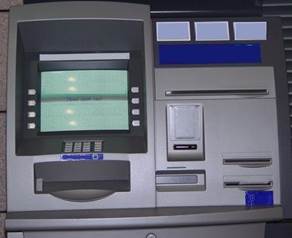
Example: Jeri
stopped by her credit union to make a withdrawal. It was a day after her
paycheck had been deposited. Her card got stuck in the ATM. She jumped into
her car to drive to the nearest credit union branch to get help. When she
reached a teller’s window to explain the situation,
she’s told that $2,000 was just withdrawn from the ATM location. She went
back to the ATM and finds that the card had been removed and, obviously, used
by another party. Jeri’s policy would cover up to $1,500 of her loss. |
c. When an insured is sued due to the unauthorized use of credit
cards, electronic fund transfer cards or similar devices, this policy will pay
the defense expense.
d. The insurance company will decide what investigations and
settlements are necessary, without consulting with the insured. Once the
insurance company pays the applicable limit, based on a settlement, it is no
longer required to provide a defense.
The insurance company may or may
not defend an insured or an insured’s bank if a suit is brought because of a
refusal to honor a forged check, draft, or negotiable instrument. If it decides
to defend a suit, any related expense is paid by the insurance company and the
insurance company also provides the counsel.
e. There are some exclusions under this coverage. No payment will
be made in the following instances:
·
An insured has not complied with the rules under
which the credit or debit card was issued
·
The unauthorized person is a resident of the
named insured’s household
·
The card or device is used with the consent of
an insured
·
The loss is caused by the dishonesty of an
insured
·
The loss results from the business of an insured
Note: Since these are not covered, there is no obligation for an
insurer to provide a defense or handle related costs.
4. Debris Removal
There is coverage for the cost to
remove the debris of covered property after a loss. The loss must be caused by
a peril that applies to the damaged property. The coverage extends to handle
the cost of removing volcanic ash, dust, or particulate matter that damages the
covered property.
The most that the insurance
company pays for the combination of debris removal and the physical loss of
property is the limit applicable to the particular damaged property. If the
limit is not sufficient to cover the debris removal, the insurance company will
pay an additional 5% of the limit specifically for the debris removal.
Important: This incidental coverage does not cover any expense
associated with the effects of pollutants. This exclusion applies to all of the
following:
·
Testing
·
Monitoring
·
Clean-up costs
·
Removal
·
Containment
·
Treatment
·
Detoxification
·
Neutralizing
·
Respond to (occurrence involving pollutants)
·
Assessment
|
Example:
Mitch’s apartment fire was doused fairly quickly by the local fire
department. Several weeks later, Mitch gets a bill for $500 from a neighbor.
It was for the cost to remove sludge from and to replant a garden. The
neighbor’s garden was ruined by fire department hose run-off that contained
char and ashes. This expense would NOT be eligible for coverage. |
Related Court Case: Pollution
Exclusion Held Not To Apply To Injuries Arising From Spilled Fuel
Finally, there is limited coverage
for the removal of fallen trees. Up to $500 per tree and $1,000 per occurrence
is provided to remove trees from the described location under the following
circumstances:
·
The tree has damaged covered property
·
The tree(s) obstructs access (by a motorized
vehicle) to a driveway on the described location
·
The tree blocks access to a ramp used to make
the described location accessible to handicapped persons.
HOWEVER, this coverage extension
is available only IF the named insured’s tree is felled by windstorm or hail or
a neighbor’s tree is felled by any of the perils covered by this policy.
Related Article: AAIS Amendment of
Policy Terms Endorsements
5. Emergency Removal
There is coverage for direct
physical loss to covered property for up to 30 days if the covered property is
moved from premises to protect it from a loss by a peril that is covered by the
policy. However, this coverage does not extend past the policy’s expiration
date.
|
Example: More
than half of the roof on the apartment building where Nan lives was ripped
off during a windstorm. |
|
Note: This coverage does not
increase the limits shown for the property being removed. The property coverage
exclusions do not apply to this coverage, except regarding intentional acts. No
coverage for any insured (even the innocent insured) is provided for any loss
caused by any intentional act
committed by or at the direction of any insured.
6. Fire Department Service Charge
This incidental coverage provides
a maximum of $500 per occurrence for paying charges under an agreement between
the named insured and a fire department. The charges
must be related to a fire department responding to the insured location that is
endangered by a covered peril. As an option, an insured may purchase a higher
limit for this expense.
Note: There is no coverage if the property is located within the
operating area of a governmental authority that provides fire department
services.
7. Glass or Safety Glazing Material
Another incidental coverage is
protection against breakage of glass or safety glazing material that is part of
a structure (such as a window). There is also coverage for direct physical loss
to covered property damaged by such glass or safety glazing material breakage.
The earth movement exclusion does
not apply to this coverage.
There is no coverage for property
damaged by glass, except as described above. There is also no coverage on the
described location if the residence insured under Coverage A has been vacant
for more than 60 days in a row. A residence being built is not considered to be
vacant.
This Incidental Coverage does not
increase the limit of insurance but it is also not restricted to a sublimit.
8. Grave Markers
The insurer will pay up to $2,500
for direct physical loss to grave markers and mausoleums. To be eligible, the
loss must be caused by one of the sources of loss specifically described as
covered by this policy. The grave markers or mausoleums can be on the described
location or off.
9. Increased Cost—Ordinance or Law
Another incidental coverage
protects against the increased cost caused by the enforcement of a code,
ordinance, or law that regulates the use, construction, repair, or demolition
of property following a covered loss. It also covers the cost of removing the
debris that results when the law is enforced.
Note: If the insured chooses to repair or replace the damaged items
that are covered by this policy’s Tenants Improvements Coverage, a maximum of 10%
of that incidental coverage’s limit can be used to handle increased costs that
are solely due to the enforcement of a building code or similar law or
regulation. This coverage also applies to costs associated with debris removal.
However, any coverage is dependent upon the direct damage being caused by a
source of loss that is eligible for protection under the Contents Broad Form
policy.
Naturally, there are some
exceptions to the protection provided by this incidental coverage. It excludes
any:
- loss
in value of property caused by the enforcement of a code, ordinance, or
law
|
Example:
Frank replaces the damaged, built-in oak shelving that he uses as a room
divider. However, local ordinance requires that he use special
earthquake-resistant braces that diminish the look of the shelves and lowers
their value. This loss of value is not covered. |
- loss,
cost, or expense related to any legal requirement of an insured or others
to test for, monitor, clean up, remove, contain, treat, detoxify,
neutralize, or in any way respond to or assess the effects of pollutants
10.
Liquid Fuel Remediation
a. Under this
long, complicated provision, the special form policy provides limited
protection applicable to damage experienced under Coverage C, as well as for
items covered under the incidental coverage provided by the following:
·
Tenants Improvements
·
Trees, Plants, Shrubs, or Lawns
for certain polluting events involving liquid
fuel.
This coverage responds to both direct and
indirect damage caused by the escape of liquid fuel from a described location’s
main utility systems or domestic appliance’s fuel systems.
This provision pays for certain costs and
expenses to correct the damage when liquid fuel is released from a fuel system.
Release or escape of fuel also includes the following terms:
·
Discharge
·
Dispersal
·
Emission
·
Escape
·
Leaching
·
Leakage
·
Migration
·
Seepage
·
Spillage
The coverage applies to a fuel pollution
event that occurs at the described location.
b. Besides
responding to the damage caused by escaped liquid fuel, the coverage also
applies to the following if incurred:
·
The named insured’s expenses related to minimizing
damage, such as preventing further spread of spilled/escaped fuel from the
covered fuel system
·
The named insured’s expenses related to preventing
further spread of spilled/escaped fuel onto areas outside the covered fuel
system
·
The expense to clean escaped fuel from all
eligible, contaminated property included costs of removing such property’s
debris
·
The expense of getting access to a damaged fuel
system (i.e., tearing out walls, floors, excavation, etc.) including
repairing covered property that was damaged to facilitate access.
·
Related additional living expenses (that are both
necessary and reasonable) when the covered area used as a residence is
unavailable for use
·
The provision also offers reimbursement for the
expense to monitor, test or otherwise evaluate the harm caused by escaped fuel -
such costs are only eligible when a government authority requires such work be
performed by the insured. Therefore, there is no coverage if an insured decides
to do so voluntarily.
c. The Content
Broad Form’s Policy Period condition does not apply to fuel release incidents.
d. No coverage
applies to:
·
Damage to lawns and other greenery when such items
qualify as business property
·
Loss to land, or water (either underground or
surface)
·
Any diminished property value caused by a liquid
fuel loss
·
Loss involving lease or contractual arrangements for
property sales
·
Loss involving the cancellation of a lease or
contract
·
Loss of the escaped fuel
·
Most expenses related to repairing or replacing a
fuel system that permitted any fuel’s escape.
e. To prevent
duplicate coverage sources, the limits and special terms that apply to the
following coverages are inapplicable to eligible incidents of escaped fuel:
·
Incidental Property Coverage for Debris Removal
·
Coverage D-Additional Living Costs and Loss Of Rent
f. Unless the
named insured optionally purchases a higher limit, a maximum of $10,000 per
policy period (note, an aggregate limit) is available to respond to eligible
incidents. The stated limit is not affected by the number of claims, lawsuits,
locations, or releases that are first discovered and occur within the policy
period.
When a liquid fuel related loss occurs and it
damages items eligible for protection under the policy’s Incidental Property
Coverage for Trees, Plants, Shrubs or Lawns, the maximum coverage available for
such property is 10% of the policy’s Coverage C limit. This is subject to a
maximum of $500 for a single eligible item (tree, shrub, or bush). The use of
this incidental coverage for fuel release events does not affect that
coverage’s limit. Furthermore, when such an event triggers coverage under additional
living expenses, that protection is constrained by consideration of the
reasonable amount of time it should take to make the insured premises livable
again or the time to relocate to other, permanent, housing.
g. The fact that
an event that qualifies for coverage under this policy’s Liquid Fuel
Remediation occurs at the same time that another eligible hazard causes direct
damage to covered property does NOT affect any other available policy coverage.
11. Loss Assessment
In certain circumstances, there is
coverage (up to $1500 per occurrence) for the named insured’s share of an
assessment made by a homeowners, condominium, or similar residential
association.
Coverage applies only if all the
following apply:
- The
assessment is made during the policy period,
- It
must result from direct loss to the property owned collectively by all
association members,
(as opposed to an
assessment to replace worn hall carpeting or for landscaping)
|
Example: Trudy turns in a claim to her insurer to recover a $550
assessment levied against her by a tenants association. The insurer denies
the claim when they find the assessment was to replace worn hallway and lobby
carpeting. |
|

- It is
caused by a peril covered by the policy (excluding earthquake or land
shock waves or tremors before, during, or after a volcanic eruption,
explosion, or effusion), and
- It
must be charged against the named insured as an owner or tenant of the
described location.
Note: There is no coverage for assessments charged against the
association by any governmental body or authority or for assessments to cover
the deductible on the association’s insurance policy.
It’s important to understand that
$1,500 is the maximum amount available for a single, eligible loss that
triggers an assessment, unless a higher limit is shown on the declarations.
The policy mentions that, under
the Policy Conditions section, Policy Period does not
apply to this coverage. This is added so there is no conflict when the loss
occurs in one policy period but the assessment is made in a later period. The
policy in effect when the assessment made is the one that applies.
12.
Reasonable Repairs
a. This incidental coverage, (which neither adds to the policy’s
property limit nor affects the separate property protection duties) reimburses
expenses related to the prevention of additional damage to property that has
experienced a loss. The coverage applies only for the type of loss and for the
type of property that are eligible for protection under the policy.
b. While the policy provides coverage for certain repair-related costs,
this does not affect the policy’s applicable coverage. In other words, it does
NOT increase the policy’s total coverage, only expands it to another category.
Further, this provision does not affect the named insured’s responsibilities to
act to protect and preserve his property from additional damage any time a loss
occurs.
13. Refrigerated Property
Under certain circumstances, there
is coverage (up to $500, unless a higher limit is shown in the declarations)
for a direct loss to covered items that are in a freezer or refrigerated unit on the described location. The loss must be caused by one of
the following:
·
Disruption of electrical service from conditions
out of the insured’s control (if caused by generating or transmission
equipment)
·
Mechanical breakdown of the refrigeration
equipment.
Note: The equipment must be working properly prior to the loss.
Also, the power failure and the bacteria, fungi, wet rot, or dry rot exclusions
do not apply to this coverage.
|
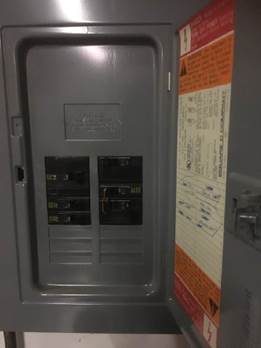
Example: Kelli’s
landlord has hired a handyman to do some maintenance and update work in
Kelli’s apartment building. The handyman worked on the building’s electric
breaker box and, due to improper wiring, it shorted out. The incident
occurred overnight and Kelli woke up to a warm freezer with all the food for
a championship football game party ruined. Her loss would be eligible for
coverage. |
|
14. Tenants Improvements
a. Under certain circumstances the tenant’s policy will provide
limited coverage for loss to property that is located on the rented premises
when that property is owned by or exists due to the financial efforts of the
named insured. Eligible property includes additions, alterations and
decorations, and fixtures. Any loss has to be the result of a source of loss
that is eligible for protection under this policy.
b. The Tenants Improvements’ provision does not apply to damage to
any form of land, water (underground or surface), trees and other greenery,
grave markers, or mausoleums. It also does not apply to damage at any structure
on the applicable residence location which is not the named insured’s residence
when any of the following apply:
·
It is available for rent to any person who is
NOT a tenant at the named insured’s residence at the described location. There
is an exception for structures used just for non-business garaging
·
It is used in business activity – regardless,
the level of business activity
·
It is used for storing business property
Coverage for a structure used to
store business property can qualify for coverage if that property is motorized
equipment that is designed for use in residential maintenance. When it is not
property that qualifies as a motorized vehicle, coverage may still apply as
long as the property does not consist of fuel containers greater than five
gallons capacity or contains fuel, other than what is found in its, permanently
installed fuel tank.
c. The maximum amount of coverage is one-tenth of the applicable
policy’s limit for Coverage C, unless the named insured has, optionally,
purchased a higher limit.
|
Example: A
tenant rents a home on a five-year agreement. The tenant receives permission
to have a storage shed built on the large backyard. The shed, among other
things, contains a large compressor and a generator. The shed would be
eligible for coverage. |
15. Trees, Plants, Shrubs, or Lawns
There is coverage for direct
physical loss to trees, plants, shrubs, or lawns on the described location
caused by any of the following:
·
Fire or lightning, explosion, riot or civil
commotion, or aircraft
·
Vehicles not owned or operated by an occupant of
the described location
·
Vandalism or theft.
Note: Up to 10% of the Coverage C limit is available to cover
trees, plants, shrubs, or lawns. No more than $500 will be paid for any one
tree, plant, or shrub, including the cost to remove the debris of the covered
item. There is NO coverage for trees, plants, shrubs, or lawns grown for
business.
PERILS INSURED AGAINST
COVERAGES C AND D
This
section of the policy lists the perils which are insured. The policy coverage
applies only when a listed peril physically damages property described under
Coverages C. The coverage exceptions are explained under the Exclusions That
Apply To Property Coverages section. Although not mentioned in the introduction
to this section, the listed perils must also be the cause for any claim for
indirect loss (Coverage D).
Related
Article: Dwelling Policy Program Perils
The
eligible perils are:
a. Fire or Lightning
b. Windstorm or Hail
Note: Under certain circumstances,
there is no coverage for loss to either of the following:
·
When damage to the interior or to the interior’s
contents caused by dust, rain, sand, sleet, snow, or water, driven by wind or
not, that enter through an opening in the structure not made by the direct
force of wind or hail; or
·
Damage to watercraft or their trailers,
furnishings, equipment or engines or motors, unless inside a fully enclosed
building.
Naturally, an insurer wants its
insureds to use common sense and protect their property. If the first
stipulation didn’t exist, then coverage would be available for losses that
could be prevented by closing doors, windows and by moving personal property indoors.
Related Article:
Windstorm or Hail—A Discussion
c. Explosion
Related Article:
Explosion—A Discussion
d. Riot or Civil Commotion
Related Article: Riot or Civil
Commotion—A Discussion
e. Aircraft
Spacecraft and self-propelled missiles
are included under this peril.
|
|
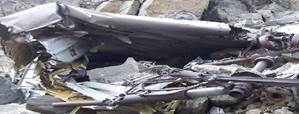
Example: Joe
comes home to his apartment, dead tired from a double-shift at work. Just as
he leans over to pick up a remote, he notices that his living room table and
large screen TV have been obliterated by a charred lump of small aircraft
engine which has crashed through his ceiling. This loss is eligible for
coverage under the aircraft peril. |
f. Vehicles
Note: Vehicle damage to fences, driveways, or walks that is caused
by a vehicle that is owned or operated by an occupant of the described location
is excluded.
Clarification: Even though such losses would likely be accidents,
the point of the exclusion is to protect a company from unacceptable exposure.
An insured property’s occupants are constantly driving to and from their home.
Without the coverage exception, companies would have to pay for many nuisance
losses when fences, curbs, etc., receive their dents and dinks from inattentive
occupants, not to mention their exposure to a household’s new drivers.
g. Sudden and Accidental Damage from Smoke
There is coverage when boiler,
furnace or related equipment release fumes, smoke, and soot or vapor causing
sudden and accidental damage. However, there is no coverage for loss caused by
smoke from agricultural smudging or industrial operations. Both of these
sources of loss result from a home’s proximity to an operation or practice that
is longer term and intentional in nature. Agricultural smudging is the practice
of creating an oily smoke to cover fruit and fruit trees in order to protect
them from frost.
h. Volcanic Eruption
This does not include any loss
caused by earthquake or other shock waves or tremors.
i. Vandalism or Malicious Mischief
A coverage exception is made to
exclude vandalism or malicious mischief loss to property on the described
location if the residence is vacant for more than 60 days in a row just before
the loss. However, a residence that is being built is not considered vacant.
|
Example:
Principal Hardnose lives only a few blocks away from his job at Strictly
Ruled High School. Principal Hardnose is not very popular, so no one was
surprised when, one August night during the Hardnose family vacation, some
unknown party bombarded his home with bottle rockets. The rockets severely
scarred the home’s exterior woodwork and several windows were smashed. The
rockets that crashed through the windows damaged some interior walls and
floors: Scenario 1: The vandalism damage
was covered because the Hardnoses were away on their annual two-week
vacation. Scenario 2: The vandalism damage
was not covered as the Hardnose Family moved their furnishings out of the
house and it lay vacant while the family was on a three-month, out-of-state
sabbatical and the loss occurred in the 3rd month of their absence. |
The above exclusion of vandalism
coverage when the residence is vacant for 60 days or more also extends to acts
that follow (ensue) from a deliberate act related to the vandalism and/or
malicious activity.
Related Court Case: “Water Damage
Exclusion Held Overcome By Vandalism Proximate Cause”
j. Theft
This peril expands the term to
include attempted theft and loss of property from a known place so that it is
likely that theft occurred.
Note: There is no coverage for any of the following:
·
Theft in or to a residence while it is being
built. This includes the theft of materials or supplies that are intended to be
used in the construction of the residence. This exception applies until the
residence is occupied for its intended use
·
Theft by an insured
·
Loss of a precious or semiprecious stone from
its setting
·
Loss as a result of the theft of a credit or
debit card or other electronic transfer or access devices, except as provided
under Incidental Property Coverages
·
Theft from a part of the described location
while it is rented to others who are not considered insureds
|
|
Example:
Sharla’s one of the few folks living in the host city that is NOT excited by
the Big Game. Since she lives less than a mile from the stadium, she decides
to rent out her apartment and spend that week with relatives. She later is
upset to find that she can’t be reimbursed from the disappearance of a TV,
laptop and other property she discovers after her renter has left. |
·
Theft of trailers, semi trailers, campers,
camper bodies, watercraft or their furnishings, equipment, or engines or motors
when not at the described location.
·
Theft of property that occurs away from the
described location while on a residential premises which an insured owns,
rents, or occupies. There are two exceptions. Theft coverage does apply when an
insured is only temporarily residing. Theft coverage also applies for the
property of an insured that is a full-time student, while the property is in
the living quarters occupied by the student at school. However, the exception
does not apply if, before the loss, the student has been away for 60 or more
days from that location.
k. Falling Objects
There is no coverage for loss to
property inside a structure, unless the falling object has first damaged an
outside wall or the roof of the structure by impact; nor is there coverage for
the object which falls.
|
Example: An old tree is next to the apartment where
Lenny lives. One day a major limb breaks off, crashes through the apartment
building roof, demolishing Lenny’s bedroom, and most of its furnishings.
Lenny’s loss is covered under this provision. |
|
l. Weight of Ice, Snow, or Sleet
There is coverage when it causes
damage to property inside a structure. However, this peril excludes damage to
items that, normally, do not belong to a tenant such as awnings, fences, paved
exterior surfaces, swimming pools, foundations, docks, wharves, or piers.
m. Sudden and Accidental Tearing Apart, Cracking, Burning, or Bulging
This coverage refers to
accidental, violent loss to a heating, air
conditioning, or automatic fire protective sprinkling system or water heater.
This cause of loss does not respond to damage involving freezing.
n. Accidental Discharge or Overflow of Liquids or Steam
This protection is quite limited
since it only responds to discharge and overflow from a plumbing, heating, air
conditioning, or automatic fire protective sprinkling system; water heater; or
domestic (rather than a commercial-oriented) appliance. Losses involving sumps,
sump pump, roof drains, gutters and related equipment are not covered. Further,
the following situations are also excluded:
- Caused
by continuous or repeated seepage, leakage or condensation over weeks,
months or even years. There is coverage if an insured could not have
reasonably suspected the situation to exist.
- Caused
by freezing
- Damage
to both the system and the particular appliance from which the water or
steam escaped
- Caused
by accidental discharge or overflow that originates away from insured
premises.
|
Example: Abby
returns home to her basement apartment and finds it flooded. It turns out
that the cold-water feed line to her kitchen faucet broke and water sprayed
out for several hours. An investigation shows that the line was weakened by
being struck by the edges of metal trays that Abby stored in the cabinet that
enclosed the kitchen sink. This loss would be eligible for coverage. However,
this provision would not include the damage to or the cost of replacing the
broken water line. |
o. Freezing
This involves situations of damage
from frozen house utility systems or regular appliances. If a fire-fighting
system is installed in an insured home, damage caused by a frozen sprinkler
system is included. Coverage is excluded for any loss on the insured premises
unless an insured does of the following:
- Maintain
heat in the building
- Shut
off the liquid supply and drain the system, heater, or domestic appliance
(when no water-driven anti-fire system exists)
- Maintain
the water supply (when a water-driven anti-fire system DOES exist)
Parts of the policy’s subsurface
and surface water exclusion do not apply to this particular coverage.
p. Sudden and Accidental Damage
from Artificially Generated Electrical Currents
This peril is restricted by
eliminating coverage for loss to tubes, transistors, and similar electronic
features that are components of appliances, computers, home entertainment
centers and similar items.
Note: This could create a
significant coverage gap for newer or retrofitted homes with increasingly
complex, integrated electronics, such as Smart homes, especially since
circuitry within the apparatus is not covered.
q. Sinkhole Collapse
In this policy, this term means
direct physical loss caused by sudden settlement or collapse of earth that
forms the support for covered property. The earth settlement or collapse must
be due to subterranean voids created by the action of water on a limestone or
similar rock formation. This source of loss is distinct from an event called
Mine Subsidence when earth settlement or collapse occurs due to active or
abandoned mines.
Important: There is no coverage for the cost of filling sinkholes.
EXCLUSIONS THAT APPLY TO PROPERTY COVERAGES
This section of the Contents Broad Form policy lists the
sources of property loss that ARE NOT covered by the policy. The current language
strengthens the anti-concurrent causation intent by stating that if any of the
following perils cause loss or damage directly or even indirectly, there is no
coverage. The loss or damage continues to be excluded even if other events
aggravate or contribute to the loss before, after or during the excluded peril.
In addition, the exclusions apply no matter how large or small the damage area
is.
a. Ordinance or Law
There is no coverage for any loss
or increased cost caused by the enforcement of a code, ordinance, or law that
regulates the use, construction, repair, or demolition of property or the
removal of its debris, except as provided under Incidental Property Coverages.
This exclusion extends to any loss in value of any damaged property that
results from the enforcement of a code, ordinance, or law.
This exclusion has another
important limitation. No coverage is provided for damages or expenses that are
related to legal requirements involving the existence or impact of pollutants.
b. Civil Authority
If the civil authorities
confiscate, destroy, or seize property that is covered under Coverages A, B or
C, there is no coverage. (There is coverage under Coverage D.) However, if the
civil authority is destroying the property as a way to create a fire stop, the
loss is covered, provided the fire would have been covered by the policy.
Note: Both a. and b. are items that are not a particularly high
exposure to tenants, with the exception of tenants with substantial investments
in improvements or betterments.
c. Nuclear Hazard
If nuclear reaction, radiation, or
radioactive contamination causes a loss, such loss is not covered no matter how
the nuclear reaction, radiation or radioactive contamination is caused and
whether it occurs in a controlled or uncontrolled circumstance. Any loss that
is a consequence of the above is also not covered. Fire, explosion, and smoke
often are part of a nuclear incident, but even if these perils are covered
under the policy, when they occur as part of a nuclear reaction, radiation, or
radioactive contamination loss, they are not covered.
There is one exception. If there
is a direct loss by fire that is a result of the nuclear reaction, radiation,
or radioactive contamination, it is covered.
d. War and Military Action
War is an absolute exclusion, including
undeclared wars and civil wars. Warlike action taken by a military force is not
covered even if the action is one of defense by a governmental authority and
not offense. There is also no coverage if a loss is caused by internal domestic
disputes such as insurrection, rebellion, revolution, and usurped power
including the action the government takes to curtail the event. The discharging
of a nuclear weapon, intentional or accidental, is defined as a warlike action.
e. Neglect
Insurance policies are contracts
that obligate an insurance company to help a customer whose property is damaged
or destroyed under described conditions. Insurance contracts are meant to
respond to accidental loss so, inherent in the agreement, is the assumption
that the insured will act to preserve or protect their property. In case an
insured doesn’t act in this manner, the insurer is relieved of any obligation
to pay for any damages caused by the insured’s failure. Of course, an insured
is not required to go through heroic efforts to save property.
|
Example: Abby
returns home to her basement apartment and finds it flooded. It turns out
that the cold-water supply line to her kitchen faucet broke and water sprayed
out for several hours. An investigation shows that the line was weakened by
being struck by the edges of metal trays that Abby stored in the cabinet that
enclosed the kitchen sink. Abby has the broken line repaired, but she’s been
crazy busy at work, so she arranges to stay at her boyfriend’s home for a
week before reporting the claim. Her insurer denies her payment for
substantial, additional damage caused to her property because she failed to
attempt to dry out and salvage any of her possessions. |
f. Earth Movement
Note:
A mandatory Amendment of Policy Terms endorsement has changed this item.
Related Article: AAIS Amendment of
Policy Terms Endorsements
The policy excludes losses due to
earth movement no matter how the earth movement is caused – animal, human or
act of nature. There are five distinct items included in the definition of
earth movement.
- Earthquakes
- Volcanic
eruption shock waves or tremors no matter when they occur
- Mudslide
or mudflow and landslide
- Erosion
and subsidence
- Other
– including but not limited to the earth sinking or rising, expanding, or contracting and even
just plain shifting.
There are three exceptions.
Sinkhole, as described in the Incidental Property Coverages, direct fire or
explosion loss that result from any type of earth movement, and theft, if theft
is covered elsewhere in the policy.
g. Water
Under this exclusion, the HO 00 04
Tenants Broad Form policy excludes a wide array of loss involving water.
1) There is no coverage for damage that results from flood, surface
water, waves (including tidal wave and tsunami), tides, tidal water, overflow
of a body of water, or spray (which occurs from any of the sources mentioned
above), driven by wind or not. Further, coverage is excluded for loss if caused
by water surge due to storm, tides or a tide created by a storm (storm tide).
2) There is no coverage if a loss is
caused when:
a) water backs up through sewers or drains or
b) water overflows (or is in anyway discharged) from within a sump
pump, sump pump well, or other type of system designed to remove subsurface
water that is drained from the foundation area.
Note: The reference to DISCHARGED water is intended to defeat
attempts to gain coverage from, essentially, technicalities.
3) If water below the surface of the ground causes the loss there
is no coverage. This term includes (but is NOT restricted to) water that exerts
pressure on, or seeps or leaks through or into a building, sidewalk, driveway,
foundation, swimming pool, or other structure. It also applies to such water
that flows through or into such areas/structure.
|
Example: Jeremy
rents a basement apartment in the home of an old college friend. His friend’s
home includes an in-ground pool. The basement is flooded by water that
escaped when the liner of the poorly maintained pool cracks. The water forced
its way into the home’s basement, ruining most of Jeremy’s property. The loss
is excluded by his policy. |
4) When a loss is caused by matter that is either contained in
and/or has been transported by sources described in paragraphs 1), 2) and 3)
above, there is no coverage. The matter is not defined but examples could be
sewage, waste, or any other type of debris.
5) The losses caused by items discussed in 1) through 4) are not
covered regardless of whether the item:
a) is an act of nature
b) involves water and/or matter that comes from (overtops, escapes
from, released from or otherwise is discharged) a containment or control system
(such as dikes, dams, levees, floodgates, and similar devices).
6) While the above (and similar) events are excluded, an exception
is made for direct loss to covered property caused by a subsequent fire or explosion
7) Another exception is granted for theft that is related to such
occurrences mentioned above (as long as the applicable policy provides theft protection
elsewhere in the policy).
|
Example: A
creek that flows through the neighborhood near Betty’s apartment building
swells past flood stage due to several days of heavy rain. City authorities
mandate that the neighborhood be evacuated. Shortly after flood waters reach
her apartment building, looters ransack the upper-story apartments. Betty’s
loss is eligible for coverage. |
Related Court Case: HO
Policy Excludes Swimming Pool Damage from Hydrostatic Pressure
h. Power Failure
The policy does not respond to
damage caused by a failure of utility service unless the cause occurs on the described location, but the policy will cover any
direct damage due to a subsequent covered peril.
Related Court Case:
Spoilage From Power Failure Not Covered Without Endorsement
i. Intentional Acts
The policy does not cover
intentional acts of any insured that acts alone or in collusion with another
that results in a loss. The exclusion extends to losses resulting from
intentional acts committed by persons acting on the directions of any insured.
Note: Not only must the act be deliberate, but also the intent must
be to cause a loss.
|
Example: After
placing a very large bet on a championship basketball game, Flora is enraged
when the team she bet on loses at the last second. She kicks over her T.V.
and destroys a table and an oak shelf. She turns in a claim for the loss and,
later, is further enraged when she discovers the loss is not covered. |
When one insured intentionally
damages property that is owned or co-owned by another insured, all insureds are
barred from collecting payment of that loss. Innocent insureds are not exempt
from a clear policy exclusion.
j. Bacteria, Fungi, Wet Rot, or Dry Rot
The policy does not cover loss involving mold, bacteria, and similar
substances. Neither does it respond to circumstances
that directly create rotted property. If, somehow, rotting, or bacterial mold
and similar events trigger a loss from an eligible hazard or peril (source of
loss), that damage is eligible for coverage.
LIABILITY COVERAGES
Principal Coverages—Liability and Medical Payments to Others
Unlike the first part of the policy, which concerns itself
with damage to property belonging to the insured, this part provides protection
for a person’s responsibility for injuring other people or their property. The
liability portion of the policy has its own set of coverages, exclusions (with
exceptions) and conditions.
1. Personal Liability—Coverage L
Note:
A mandatory Amendment of Policy Terms endorsement has changed this item.
Related Article: AAIS Amendment of
Policy Terms Endorsements
The insurer is obligated, up to
the limit shown on the declarations, to pay the amounts for which an insured is
legally liable because of bodily injury or property damage to others. However,
any payment under Coverage L—Personal Liability is subject to all of the
following:
·
Any loss has to arise out of an eligible
occurrence
·
The loss has to occur within the policy period
·
The bodily injury or property damage must not be
excluded under this coverage.
|
Example: Welcy
is late for meeting her cycling club for their annual “Rider’s Round-up.” As
she rushes down her apartment stairs, she slams into her neighbor climbing
the stairs with groceries. Her neighbor needs stitches for cuts to her face
and legs and treatment for a broken arm. Welcy’s policy will handle her
neighbor’s subsequent lawsuit for her injuries. |
The insurer has the option of
investigating and, IF the insurer decides it is appropriate, settling claims or
suits. It is also the insurer’s choice regarding who, if anyone, handles the
legal defense. In recent years, this insurer right has been causing some
controversy as, in certain disputes, a lawyer selected by (or often working as
an employee) the insurer is seen as being an advocate of the insurer and not
the insured.
The insurer does not have to
continue defending an insured after it has paid a judgment or made a settlement
that is equal to the limit shown on the declarations.
Related Court Case: Negligent
Misrepresentation of House Condition Held Not Covered
2. Medical Payments to Others—Coverage M
Under this coverage, the insurer
agrees to pay for necessary medical expenses, which are related to an eligible
loss that involves bodily injury. Medical expenses refer to a reasonable (as
determined by the insurer) amount for medical, surgical, x-ray, dental,
ambulance, hospital, and professional nursing services. It also covers items
such as funeral services; prosthetic devices; hearing aids; prescription drugs;
and eyeglasses or contact lenses.
|
Example: Let’s
return to Welcy injuring her neighbor. The neighbor receives a bill for the
injuries mentioned before. She then sent a note to Welcy asking to be
reimbursed for her deductible as well as the remainder that is not handled by
medical insurance. Welcy’s policy will respond to these expenses. |
In order to qualify for coverage,
the expense must be incurred or medically determined within three years from
the date of an accident-causing bodily injury covered by this policy.
Medical payment coverage is
provided for situations that occur either on, or away from, the insured
premises. While on the premises, the injured party merely needs to be on the
premises with an insured’s permission. In order to qualify for coverage while
away from the premises, the bodily injury must:
·
Result from a condition on an eligible location
·
Result from an activity of an insured
·
Be caused by a person who is performing duties
as a domestic employee
·
Be caused by an animal owned by or in the care
of an insured
The above elements are independent
of each other. Meeting any single element may qualify an injury for medical
payment coverage.
Note: There is no coverage for medical payments for the named
insured or for any regular resident of the named insured’s household. However,
there is coverage for domestic employees.
Incidental Liability Coverages
The policy includes eight incidental liability coverages and
they are subject to all of the terms which apply to principal coverages
L—Personal Liability and M—Medical Payments to Others.
Note: These
incidental liability coverages do not increase the limits of liability, except
under the following:
·
Damage to property of others
·
Claims and defense costs
·
First aid expense
·
Loss assessment
1.
Business
The Contents Broad Form policy provides some
very limited coverage for bodily injury or property damage related to a
business use of the insured premises. Specifically, coverage is granted for
such injuries or damage created by two types of business activities:
a. The following
types of rental activities are covered:
·
The occasional rental, as a residence, of the
insured premises that is usually occupied by the person appearing on the
declarations,
·
The rental of other parts of the insured premises
for use as a residence as long as no one family unit includes more than two
roomers or boarders, or
·
The rental of a part of the insured premises for
use as a school, studio, office, or private garage.
|
|
Examples: The Fernduds
rent a single-family residence that is located near a large college. As
permitted by their landlord, for the last several years they rent out the
home to a group of alumni who attend homecoming. The renters are six former
alumni who belonged to the same dorm. They use the house for partying
off-campus. Should a loss occur, this situation might get complicated since
it could challenge what might be meant as “occasional.” |

b. The policy
also covers business activities involving younger members of an insured
household. Businesses run by persons younger than 21 are eligible for coverage
as long as the activity does not include employees and that any loss is related
to the activity.
Note: Exclusion g., under
Exclusions that Apply to Coverage L and Coverage M, does not apply to this
Incidental Liability Coverage. Also note that the business activity coverage is
subject to the additional exclusions listed under Coverage L and the additional
exclusions listed under Coverage M.
2. Claims and Defense Cost
Note:
A mandatory Amendment of Policy Terms endorsement has changed this item.
Related Article: AAIS Amendment of
Policy Terms Endorsements
In a defense action, the insurance
company will pay all of the following:
- The
costs that are taxed to an insured and the costs incurred by the insurance
company
- The
premiums on bonds but only on the amount of the bond that is within the
limits in the policy. The insured is responsible for the premium of the
bond limits in excess of the policy limits.
- The
necessary costs incurred by the insured at the request of the insurance
company including an insured’s lost earnings caused via time spent away
from work (subject to a $250
daily maximum)
- The
interest accruing on the entire judgment amount following its award. Once
the insurance company deposits its policy limits with the courts, it stops
paying such interest even if the limits did not satisfy the entire
judgment
- The
portion of prejudgment interest levied against the insured up to the
insurers limits. Once a full limits offer is made, the insurer will no
longer pay this type of interest.
3. Contracts
There is coverage for damages for bodily
injury or property damage under a written contract if either of the following
apply:
·
The
contract directly relates to the ownership, maintenance, or use of an insured
premises
·
The contract where the liability of others is
assumed by an insured was made before the loss
|
Example: |
The loss causing the bodily injury or
property damage must take place during
the policy period. Exclusion c., under
Additional Exclusions that Apply to Coverage L does not apply to this
Incidental Liability Coverage. The other Coverage M and Coverage L and M
exclusions still apply to contracts.
4. Damage to Property of Others
This coverage is often called
voluntary property damage. Its purpose is to handle smaller losses without
being concerned about an insured’s legal liability. Under this provision, the
insurer will pay replacement cost for property damaged by the insured without
regard to legal liability.
|
Example: Judy
Songluv is celebrating the Grammy awards presentation by throwing a huge
party at her home. As part of the festivities, she borrows PA equipment from
a musician friend so she and her guests can perform karaoke. During the
party, Judy is in a hurry to get from her kitchen back to her living room.
She trips and falls against a speaker stand. The stand and speaker tip over
and the speaker hits the floor and bursts into pieces. The policy should
cover this loss up to the coverage limit. |
Note: The limit for this coverage is $1,000 (per each eligible
incident).
The exclusions that apply to
coverages L and M aren’t applicable to this coverage. However, there are
certain circumstances under which the insurance company will not pay for damage
to property:
a. If the property is covered under the property section of the
policy. However, if the property section limit does not satisfy the loss, this
coverage will pay the excess up to the limit of the coverage.
b. If the property is owned by an insured, or owned by, rented to,
or leased to another resident of the named insured’s household or by a tenant
of an insured.
c. When the loss is
caused intentionally by an insured that has reached the age of 13
d. Involving an insured’s business activities or a premises owned,
rented, or controlled by an insured other than an insured premises
e. When the loss arises from the ownership, operation, maintenance,
use, occupancy, renting, loaning, entrusting, supervision, loading, or
unloading of motorized vehicles, aircraft, hovercraft, or watercraft.
|
|
Example: Adam
and the Playersums are neighbors in an apartment complex. Adam, a recent
college grad, is friends with the Playersums’ teenaged son, Joey. Adam lets
Joey use his moped. Joey loses control while riding through the complex’s
parking lot and he strikes another tenant. Adam’s policy will NOT cover this
loss. |
There are two exceptions. Property
damage that arises from motorized vehicles not owned by the insured and which
are meant for recreational off-road use or handicap assistance is covered.
There is also coverage if the nonowned vehicle is a service vehicle for the
insured premises or for nonbusiness purposes at another premises. However, these
exceptions apply only when the vehicles are not required to be registered by a
governmental authority.
5. First Aid Expense
If the insured incurs first aid
expenses caring for persons injured by bodily injury under the policy, the
insurance company will pay for those expenses provided the persons are not
insureds under the policy.
6. Loss Assessment
There is coverage for the named
insured’s share of an assessment made by his or her homeowners, condominium, or
similar residential association if the assessment is due to either of the
following:
·
Bodily
injury or property damage eligible for insurance under Coverages L and M of
this policy
·
Damages
or legal fees the association has a legal obligation to pay for the acts of a
director, officer, or trustee but only if they result from the exercise of his
or her duties performed on behalf of the association. These individuals must be
elected by the association and serve without compensation.
There is no coverage if the
assessments charged against the named insured are due to a requirement by any
governmental body or authority upon the residential association.
|
Example: An
insured lives in a large apartment complex. The complex’s tenant’s
association levies an assessment of $430 per tenant. The assessment is to
cover the medical expenses of a child who was injured when tripping over a
speed bump that had just been installed in the complex’s parking lot. This
instance would be covered by the Contents Broad Form homeowner policy. |
Also, coverage is barred if the
assessment involves property other than what appears as the described location.
Coverage applies if the assessment is made
during the policy period. This means that coverage is based not on the
occurrence of the loss that causes the assessment but, instead, is based on the
timing of the assessment charge. As a way to prevent confusion, the Policy
Period condition of the liability section does not apply to this coverage.
The limit for this coverage is
$1,500 per occurrence. Regardless of the number of assessments, this limit is
the most that will be paid for either of the following:
·
A single accident, including repeated exposures
to similar conditions
·
A particular act of a director or trustee. (An
act involving more than one director or trustee is considered a single act.)
7. Motorized Vehicles
a. This very
long, complex provision concerns the policy’s limited-basis coverage for bodily
injury or property damage that is a result of the ownership, maintenance, use,
loading, or unloading of the following:
·
A motorized vehicle that is in dead storage and is
at the insured premises
This exception is granted because such vehicles represent a premises
rather than an auto exposure.
Related Court Case: “Homeowners Insurance Covers Injuries
Resulting From Auto Repair”
·
A motorized vehicle that services the insured
premises provided any occurrence takes place on an insured premises. Insured
premises in this case does not include premises that are used by the named
insured in connection with other insured’s premises. It also does not include
cemetery lots or burial vaults.
·
A motorized vehicle designed only for off public
roads use and is used to service the insured premises or premises of another
·
A motorized
vehicle that assists a handicapped person
·
A
motorized recreational off-road vehicle that is not
owned by an insured but is used by an insured (not required to be on premises)
·
A
motorized recreational off-road vehicle that is owned
by an insured provided any occurrence takes place on an insured premises but
not a connected premises to the insured premises or a cemetery lot or burial
vault
·
A battery operated, very low speed (15 m.p.h. or
less) motorized vehicle that is not a motor-driven bike, moped or golf cart
·
A motorized golf cart owned by the insured and not
designed to seat more than four persons, nor designed to exceed a speed of 25
m.p.h. but only if the occurrence takes place at one of the following:
o
At a golf club or similar establishment and the
cart is being stored or parked or is being used by an insured in a manner
appropriate for the golf club – on the marked paths and in accordance with club
rules. Coverage continues if the cart must travel across public roads but only
if traveling where marked and to other parts of the golf club.
o
A residential community where golf carts are
allowed on the public roads, the community has a property owners association
and the insured premises is located within the community.
b. This
provision’s wording reiterates that any coverage is barred if, at the time of a loss, the applicable
vehicle is subject to registration because it is designed for public road use
in order for it to be used at the described location. Coverage is also barred,
if the vehicle is part of a speed or performance contest, if it used in
business (exception exists for golfing), is rented to others or if an insured
is compensated for using the vehicle to transport anyone or anything.
c. Exclusion c. and
e. under Exclusions that Apply to Coverages L and M do not apply to this
Incidental Liability Coverage and exclusion g. also does not apply but only for
golf carts being used at golfing establishments. The other exclusions
applicable only to Coverage L and that apply only to Coverage M still apply to
motorized vehicles.
8. Watercraft
a. There is
coverage for bodily injury or property damage resulting from the maintenance,
use, loading, or unloading of watercraft if any of the following apply:
·
It is in storage
|
|
Example: Jenny
rents a home and, included in her agreement is the full, exclusive right to
use a pole barn to store her 20-foot outboard motorboat. One day she lets her
neighbor’s daughter play on it. Unfortunately, the child slips and falls
while attempting to climb off the boat. She suffers severe cuts and a
fractured leg. Jenny’s policy will respond to the loss. |
·
It is less than 26 feet and a sailing vessel
·
It is powered by outboard engines of 25 horsepower
of less
·
The watercraft is not owned by an insured and it is
powered by inboard or inboard/outboard engines or motors totaling 50 horsepower
or less.
·
The watercraft is not owned or rented by an
insured; there is coverage under either of the following:
o It is a
sailing vessel with or without auxiliary power over 26 feet
o It is powered
by inboard or inboard/outboard engines or motors totaling more than 50
horsepower
·
When a watercraft is powered by outboard engines or
motors that total more than 25 horsepower there is coverage under any of the
following circumstances:
o The engines or
motors are acquired by an insured prior to the policy period and they are
listed on the declarations as insured for personal liability, or if a request
for liability coverage is made within 45 days after they are acquired
o The engines or
motors are acquired by an insured during the policy period
o The engines or
motors are not owned by an insured.
In other words, coverage is restricted to
loss situations involving watercraft owned by an insured as long as it is not
in active use or is low risk (small, minimally powered craft), or loss
situations involving slightly more powerful craft, which is not owned by an
insured.
b. This
provision’s wording reiterates that any coverage is barred if, at the time of a loss, the applicable
craft is part of a speed or performance contest (exception for sailing vessels
participating in either a cruise or predicted log contest), if it is rented to
others or if an insured is compensated for using the vehicle to transport anyone
or anything.
c. Exclusions c. and
e. under Exclusions that Apply to Coverages L and M do not apply to this
Incidental Liability Coverage. The other exclusions applicable only to Coverage
L and that apply only to Coverage M still apply to motorized vehicles.
Exclusions That Apply To Liability Coverages
1. Exclusions That Apply To Coverages L (Personal Liability) and M
(Medical Payments to Others)
This policy does not apply to:
a. bodily injury or property damage caused by war or warlike
situations including:
|
undeclared war |
civil war |
|
insurrection |
rebellion |
|
revolution |
warlike act by a military force or military personnel |
|
destruction, seizure, or use of property for a military
purpose |
discharge of a nuclear weapon (even if accidental) |
|
defense or hindering of hostilities by a military force |
|
b. bodily injury or property damage resulting from an insured
owning or leasing an aircraft or hovercraft. There is also no coverage for any
person who operates, maintains, uses, occupies, loads, or unloads an aircraft
or hovercraft. In addition, if an insured entrusts or loans a hovercraft or
aircraft to a person, there is no coverage. Finally, there is no coverage for
the insured’s negligence or nonexistent supervision of a person as respect to an aircraft or hovercraft. This exclusion does
not apply to bodily injury that may occur to a domestic employee of the insured
if the injury occurs in the course of that employee’s duties.
Remember that based on the
definition of aircraft and hovercraft, models are covered provided they are not
designed to carry cargo or people.
c. bodily injury or property damage resulting from an insured
owning or leasing a motorized vehicle or watercraft. There is also no coverage
for any person who operates, maintains, uses, occupies, loads, or unloads a
motorized vehicle or watercraft. In addition, if an insured entrusts or loans a
motorized vehicle or watercraft to a person, there is no coverage. Finally,
there is no coverage for the insured’s negligence or nonexistent supervision of
a person as respect to a motorized vehicle or
watercraft. This exclusion does not
apply to bodily injury that may occur to a domestic employee of the insured if
the injury occurs in the course of that employee’s duties. This exclusion also
does not apply in situations where the policy’s Incidental Liability Coverage provides
coverage for Motorized Vehicles or Incidental Liability Coverage for
Watercraft.
|
Example: Willie,
who lives in an apartment building, takes a summer-long vacation where he
plans to do plenty of hiking and fishing. He takes out a three-month lease
for an outboard motorboat. He will use it at several lakes that surround his
vacation spot. While traveling out to a part of one lake where he heard fish
were plentiful, he collides with a person using a jet ski. The loss is not
covered by his policy. |
d. bodily injury
or property damage that arises from an aircraft or hovercraft even if the
insured is considered vicariously liable because the actions of a child or
minor caused or led to the injury or property. This exclusion holds whether or
not law imposes the liability.
e. bodily
injury or property damage that arises from a motorized vehicle or watercraft
even if the insured is considered vicariously liable because the actions of a
child or minor caused or led to the injury or property. This exclusion holds
whether or not law imposes the liability. This exclusion also does not
apply in situations
where the policy’s Incidental Liability Coverage provides coverage for
Motorized Vehicles or Incidental Liability Coverage for Watercraft.
f. bodily injury or property damage resulting from rendering or
failing to render a professional service.
|
Example: Danny
is a young lawyer who lives in a stylish, four-unit apartment building. Danny
is sued by another tenant in his building. The tenant was recovering from
loss of a long-term lease after that tenant followed Danny’s advice about
handling a situation with the building owner. |
g. bodily injury or property damage that is created by any insured’s
business activities whether on or away from the insured premises and whether or
not the business is owned or operated by an insured. An exception exists for
the limited circumstances insured under the form’s incidental business coverage
and when a golf cart is used at a golfing establishment.
Note:
This exclusion also applies to other forms of injury to others that may
be directly related to an insured’s business activity as well as loss involving
expectations related to such activity (i.e., activity related service, etc.).
h. bodily injury
or property damage that is connected to locations that, while not shown as a
described location, an insured owns, rents, or controls.
Note: There is
coverage for bodily injury to a person in the course of performing duties as a
domestic employee.
i. bodily injury or property damage expected by, directed by, or
intended by an insured, as a result of a criminal act of an insured, or the
result of an intentional and malicious act by or at the direction of an insured
Note:
A mandatory Amendment of Policy Terms endorsement has changed this item.
This exclusion
applies even if the bodily injury or property damage that occurs is different than what was expected by,
directed by, or intended by the insured, or if someone suffers the bodily
injury or property damage other than the person or persons expected by,
directed by, or intended by the insured.
This exclusion makes
an exception for bodily injury or property damage that is caused by an insured
using reasonable force to protect people or property.
|
Example: Rhea
is tired of her neighbor Benny leaving his trash bag outside of their
apartment building’s dumpster instead of placing it inside, as is required.
One evening she grabs his trash bag and puts it in front of Benny’s door. In
the morning, while rushing to get to work, Benny doesn’t notice the bag. He
falls over it and breaks a front tooth as well as suffers a concussion. He
sues Rhea after she confesses and apologizes. This loss is not eligible for
coverage under Rhea’s policy. |
Related Article: AAIS Amendment of
Policy Terms Endorsements
j. bodily injury or property damage because a communicable disease
is transmitted by an insured.
This is a broad exclusion with no
limitation.
k. bodily injury or property damage due to sexual molestation.
The term insured is not used in
this exclusion and there is no further explanation. Since there are no
explanations or limitation, this means that if an insured is named in any suit
involving sexual molestation there is no coverage even if the insured is not
alleged to have perpetrated the molestation.
Related Court Case:
Sexual Misconduct Claim Denied
l. bodily injury or property damage that is a result of physical or
mental abuse.
There is no requirement that this
be a direct result of the abuse, the amount of time that can be between the
abuse and the bodily injury and the property damage. It doesn’t even say who
must cause the physical or mental abuse. It is a very open-ended exclusion.
Related Court Case: , HO Policy Excludes Physical Abuse of Minor
m. bodily injury or property damage that arises out of corporal
punishment.
This exclusion is as equally open-ended
as the physical or mental abuse exclusion.
n. bodily injury or property damage arising from any aspect of the
illegal drug trade. This includes manufacturing, selling, using, delivering, transferring,
or possessing of a controlled substance such as cocaine, LSD, marijuana along
with other narcotic and hallucinogenic drugs by a person (does not have to be
an insured).
This very broad exclusion should
make homeowners wary of activities in or around their home since they would
have no coverage even if they had no knowledge of the activity on their
premises. This exclusion does not apply to prescription drug use provided the
person to whom it was prescribed uses the drugs.
Related Court Case:
Wrongful Death Claim Arising From Providing Illegal Drugs In Home Held Not
Covered
Note:
A mandatory Amendment of Policy Terms endorsement has added one more
exclusion to this section.
Related Article: AAIS Amendment of
Policy Terms Endorsements
2. Additional Exclusions That Apply Only to
Coverage L (Personal Liability)
Coverage L (Personal Liability)
does not apply to:
a. bodily injury to any of the persons defined as insureds under definition 13. a.-e. in the definition
portion of this policy. This would include the named insured, residents of
the named insured’s household, the named insured’s relatives and more. It also
means that persons defined as insureds under definition 13.f. are covered for
bodily injury. The 13.f. insured definition includes real estate managers,
persons accountable for animals and watercraft, etc.
|
Example: Let’s
put a different twist on a previous example. Welcy is late for meeting her
cycling club for their annual “Rider’s Round-up.” As she rushes down her
apartment stairs, she slams into her HUSBAND who was coming up the stairs.
Her husband requires stitches for cuts to his face and legs and treatment for
a broken arm. Welcy’s policy will NOT respond to any of his injuries. |
b. any claim made or suit that is brought against an insured that
is seeking contribution to or reimbursement of damages for which another person
may be liable because of bodily injury to an insured.
This exclusion is
trying to eliminate coverage that might be gained when one insured may have
assisted another in the injury of another insured.
c. liability assumed under a contract or an agreement, except as
provided by the Incidental Liability Coverage for Contracts.
|
|
Example: Jimmy
and his friends love fantasy football and Jimmy is the fantasy league
commissioner. He rents his apartment complex’s clubhouse for the league’s
fantasy draft party. The rental contract includes a clause that he is liable
for damages and injuries that occur while it is rented. When a league member
trips on some loose carpeting and severely injures his back, it is eligible
for coverage under Jimmy’s policy. |

d. loss involving damage to the named insured’s property
e. expendiitures made on owned property to prevent injuries to and
damage to property belonging to others.
Although the insurance company
appreciates the efforts, an insured should take such measures without expecting
payment from the insurance carrier.
f. damage to property that is rented to, occupied by, used by, or
in the care of an insured, except for property damage caused by fire, smoke, or
explosion
Note: This coverage exception concerning property in the control of
an insured is often referred to as Fire Legal Liability.
g. sickness, disease, or death of a domestic employee. This applies
only when a written notice is not received by the insurance company within 36
months following the end of the policy period during which the injury occurred.
Stated another way, such injury to a domestic employee IS covered but only IF
notice of the injury is received no more than 3 years after the end of the
policy period during which the loss occurred.
h. bodily injury to a person, including a domestic employee, if the
insured has a workers compensation policy covering the injury. Such injury is
also not covered if benefits are payable or are required to be provided by the
insured under a workers compensation, non-occupational disability, occupational
disease, or like law. This exclusion places the coverage onto the workers
compensation carrier and prevents double dipping. It also doesn’t protect the
employer from shirking his or her legal responsibilities.
i. liability for group, property owner assessments. Eligible groups
may consist of any form of residential association. Note that this exclusion
does not apply to the limited protection that exists under the policy’s Loss
Assessment incidental coverage.
j. bodily injury or property damage that results from an occurrence
for which an insured is also an insured under a nuclear energy liability policy.
This exclusion is not affected by the serious technicality that coverage does
not exist due to an exhausted nuclear energy liability policy. Protection
provided by American Nuclear Insurers, Mutual Atomic Energy Liability
Underwriters, Nuclear Insurance Association of Canada (including their
successors) qualifies as a nuclear energy liability policy.
3. Additional Exclusions That Apply Only to
Coverage M (Medical Payments to Others)
Coverage M (Medical Payments to
Others) does not apply to bodily injury to:
·
Persons living on the insured premises including those who meet the definition of insureds. An
exception exists for domestic employees.
·
Persons (including domestic employees) suffering
bodily injury when the incident either is or should be protected by workers
compensation, disability (other than workers comp), occupational disease or any
similar law. This exclusion operates in incidents when no coverage is carried
at the time of a loss, but such coverage was supposed to be available.
·
A domestic employee if the injury occurs off of
the premises AND is not related to his or her duties to any person who
qualifies as an insured
|
|
Example: |
·
That results from and all consequences of
nuclear reaction, nuclear radiation, or radioactive contamination, however
caused.
WHAT MUST BE DONE IN CASE OF LOSS
OR CLAIM
This section of the policy discusses a very important part of the
policy, the promise of the insurer, under described circumstances, to pay for a
loss (including defending a lawsuit). Since the policy is a contract, both the
insurer AND the insured have responsibilities. The manner in which an incident
is handled by an insured is a critical matter. It increases the policy’s
ability to function as intended. The policy lists the responsibilities
separately, under the major coverages and it also makes references to parties
that represent an insured.
1.
PROPERTY COVERAGES
a.
Notice
When a loss occurs, the insured is obligated
to do all of the following:
·
Promptly notify the insurance company or the
insurance company’s agent
Note: The company
providing coverage has a right to ask that the notification be in writing.
·
IF the act that causes the loss is a crime, the
insured must promptly notify the police
·
Notify the credit, debit, or similar
funds-handling card company if the loss involves a credit, debit, or similar
card
The above actions serve important functions.
First, they permit the company to begin the loss investigation process,
including any action to protect its rights and to determine if an insured is
actually liable for payment under the policy. Quick notification to the police
and any credit or debit card companies help to minimize a potential loss by
initiating any criminal investigation and terminating a thief’s ability to make
continued use of stolen cards. The reporting duty also minimizes fraud on the part
of an insured. Persons tempted to make phony claims may be stopped by the
requirement of a police report.
b.
Protecting Property
The Contents Broad Form policy recognizes the
importance of preserving property. An insured is required to extend a good
faith effort to protect covered property at and after an insured loss to avoid
additional loss. The company agrees to reimburse the insured’s REASONABLE costs
incurred for necessary repairs or emergency measures performed solely to
protect covered property from further damage. However, the preservation effort
must involve covered property that is endangered by a covered peril or a
covered peril that has already caused damaged. The insured must keep an
accurate record of such costs. However, the insurer will not pay for such
repairs or emergency measures performed on undamaged property. This provision
does not increase the insurer’s policy limit.
c. Cooperation
The insured must cooperate with the insurer
in performing all acts required by this policy. The policy requires that an
insured work with, rather than against, the insurer in order to investigate and
process a possible claim.
d.
Inventory of Damage Personal Property
This is the quantity, description, cost,
amount of loss, and actual cash value of the personal property involved in the
loss. The insured must give the insurance company copies of all bills,
receipts, and related documents to confirm these.
e.
Showing Damaged Property
The insured must show the damaged property
and allow the insurer to take samples of damaged property for inspection,
testing, and analysis. Such requests can be made at the insurer’s discretion
and the number of requests should be kept reasonable. Of course, what is
considered reasonable is subjective.
Related Court Case: Law Bars Suit
Against Public Adjuster
f.
Records and Documents
The insured must show records, including tax
returns and bank records of all canceled checks that relate to the value, loss,
and costs, and permit copies to be made of them as often as the insurance
company reasonably requests.
g.
Examination under Oath
The insured must agree to be questioned by
the insurer with regards to a claim and the questioning can include answering
questions under oath. When more than one insured is questioned, the sessions
can be taken separately and without any other insureds witnessing the separate
sessions.
This duty helps to protect a company against
attempts to conspire to file false claims. On the positive side, it may also
assist in getting the most details concerning a valid loss.
Note: Insurer
Requests - While an insurance company has the right to make requests concerning
gathering insured statements, seeing the damaged property, and securing related
records, the emphasis is on the insurer making REASONABLE demands. The request
must be for the purpose of moving along their claims investigation and a formal
decision on accepting or denying the claim.
h. Proof of Loss
If the insurance company requests it, the
insured is required to provide the insurer with a signed, sworn proof of loss.
The proof of loss must be submitted within 60 days from the date of the
insurer’s request and it must show the following:
·
The time, place, and the details of the loss
·
The
(insurable) interest of the insured and the (insurable) interest of all others,
such as mortgagees and lien holders, in the property. If a party cannot
demonstrate an insurable interest in the damaged property, the insurer is not
obligated to make payment to an insured.
·
Other policies that may cover the loss, since other
policies may have to also provide coverage for an eligible loss
·
Changes in title or use
·
Available plans and specifications of buildings
·
Detailed repair estimates
·
An inventory of lost items (the inventory must meet
the requirements stated separately in this section)
Further, an insured must document any claim
that includes any request for reimbursement for a credit card, debit card or
other, similar funds-handling card. Finally, any requests that involve
additional living expenses have to be supported by proof of the property’s
current market rental value and actual additional living expenses incurred.
i.
Assistance with Enforcing Right Of Recovery
This duty requires an insured to help the
carrier with any reasonable recovery effort. In many instances where insurers
make payments to their clients, other parties are responsible for the damage or
injury. When possible, insurers take action to recover payments from these
other parties and they often need the insured’s help. This is also known as right of subrogation.
2.
LIABILITY COVERAGES
Once there has been an occurrence, the
following duties must be performed. It is important to notice the word
occurrence is used and not claim. This means that an obligation exists even
before a claim is presented. The named insured can choose to have another
insured perform the duties but the ultimate responsibility of getting the
duties completed remains with the named insured.
a.
Notice
While speed in reporting a loss is important,
quick notification is useless if it doesn’t include enough information with
which to make decisions. Therefore, the notification has some content
requirements. Specifically, the notice should include all of the following:
·
The name of the named insured
·
The policy number
·
The time, place, and the details of the occurrence
·
The names and addresses of all known potential
claimants and witnesses
Further, any notification has to be done in
writing and, if not performed by an insured, must be completed by an insured’s
legitimate representative (a person with proper authority to work with the
insurer on behalf of the insured AND to be held accountable for actions or
errors).
b.
Volunteer Payments
An insured must not make payments, pay, or
offer rewards, or assume obligations or other costs, except at the insured's
own cost. This stipulation does not apply to costs that are allowed by this
policy, such as minor payments (i.e., first aid) that are permitted under the
policy’s incidental coverage section.
The policy allows an insured some leeway to
make payments in order to respond to emergencies or to help mitigate problems.
However, an insured has to take great care in making payments that fall outside
of the parameters permitted by the company. EVEN when an insured agrees to make
payments out of his or her own pocket, he or she needs to be aware of the
ramifications of such payments. Certain actions may be interpreted as an
admission of guilt or responsibility for a loss when that interpretation may be
wrong. It is important that an insured not put his company on the hook for a
loss when the facts don’t support liability on the insured’s part.
c.
Cooperation
The insured must cooperate with the insurer
in performing all acts required by this policy. The policy requires that an
insured work with, rather than against, the insurer in order to investigate and
process a possible claim.
d.
Notice, Demands and Legal Papers
Insureds are required to provide rapid
notification to the insurer of any communications, especially paperwork that is
related to an occurrence. Specifically, the insured must send copies of such
paperwork to the insurer as quickly as possible. Failure or significant delays
can compromise the insurance company’s ability to properly investigate and
handle a claim.
e.
Assistance with Claim and Suits
At the request of the insurance company, an
insured must help the company with any of the following:
·
To settle a claim
·
To participate with lawsuits, such as appearing at
trials and hearings
·
With their efforts to recover payments or take
other action against separate parties who may be legally responsible for
applicable injury or damage
·
With efforts to obtain and provide evidence
·
To ensure attendance of all witnesses.
Note: This
provision actually appears redundant as it is an expansion of the “Cooperation”
duty.
f.
Other Duties—Damage to Property of Others
In case of damage to property of others loss,
the insured must give a signed, sworn statement of loss within 60 days after
the loss and must exhibit the damaged property but only if the property is
still within the insured’s control.
HOW MUCH WE PAY FOR LOSS OR OCCURRENCE
In this portion of the policy, the company’s obligation to
provide insurance protection to the insured is described, including
explanations of limits, deductibles, losses to pairs, set and parts and loss
settlement terms.
1. Property Coverages
a. Our Limit
Subject to the deductible or any
other limitation that may apply, the insurance company providing coverage has
the option to pay either the policy’s applicable limit or the amount that is
developed according to the policy’s loss settlement terms. The amount that is
paid will be the LEAST EXPENSIVE option. The option will be exercised without
being affected by the total number of insureds, claimants or financial
interests involved with a given occurrence. However, the amount paid will also
be subject to the actual insurable interest that exists.
b. Deductible
The deductible that appears in the
policies applies to all of the principal and incidental property coverages,
except for Refrigerated Property, Fire Department Service Charge and Credit
Card; Electronic Fund Transfer Card or Access Device; Forgery and Counterfeit
Money losses.
Unless a specific exception is
made, the deductible that appears on the policy declarations page applies to
losses caused by all covered perils. The insurance company providing coverage
will pay the part of the loss that exceeds the deductible.
Important Factors to Remember About the Deductible
·
The deductible applies per occurrence.
·
The deductible applies separately at each
covered location.
·
Only one deductible applies at each location.
c. Loss to a Pair or Set
If there is a loss to an item that
is part of a pair or set, the insurer has the option of just paying to replace
or repair the item, or to pay the difference in the actual cash value of the
pair or set just before the loss and the actual cash value just after the loss.
In other words, the insurer does not become obligated to compensate such losses
by providing the value of a full pair or set.
d. Loss to Parts
When an occurrence involves a loss
to a part of an item that consists of several components, the insurer’s
obligation is only according to the value of the lost or damaged part or the
cost to repair or replace it.
Both the Loss to a Pair or Set and
the Loss to Parts provisions are meant to control the insurer’s exposure. In
this case, the insurer makes it clear that it is not automatically obligated to
treat a partial loss as, for all intents, a total loss. Of course, the loss
circumstances and the type of property involved have a great deal to say about
the values involved and what is considered to be fair.
|
Example: Arty is
on a picnic with his girlfriend when it starts to rain. They pack up their
food and rush to the car. Arty’s girlfriend looks back and sees that they
forgot Jessie’s stereo CD player. She runs back, grabs it and heads back to
the car. Because of a very wet handle, the player slips and hits the ground.
However, it only damages one of the detachable speakers. When Arty turns in a
claim, he bases it on the value of the entire unit. His insurer informs him
that it would only be obligated to pay for the value of the damaged speaker.
Since that amount is below his deductible, the insurer does not process a
claim. |
e. Loss Settlement Terms
Eligible losses are handled
according to actual cash value terms.
Actual Cash Value Terms
Actual cash value includes a
deduction for depreciation.
The actual cash value terms are
used to settle losses in all instances where items are not eligible for
replacement cost settlement. In those instances, the least expensive option
among the following is used:
1. to the extent practical, the
cost to repair or replace the property with materials of likes kind and quality
2. the actual cash value of the
property at the time of loss
2.
Coverage L—Personal Liability
The policy’s Coverage L limit appears on the
declarations and it acts as the maximum possible amount that the insurer is
obligated to pay for a single occurrence. This maximum obligation is not
affected by the number of persons who are insureds, the number of parties who
sustained injury or damage, or the number of legal actions (claims or
lawsuits). Further, the above limit also acts as the maximum when more than one
policy period is involved and it applies regardless of the number of claims.
Repeated exposure to similar conditions is considered one occurrence as are all
bodily injury and property damage from any one accident.
3.
Coverage M—Medical Payments to Others
The coverage limit that appears for Coverage
M is the maximum amount of protection available for medical expenses paid to a
given third party for a single accident.
The payment of a claim under Coverage M does
not imply liability under Coverage L. In other words, the policy may cover the
medical expenses of an injured person without giving up the right to
investigate and decide upon the merits of any related liability claim.
4.
Severability
Each insured under the policy is treated
individually under the policy with one exception—the limit of insurance applies
per occurrence not per insured.
|
Example: All five
members of the Johnson family are sued by Snake Taters. Snake, while
attending a party at the Johnson home, stepped on a baseball and fell on
their kitchen’s hardwood floor. He was paralyzed by the accident. While all
five members are each covered by the policy’s $300,000 Coverage L limit, that
limit is the maximum, total amount available for Taters’ lawsuit. |
|||
|
Johnson vs.
Taters HO Loss Settlement |
|||
|
Insured |
Amount
Awarded |
Applicable Several Limit |
|
|
J. Johnson |
$85,000 |
$85,000 |
|
|
P. Johnson |
$120,000 |
$120,000 |
|
|
A. Johnson |
$215,000 |
$215,000 |
|
|
O. Johnson |
$15,000 |
$15,000 |
|
|
R. Johnson |
$45,000 |
$45,000 |
|
|
Total Awarded |
$480,000 |
||
|
Total Paid Under Policy |
$300,000 |
||
5.
Insurance under More Than One Coverage
If more than one coverage of this policy
applies to a loss, no more than the actual loss itself will be paid. This
condition assures that a person is not allowed to benefit from the fact that
coverage under the policy exists from more than one area.
6.
Insurance under More Than One Policy
a.
Property Coverage
Depending upon the source of coverage that is
available (in addition to this policy), the policy may respond to the loss on
either a proportional or an excess basis.
When there is other insurance that applies to
the loss, the insurance company providing coverage under this form is only
obligated to pay its share of the loss. This policy’s share is based upon the
portion of coverage it provides in relationship to the total amount of coverage
available from all sources of coverage, which apply to the loss.
|
Example: Lana
bought a luxury refrigerator for her apartment. She was also talked into the
appliance store’s SUPERGUARANTEE Warranty. It would replace any product in
full for the first year after the day of purchase. Lana’s apartment catches
on fire and she submits a claim of $5,000, which includes $1,200 for the
refrigerator. The insurance company pays Lana $3,100 which takes
into account the ACV value of the loss property less $1,200 for the
fridge. The insurer advises her to submit a separate claim under her warranty. |
Loss, cost, or expenses that are covered
under a government fund or a home warranty type plan are not considered
insurance under this provision.
When a loss also is
covered by the master policy of an association or corporation of property
owners, this insurance responds on an excess basis. In other words, this policy
would provide coverage ONLY AFTER any available protection from the master
policy is exhausted. While this is an important provision, it is likely to be a
rare occurrence since master policies are unlikely to provide coverage for
property owned individually. This provision does not affect the application of
this policy’s Association Deductible Incidental Property Coverage.
b.
Coverage L - Personal Liability
This insurance is excess over other valid and
collectible insurance that applies to the loss or claim. However, this
condition does not apply to insurance written specifically to act as a second
or additional tier of coverage above this policy's limits.
If the other insurance is also considered
excess, this policy will pay only its share of the loss. The part of the loss
that will be paid is that part of the loss that the applicable limit under this
policy bears to the total amount of insurance covering the loss.
This condition attempts to make any liability
protection provided by this policy act only after another source of coverage
responds to a loss. It adds an option of responding on a proportional basis
when the other source of coverage provides its protection on an excess basis.
Unfortunately, not all circumstances can be foreseen by policy conditions so
there are times that insureds and insurers will dispute how coverage is to
apply.
Related Court Case: “Other
Insurance Clauses in Consecutive Policies Determined Obligation of Each
Insurer” - illustrates how insurers argue other coverage and subrogation
issues.
7.
Warranties and Service or Maintenance Plans or Agreements
The policy’s available coverage is directly
affected when a warranty, service plan or similar agreement applies to an
occurrence. In such instances, the policy responds on an excess basis. This
provision applies even if such agreements or plans are structured to operate
similarly to insurance. Regardless, the policy’s coverage would apply as excess
(as opposed to the proportional basis that applies when other sources of
insurance are available).
8.
Government Funds
The policy’s available coverage is directly
affected when a government fund also applies to an occurrence. In such
instances, the policy responds on a proportional basis. Specifically, this
policy would apply coverage based on the share of total protection that its
limit represents as a proportion of total available protection.
PAYMENT OF LOSS
1. Property Coverages
Losses are adjusted between the
named insured (including resident spouse) and the insurance company. The
insurance company is obligated to pay an insured loss within 60 days after
receiving an acceptable proof of loss and coming to a written agreement on the
amount of the loss.
The 60-day payment also applies if
there is a dispute between the insured and the insurer and the appraisal
condition is exercised. In such instances, the insurer has to make payment
within 60 days after the filing of an appraisal award. Unless there is a loss
payee, payment is made to the named insured.
If a covered loss makes the
described location unfit for use for more than one-month, additional eligible
expenses will be paid on a monthly basis. The insured must submit proof of the
extra living expenses.
The insurance company has some
flexibility in paying for an eligible loss. The settlement may be paid in
money; or the insurer may choose to rebuild, repair, or replace the property.
The insurance company is obligated to give the insured notice of its intent
within 30 days after the insurance company receives an acceptable proof of
loss.
The insurance company has a right
to take all or part of the damaged property at the agreed or appraised value.
If the insurance company pays for or replaces property, it then belongs to
them. This last option is another way to make certain that an insured is
indemnified for, rather than enriched by a loss. Insurers also salvage property
as one way to help recoup their loss payments.
2. Liability Coverages
Once a person has been granted a
judgment against an insured or insurance company, the insured and the claimant
have reached an agreement, that person can recover under the policy based on
the extent of coverage the policy provides. Note: That extent is based on the limits section of the policy.
3. Damage to Personal Property of Others - At the option of the
insurance company, a loss may be handled and paid either with an insured or
with the actual owner of the damaged or destroyed property. These handling
options are mutually exclusive.
Note: If it is not clear, the above reference to owner is to the
owner of the damaged or destroyed property (not the owner of the policy paying
the coverage). This insurer option could help to mitigate adverse feeling
between the insured and the property owner.
POLICY CONDITIONS
CONDITIONS APPLICABLE
TO ALL COVERAGES
1. Assignment
No insured or other party can sign
this policy and its coverages over for use by any other party unless, first,
getting the insurance company’s permission (in writing).
2. Cancellation and Nonrenewal
The named insured has the right to
cancel this policy at any time. It can be accomplished by sending written
notice to the insurer which includes the (future) termination date. A past date
can’t be used since the insurer is due premium for the coverage it has already
provided.
The insurance must supply the
insured with advance, written notice of its intent to end coverage by either
cancellation or of its decision to let the policy expire. The notice has to be
sent to the address that appears on the policy declarations and the carrier
must have documentation (such as proof of mailing) that a notice has been
delivered.
The insurance company’s
notification obligation is substantially affected depending upon how long
coverage has been in force. If a decision to cancel or nonrenew is made sooner
than 60 days, the policy may be terminated by providing advanced mailing notice
of a minimum of ten days.
Once coverage hits the 60-day
mark, cancellation can only take place at a policy’s anniversary with several
important, following exceptions:
·
The premium has not been paid by the required
time
·
The policy was provided based on the insured
either providing false information or by withholding
important information and this situation would have prevented the insurer from
agreeing to accept the application.
·
A material change or an increase in the likelihood
that a loss may occur.
This condition goes on to say
that, if the policy is canceled for nonpayment of premium, the company
providing insurance will give the named insured at least 10 days’ notice before
the cancellation is effective. If the policy is to be canceled for any other
reason after it has been effective for 60 days or more, the insurance company
is obligated to provide at least 30 days notice before cancellation. If the
company providing coverage elects to non-renew the policy, it is obligated to
provide at least a 30-day notice.
Important: Generally, this provision is pre-empted by state law
regarding cancel or nonrenewal reasons, amount of notice and proof of delivery.
It is critical that state law is followed concerning any decision to cancel or
non-renew a homeowner policy.
If any return premium is owed, it
will be refunded at the time of the cancellation or as soon as is practical.
Payment of the unearned premium has no bearing on cancellation.
3. Change, Modification, or Waiver of Policy Terms
Only the insurance company has the
option of waiving or changing this policy’s terms and such waiver
or change must be in writing. If the insurance company providing coverage under
this policy adopts a revision that broadens coverage without additional
premium, the broadened coverage will apply to this policy as of the date the
insurance company adopts the revision in the state in which the described
location is located. This condition applies only to revisions adopted 60 days
prior to or during the policy period shown on the declarations. This condition
does not apply to changes in a policy that both broaden and restrict coverage
whether in an edition change or an endorsement.
Instances when the insurance
company requires the insured to provide an appraisal or to participate in
questioning where an oath must be made to support the answers do not mean that
any policy terms have been waived.
Related Court Case:
Insurer Fails To Explain Nonrenewal Of Coverage For Drain Back-Up
4. Conformity with Statute
Terms in conflict with the laws of
the state in which the premises shown on the declarations is located, are
changed to conform to such laws. This provision is rarely relied upon since
amendments or endorsements are added to policies based on the described
location’s state. However, there are instances where the condition is relied
upon such as when a law changes after the policy issuance and prior to the
attachment of a revised amendatory endorsement.
5. Death
If the named insured or the named
insured’s in-resident spouse dies, the legal representative of the person who
died becomes an insured with respect to the deceased insured’s premises and
property but only for the coverage provided by the policy at the time of that
person’s death.
Recognizing
that the status of the residents in the household change in the policy once the
named insured or spouse dies, the definition of insured is changed for the time
of transition following the death. The definition of insured is expanded to
include members of the deceased person’s household who were members at the time
of death but only while residing at the described premises. In addition, if a
person is granted temporary custody of the covered property belonging to the
deceased, that person is an insured but only for that property and only until a
legal representative is appointed.
6. Inspections
The
insurer reserves the right to inspect the property it insures and it can do so
with its own personnel or it can have another organization make
an inspection on its behalf. The condition also warns the insured that,
while an inspection and related information about the results of the inspection
may imply a type of warranty or guarantee about the fitness of the insured
location, that is not an assumption that should be made.
This provision makes the insured
aware that a company inspection cannot be used as evidence of the worthiness of
the property. A company has their own underwriting
rules and philosophy for providing coverage and will not permit its actions to
be used to the benefit of other parties. This also prevents the company from
being held liable to other areas of authority concerning the property.
7. Misrepresentation, Concealment, or Fraud
Any intentional concealment or
misrepresentation on the part of any insured can void the policy for ALL
insureds. If an insured lies or hides a significant fact or any circumstance
that relates to the insurance that is granted by this policy, this will cause
the insurance to bar coverage for any insured. Therefore, such instances or
acts will bar coverage even for innocent insureds. This negative consequence
may take place due to incidents that occur either before or after any loss.
Simply put, the company should be
able to rely on the statements made by the insured in making its decision to
insure a person or property. If the statements are seriously in error, the
insurance contract has no right to exist and the company has no obligation to
honor it.
Related Court Case: Do
Misrepresentations Bar Homeowners Coverage?
8. Subrogation
When an insurer pays damages, it may ask the
insured to transfer his or her right to attempt to recover damages from another
party. The insured must agree, in writing, to do so and to fully cooperate with
the insured in pursuing the recovery. This act of seeking payment from a party
responsible for a loss is called subrogation. This right is very valuable to an
insurer. In fact, if an insured negatively affects this right to recover
payment after a loss has occurred, the insurer may no longer be obligated to
pay for the loss.
The insured may waive all rights to recover
before a loss occurs—but this waiver must be in writing. Signing this waiver
BEFORE a loss does not affect coverage under the policy.
Subrogation problems do arise under homeowner
policies. Many insurers aggressively assert and protect their rights to
subrogate against other parties. In some instances, insurers are taking legal
action against their clients who harm this right.
Note:
Subrogation does not apply to losses involving
medical payments made to other parties or to the Damage to Property of Others,
Incidental Liability Coverage.
Related Court Case:
House Renter Held To Be Coinsured Under Owner's Policy and Not
Subject To Subrogation
CONDITIONS APPLICABLE TO PROPERTY COVERAGES ONLY
1. Abandonment of Property
An insured may not abandon
property to the insurer without the insurer’s permission.
Of course, if the insurer agrees
to accept the damaged property, the act is NOT abandonment.
2. Appraisal
If the insurer and the named
insured do not agree over the value of the covered property or the amount of
the loss, each party has 20 days (after receiving a written request from the
other party) to select an appraiser. The two appraisers will select an umpire.
If, within 15 days, they do not
agree on an umpire, the two appraisers may ask a judge of a court of record of
the state where the described location is located to make the selection. If the
two appraisers agree in writing, that sets the amount of the loss. However, if
they do not agree, the differences are submitted to the umpire and then the
written agreement of any two of the parties sets the amount of loss. Each party
will pay its appraiser and the two parties will share the cast of the umpire
and related expenses equally. Remember – the appraisal is about the amount of
the loss not whether or not coverage applies.
3.
Loss Payable Clause
If the form includes a loss payee with an
insurable interest in any covered contents, that loss payee (appearing in the
declarations) is granted status as an insured. However, any coverage is only to
the extent of the amount and nature of their interest in any personal property
that is protected by this policy. A copy of any termination notice or
non-renewal sent to the insured will also be sent to the applicable loss payee.
4. No Benefit to Bailee
This policy is not intended to
provide protection for the direct or indirect benefit to parties who are paid
to assume custody of the covered property. In other words, such persons or
organizations should secure their own insurance instead of piggybacking onto an
insured’s coverage.
5. Policy Period
The policy period sets the time
frame in which a loss must occur in order for it to be covered under the
policy.
6. Recoveries
There are instances when the
insurer pays for a loss and then the property is recovered. Similarly, after
the insurer’s payment, damage payments are received from those responsible for
the loss. When this happens, the named insured and the insurer are obligated to
inform each other. The costs of the recovery efforts are paid first. (The
policy isn’t clear as to who is paying the cost – does the cost come out of
recovery prior to the dispersal or does the party who secured the recovery pay
the cost?)
The named insured can decide to
keep the property or give it to the insurer. If the recovery is not wanted,
then nothing changes but if the named insured wants the property, claim
payments received from the insurer, or some lesser agreed upon amount, must be
returned to the insurer. If the named insurer did not receive a complete
payment for the claim, due to a deductible or a coverage limitation, the
recovery is prorated based on the interest of each party in the loss.
What is important about recoveries
is that they are resolved in a manner that is fair to the insurer and the
insured. One party should not significantly benefit from the recovery of
property or money if it comes at the expense of the other party.
7.
Suit Against Us
A suit against the insurer cannot be filed
without Property Coverage’s terms being complied with. Further, the suit must
be filed within two years after the loss.
Related Court Case: Court Bars Suit
For Damages to Contaminated Home
Note: If applicable
state law makes this time period invalid, the suit must be filed according to
that state’s mandated time frame.
8. Volcanic Eruption
All volcanic eruption action that
occurs within a 72-hour (3-day) period is considered a single occurrence.
CONDITIONS APPLICABLE TO LIABILITY COVERAGES ONLY
1.
Bankruptcy of an Insured
Bankruptcy or insolvency of an insured does
not relieve the insurance company of its obligations under this policy.
2.
Duties of an Injured Person—Medical Payments to Others Coverage
When there is a loss, the injured person or
his or her representative must provide the insurance company with a written
proof of claim as soon as it is practical. The insurer has the right to request
the statement be made under oath. The insurer must also receive permission or
authorization to receive copies of medical records.
In addition, the person who was injured must
agree to allow the insurers chosen doctors to conduct medical exams on a
reasonable schedule.
Note:
Although all of this may sound reasonable – the injured party is not a
part of the insurance contract so this may be difficult to enforce.
3.
Policy Period
This policy’s protection only extends to the
bodily injury or property damage losses occurring within the applicable policy
period.
4.
Suit Against Us
The insured is not permitted to file suit
against the insurer without, first, complying with all of the policy’s terms.
Further, the amount of the insured’s liability must have been determined by
either of the following:
- A final
judgment against the insured as a result of a trial
- A written
agreement between the insured, the claimant, and the insurer
Note: No person has
a right under this policy to join the insurance company or to speak for the
insurance company in actions related to determine the amount of an insured’s
liability.