BP 0200–BUSINESSOWNERS
SPECIAL POLICY AND BP 0100–BUSINESSOWNERS STANDARD POLICY ANALYSIS
(May 2025)
INTRODUCTION
The Businessowners
Policy for small businesses was developed over 40 years ago and has evolved
from a relatively simple product with limited perils, eligibility, and closely
designated premises treatment to a much broader and more sophisticated product.
It now applies to many more eligible classes of business with larger and higher
eligibility thresholds.
BP 0200 is analyzed
first. At the end of this article, the differences between it and BP 0100 are
analyzed.
BP 0200–BUSINESSOWNERS SPECIAL POLICY ANALYSIS
This analysis focuses
on the 06 12 edition of the American Association of Insurance Services (AAIS)
BP 0200 – Businessowners Special Policy and BP 0100 – Businessowners Standard
Policy. The BP 0816 – Policy Amendatory Endorsement, introduced with a 01 15
edition date, is a mandatory nine-page document that incorporates many changes
typically included in a policy edition update.
Although the
endorsement is analyzed separately, we have highlighted the changes in this
analysis to enhance understanding. The modifications resulting from the BP 0816
– Policy Amendatory Endorsement are presented in bold print.
Related Article: BP
0816-Policy Amendatory Endorsement
TABLE OF CONTENTS
This detailed table of
contents follows the optional insurance company policy jacket and BP
0010–Businessowners Policy Declarations. In addition to chronologically listing
the contents in subject and page order, it refers to mandatory state specific
endorsements and other endorsements that may be added. It points out that
certain words are defined in various definition sections and appear within
quotation marks.
INSURING AGREEMENT
The insurance company
provides certain coverages in return for the named insured paying the premium.
This is subject to policy terms and conditions.
COMMON POLICY DEFINITIONS
Defined words are used
throughout the policy. Restricting or expanding the meaning of words or phrases
to only the definition in the section can reduce or increase coverage, so it is
important to review each definition carefully. Defined terms are indicated in
the coverage form with quotation marks. Fifteen terms are defined:
1. You and your
These
are the parties identified on the declarations as the insured. Each party
listed is a separate you.
2. We, us and our
This
is the insurance company that provides the coverage.
3. Basic territory
This is the United
States of America, its territories and possessions, Canada, and Puerto Rico.
4. Computers
This is hardware the named insured owns and
any hardware in the named insured’s care, custody, or control. Computers also
include software. The named insured is not required to own or have the software
in its care, custody, or control.
5. Data Records
These are files,
documents, and information stored electronically on any type of media.
6. Declarations
These are any pages designated
as declarations, supplemental declarations, or schedules, but only if they
relate to the policy.
7. Fungus or related perils
This is a broad definition. It encompasses mold, mildew, and other types
of fungi, algae, slime mold, as well as any other type of protist, wet rot, or
dry rot. It also includes the chemicals, compounds, and matter released by
fungi, wet rot, dry rot, and protists. Examples include metabolites (such as
microbial volatile organic compounds), toxins, spores, and fragments.
NOTE: A protist refers to a
broad category of single-celled organisms that belong to the kingdom Protista.
8. Hardware
This is a network of electronic machine components that accepts
instructions and information, processes the information according to the
instructions, and produces the desired results. This definition restricts
hardware to mean only mainframe and mid-range computers, servers, personal
computers, workstations, various portable computer devices and accessories, and
data processing equipment peripheral to the other hardware, such as printers,
modems, and keyboards.
9. Limit
This is
the amount of coverage that applies.
NOTE: Limits are usually on the declarations
but may be anywhere in the policy.
10. Media
Media is
used with hardware. It is where data records, programs, applications, and
proprietary programs are recorded or stored. Examples of media are films,
tapes, cards, discs, drums, cartridges, cells, DVDs, and CD-ROMs. However, the
definition is not restricted to only the example items.
11. Pollutants
This is a broad and
expansive term. It includes solids, liquids, thermal or radioactive
contaminants, and irritants such as acids, alkalis, chemicals, fumes, smoke,
soot, vapor, and waste. However, it is not limited to just these. Waste also
encompasses materials intended to be disposed of, recycled, reclaimed, or
reconditioned. Additionally, the term includes both visible and invisible
electrical, magnetic, and electromagnetic particles or fields, as well as
sound.
12. Programs and applications
These are operating
programs, applications, and data management tools that can be purchased retail
or wholesale. They can be stored on media or be pre-installed in hardware.
13. Proprietary programs
These are operating
programs and applications developed specifically for the named insured (or
another entity). They are stored on media or installed in hardware.
14. Software
This
is a broad term that includes media, data records, programs and applications,
and proprietary programs as defined in this section. However, the definition of
software is not limited to only these items.
15. Terms
These are provisions,
limitations, exclusions, conditions, and definitions that can be found
throughout this coverage form and other forms used in creating the policy.
COMMON POLICY CONDITIONS
The common policy
conditions apply to the property, liability and any other coverage this policy
provides.
1. Assignment
The policy cannot be
assigned to another party without the insurance company's written consent.
NOTE: This is consistent with the
long-standing rule that insurance coverage forms and policies are personal in
nature and cannot simply be handed off from one party to another.
Related Court Case: Assignment
of Policy is Not Valid without Insurer Consent
|
|
Example:
Jason sells his Army-Navy clothing
store to Merick. Merick does not have an insurance agent, so Jason agrees to
just assign his current policy to Merick. In turn, Merick agrees to pay the
premiums and abide by all the policy’s terms. Jason and Merick believe this is an effective way
to resolve the issue, but the insurance company does not. It will not honor
any claim Merick presents because of this condition. If Merick wants
coverage, he must apply in his own name. |
2. Cancellation
Cancellation provisions
vary by state, so rather than provide a countrywide cancellation provision,
this condition refers the reader to specific state endorsements.
3. Change, Modification, or Waiver of Policy Terms
The insurance company
is the only party that can make changes to or waivers in the policy terms. These
changes are valid only when the insurance company makes them in writing.
Related Court Case: Handwritten
Changes to Declarations Create Coverage Dispute
|
Examples: Scenario 1: Edward asks
his agent to ask Simple Insurance Company to waive its vacancy provision. The
underwriter agrees to do so but does not issue a written endorsement to the
policy. Two months later, the vacant building is vandalized, and Simple
denies coverage.
Scenario 2: Simple
Insurance Company’s underwriter tells Edward’s agent that he will endorse Edward’s
policy to provide coverage on only a named perils basis. A loss that none of
the named perils covers occurs, and Simple denies coverage. However, the
change in perils covered was not endorsed to the policy. As a result, the
loss is covered because all changes must be in writing. |
4. Conformity with Statute
This provision
automatically adjusts any part of the policy that conflicts with applicable law
to align with that law or statute.
NOTE: This eliminates having to constantly
endorse the policy when new legislation is enacted, which affects the policy.
5. Cooperation
This condition requires
the named insured to cooperate with the insurance company and perform all acts
the policy requires. This condition applies only after a loss occurs.
Related Court Case:
Uncooperative Insured Can’t Seek Arbitration (Classic)
6. Examination of Books and Records
The insurance company
has the right to examine and audit the named insured's books and records, but
only those that pertain to the policy. The insurance company may review these
books and records only during the policy period and for up to three years after
the policy expires.
NOTE: This caps the company’s right to
examination while allowing it additional time to deal with unexpected
circumstances and situations that may arise after the policy expires.
7. Inspections
Any inspection the
insurance company makes is for its benefit, not for the named insured’s
benefit. The insurance company has the right to inspect any of the named
insured’s operations or properties. However, the insurance company decides whether
it will inspect.
The insurance company
may or may not share the information from an inspection it made with the named
insured. However, any inspection, report, or advice the inspector gives to the
named insured does not warrant that the property or operations are safe,
healthful, or comply with codes, laws, rules, standards, or any regulations.
Related Court Case: Inspection of
Premises by Insurer Was Not Performance of a Duty Owed the Insured
8. Liberalization
The insurance company
may revise this policy’s coverage during the policy period, broadening it
without charging an additional premium. In such cases, the broadened coverage
automatically applies to this policy. This condition also applies if the
revision took effect up to 60 days before the policy’s effective date.
NOTE: This is helpful to both
the named insured and the insurance company because insureds and agents may ask
to cancel and rewrite policies or delay renewal issuance to obtain the latest
edition.
Related Court Case: Pollution
Definition, Policy “Revision” Challenged
9. Misrepresentation, Concealment, or Fraud
Coverage
is void to all insureds – named or not - when any of the following takes place:
- An intentional or
willful concealment or misrepresentation by any insured – named or not -
of a fact or circumstance that is both material and relates directly to
this insurance.
Related Court Case: Insured’s
Material Misrepresentation in Application Warranted Denial of Coverage
- An intentional or
willful concealment or misrepresentation by any insured – named or not –
of any insured’s interest in the insurance coverage.
- False swearing or
actual fraud by any insured- named or not – but only when it is regarding
this specific insurance or the object of such insurance.
Related Court Case: Misrepresentations Voids Entire Policy
NOTE: The materiality and significance of the
misrepresented information is the key element in any situation that involves
concealment or misrepresentation.
PROPERTY COVERAGES
This
section pertains to the property coverages in this form. It includes its own
definitions, coverage descriptions, perils, exclusions, limitations, and
conditions. These are applicable in addition to the common policy definitions
and conditions.
ADDITIONAL DEFINITIONS
The
following definitions apply to the Property Coverages. They are in addition to
the Common Policy Definitions. Fourteen terms are defined.
1. Computer hacking
This
occurs when an individual or group gains unauthorized access to a computer,
website, or network in any manner. These individuals or groups may or may not
be employees. The following are examples of potential outcomes when such
individuals or groups gain unauthorized access, though this list is not
exhaustive:
- Modify, generate, delete, or destroy software
- Destroy, degrade,
corrupt, alter, or destroy software’s performance, quality, or integrity
- Copy, scan, or
observe proprietary programs, programs and applications, and data records
- Destroy, damage,
degrade, or corrupt hardware or media or make it inadequate or unable to
function properly
- Eliminate or deny
access to or services from websites, computer networks, or computers
2. Computer virus
A
computer virus is a type of code. It can be malicious and self-replicating, but
it can also be another type of code. Regardless, it must be inserted into a
computer, network, or website server. The following are examples of the types
of actions that might occur due to the introduction of viruses:
- Modify, generate, delete, or destroy software
- Destroy, degrade,
corrupt, alter, or destroy software’s performance, quality, or integrity
- Destroy, damage,
degrade, or corrupt hardware or media, or make it inadequate or unable to
function properly
- Eliminate or deny
access to or services from websites, computer networks, or computers
3. Dependent locations (BP 0816 changes)
These
are locations within the basic territory the named insured does not operate but
relies on for its business. There are four types of dependent locations:
- Contributing locations deliver material or services to
the named insured’s business.
This does not include utility service providers or services that remove wastewater.
NOTE: BP 0662–Utility Service Disruption–Time
Element provides coverage for loss of income due to disruptions at utility
service providers.
|
Example:
A tire manufacturer may be
a dependent property for a tire retailer. |
- Recipient
locations receive the named insured's products.
|
Example:
The named insured is a
manufacturer. Its customers, especially significant ones, are the dependent
locations. |
- Leader locations
attract customers to the named insured's business.
|
Example:
A
major retail store in a shopping center could serve as the leading location
for other retail stores in that center. |
- Manufacturing
locations make products for the named insured's customers under a contract
of sale.
|
Example:
A machine shop provides
component parts that completes the named insured’s machinery for its
customers. |
The BP 0816 change
eliminated the term supplier and replaced it with the more precise term
“deliver material and services.” It also specifically removed wastewater
removal services from being a contributing location.
4. Earth movement (BP 0816 change)
The
definition of earth movement in BP 0816 replaces the one in the BP 0200.
Paragraph a. in the BP 0816 defines Earth. Whenever the
term is used in this definition, it is not only earth but also substrates,
strata, soil, ground, and sediment.
Paragraph b. states that earth movement is quite simply the
movement of earth. The following are examples of such movement.
1) Earthquake
An earthquake
is defined as including earth tremors or temblors. The aftershocks that follow
any earthquake are also included in the definition. How these events are
manifested is insignificant. They can be experienced as shaking or through any
other form of ground displacement.
2)
Liquefaction of soil
Whenever soil
is liquefied, it is an earth movement regardless of whether it is part of an
earthquake.
3) Volcano
All the
movement around a volcano is earth movement. This means the eruption, explosion,
and effusion. It is also the shaking and ground rupture before, during, or after
a volcanic eruption.
4) Landslide
The material
carried by the landslide or moving with it is part of the landslide.
5) Mine
subsidence
This term
applies only to man-made mines and applies regardless of the activity or use of
the mine at the time of the subsidence.
6) Any other
earth movement
This item is
further explained to include the sinking, contracting, shifting, or rising of
the earth. Examples of this movement are erosion, expansion, shrinking,
freezing, thawing, improperly compacted soil, and water that moves beneath the
ground’s surface, but only if they cause covered property to crack, settle or
shift.
Sinkhole
collapse is not considered earth movement.
Paragraph c. Acts,
errors, or omissions resulting in earth movement, regardless of where they
occur, are also earth movement. Examples include the following:
1) Excavating
or construction.
2) A blast or
vibration without regard as to where it came from.
3) Any
process that extracts natural resources underneath the earth’s surface.
Examples of processes are hydraulic fracturing (fracking), drilling, mining,
and the extraction of geothermal energy, but not limited to these. Examples of
natural resources are gas, heat, minerals, water, and oil, but not limited to
these.
4) Any
injection under the earth’s surface. Examples are water and wastewater but
could be any material natural resource or substance.
5) The
storage of a natural resource, material, or substance beneath the earth’s
surface. Carbon dioxide is one example.
6) Any of the
above in combination with each other.
5. Employee
This
definition describes three diverse types of employees.
a. This is the traditional
definition of employee. An employee must meet all the following criteria:
- Be a natural person.
- Be
in the named insured’s service or have been terminated 30 or fewer days
before.
- Receives
monetary compensation from the named insured.
- The
named insured must have the right to direct the person while performing
services for the named insured. The named insured is not required to
direct the employee. It simply has the right to do so.
b. Employees of a labor
contractor are considered employees of the named insured if they meet all the
following criteria:
- Be
a natural person.
- Be in the named
insured’s service.
- The named insured
must direct the person while performing services for the named insured on either
a long-term, short-term, or temporary basis.
c.
An intern or student who meets the following criteria:
- Be a natural person.
- Be
in the named insured’s service.
- May
or may not receive monetary compensation from the named insured.
- The
named insured must have the right to direct the person while performing
services for the named insured. The named insured is not required to
direct the employee. It simply has the right to do so.
There
is an important restriction for temporary and short-term employees. They are
considered employees if they have care and custody of property while on the
premises. However, they are not considered employees if they remove that
property from the premises.
NOTE: Short-term
worker is not defined in the policy.
|
|
Example: Jayson asks
Kate to take the company’s bank deposit to the bank. A week later, the bank
informed Jayson that his funds were short because no deposit had been made
the previous week. Kate disappeared after taking the deposit:
Scenario 1: Jayson employed Kate for two years.
Employee Dishonesty covers this loss. Scenario 2: Accounting Temps employed Kate, and
she worked for Jayson over a two-year period, but only on a short-term basis
for two or fewer weeks at a time. Employee Dishonesty does not cover this
loss. Scenario 3: Kate is an intern. Her internship was
for three months and was to end a week after she made the deposit. Employee
Dishonesty does not cover this loss because the internship was a short-term
assignment. |
There
are two additional restrictions to consider. Individuals or entities such as
agents, brokers, commission merchants, contractors, and similar roles are not
classified as employees. However, partners, directors, trustees, joint
venturers, managers, and members are considered employees only when they are
performing typical employee duties. They do not qualify as employees when they
are engaged in tasks that do not fall under the definition of employee duties.
6. Insured
This
is the named insured. It also includes other persons or entities insured under
Property Coverages.
7. Interruption
This is either of the
following:
a. The named insured’s business being reduced or completely
stopped.
b. Any (or all) of the described premises that become unfit
for renters to occupy.
NOTE: This definition applies to Coverage
C–Loss of Income. This definition may be viewed as a clarification of coverage
or as a restriction.
8. Money
This
is currency, coins, bank notes in common use (as opposed to collector’s items),
and register checks. Traveler's
checks and money orders being held for sale are also considered money.
9. Restoration period
This
is an important part of Loss of Income coverage. It means the time it takes to
resume normal business operations at the covered location. It determines when
coverage begins and when it ends. While Earnings and Extra Expense coverages do
not begin at the same time, they end at the same time.
a. Earnings coverage
begins 72 hours after a covered peril physically damages covered property.
Extra Expense starts immediately after such covered physical damage loss
occurs.
b. The restoration period ends when the physical damage is restored,
or when business resumes at a new business location, whichever occurs first.
However, the date restored is not solely based on the date the building is repaired,
replaced, or rebuilt. It is based on the date the building should have been restored.
|
Example: A fire destroys Joshua’s kitchen. He is
visibly upset but immediately begins to talk to architects and contractors
about rebuilding. He considers several options, including moving to another
location, but finally decides to stay put and rebuild. Rebuilding takes 180 days. Joshua’s insurance
company believes that it should not have taken more than 120 days, but it was
delayed because Joshua tried to select from his many options. Joshua argues
that he was being prudent, but the insurance company contends that he
procrastinated. |
The
expiration date does not affect the restoration period.
c. The restoration period
is not affected by any delay due to enforcing any type of ordinance or law that
regulates rebuilding, rezoning or any pollution or fungus-related activity (including
abating).
New Unnumbered Definition – Secondary Dependent Location
(BP 0816 addition)
A location within the basic territory that is neither owned
nor operated by a dependent location, but does one or both of the following:
- Supplies services or materials to the
dependent property, which are then used by the dependent property to
supply services or materials to the named insured.
- Receives products from a dependent
location that receives products from the named insured.
This
definition excludes transit-type structures such as airfields, bridges,
pipelines, roads, tunnels, and waterways. It also excludes water,
communication, and power suppliers, as well as wastewater removal services.
|
Example: Peggy sells custom-designed western
shirts. Western Styles manufactures the shirts, but Flying Needles provides
the embroidery. In this example, Peggy is the named insured, Western Styles
is the dependent location, and Flying Needles is the secondary dependent
property. |
10. Securities
These
are both negotiable and non-negotiable instruments or contracts that have
monetary or other property value.
The
following are examples of securities, but they are not the only such
instruments or contracts considered securities:
- Stock certificates
- All tokens,
tickets, revenue, or stamps but only if in current circulation. The stamps
can be actual stamps or an unused value in a meter.
- Evidences of debt
used with credit, debit, or charge cards but only when the named insured
did not issue the card.
NOTE:
Money
is not securities. In addition, stamps currently being used do not include
stamps in stamp collections.
11. Sinkhole collapse
This
occurs when the soil below the covered property that supports it collapses into
an underground opening. The opening must have been created by water acting on
limestone or similar rock formations. The term does not include the land’s
value or the cost to fill sinkholes, nor does it include land that collapses or
sinks into man-made underground cavities.
12. Specified Perils (BP 0816 change)
These are the named
perils of aircraft, civil commotion, explosion, falling objects, fire, hail,
fire extinguishing equipment leakage, lightning, riot, sinkhole collapse,
smoke, sonic boom, vandalism, vehicles, volcanic action, water damage, weight
of sleet, snow, or ice, and windstorm. However, these perils are not covered if
they are excluded or limited elsewhere.
Falling objects does
not include loss to personal property stored in the open. It also does not
include damage to the interior of buildings or personal property stored in
buildings unless a falling object first breaches the building's exterior.
The BP 0816 change is to enumerate these perils and then
explain falling objects and water damage within the peril discussion. The
falling object coverage is unchanged. However, a meaningful change has occurred
with the water damage peril to align with the Water Exclusion.
Water damage is the sudden or accidental discharge or
leakage of water or steam. However, it must directly result from the cracking
or breaking of a part of the system or appliance holding the water or steam. It
is also the sudden or accidental discharge or leakage of water or material that
is waterborne, but only if all the following occur:
- Direct result of a water or sewer pipe
breaking or cracking
- The breaking or cracking is due to wear
and tear
- The water or sewer pipe is part of a
municipal sanitary sewer system
- The sewer system is not on the named
insured’s premises
The Water Exclusion’s paragraphs on surface water and water
damage below the ground's surface do not apply if coverage is provided within
this water damage definition.
13. Valuable papers and records
These
are written, printed, or otherwise inscribed documents and records. Some
examples are books, maps, drawings, abstracts, films, deeds, mortgages, and
manuscripts. The definition does not include money, securities, or data
records.
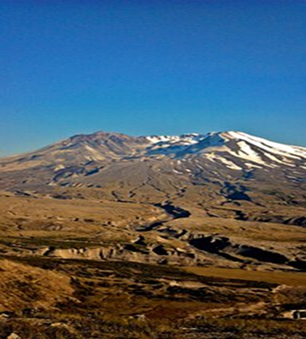
14. Volcanic action
Airborne is an important word in
this definition. Airborne volcanic blast or shock waves are volcanic action.
Ash, dust, particulate matter, and lava flow are also considered volcanic
action. None of these actions take place underground.
The cost to remove dust, ash, or particulate matter
is excluded unless the covered property first sustains direct damage.
|
|
Example: A nearby volcano
discharges an ash plume. Scenario
1: Hot ash
lands on plastic containers in the named insured’s yard. The containers melt
and must be destroyed. This loss is covered. Scenario
2: Hot ash lands on
several nearby buildings. The ash does not damage the buildings but must be
removed because of its appearance. This loss is not covered. |
PROPERTY COVERED
Coverage
A–Buildings and Coverage B–Business Personal Property cover direct physical
loss or damage to the property described. However, this coverage is limited by
two conditions:
- The loss or damage must be caused by or result from a
covered peril.
- The property
defined under Coverage A and Coverage B must be located at the premises
specified in the Declarations.
Coverage A–Buildings
Buildings
and structures listed on the declarations with a limit of insurance. A covered
building or structure includes the following:
1. Completed additions
NOTE:
No
further description is provided on completed additions.
2. Machinery and equipment
These machines are a
permanent part of the described building or structure.
3. Fixtures, including outdoor fixtures
Fixtures include inside
and outside property.
|
|
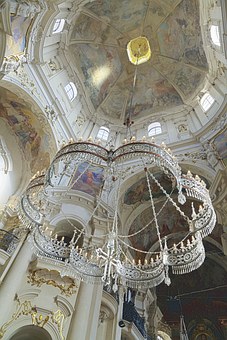
Example: A restaurant has several chandeliers
installed in its main ballroom. These chandeliers are fixtures, not personal
property. |
4. Maintenance/service personal property
This personal property
the named insured uses to maintain or service the specified premises. Examples
include air conditioning equipment, fire extinguishing apparatus, and floor
coverings, but not limited to these items. Other examples are appliances for
refrigeration, ventilation, cooking, dishwashing, laundering, and outdoor
furniture.
|
Example:
Jerry’s apartment complex placed
several benches along the common area sidewalks for the convenience of its
tenants. It also installed outdoor grills to encourage tenants not to grill
on their porches. The benches and grills are considered part of the building.
|
Related
Court Case:
"Fixtures Pertaining to the Service of the Building"
Defined by Court
5. Construction materials
This
property is only covered when there is no other insurance in place.
Coverage
applies to additions being constructed, as well as to alterations or repairs
being made to a covered building. It also includes materials, equipment,
supplies, and temporary structures located on or within 100 feet of the
described premises that are being used for these additions, alterations, or
repairs.
NOTE: Once an addition is
completed, it is covered as a completed addition as outlined in item 1. above.
6. Landlord-owned personal property
Personal
property owned by the insured in communal areas, rooms, or apartments is covered,
but only when the named insured is a landlord. Furniture, furnishings, or
equipment provided to a tenant occupying the premises is an example of such
property.
7. Building glass
NOTE: No further description
is provided on building glass.
Coverage B–Business Personal Property (BP 0816 Change)
The
following replaces the wording of the first paragraph of Coverage B – Business
Personal Property:
When
the named insured occupies the entire building, there is coverage for the
insured's business personal property when the following conditions apply:
- The property is
located in or on a building or structure listed on the declarations with a
BPP limit.
- The
property is in the open within 100 feet of the scheduled premises with a
BPP limit.
- The
property is in or on a vehicle within 100 feet of the scheduled premises
with a BPP limit.
If
the named insured only occupies part of a building or structure, the business
personal property must be within 100 feet of that building or structure and
either in the open or in or on a vehicle
to be covered. The property is covered only if there is a limit on the
declarations for business personal property at the described premises.
Business
Personal Property includes the following:
1. Owned property
Owned
property of the named insured is covered, but only if that property is used in
the named insured’s business.
Related
Court Case:
Business Personal Property Meant All Merchandise the Retailer Had an
Insurable Interest in
2. Personal property of others
The legal liability of
the named insured for the property of others (care, custody, or control), as
well as the cost of labor, materials, and other services that the named insured
has provided for that property, is covered.
|
Example: Jim
is a tailor. When a small fire damages property on his premises, his business
personal property coverage pays the following: ·
$25,000 for the
value of the suits in Jim’s possession to be altered at the time of the loss.
The replacement value of the suits exceeds $100,000, but Jim’s legal
liability is limited to their actual cash value. ·
$10,000 for the
cost of Jim’s labor in the alterations. This includes the fabrics and other
notions used in the alterations. |
NOTE:
The
insured who works on the property of others should consider whether legal
liability coverage alone is sufficient. Bailee Customers Coverage may be more
appropriate.
Related
Articles:
AAIS Bailee
Customers Floater Coverage–Dry Cleaners and Laundry Form
AAIS
Miscellaneous Bailee–Processor Floater
ISO Bailees
Customers Coverage Form
3. Leased personal property
Personal
property the named insured leases is covered but only for the contractual
obligation.
NOTE:
Because property leases differ, the limit required can
only be determined by reading the lease.
4. Tenant’s property
a. When the named insured
is a tenant, this coverage applies to improvements made to the space they
lease. Improvements include fixtures, alterations, installations, and
additions. A tenant cannot remove these improvements when the lease ends and
they move out of the building. However, these improvements hold financial value
for the tenant during the lease period. This coverage pertains to the tenant’s
use interest in those improvements.
NOTE: Items the named insured
can legally remove are considered owned business personal property.
|
Example: Jessica is currently leasing retail space from
Mini Shopping Plaza, which is in the process of renovating the space to meet
her specifications. The planned renovations include dressing rooms, built-in
cubbies, wooden coverings, and inserts for window displays. The total cost of these
renovations amounts to $50,000, which is incorporated into Jessica's rent.
This arrangement means that the tenant improvements will be covered once they
are completed. However, it's important to note the coverage is limited to
Jessica's interest in the use of these improvements. |
Related Article: Improvements and Betterments
b. The tenant may own or be in control of the building’s
exterior glass. In such a case, this policy covers that glass as business
personal property. However, if building coverage is provided at the same
premises, this glass coverage does not apply, and only building glass coverage
applies.
|
Example:
Dan‘s Deli is required to carry building insurance on the leased building.
One night, vandals broke the front glass windows. Since Dan has building
coverage on his policy, the glass is covered as building and not business
personal property. |
PROPERTY NOT COVERED
Neither
Coverage A–Building nor Coverage B–Business Personal Property insures the
following property. However, Additional Coverages or Extensions of Coverage provide
limited coverage for some of these items, as stated in the remarks accompanying
each item.
1. Accounts Receivable
Accounts
receivable are not covered.
There
is an exception. Extensions of Coverage B–Business Personal Property 1.
Accounts Receivable provides limited coverage.
2. Animals
Animals are not covered.
There are two exceptions.
- Animals the named
insured owns with the intent to sell are covered, but only if the named
insured keeps them inside a building.
- Animals belonging
to others that the named insured boards are covered. The named insured is
not required to keep these animals inside a building.
3. Antennas, Fences, or Signs
Outdoor
radio, television, satellite, dish-type, or other antennas or their masts are not
covered. Towers, lead-in wiring, fences, and signs not attached to buildings
are also not covered.
There
is an exception. Additional Coverages 1. Antennas, Fences, or Signs provides
limited coverage.
4. Contraband
Contraband refers to
goods that are illegal to produce, possess, transport, or trade under the law.
Examples of contraband include illegal drugs, counterfeit goods, smuggled
weapons, and stolen property.
Property or contraband is not covered
while being illegally transported or traded.
|
Example: Cigarettes can be sold legally in all
states. However, cigarettes taxed in one state and then transported and sold
in another state to avoid the second state’s excessive taxation are
considered contraband. |
5. Data Records and Programs (BP 0816 change)
Electronic data records, software programs and
applications, and proprietary software programs are not covered.
There are two exceptions.
- Prepackaged
software the named insured is holding for sale is covered.
- Electronic data records, software programs
and applications, and proprietary software programs that are part of the building’s
HVAC, lighting, elevators, or security systems if they are integrated into
those systems.
6. Land, Water, Growing Crops, or Lawns (BP 0816 change)
Land
is not covered by the policy, even if it is beneath a covered structure. Water,
whether on the surface or underground, is also not covered. Additionally,
growing crops and lawns are not included. The only exception is for lawns
that are part of a vegetated roof.
7. Lottery Tickets
Lottery tickets in the
possession of the named insured for the purpose of sale are considered covered
under the policy. Conversely, lottery tickets not offered for sale, despite
potentially holding value for the named insured, are excluded from coverage.
8. Money or Securities
There
is no coverage for money, securities, accounts, bills, or food stamps.
NOTE: Coverage can be added
by endorsement.
Related Article: AAIS
Businessowners Policy Available Endorsements and Their Uses
9. Trees, Shrubs, or Plants (BP 0816 change)
Indoor or outdoor
trees, shrubs, or plants are not covered. Grain, hay, straw, or other crops
outdoors are also not covered. However, coverage applies when they are indoors.
There are two
exceptions.
·
Extensions of Coverage: Coverage A–Buildings 3.
Trees, Shrubs, and Plants provides limited coverage.
·
Trees, shrubs, or plants on a vegetated
roof are covered.
10. Valuable Papers and Records
There
is no coverage for valuable papers and records.
However,
limited coverage is provided under Extensions of Coverage: Coverage B–Business
Personal Property 6. Valuable Papers and Records.
11. Vehicles or Aircraft
Coverage does not apply
to aircraft or vehicles. There is also no coverage for any self-propelled
machine requiring a license for use on public roads. Computers designed for or
permanently installed in aircraft, vehicles, or self-propelled machines are also
not covered.
|
Example: Kelly purchased a drone to take
photographs of real estate properties for his business as a realtor. However,
his insurance policy does not cover the drone. The drone has a permanently
installed computer used for navigation and photography. When Kelly removed some parts of the
computer for maintenance, a fire caused damage to them. Unfortunately, the
fire damage is also not covered by the policy, even though the parts were not
attached to the drone at the time of the incident. |
NOTE:
There
are now separate policy forms (such as Inland Marine) designed for these types
of vehicles and aircraft.
Related Article: CA
00 01–Business Auto Coverage Form Analysis
Related
Court Case:
Mobile Vehicle Held to be Property Not Covered in Spite of Insured's
Claim of Warehousing
12. Watercraft
There
is no coverage for watercraft. There is also no coverage for the watercraft's
motors, equipment, or accessories while afloat. The motors, equipment and
accessories are covered property while on land.
NOTE:
Coverage
for watercraft and its related equipment is available under boat, yacht, or
ocean marine policies.
Related
Article:
Ocean Marine Insurance Overview
ADDITIONAL PROPERTY EXCLUDED AND LIMITATIONS
The
following exclusions and limitations apply to Coverage A–Buildings and Coverage
B–Business Personal Property.
1. Animals
Animals are not
covered. However, there are two exceptions under which certain animals can be
considered covered property, but the coverage is quite limited. First, the
animal must suffer damage caused by a specified peril or due to the breaking of
building glass. Second, the damage must either result in the death of the
animal or require its destruction.
NOTE: The only
animals covered are those which the named insured owns, keeps inside a
building, and holds for sale. Additionally, animals owned by others the named
insured boards are covered.
2. Boilers
There
is no coverage when loss or damage occurs to any of the following:
a. Steam boilers, steam
pipes, steam turbines, or steam engines, but only when a condition or
occurrence within them causes the loss or damage. However, if gas or fuel that
explodes in a firebox, combustion chamber, or flue causes the loss or damage, then
coverage applies.
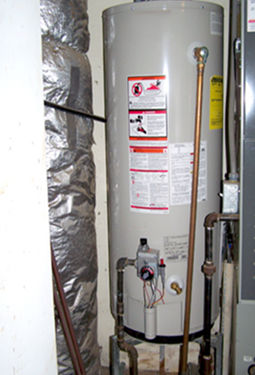
b. Hot water boilers or water heaters, but only when a
condition or occurrence within them causes the loss or damage. However, if
there is an explosion within a hot water boiler or water heater, then coverage applies.
|
|
Example: The hot water heater's pilot light
goes out. However, gas continues to fill the chamber and sparks from attempts
to re-ignite the pilot light cause an explosion. The damage caused by the
explosion is covered. |
NOTE: Equipment Breakdown
Protection Coverage should fill this gap in coverage due to this limitation.
Related
Article: 231.1,
ISO Equipment Breakdown Protection Coverage Form Overview
3. Furs
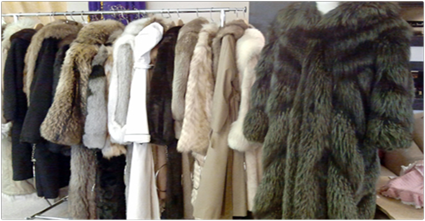
Theft of furs or fur
garments is covered but limited to not more than $2,500 in a single occurrence.
|
|
NOTE:
Businesses
with stocks of fur can be insured under furriers block
coverage forms and policies.
Related
Articles:
Other
Non-Filed Inland Marine Coverage Forms Archive
ISO Furriers
Block Coverage Form
4. Glassware/Fragile Articles
Loss
or damage to fragile items such as glassware, statuary, porcelain, and
bric-a-brac is excluded unless they break due to a specified peril or as a
result of building glass breaking. This limitation does not apply to glass that
is part of the building or structure. Additionally, it does not apply to
bottles and other containers held for sale. Photographic and scientific
instrument lenses are also exempt from this limitation.
5. Interior of Building or Structure (BP 0816 change)
Coverage does not apply to loss or damage to the
interior of a building or structure caused by rain, snow, sleet, ice, sand, or
dust. It also does not apply to loss or damage to
the personal property in that building or structure from the same perils. This
applies regardless of whether wind is involved.
However, there is coverage
for the building or structure, and personal property if these elements
enter the building through an opening that a covered peril first creates. Additionally,
coverage applies if the snow, sleet, or ice thawing on the building or
structure causes the loss.
|
Examples:
|
6. Jewelry, Watches, Jewels, Pearls, Precious Stones, or Metals (BP 0816 change)
Theft of jewelry,
watches, jewels, pearls, precious stones, or precious metals is covered but
limited to no more than $2,500 in a single occurrence. However, individual
watches and jewelry valued at $100 or less are not subject to this limitation. The $2,500 limit can be increased on the
Declarations.
|
Example: A thief
breaks into the Jones Department Store, focusing on the jewelry area. She
steals $25,000 in jewelry and watches valued at less than $100 each. She also
steals $50,000 worth of items, each worth more than $100. She then starts a
fire to cover her tracks, which causes an additional $100,000 in damage to
the jewelry area. The
total claim paid is as follows: ·
$25,000 for jewelry and
watches valued at less than $100 each. ·
$2,500 for items valued
at more than $100 each. The limitation applies because of theft, and the
limit was not increased. ·
$100,000 for the damage
the fire caused. |
NOTE:
Businesses
with stocks of this type of merchandise can be insured under Jewelers Block
Coverage Forms and Policies.
Related
Articles:
ISO Jewelers
Block Coverage Form
ISO Jewelers
Block Coverage Form
7. Missing Property
Property
that cannot be accounted for and lacks any physical evidence to explain its
disappearance is not covered. Property considered missing because of an
inventory shortage or that has mysteriously disappeared are examples of such
uncovered losses.
This
limitation does not apply to losses that would otherwise be covered under Optional
Property Coverages 1. Employee Dishonesty, or 2. Money and Securities covers.
8. Patterns, Dies, Molds, Models, or Forms
Theft
of patterns, dies, molds, models, or forms is covered but limited to no more
than $2,500 in a single occurrence.
9. Personal Property in the Open
Personal
property left in the open and then damaged by rain, snow, ice, or sleet is not
covered.
NOTE:
Personal
property kept in the open is not usually susceptible to such losses; otherwise,
the insured would keep it indoors for protection. Any insured who leaves
personal property exposed to such losses outside would be considered negligent.
10. Unauthorized Transfer of Property
Coverage does not apply
to loss or damage to property that has been transferred to a person or to a
place outside the described premises when the transfer is made because of unauthorized
instructions.
|
|
Example: Mary receives a call from someone named
John, who says he is calling on behalf of Gus, Mary’s boss. John tells Mary he paid Gus
$2,000 for a new keyboard and asks her to give it to the deliveryman when he
shows up. Mary follows John’s instructions. When Gus returns, Mary
tells him that she followed his instructions only to discover that John misrepresented
himself, and the keyboard is now nowhere to be found. This loss is not covered. |
New Unnumbered – Lawns, Trees, Shrubs, or Plants Part of a Vegetated Roof
(BP 0816 addition)
Vegetated roof lawns,
trees, shrubs, and plants are now covered under the same provisions as other
types of property due to amendments in the Property Not Covered section.
However, there are specific exposures unique to these items that remain
excluded.
The four new exclusions
applicable solely to these items are as follows:
·
Temperature
changes or extremes
·
Disease
·
Conditions
of the atmosphere or soil being excessively dry or overly damp
·
The perils
of rain, snow, sleet, ice, frost, or hail
ADDITIONAL COVERAGES
This
section provides additional property coverages. Each has additional limits
unless specifically stated otherwise.
1. Antennas, Fences, or Signs
The
Property Not Covered section excludes loss or damage to specific types of
outdoor property. This additional coverage insures that type of property and is
subject to the following limitations:
- Outdoor fences are covered for only the perils of
fire, lightning, explosion, riot, civil commotion, and aircraft.
- The most paid is
$2,500. Higher limits are available.
- Outdoor signs not
attached to a building are covered for up to $1,000 per sign.
NOTE: The wording that
applies to the most paid does not indicate if the limit is per occurrence, per
item, or per policy. This could lead to some confusion.
2. Collapse
The
limit is not increased for the covered property under this Additional Coverage.
NOTE: This additional
coverage is necessary because of the Collapse exclusion. At one time, coverage
forms and policies did not exclude collapse. However, various judicial
interpretations revealed an ambiguity in the concept of collapse, so form
writers developed the current method of excluding collapse as a peril and then
providing collapse coverage in a more straightforward and defined manner.
For
an example of how the collapse continues, consider the following court case:
Related Court Case: Definition Of “Collapse” Ambiguous:
Ruled To Include Both Actual And Imminent Collapse
a.
Collapse Coverage applies only to sudden and abrupt
collapses, covering direct physical loss or damage to property when a building
or structure collapses, either fully or partially. This coverage is triggered
by one or more of the following specific causes:
Related Court Case: Support Beam
Failure Excluded Under the Policy
|
Example: The front porch suddenly collapsed. Scenario 1: Jess was concerned because she had previously
heard creaking when the wind blew. She Googled and talked with friends, who
all told her that older buildings creak. Everyone was surprised when the
porch collapsed. This loss is covered. Scenario 2: Jess was concerned when she noticed her
porch was bowing and suspected a problem. She did not have the money to spend
to correct the condition, and she just ignored the situation and tried to
build up her savings. She was thrilled when the porch finally gave way. The
insurance company denied her claim because the decay was obvious. |
2) A structural component that has been damaged by insects or
vermin. This cause is covered only if the insect or vermin damage was hidden in
such a way no insured was aware the damage existed. Being unaware is acceptable
only if there was no reasonable way for an insured to suspect the damage. This
means that negligently ignoring signs of potential damage is not acceptable.
|
Example: The floor suddenly collapsed. Scenario 1: Percy was very surprised when he heard
a loud crash in the file room. The room contained archives and was occupied for
only a few days each year. Termites had apparently infested the beams under
the room and weakened them, causing the collapse. This loss is covered. Scenario
2: Percy had noticed that the
waiting room floor flexed when people walked on it. He checked in the
basement but did not see any obvious problems because of the suspended
ceiling in the finished basement. He noticed some ants and contacted an
exterminator, but never followed through. The floor collapsed because of an
infestation of carpenter ants. This loss is not covered. |
3) Defective materials or methods used during construction, remodeling,
or renovation while the construction activities are taking place is covered.
|
Example:
Paul places boards against
the tilt-up wall to hold it in place until it is properly secured. The boards
give way because they are defective, and the wall collapses. This collapse is
covered due to the defective boards. |
If
a completed building or structure collapses solely due to defective materials
or methods used during construction, there is no coverage. However, there is an
exception. If a sudden and abrupt collapse is caused by any of the following
factors, there is coverage, even if the collapse is also the result of
defective materials or methods.
a) A structural component
being decayed. This cause is covered only if the decay was hidden in such a way
that no insured was aware the decay existed. Being unaware is acceptable only
if there was no reasonable way for an insured to suspect the decay. This means
that negligently ignoring signs of potential decay is not acceptable.
|
Example: James had windows installed when he
remodeled his office. The windows were not installed properly, and water
seeped in. Because the walls were paneled, there were no obvious problems.
The water seeped into the floorboards and eventually resulted in their decay,
leading to collapse. Even though defective construction methods were the
reason behind the collapse, coverage applied because the hidden decay caused
the collapse. |
b) A structural component
damaged by insects or vermin. This cause is covered only if the insect or
vermin damage is hidden in such a way that no insured was aware the damage
existed. Being unaware is acceptable only if there was no reasonable way for an
insured to suspect the decay. This means that negligently ignoring signs of
potential damage is not acceptable.
c) Specified perils or building glass breaking, but only
as covered under the Property Coverages.
|
Example:
Gayle
purchased a garden shed kit. She assembled it based on her best guess and
ignored the detailed instructions accompanying the kit. A windstorm that
occurred three months later caused the improperly constructed shed to
collapse. Coverage applies even though the defective construction was a
primary reason behind the wind causing the shed to collapse. |
d) Weight of personal property or people
|
Example:
The
architect’s plans for the balcony specified the use of 3/4-inch screws.
However, Jerry’s crew opted to use 1/2-inch screws instead, believing they
would suffice. The balcony ultimately collapsed when furniture was placed on
it. Coverage is applicable even though the main reason for the collapse was
Jerry’s faulty decision to substitute 1/2-inch screws for the specified
3/4-inch screws. |
e) The cumulative weight of
rainwater that collects on a roof.
b. Collapse restrictions
It
is important to understand what collapse means. This paragraph defines the
term.
- The important words are sudden and abrupt.
A gradual collapse is not a covered collapse. The building must cave in,
fall in, fall down, or give way. The building, structure, or any portion
of the building or structure can collapse. However, to be considered
collapse, the building or part of the building where the collapse occurred
can no longer be occupied for its intended purposes because of the
collapse.
- The following are
examples of buildings not considered to be in a state of sudden and abrupt
collapse:
o A building or structure,
or any part of a building or structure, that remains standing even though it
may be bending, bulging, cracking, expanding, leaning, sagging, settling, or
shrinking.
o A building or structure,
or any part of a building or structure, that looks like it may very soon cave
in, fall down, fall in, or give way.
o Any portion of a
building or structure that remains standing even though it has separated from the
building or structure or any portion of it.
c.
Additional Property Restrictions
This is coverage for collateral damage of a covered
collapse. There is coverage when a building or structure collapses as described
above and causes direct physical loss or damage to the property described in
this paragraph. However, this applies only if this policy covers the described
property.
The described property is the following:
- Outdoor radio,
television, satellite, dish-type, and other antennas. This includes their
masts, towers, and lead-in wiring.
- Outdoor
canopies, awnings, and their supports
- Gutters
and downspouts
- Fences
- Yard
fixtures
- Outdoor
swimming pools
- Wharves,
docks, piers, and bulkheads
- Beach
and diving platforms and related attachments
- Retaining
walls that are not part of buildings or structures
- Roadways, bridges,
walkways, and other paved surfaces
|
|
Example: The high-rise office building has
collapsed, causing damage to nearby properties. The building is covered, and coverage
applies to all the following damages: ·
The
destroyed tower and antenna on the roof. ·
The
destroyed satellite dishes on the ground. ·
The
torn-off awnings on the owned building next door. ·
The
torn-off gutters and downspouts on the owned building next door from falling debris.
·
The
fences and yard fixtures of the building that collapsed, and the owned
neighboring buildings that falling debris crushed. |
d.
Collapse of Covered Personal Property
Direct damage caused when covered personal property
collapses is covered, even when the building or structure does not collapse.
The personal property collapse must be sudden and abrupt and must result from
one of the causes listed in paragraph a. of this additional coverage. The important words are
sudden and abrupt. Gradual collapse is not a covered collapse. The personal
property must cave in, fall in, fall down, or give way.
Personal
property that is bending, bulging, cracking, expanding, leaning, sagging,
settling, or shrinking has not collapsed. The collapse must be sudden and
abrupt.
The coverage this paragraph provides has two
restrictions. There is no coverage for either of the following:
- Any property listed in 2. c.
above.
- If marring or scratching is the only loss or damage that sudden and
abrupt collapse causes.
e. Any reference to Covered Peril includes this Additional Coverage 2. Collapse
as described and limited in
2. a., 2. b., 2. c., and 2. d. above.
|
Example:
An earthquake damages a
building's wall and causes a tree limb to fall, causing part of the roof to
collapse. The collapse peril usually applies to falling objects, but neither
the damage to the wall nor the damage to the roof is covered because both
were the result of the earthquake, an excluded peril. |
Related Article: Concurrent Causation and Anti-Concurrent Causation
Clauses–A Discussion
|
Examples:
|
Related Court Cases:
Collapse Coverage Did Not Apply to Replace All Stucco
Policy is Ambiguous about Collapse
3. Counterfeit Money or Money Orders
The insurance company pays up to $1,000
for loss if the named insured, in good faith, accepts counterfeit paper
currency or accepts money orders that are not paid when presented. Coverage
applies only if the named insured provided money, services, or products in
exchange for the currency or money order. Higher limits are available.
|
Example:
Jeremy takes a money order
that Angela gave him to the bank. The bank rejects it. Scenario
1: Angela buys groceries from
Jeremy’s store and uses the money order to pay for them. Coverage applies. Scenario 2: Angela gives Jeremy the money order as
a gift. Coverage does not apply. |
4. Debris Removal (BP 08 16 change)
The insurance company
pays costs to remove debris that results from a covered direct loss during the
policy period. This includes debris of both covered and other property.
There is no coverage to
remove any of the following debris:
- Extract land or
water pollutants
- Items within the property not covered
section
- Trees, shrubs, or plants that are covered property
only under extensions of coverage
- Property of others that would not qualify
as covered property under this policy
- Mud or deposits of earth from the premises
grounds
- Polluted land or
water. The restoration or replacement of the land or water is also not
covered.
The most paid is 25% of the amount paid
for the direct damage loss (not the limit), plus 25% of the deductible.
|
Example:
Calculating Debris Removal Coverage Walt insures his building for $100,000
with a $1,000 deductible. A tornado devastates the town and causes $85,000 in
damage to Walt's building. The debris removal costs are $50,000. The maximum
debris removal payment is $84,000 X .25 + $1,000 X .25 = $21,250. This means
that $28,750 is not covered. |
The combination of the debris removal
payment and the direct damage loss cannot exceed the damaged property’s limit
of insurance.
|
Example:
Calculating the Loss Payment without Additional Debris Removal Coverage In the example above, because the limit
on Walt’s building is $100,000, it is the maximum amount paid. The $84,000
loss is paid (after the deductible is applied), and $16,000 is left to pay
for the debris removal. This means that $34,000 of the calculated debris
removal expense is not covered. $100,000
Building Limit - $84,000 Loss Amount Paid = $16,000 Remaining Limit Left ($50,000 debris removal loss - $16,000
remaining coverage = $34,000) |
An additional $25,000 is available for
debris removal. It can be used if the 25% of direct damage is either inadequate
or if the combination of direct loss plus debris removal is inadequate (but not
both). The $25,000 additional limit is available only once, but the limit can be increased.
|
Example:
Calculating the Debris Removal Coverage with the Additional Coverage Using the $25,000 limit to satisfy the $28,700
shortfall in the first example does not prevent the limit capping. Applying
the $25,000 additional amount of debris removal expense, as shown in the
second example, results in a debris removal payment of $41,000. $16,000 Remaining Coverage +$25,000 Additional Debris Removal
Expense = $41,000 Debris Removal Payment |
If only
debris from other property occurs without any direct damage or loss to covered
property, $5,000 is available to remove that debris.
|
Example: The tornado picked up a trailer from
the neighboring trailer park and dropped it onto the named insured’s
premises. When the trailer dropped, no property on the insured's premises was
damaged, but the trailer was destroyed and needed to be removed. The $5,000
limit can be used to pay for the incurred removal costs. |
The only expenses for
debris removal covered are those reported to the insurance company in writing
within 180 days of the direct damage loss.
Related Court Case: Debris
Removal Obligation Was Paid
5. Fire Department Service Charges (BP 0816 change)
The insurance company
pays any charges the named insured must pay to a fire department called to save
or protect covered property from a covered peril. The charges may be required
by a local ordinance or contract or agreement between the fire department and
the named insured that was executed prior to the loss. The limit is $2,500 and
is not subject to a deductible. Higher limits are available.
A very
important restriction applies. The limit applies per occurrence and is not
based on how many fire departments respond or how many services are performed.
|
|
Example:
Enjoyable Eating has
contracted with three different volunteer fire departments because it is
located at the far end of town. During a fire, all three departments respond.
After the initial response, one fire department remains on-site to monitor
for any rekindling of embers. The total bill amounts to $1,500 for
two of the fire departments and $2,000 for the third. However, since the
limit was not increased, the insurance company will only pay a total of
$2,500. |

6. Forgery
The insurance company
pays for a direct loss caused by the following:
a. Forgery or alteration of written promises. This paragraph
applies to written promises, orders, or directions requiring money to be paid.
Examples of such promises include, but are not limited to, checks, drafts, and
promissory notes. These could either be made, or allegedly made, or drawn on
the named insured or an agent who works on the named insured's behalf.
Mechanically reproduced
facsimile signatures are treated as handwritten signatures with respect to the
coverage in this paragraph. In addition, substitute checks (as the 21st Century
Act defines them) are considered the legal equivalent of the original check.
b. Forgery or alteration of cards. This paragraph applies to
those written instruments used with credit, debit, or charge cards. These cards
must have been issued to the named insured, a partner, officers, directors,
trustees, members, managers, or employees for use in the named insured’s
business.
This paragraph’s
coverage applies only when the named insured is legally liable to the
organization that issued the credit, debit, or charge card used with the forged
or altered written instrument. The named insured is required to comply with all
terms, provisions, and contract conditions to which it agreed when the credit,
debit, or charge card was issued.
With respect to
coverage described in item a. or b. above:
·
If
the named insured is sued for refusing to honor forged or altered documents,
and the named insured has written permission from the insurance company to
defend, the insurance company will pay reasonable defense costs.
·
The
most paid is $ 2,500 (unless a higher limit is selected). This limit includes
the defense costs described above.
|
Example: Ornelle Shopping Company issues credit
cards to all its managers, but Roger rarely uses his. He receives a credit
card bill that reflects charges he did not incur. After checking his wallet
and discovering that the card is missing, he immediately notifies the credit
card company. Ornelle refuses to pay the bill because it is forged. When the
credit card company sues Ornelle, its legal expenses are covered up to
$2,500. |
7. Glass
First
things first, the actual glass loss is covered as either building or business
personal property coverage. This Additional coverage is about the extra costs
incurred following a glass loss.
The insurance company
pays the following expenses if building glass is damaged. These expenses are
not in addition to the limit of insurance.
a. When the glass frames
are damaged as part of the building glass loss, the cost to either repair or
replace those frames is covered.
b. Often, delays occur
that prevent glass from being immediately repaired. This item pays the cost of
protecting the opening where the glass had been until the glass can be
replaced. This may involve boarding up the opening or installing temporary
glass until the replacement glass is installed.
c. A glazier must have
access to the glass to remove damaged glass and to properly install replacement
glass. Barriers may be in place that must be removed before work can begin. The
costs to remove and replace those barriers are covered.
However, this
Additional Coverage does not include removing or replacing window displays.
|
Example: Velvy’s mother installed artistic iron
gratings over all the storefront’s windows. In the past, a key allowed the
gratings to be removed, but the key was lost years ago. Velvy is known for
her creative window displays that work with the iron gratings while showing
off the latest fashion. An attempted smash and grab damaged a window, but
thanks to the iron gratings, the perpetrators did not enter the store. Velvy’s insurance company pays to
remove the gratings, and because they were damaged during the removal, it
also pays to replace them. However, it does not pay for the cost Velvy incurs
to remove and replace the window display. |
8. Increased Costs-Ordinance or Law
Perils
Excluded 5. Ordinance or Law excludes coverage for any increased costs of
construction due to a civil authority imposing or exercising a law or ordinance
after a loss. This Additional Coverage provides limited relief from that
exclusion.
If
construction costs related to a direct damage loss increase because a code,
ordinance, law, or decree that regulates construction, use, or repair of any
property is enforced, this coverage covers those increased costs. However, this
additional coverage is subject to several restrictions:
a. Coverage is only applicable if the building is insured on a replacement
cost basis.
b. The code, ordinance, law, or decree must be in force at the
time of loss.
|
Example:
Al owns a two-story frame
building in downtown Plymouth. It was built in 1900. After the building burns
down, Plymouth passed an ordinance that all downtown buildings must be made
of masonry or better construction. This coverage does not apply because the
ordinance was enacted after the fire. |
c. If the building is subject to a code, ordinance, law, or
decree before a loss occurs, but the named insured does not comply with it, the
insurance company will not pay to comply with it after the loss.
|
|
Example: Harry's Hardware is cited for not complying with the
village's plumbing and drainage rules. Harry argues with the village about
the issue. A storm damages
Harry’s building. Harry must pay the increased construction costs to satisfy
the ordinance because he will not get a building permit unless he agrees to
do so. The insurance company will not pay for that cost. |
d. If a business must relocate based on a code, ordinance,
law, or decree, the increased cost of construction is limited to those required
at the new location.
|
|
Example: Millie’s Pet Suites and Spa is located
in West Union, where a new ordinance limits businesses and residences to four
animals. Millie's business is
grandfathered in until her building collapses under the weight of ice and
snow. If she stays, she must follow the ordinance. Instead, she decides to
move outside the village limits, where the ordinance doesn’t apply, and any
increase in construction costs will be covered. |
e. The named insured has the option to build at a new
location. If it exercises that option, the insurance company pays only the
increased costs of construction that the named insured would have incurred to
rebuild at the old site.
|
Example:
Let’s change Millie’s
example from above so that no ordinance requires her to relocate. She is
eligible to receive increased costs equivalent to what she would have
incurred at her current location. She decides to voluntarily move her
facility; therefore, she’s eligible for construction cost increases, but only
for what she would have incurred at the old site location. |
f. The insurance company does not pay anything until the
building is repaired or replaced. However, there is a time frame to consider.
The repair or replacement must be done as soon as reasonably possible and
completed within two years of the date of loss.
|
Example:
Millie is exhausted and
decides to take a vacation before tackling the rebuilding project. If she
delays too long, the insurance company could decline to pay any costs because
of this condition. |
g. This coverage is not
intended to provide coverage for pollution or fungus and related expenses.
Many states have imposed environmental regulations,
but this coverage will not apply to those. Any costs or expenses for abating,
monitoring, assessing, cleaning up, removing, containing, treating,
detoxifying, neutralizing, or in any other way responding to pollution or
fungus or related perils are not covered. In addition, coverage does not extend
to any increased costs resulting from the existence of pollutants or fungus or
related perils.
This
Additional Coverage’s limit of insurance is $10,000 on each covered building or structure.
The BP 0321–Ordinance
or Law Extension is available, which provides a more comprehensive coverage and
higher limits.
Related Article: AAIS Businessowners Policy Available
Endorsements and Their Uses
9. Inventory and Appraisal Expenses
The
insurance company agrees to pay inventory and appraisal expenses the named
insured incurs. However, these expenses are covered only if the insurance
company requests that the named insured incur them to determine the value of
the loss. This means that coverage does not apply if the named insured incurs
the expenses solely for its own benefit.
In
addition, this Additional Coverage does not pay public adjusters’ fees or any
expenses due to invoking the Appraisal condition. The most paid is $2,500 and
is not subject to a deductible. (Higher limits are available.)
10. Limited Fungus and Related Perils (BP 0816 change)
This
Additional Coverage is provided because the policy excludes most losses that
fungus causes. This extremely limited coverage is similar to Additional
Coverages 12. Pollutant Cleanup and Removal, especially with respect to the
aggregate limit.
a.
Coverage
Coverage
applies only if a covered loss resulting from a specified peril first occurs,
and because of that covered loss, a fungus or related peril loss occurs. The
specified peril must occur during the same policy period in which the fungus
loss occurs.
|
Example:
Costume Corner’s policy is
issued for the period May 4, 2024, to May 5, 2025. The renewal period is May 5,
2025, to May 5, 2026. A windstorm occurs on February 2, 2025. On July 1, 2025,
Margie notices fungus activity that she believes is directly related to water
that entered the building at the time of the storm. Her claim is denied
because the specified peril loss occurred in the first policy period, and the
fungus loss occurred in the second policy period. |
The
coverage aggregate limit applies to both direct loss and clean-up costs. The
costs of removing and replacing property to remove the property that the fungus
damaged and conducting any follow-up testing are also covered.
Coverage applies only
if the named insured does everything possible to protect the property at and after
the occurrence.
Coverage does not apply
to a vegetated roof’s lawns, trees, shrubs, or plants.
b.
Limited Fungus and Related Perils Coverage Aggregate
Limit
This
coverage is subject to a $15,000 aggregate limit. This limit is restrictive in
that it does not apply per occurrence. It applies for each consecutive annual
policy period or any extension of a policy period that consists of less than 12
months, regardless of the number of claims made or buildings insured. This
coverage does not increase any other limits for covered property, expenses, or
assessments.
c.
Exceptions
This
Additional Coverage has four exceptions. These are intended to prevent conflict
and ambiguity because each exception is covered elsewhere in the policy. The limitations
within this item do not apply to any of the following:
- Fungus that results from fire or
lightning
- Additional
Coverages 14. Removal
- Collapse
caused by hidden decay subject to Additional Coverage–Collapse
- Accounts
receivable, computers, or outdoor signs coverages
d. Application of Coverage
This
Additional Coverage does not apply to loss or damage to covered property if it
is not caused by fungus or related perils in any way. The only exception is
when fungus or related perils increase the amount of a loss. This Additional
Coverage only insures the increased amount of loss due to fungus or related
perils, and this increase is subject to the terms of this Additional Coverage.
11. Lock and Key Replacement
When
a burglary is considered a covered theft loss, this coverage is available. It
covers the expenses the named insured incurs to repair or replace exterior or
interior door locks and keys, but only at the location where the loss occurred.
Coverage applies under two circumstances. The first is if the named insured
property was damaged, and the second is if the named insured’s keys were
stolen.
The
most paid is $1,000, but it is not subject to a deductible. Higher limits are
available.
12. Pollutant Clean Up and Removal
This
Additional Coverage is provided because this policy excludes most pollution
losses. This extremely limited coverage is similar to Additional Coverages 10. Limited
Fungus and Related Perils, especially with respect to the aggregate limit.
Coverage
applies to expenses the named insured incurs to extract pollutants from land or
water. However, it applies only if a covered peril caused the pollutant to be
released. The peril that causes the release must occur during the policy
period.
There
are two restrictions:
a. The named insured must
report the expenses to the insurance company within 180 days of the date that
the covered peril occurred to be paid.
b. The insurance company
pays the costs to observe, test, evaluate, or record pollutants (or their
effects) only when this Additional Coverage covers the expense to extract them.
This coverage is
subject to a $10,000 per premises aggregate limit. This limit is restrictive in
that it does not apply per occurrence. It applies to each consecutive annual
policy period. Higher limits are available.
|
Example:
Because of a fire in
Fernando's building, chemicals leak onto the land, into the stream, and into
the building’s basement. This Additional Coverage covers the costs to clean
up the land and the stream. It does not cover the cost of removing chemicals
from Fernando's basement. |
13. Recharge of Fire Extinguishing Equipment
This
Additional Coverage pays the costs to recharge fire extinguishing systems or
manual fire extinguishing equipment. Coverage applies only if the discharge was
due to an accident, a covered loss, or fighting a fire on the premises or
within 100 feet of it. Coverage also
applies to conduct hydrostatic testing.
This
Additional Coverage also applies to loss or damage to covered property that
such accidental discharges cause. However, there is no coverage for loss due to
a discharge that takes place during installation or testing.
The
limit is $5,000 and is not subject to a deductible. Higher limits are available. The insurance company has the option to
replace the equipment instead of recharging it.
NOTE:
This
Additional Coverage is to the named insured and the insurance company’s benefit
because the safety equipment is fully charged and ready if there is another
fire.
14. Removal
If
covered property is moved from its original location to another location to
protect it from a potential covered risk, it will be covered during the move
and at the new location for up to 30 days, or until the policy expires,
whichever comes first.
NOTE: This important coverage
is unique because the coverage provided is not subject to any exclusions. The
only requirement is that the potential peril be a covered peril.
|
|
|
Example:
Roger watches the progress
of the wildfire and moves his inventory to his brother's repair garage, which
is safely beyond its reach. When he attempts to retrieve the property 20 days
later, he discovers that it is damaged beyond repair by being exposed to the
gasoline and oil fumes in the garage. The loss to the inventory is covered
because it was moved there to protect it from the wildfire. |
15. Tearing Out and Replacing
The
named insured may have to open walls, ceilings, or floors to reach and repair a
leaking plumbing system that causes water, liquid, powder, or molten material
damage to the building or business personal property. Without this coverage, the
policy does not cover the damage to the walls, ceilings, or floors because a
covered peril did not damage them.
This
Additional Coverage insures damage done to undamaged property that conceals the
plumbing system. However, it does not pay the costs to repair the plumbing
system itself, but there is an exception. It will cover damaged parts of an
automatic fire protection system if damaged by freezing or discharge of any
substance from such systems.
This Additional
Coverage does not have its own sub-limit. It is considered part of the limit of
insurance.
|
Example:
A water pipe bursts behind
a wall. The cost of tearing out the sheet rock to get to the break is covered.
The water damage to the walls, floors, and personal property is also covered.
The cost of repairing the pipe itself is not covered. |
EXTENSIONS OF COVERAGE
Each
extension of coverage is an additional amount of insurance that applies to
losses a covered peril causes at the described premises unless stated
otherwise.
The Following Extensions of Coverage Apply to Coverage A–Buildings:
1. Building Property–Off Premises
Building
property being kept temporarily within the basic territory but at a location
the named insured does not own, control, rent or lease is covered. Coverage
applies while such property is in transit. There is no coverage for theft of
that property from a vehicle that is left unattended unless the property was in
a locked and secured part of the vehicle. Evidence of forced entry must be
visible.
The limit for property
off-premises is $5,000. Higher limits are available.
|
|
Example: Wally removes an air-conditioning unit and takes it to a
dealer for repairs. While at the shop, a fire in the shop damages the unit.
This loss is covered up to the $5,000 limit. |
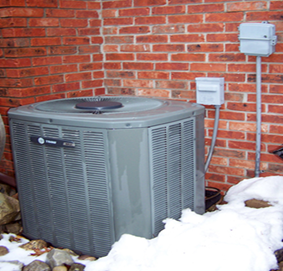
2. Newly Acquired Buildings
Buildings
or structures newly constructed on the covered premises and buildings or
structures newly acquired but at a premises not described are covered. The new
construction or the acquisition must occur during the policy period. If newly
acquired, the premises must be within the basic territory.
Coverage
begins when construction begins or when the building or structure is acquired.
It ends at the earliest of 30 days later, when the policy expires, or when the
building or structure is reported to the company to be added to the policy.
This is not free
coverage. Once reported, the items are added to the policy as of the
acquisition date or construction starting day, and the premium must be paid.
The maximum paid for a single newly acquired building or structure is $250,000.
3. Trees, Shrubs, and Plants (BP 0816 change)
Loss
or damage to the named insured's outdoor trees, shrubs, and plants is covered,
but only if the perils of aircraft, civil commotion, explosion, fire, lightning,
or riot caused the loss or damage.
The
cost to remove the debris created by a covered loss is part of this extension. The cost to remove debris of other property
consisting of trees, shrubs, and plants that land on the premises is also part
of this extension.
This
coverage does not apply to a vegetated roof’s trees, shrubs, or plants nor to
debris of other property that belongs to the named insured’s landlord.
The most paid is
$2,500, subject to $1,000 for any one tree, shrub, or plant. The BP0816
change has removed the cost of debris removal from this limit. This is due to
the changes within the Additional Coverages – Debris Removal. Higher limits
are available.
|
|
Example: Paula’s outdoor landscaping was
destroyed when a protest spilled out from the street onto her property. Three young trees were bent
so badly that they had to be removed. Each tree costs $500 to plant, but
costs $400 to remove because the root systems have to be dug out before new
trees can be planted. The cost of the total covered claim was
over $5,000, but this coverage paid Paula only $2,500. |
The Following Extensions of Coverage Apply to Coverage B–Business Personal Property:
1. Accounts Receivable
a.
Coverage
applies to four types of losses if a covered peril damages the named insured’s
records of accounts receivable.
- Amounts that are owed to the named
insured but that it cannot collect.
- If
the named insured must take out a loan to cover money it cannot collect,
the interest charged on that loan is covered.
- Any
increased collection costs that the named insured incurs when the increase
is due to the accounts receivable loss.
- Costs
that are incurred to reproduce or reconstruct the accounts receivable
records. Only costs that are deemed reasonable are covered.
b.
Exclusions
Only
three exclusions in Perils Excluded apply to this Extension of Coverage.
- Civil Authority
- Nuclear
Hazard
- War
and Military Action
Only
four exclusions in Additional Exclusions apply to this Extension of Coverage:
- Criminal,
Fraudulent, Dishonest, or Illegal Acts
- Electrical
Damage
- Indirect
Losses
- Voluntary
Parting
Three
exclusions are added for this Additional Coverage:
- No coverage
applies if a loss results from concealing, altering, or destroying the
insured's accounts receivable records to hide criminal or fraudulent
activities involving money, securities, or property.
NOTE: The concealment, falsifying, etc., can
be conducted by any person – it could be the named insured, but it could also
be any employee or even an outsider.
|
Example:
Perry is the Journeyman’s
bookkeeper. He has been embezzling for a few months and just found out that
an outside auditor is coming to the office the next day to review the books.
Perry panics, breaks into the office that evening and sets a fire that
destroys all the accounting records. The investigation traces the arson to
Perry, who confesses. The insurance company does not pay Journeyman anything
for its accounts receivable loss. |
- When a loss is
uncovered only because of a discrepancy in the named insured's books or
records it is not covered. However, the named insured may use such a
discrepancy to support its accounts receivable claim if there is other
evidence to prove that a loss occurred.
- Bookkeeping,
accounting, billing errors, or omissions losses are not covered.
c. The most paid for an on premises
loss is $10,000 per occurrence. The most for an off premises loss is $5,000.
Higher limits are available.
2. Business Personal Property
The
insurance company pays for loss or damage to the following Business Personal
Property:
a. Business personal property at a new location the named
insured acquires.
|
Example:
Mark purchases a new
building. The purchase price includes all business personal property inside
the building. Extensions of Coverage 2. Newly Acquired Buildings covers the
building. This Extension of Coverage covers the newly acquired business
personal property. If Mark moves any business personal property into the new
building, this Extension of Coverage also covers that property. |
b. Business personal property newly acquired by the named
insured but is located at an existing premises.
|
|
Example: Mark finds a great deal. He immediately
purchases the machinery and has it delivered to his main building. This
Extension of Coverage covers the newly purchased property. |
c. Business personal property at the described premises in a
building either under construction or newly acquired.
|
Example:
Mark moves business
personal property into a new building, which he is building on his property.
Extensions of Coverage 2. Newly Acquired Buildings covers the building. This
Extension of Coverage covers the business personal property. |
Coverage
applies to only such locations in the basic territory.
Coverage
begins when the named insured acquires either the location or the business
personal property. It ends no later than 30 days after the date it was
acquired. However, the coverage extension ends as soon as the location or the
business personal property is reported to the insurance company or the policy
expires, whichever comes first. The named insured pays the premium for the
location or the business personal property it acquired beginning with this
coverage’s effective date.
The
most this Extension of Coverage pays is $100,000 at each building.
Related Court Case: Newly Acquired Property Held Not Covered After the Automatic
90-Day Protection Expired
3. Business Personal Property–Off Premises
This
Extension of Coverage insures business personal property temporarily at
locations in the basic territory that the named insured does not own, control,
rent, or lease. It also covers property in transit. It does not cover valuable
papers and records or accounts receivable. Coverage also does not apply to
theft from unattended vehicles unless the property is in a locked and secured
part of the vehicle and there are visible signs of forced entry.
The
most this Extension of Coverage pays is $10,000. Higher limits are available.
4. Data Records and Programs (BP 0816 change)
Loss or damage that a
covered peril, computer hacking, or computer virus causes to data records,
programs and applications, and proprietary programs is covered.
However, there is no
coverage for loss or damage:
- when caused by or
is a direct result of an employee or volunteer manipulating the computer
system. The employee may be full time, leased or temporary. There is also
no coverage if the computer manipulation was by an individual or
organization hired by the named insured to provide computer-related
services.
- to accounts
receivable.
- to prepackaged software that the named
insured holds for sale.
- to electronic data records, software
programs and applications, and proprietary software programs that are part
of the building’s HVAC, lighting, elevators, or security systems if they
are integrated into those systems.
The
coverage is limited to no more than $10,000 aggregate in any one policy period.
This limit is flat and is not increased regardless of the number of computers,
premises, locations, or occurrences. The limit can be increased.
5. Personal Effects
Coverage
applies to personal effects that the named insured, its partners, officers,
directors, trustees, joint venturers, members, managers, or employees own. Personal
effects do not include the named insured's business equipment or tools.
The
most the insurance company pays at each premises is $2,500. Higher limits are
available.
NOTE: The policy does not define Personal Effects.
|
Example:
A windstorm blows in the
windows at Jill’s Design Place and destroys Jill’s personal collection of tea
cups. It also ruins her family pictures, the two suits she had just cleaned,
and a pair of boots she stored under her desk. Her personal assistant’s vase,
teapot, coat, and family pictures were also ruined. All could be covered as
personal effects. |
6. Valuable Papers and Records
a.
This Extension of Coverage insures loss or damage to
valuable papers and records that the named insured owns and those in its care,
custody, or control. The loss or damage must be caused by a covered peril.
b. Coverage does not apply
to loss or damage to property:
·
After
it has been sold, even though it has not yet been delivered.
·
That
is stored at a location other than the described premises
·
When
it is a sample that is for sale
Only
exclusions in Perils Excluded apply to this Extension of Coverage:
- Civil Authority
- Nuclear
Hazard
- War
and Military Action
Only
three exclusions in Additional Exclusions apply to this Extension of Coverage:
- Criminal,
Fraudulent, Dishonest, or Illegal Acts
- Voluntary
Parting
- Defects,
Errors, or Omissions but only item c. in that exclusion
c.
The
most paid for an on-premises loss is $10,000 per occurrence. The most for an
off-premises loss is $5,000. Higher limits are available.
Additional Unnumbered Coverage B – Business Personal Property Extension (BP 0816 addition)
Business Personal Property – Portable Storage Units
Business personal
property stored in a portable storage unit or detached trailer is covered under
the following circumstances:
- There must be a
direct physical damage loss
- The property must be covered
- The storage is temporary
- The unit or trailer is within 100 feet of
the described premises. The described premises may be the interior of a
building or structure, and then this requirement is that it be within 100
feet of that building or structure.
The coverage provided above is restricted under the
following circumstances:
- The loss happens after the business
personal property has been in storage in the unit or trailer for more than
90 days.
- The actual unit or trailer has been on the
premises and in use for more than 90 days in a row.
- The loss or damage is due to rain, snow,
sleet, ice, sand, or dust unless the actual unit or trailer was damaged by
a covered peril allowing these excluded perils to enter or the snow, sleet
or ice on the unit or trailer thawed and entered the unit or trailer.
- The loss is covered elsewhere under this
policy or an endorsement attached to it.
- The loss or damage is to the trailer or
unit.
The coverage is limited to $10,000 for a single occurrence
and applies over covered property in such trailers or unit. There is no per
trailer or per unit limit. This limit can be increased.
COVERAGE C–LOSS OF INCOME (BP 0816 CHANGES)
Loss
of income coverage begins only after direct physical loss or damage to real or
personal property. While direct damage to property does not always result in
the business being interrupted, loss of income coverage applies if it does.
This coverage applies only if the direct damage to property is caused by a
covered peril that interrupts the named insured’s normal business activities.
Any subsequent loss of income is covered but only during the period of
restoration.
NOTE: There is no
requirement that the damaged property be covered by this policy.
Restrictions
Coverage C–Loss of Income is subject to the
following four
restrictions:
a.
A
peril that applies only to computers is not a covered peril.
b.
Real
or personal property must sustain loss or damage at the described premises or
within 100 feet of the premises either in the open or in a vehicle. If the
named insured occupies, rents, or leases only part of the premises or building,
the term premises includes both the portion the named insured occupies and any
area of the building that provides service for or access to the named insured’s
portion of the premises.
NOTE: With the 0816 change,
the word site has been removed.
Damage to personal property
in the open or in a vehicle within 100 feet of the building of the insured’s
described premises.
c. There is no coverage
when Loss of Earnings or Extra Expenses is due to loss, damage, destruction, or
corruption of data records, programs and applications, or proprietary programs.
A limited amount of coverage is available under Additional Loss of Income
Coverages for Destruction of Data Records and Programs.
d.
Only the loss of income and extra expenses incurred
within the 12 months following the date of direct physical loss or damage to
property are covered.
NOTE: This means that this
coverage does not have a dollar limitation and that the time period can extend
beyond the policy expiration date.
|
|
Example: Roger has an office on the 14th floor
of a high-rise office building. The building’s lobby is damaged so severely that
clients cannot use the elevators to reach Roger’s office. Roger has a loss of
earnings even though his property is not damaged. Roger’s policy period is February 1, 2025,
to February 1, 2026. The damage to the lobby occurred on July 15, 2025. Roger
cannot resume his operations until April 1, 2026. The insurance company pays
Roger’s total claim even though his policy expired. |
Coverage Limit
If
there is a limit of insurance for this coverage on the declarations, it is the
most paid for all earnings and extra expenses combined.
NOTE: This might create a degree of ambiguity because there is no indication
whether the
time limit or the dollar limit takes precedence. The Businessowners Policy
Rating Manual states the limit for Loss of Income is to be 20% of the limit for
Coverage A plus 100% of the limit for Coverage B. There is an option to provide
coverage without a specific limit, but it is subject to a premium surcharge.
When the named insured selects this option, the words “Actual Loss Sustained”
are entered on the Declarations instead of a limit.
Related
Court Case: Business Income Held Not Applicable to Building Not Scheduled for
Such Coverage
Earnings
This
coverage pays the actual loss of net income. Net income is defined as the net
profit or loss of the business before income taxes. This coverage also pays for
interest, payroll expense along with operating expenses that continue even
during a loss. However, only such expenses normal to the business are paid.
To compute the loss,
the insurance company looks to the businesses experience and the probable
experience had there been no loss.
|
Example: Harry had a net income of
$100,000 from January 1, 2025, to January 1, 2026. He signed a contract with
a new customer on November 15, 2025, that should produce an additional
$50,000 in net income. Harry has a loss on October 1, 2025, that resulted in
a five-month loss of income. The insurance company examines the net income
for the period January 1, 2025, to January 1, 2026, and the anticipated future
revenue due to the new contract. |
Additional Restrictions
The
following restrictions apply in addition to the restrictions listed under
Coverage C–Loss of Income:
a.
The
only expenses paid under this coverage (extra expenses coverage will pay other
types) are those determined to be necessary during the restoration period.
Payroll and other expenses are paid, but only as much as needed so that the
business can resume normal operations that existed before the loss occurred at
the same level of quality.
NOTE: This means if the
business had lousy service in the past because of inadequate staffing, the
payroll expense would only be the amount needed to maintain the same lousy
service.
b.
The
named insured is expected to be prudent. If the named insured can resume any or
all operations but chooses not to, this insurance will not pay for an increase
in the loss because of that refusal.
c. The insurance payment is for time that the named insured should have
needed to resume operations. If the named insured chooses not to resume
operations or delays operations, only the amount of loss that should have been
incurred is paid.
|
Example:
A covered peril damages the
Millie and Sons store. Millie, the owner, has worked for 12 years and has
never taken a vacation. She decides this is the perfect time to take a
one-month European vacation. The insurance company believes her vacation
delayed the book store resuming operations. As a result, it reduces its
payment for loss of income by at least one month of her vacation. |
d.
If the
direct damage loss that caused the named insured’s business income loss also
caused a situation in which the named insured could have increased its earnings
if it had been able to operate following the loss, this coverage does not
include that increase.
NOTE: This income would be
considered windfall income.
Related
Court Case:
Earnings Insurance Held Not Applicable When Motel Was Not Closed
Extra Expenses
This
coverage pays three types of extra expenses:
- All necessary
extra expenses the named insured incurs to continue or resume normal
business activities following a loss.
NOTE: These are not the
ordinary expenses described in Earnings. These are expenses incurred above and
beyond ordinary expenses to help propel the business back into operation.
- Any
extra expenses to repair, replace, or restore any property. These expenses
are incurred to reduce the down time so the only expenses paid are those
that reduce the down time. The amount paid is no more than the actual
income loss savings.
- The
extra expenses incurred to research, replace, or restore information on
damaged valuable papers and records are paid but only for the amount those
expenses reduce the loss of income.
If
extra expense is used to purchase property for temporary use, the salvage value
of that property is deducted from the extra expense payment.
Additional Restrictions
The
following restrictions apply in addition to the restrictions listed under
Coverage C–Loss of Income:
a.
The
named insured is expected to be prudent. If the named insured can resume any or
all operations but chooses not to, this insurance will not pay for an increase
in the loss because of that refusal.
b.
Coverage
is limited to only necessary extra expenses incurred during the period of
restoration.
c. The insurance payment is for the amount of time the named insured should
have needed to resume operations. If the named insured chooses not to resume
operations or delays operations, only the amount of loss that should have been
incurred is paid.
|
|
Scenario 1: OK Printing sustains a covered loss. The equipment it
needs to resume operations is not available for three months, but the work
can be subcontracted to others for an additional cost for the three months.
This extra expense is paid. Scenario 2: Changing the scenario, OK Printing cannot operate without
its presses, and its business operations are suspended. The new presses
ordered from Regions Machinery will take six months to arrive. The suspension
costs the insurance company $50,000 per month. Regions Machinery offers a priority service that will
reduce the waiting period to three months, subject to a $20,000 surcharge and
$25,000 in additional freight charges. The insurance company agrees to pay
these costs because it reduces its expected loss from $150,000 to $45,000. |
Related
Court Case:
Extra Expense Coverage Endorsement Held Inapplicable
Exclusions and Limitations
The provisions below
apply to Coverage C–Loss of Income.
1. Fire Extinguishing
Coverage
does not apply to expenses to fight fires.
2. Leases, Licenses, Contracts, or Orders
There
is no coverage for the increased amount of loss because a lease, license, order,
or contract is suspended, lapses, or cancelled during the period of
restoration.
The
only exception applies if the suspension, lapse, or cancellation resulted from
the interruption of normal business activities. The Period of Loss Extension
also applies to this exception.
Extra expenses are paid for the covered suspension, lapse, or
cancellation only
during the restoration period. This means extra expenses beyond the restoration
period is not covered.
|
Example:
KB has a contract to supply
Larry’s Retail with up to 10,000 units during a given year. KB’s roof collapsed
one month after the contract took effect, and it did not deliver any units
during the three-month restoration period. Larry cancels the contract. The
insurance company pays for the loss of earnings from the number of units that
would have been sold during the restoration period had the contract remained
in effect. It does not pay for sales that could have been anticipated after
the restoration period and any applicable period of loss extension if the
contract had remained in force. |
3. Strikes, Protests, and Other Interference
The restoration period
is not extended if a strike, protest, or similar activity at the premises
interferes with rebuilding, replacing, or repairing damaged property.
|
Example: A tornado destroys Rolly’s Hardware
Outlet and Building Supply. Because the store cannot reopen, it misses the
increase in sales from residents rebuilding and repairing their homes and
businesses that the tornado also damaged. Rolly’s cannot include the
potential increase in sales in its earnings calculation. |
NOTE: This means that the insurance company
does not cover the increased loss of earnings.
|
|
Example: Stephanie’s clothing store is damaged when an
automobile involved in a police chase crashes into it. The police arrest the
occupants of the automobile, but one dies during the process. Numerous individuals visit the crash site daily to
protest what they believe to be police brutality. The protests make it
impossible for contractors to access the premises, and as a result, repairs
cannot be made. Because the demonstrations lasted ten days, Stephanie was not
paid for the ten days of lost earnings. |

4. Unnecessary Expenses
The
insurance company does not cover any expenses incurred by the named insured
during the restoration period that the insurance company deems unnecessary.
LOSS OF INCOME COVERAGE EXTENSIONS
The following Loss of Income Coverage Extensions are part
of the applicable Loss of Income coverage limit, not in addition to it.
1. Alterations and New Buildings
Loss of Income coverage applies to any loss or damage caused by or resulting from a covered peril at the described premises, specifically to the following:
a. Additions or
alterations
b. New buildings or
structures that are currently under construction or have already been
completed
c. Equipment,
machinery, materials, or supplies located on the premises or within 100 feet of
it. This coverage applies only to items intended for use in the construction of
items a. or b. above, or that are incidental to the new buildings being
occupied.
If the loss or damage delays the start
of normal business operations, the restoration period will begin when those
operations would have commenced if there had been no loss.
|
Example:
The kitchen cabinets for the apartment
units are received and stored in a storage shed on the premises. A lightning
strike destroys the shed, resulting in the loss of all the cabinets.
Replacing them sets the opening day back 30 days. The 30-day loss of income
is a covered loss. |
2. Fungus and Related Perils
Coverage
applies for a cumulative period of up to 30 days to loss caused by the presence
and/or any activity of fungus or related perils when it is a direct result of a
covered peril. This Coverage Extension does not include fire and lightning as
covered perils because fungus from fire and lightning is not excluded.
NOTE:
There are some confusing aspects of this extension
that may have to be examined:
- What is a
cumulative period of time? Does it apply to a single loss or to all
losses?
- When
must the initial peril that caused the fungus or related peril occur? Can
it be prior to the policy period?
- This
coverage extension does not refer to the period of restoration. Does the
period of restoration apply to this specific type of loss or not?
3. Interruption by Civil Authority
Loss
of Income coverage extends to include losses caused when a civil authority
denies access to the described premises. The civil authority’s decision to deny
access must be the result of damage to property at other than the described
premises. This coverage applies only if a peril covered by this policy causes
the damage. However, coverage is subject to both of the following provisions:
a. The described premises
must be within one mile of the damaged property. It must also be inside the
area to which access is denied.
b. The order must be
issued because of one or both of the following:
- The civil authority requires complete access to the
damaged property.
- The conditions in the area are considered dangerous
because of the damage the covered peril caused or is causing.
NOTE: This change significantly reduces
coverage. The previous edition had no restrictions on the distance the
described premises had to be from the damaged property. This one-mile
limitation may be particularly concerning in rural areas with limited access to
roads and bridges.
|
|
Example: Millie
owns a bait shop near Stonelick Lake. A wildfire starts in a nearby forest,
and all access to Stonelick is restricted to emergency vehicles only. The
fire does not damage Millie’s bait shop, but it loses two weeks of income
during the period of restricted access. The previous edition provided coverage for this
situation. The current edition does not because the wildfire was more than
one mile away. |
Waiting Period and Time Limitation
Earnings Coverage lasts
for up to four consecutive weeks from the order date. However, it does not take
effect until 72 hours after this coverage starts.
|
Example: A
riot two blocks from Joseph’s Stop and Shop starts at 9:00 p.m. on a Tuesday.
The following day, civil authorities shut down all access to the area at 8:00
a.m. and closed all streets that offered access to Joseph's 24-hour
convenience store. The looting continues, and the streets remain closed until
the order is lifted at 8:00 a.m. on Saturday morning. During this time, Joseph is unable to find suitable
inventory or a temporary location for its operations outside the riot zone.
Joseph’s loss of earnings is $8,500 per day, but the insurance company does
not pay anything because the order was not in effect for more than 72 hours. |
Extra Expense coverage
begins when the civil authority issues the order that denies access to the
premises. It ends either four weeks after the date of the order or when
Earnings coverage expires, whichever is later.
|
Example:
Joseph is quite the entrepreneur. He
knows that, even during a riot, people need food, drink, and various types of
supplies. He quickly rents a food cart and stocks it with inventory he moved
out of his store. Extra expense coverage pays for the cost of the food cart
and any other expenses above the normal expenses that he incurs to remain in
operation. Because there is no waiting period, all the expenses are paid. |
4. Period of Loss Extension (BP 0816 change)
A business that reopens
following a loss can expect a time lag before it resumes a normal revenue
stream. However, loss of income coverage ends when it can resume operations.
This extension extends the earnings part of the loss of income coverage for the
lesser of 60 days or the number of
days needed for business activities to return to the level that existed prior
to the loss. The 60 day period can be extended.
This additional coverage does not
necessarily begin when business income coverage ends. It begins when the
damaged property is rebuilt,
repaired, or replaced and operations resume. Business income coverage ends when
the damaged property should have been
rebuilt, repaired, or replaced without stating that operations are resumed.
As a result, there may be a gap between the time business income coverage ends
and the time extended business income coverage begins.
|
Example:
Hank's Hardware has a fire loss. He cannot
find a substitute location, and the restoration takes five months. During
this time, Hank's customers take their business to Stan's Structural Stuff in
the next town. After the restoration period ends, Hank's seasonally adjusted
traffic is only half of what it was before the loss, and he increases his
advertising to get his old customers back. The insurance company pays the
difference in earnings until business returns to normal or for 60 days,
whichever is less. |
Restrictions
a. This coverage does not apply when the reason the business
activities have not returned to pre-loss level is because the peril that caused
the loss of income caused damage in a widespread area, resulting in overall
unfavorable business conditions.
|
Example:
Let’s revisit Hank’s example above.
Hank resumes business after five months, and the revenue is half of what it
was before the loss. However, the reason is not that customers went to
Stan’s. Instead, it is because many of his customers are still arguing with
insurance adjustors about rebuilding following the tornado. They do not have
any money until the claims to fix their homes are resolved, and they are not
improving their homes because of the extensive work needed. Because the loss
of revenue is due to the current economic conditions, Hank is not eligible
for extended coverage. |
b. The term “damaged
property” does not include finished stock. This means coverage begins even if
the finished stock has not been replaced.
ADDITIONAL LOSS OF INCOME COVERAGES
The following
Additional Loss of Income Coverages provide additional amounts of insurance.
1. Destruction of Data Records and Programs
NOTE: This is a new section to the policy, but
not new coverage. It is added because Loss of Income coverage now excludes it.
This means coverage was removed, and a much lower amount of coverage with
limited perils is now provided as an additional coverage. Additionally, the
coverage is further reduced due to it now being provided on an annual aggregate
basis, rather than the standard occurrence basis.
When a covered peril
causes loss, damage, destruction, or corruption of programs and applications,
proprietary programs, and data records, coverage is provided for the resulting
loss of earnings or extra expenses.
a. The perils the policy covers do not apply. The only covered
perils are the specified perils, computer hacking, computer virus, and
Additional Coverages 2. Collapse.
b. There is no coverage if the damage is caused by or is a
direct result of an employee or volunteer manipulating the computer system,
regardless of whether the employee is full-time, leased, or temporary. There is
also no coverage if the computer manipulation was by an individual or
organization hired by the named insured to provide computer-related
services.
c. Any additional peril(s) endorsed to the policy do not apply
to this Additional Loss of Income Coverage.
Time Limitation
This Additional Loss of
Income Coverage does not apply when a loss occurs or expenses are incurred
after the restoration period has ended. This limitation applies even if the
limit for this coverage has not been exhausted.
Coverage Limit
The most the insurance
company pays in any one policy period is $10,000. This is an annual aggregate. It
applies regardless of the number of computers, premises, or interruptions. This
limit can be increased.
2. Earnings from Dependent Locations (BP 0816 change)
This
coverage pays the named insured's loss of earnings because a dependent or a secondary dependent property sustains
a direct damage loss from a peril this policy covers. It also covers extra
expenses the named insured may incur due to the same type of loss.
There
are three restrictions:
- There is no coverage if the only
direct physical loss or damage is to software. If both software and other
property are damaged, coverage ends when the other property is repaired,
replaced, or rebuilt, regardless of whether the software is ready.
- The
named insured may be able to resume business by using other sources or
materials, but does not do so. Coverage is reduced by the savings that
could have been obtained if it did. This restriction applies only to Loss of
Earnings, not to Extra Expenses.
- If the named insured chooses to
either delay the resumption of operations or not to resume operations at
all, the amount of loss is determined based on the time it should have
taken to resume operations promptly.
|
|
Example: Ashland Floral receives all
its orchids from Exotic Orchids. A fire destroys Exotic’s main greenhouse.
Ashland’s income drops because it cannot provide many of the more popular
flowers. This Additional Coverage pays for that loss of income, but only
after the first 72 hours of the loss. If Ashland can obtain
comparable orchids from another source, it must do so. Otherwise, there will
be a reduction in the payment for the loss of income. |
Coverage Period
a.
This
coverage begins 72 hours after the direct physical loss or damage to the dependent or secondary dependent location. It ends when the property at the dependent or secondary dependent location should have been rebuilt, repaired,
or replaced if reasonable speed and materials of similar quality had been used.
b.
The time period is not extended because of enforcing
any codes,
ordinances, laws, or decrees that regulate any of the following:
- Construction,
use, repair, or demolition of property
- Testing, abating, monitoring, cleaning up, or other activities
related to pollutants or fungus
The
policy’s expiration date does not limit the coverage period.
Coverage Limit
The
most this coverage pays for any one loss is $5,000. Higher limits are
available.
3. Newly Acquired Locations
Loss
of earnings or extra expense because of loss or damage to property at a
location acquired by the named insured is covered if the loss or damage is due
to a covered peril. This applies only if the location is within the basic
territory.
Time Limitation
Coverage
applies for up to 30 days after the property is acquired. This restriction is
in addition to other policy restrictions that apply to Earnings and Extra
Expenses.
Coverage Limit
This
is not free coverage. Once reported, the items are added to the policy as of
the acquisition date, and premium must be paid. The maximum paid for earnings
and extra expenses is $100,000.
NOTE: This applies only to
property at acquired locations. This means this does not mesh exactly with the
newly acquired building and business personal property extensions. There is no
coverage for loss of income due to loss of earnings or extra expense for new
buildings or structures or additional personal property at existing locations.
PERILS COVERED (BP 0816 CHANGES)
Perils
Covered applies to Coverage A–Buildings, Coverage B–Business Personal Property,
and Coverage C–Loss of Income, unless otherwise stated.
The
insurance company covers direct physical
loss or damage unless the loss is
limited or caused by an excluded peril.
NOTE:
The
08 16 mandatory endorsement removes the word “risk” from the above coverage
language. This means coverage does not apply to “any” direct physical
loss or damage. The inclusive statement needed to be modified because no
insurance company can afford to pay for all physical damage losses. Perils
Excluded and Additional Exclusions must be examined to determine what is covered.
Related
Court Case:
No Coverage without Direct Physical Loss from an Efficient Proximate
Cause
PERILS EXCLUDED
If one or more of the following 10 exclusions cause
loss or damage, the insurance company will not provide coverage for it. This
statement applies regardless of any other events that may have contributed to
the loss or damage or may have caused that loss or worsened the damage. The
statement applies whether those other events occurred before, during, or after
the excluded event.
1. Civil Authority
There is no coverage for loss or damage resulting from an order of any
civil or government authority. Examples of such orders include seizure,
confiscation, destruction, or quarantine of property, but this is not an
exhaustive list.
However, coverage does apply for
loss or damage caused when a civil authority orders that property be destroyed to
prevent a fire from spreading, provided the fire is the result of a covered
peril.
NOTE: Coverage for Interruption by Civil Authority at locations away from the
described premises that prevent access to the insured's premises by its
customers is available as a Loss of Income Coverage Extension.
2. Earth Movement (BP 0816 change)
There
is no coverage for loss or damage caused by any earth movement. This applies
when any of the following apply:
- The earth movement
is the result of natural causes
- The earth movement is the result of
manmade activities
- The origination of the earth movement is
the covered property. The cause can be on the covered property or under
it.
- Activities being
performed at the named insured’s request or for the benefit of the named
insured resulting in the earth movement.
There
are four exceptions:
- When a volcano explodes, erupts, or
effuses so that either volcanic action or breaking of building glass
occurs, there is coverage for the resulting loss or damage. All volcanic
eruptions within a 168 hour time period is considered a single occurrence.
NOTE:
Without
this 168-hour grace period, separate deductibles would be applied to each
eruption, and a new set of limits would be available for each occurrence.
Because this is not practical, the arbitrary 168-hour time period provides at
least a logical grouping of claims.
- When a fire occurs
because of earth movement, coverage applies to the loss or damage the fire
causes.
- When an explosion
not related to volcanic activity occurs because of earth movement,
coverage applies to the loss or damage resulting from that explosion.
- Computers are not subject to this exclusion.
3. Fungus or Related Perils
There
is no payment for loss, cost, or expense when caused by or in some way is
related to the existence or any activity of fungus or related perils.
There
are five exceptions:
- Some coverage is provided by Additional Coverage –
Limited Fungus and Related Perils.
- Loss or damage
caused by a specified peril, even though the specified peril is the result
of fungus or related perils.
- This
exclusion does not apply to Loss or damage that results from fire or
lightning.
- This
exclusion does not apply to collapse when it is caused by hidden decay
under the Additional Coverages–Collapse.
- This
exclusion does not apply to computers.
4. Nuclear Hazard
The insurance company does not cover
losses or damages caused by or resulting from a nuclear reaction, radiation, or
contamination. This exclusion applies regardless of how the loss was caused or
whether the nuclear incident was controlled. Any loss caused by the nuclear
hazard is not treated as a loss caused by fire, explosion, or smoke.
The only exception applies to
direct loss or damage caused by fire resulting from a nuclear hazard.
5. Ordinance or Law
The
insurance company does not pay for losses or increased costs incurred when
codes, ordinances, laws, or decrees regulating the construction, use, or repair
of any building or structure are enforced. This also applies when any of these
require property to be demolished and its debris removed.
The
only exception is the limited coverage provided in Additional Coverages:
Increased Costs – Ordinance or Law.
Additionally, there is
no coverage if enforcement takes place when there is no loss or damage.
Furthermore, there is no coverage for increased costs incurred to comply with
regulations during a construction event or for debris removal in cases where a
property has been physically damaged.
|
|
Example: Marilyn
builds a frame addition to her brick restaurant. She and her husband do all
the work and do not apply for a permit. Scenario 1: Marilyn's neighbor becomes upset and complains to
the city because the addition obstructs his view. City officials visit the
site and inform her that city codes do not allow frame structures to be used
with restaurants. The officials then order that the addition be destroyed.
This loss is not covered. Scenario 2: A kitchen loss has occurred. The general
contractor applies for a permit to repair the kitchen and is informed that
the existing frame kitchen must be removed and replaced with a brick kitchen.
While the kitchen loss is covered, the costs
associated with removing the undamaged portions of the frame structure and
clearing the debris are not covered. Additionally, the difference in cost
between rebuilding the damaged section of the building with brick instead of
frame is also not covered. |
6. Utility Failure
There
is no coverage for loss or damage caused by failure or disruption of power,
water, communication, or other utility services supplied to the described
premises. This exclusion applies only when the failure or disruption originates
at one of the following:
a. A location that is not
the described premises.
b. The described premises
is subject to failure due to equipment owned by the utility company, which it
furnishes to the described premises to provide utility service.
The
following two definitions are provided within this exclusion:
- The term “failure or disruption” refers to the disruption of normal
services. This includes power surge, reduction in supply, low or high
pressure, increased or decreased voltage, or other disruptions.
- The term
“communication utilities” is expansive. Services related to Internet
access, telephone, cable, and other connectivity, including cellular,
satellite, and various electronic services or networks, are all considered
communication utilities; however, the term is not limited to just these.
There
are two exceptions:
- If any failure or disruption of these services results
in a covered peril, there is coverage for the loss or damage that the
peril causes.
- No part of this
exclusion applies to computers.
|
|
Example: An electrical transformer explodes
after being struck by lightning, causing an electrical surge that enters the
building and ignites a fire that destroys sensitive electronic equipment,
including computers. Scenario 1: The pole is 20 feet away from the Martin
Grocery Store premises. Coverage applies to loss or damage to computers, but
does not cover electronic equipment. If the power surge causes a fire, the
resulting damage from the fire is also covered. Scenario 2: The pole is on the Martin Grocery
Store premises. There is coverage for the computers and electronic equipment if
the transformer is the named insured’s property. If the utility supplies the
transformer, the situation is identical to Scenario 1. |
7. Virus or Bacteria
NOTE: Although this exclusion is called the
virus or bacteria exclusion, it is a microorganism exclusion. Virus and
bacteria are merely two examples of microorganisms.
Coverage does not apply
for loss, cost, or expense due to any microorganism.
The microorganism must meet
both of the following criteria:
- A virus, bacteria,
or any other type of microorganism.
- Actually, causes
or can cause an illness, disease, or other type of physical distress.
This is a far-reaching
exclusion. Loss, cost, or expense resulting from any of the following is not
covered:
- Any contamination
that the microorganism causes
- Any access to
property that is denied because of the microorganism.
Loss, cost, or expenses
resulting from fungus or related perils are not excluded under this provision
because they are specifically addressed in Exclusion 3. above. If other
exclusions also apply to the losses, costs, or expenses mentioned, the terms of
those exclusions are overridden by this provision. This distinction is
important because the other exclusions may include exceptions that are not
available under this provision.
8. War and Military Action
There
is no coverage for any loss or damage caused directly or indirectly by any act
of war.
Loss
or damage from any of the following activities is excluded:
a.
War,
this includes civil war and undeclared war.
b.
Warlike
action when such action is from any military force. Action taken to stop or
hinder the actual or expected warlike action is also excluded. The military
force must be part of a governmental, sovereign, or other authority using
military personnel or agents.
This
last sentence is very important because, without it, coverage for riot and
civil commotion could be excluded.
c. Insurrection,
rebellion, revolution, usurped power, or action by a governmental authority to
hinder or defend against these.
|
Example: Frederick has an impressive arsenal at his home.
He even owns a tank. One day, he drives his tank to the courthouse and
threatens to shoot at it unless he is exempted from the local property tax.
He is not happy with the response and chooses to fire a round. Although the
act could be considered warlike, the fired round missed the courthouse and
hit a retail store. The store is damaged from the errantly fired round. The store is insured under a Businessowners
Policy and is covered because Frederick is not a governmental authority. |
NOTE:
This
exclusion does not have any exceptions. All loss or damage is excluded. If an
action could be considered both war and nuclear hazard, the war exclusion
applies instead of the nuclear hazard exclusion.
9. Water (BP 0816 changes)
a. The insurance company
does not pay for loss or damage caused by any of the following:
- Floods, surface water, and waves, whether
wind-driven or not, along with spray from any of these sources, are
included in this definition. The term "waves" is expanded to
encompass not only tidal waves and tsunamis but also tidal waters, tides,
and the overflow of any body of water.
- Wind-driven water can include storm surge, storm
tide, and tidal surge, but any other wind-driven water is also excluded.
- Mudslide or mudflow.
- Water from any of the following, but only when water
backs up through overflows, or otherwise discharges from it:
o
Sewers or drains
o
Sumps, sump pumps, or related
equipment
o
Other systems designed to remove
subsurface water away from foundations
- Water that is beneath the ground’s surface.
Examples of the type of coverage that is excluded is when water exerts
pressure on any of the following or when water simply flows, seeps, or
leaks through or into them:
o
Paved or unpaved basements
o
Openings, such as doors and
windows
o
Paved surfaces, floors, walls,
or foundations
o
Structures including septic
tanks and swimming pools
- Material present in the water described above or
being moved through any water described above.
However, fire,
explosion, or sprinkler leakage may result from any of the causes described
above. In that case, the resulting loss is covered.
b. This exclusion also applies in the following cases:
- The material is carried or moved by water, as described above in
9.a., whether the water results from an act of nature or an act of man.
- When the cause of water loss results from water
or materials not remaining in a device designed to contain it, this
exclusion remains applicable. Examples of such devices include dikes,
floodgates, dams, seawalls, and similar structures. Water may exit these
devices by escaping, flowing over the top, being released, or discharged
in any manner.
No part of this exclusion applies to computers.
|
Example:
Muddy Creek rises
unexpectedly and floods Kathy’s Restaurant. The cook is so surprised that he
forgets to turn off the oven and the burners on the stove when he flees. The
flood extinguishes the fires on the burners but does not stop the flow of
gas. When power is restored the next day, a spark ignites the gas, causing an
explosion. The loss or damage the explosion causes is covered, even though the
flood was the proximate cause of the loss. |
NOTE: Coverage is available
for some of the exclusions. BP 0330–Water Backup and Overflow Coverage is
available for use with this policy. Flood insurance is available through the
National Flood Insurance Program (NFIP).
Related Article: Overview of the
National Flood Insurance Program
Related Court Case: Water Damage
Excluded As "Flood" Loss Though Sewer Backup Contributed
10. Weather
Loss
or damage caused by weather conditions is excluded from coverage. However, this
exclusion only applies if the weather is a contributing factor to a cause or
event that falls under one of the nine exclusions mentioned above.
There is an exception
to this exclusion: if a covered peril leads to a loss and the weather also
contributes to that loss, coverage will still apply unless the loss is excluded
for another reason.
|
Example:
Torrential rainfall causes the Old Dam to give way,
flooding Henry’s office building. Because flood is excluded, coverage does
not apply to Henry’s loss, even though weather conditions could be considered
the proximate cause of loss. However, when Henry’s steam boiler explodes
because the flood disrupts the flow of fuel, the loss or damage caused by the
explosion is covered. |
ADDITIONAL EXCLUSIONS
The
insurance company does not cover loss or damage if any of the following
exclusions relate to the loss.
1. Animals
There
is no coverage for loss or damage caused by nesting, infestation, discharge, or
release of waste products or secretions by animals. Birds and insects are
considered animals in this exclusion.
There
are two exceptions:
·
If
such a loss or damage results in building glass breaking or a specified peril,
the damage from that resulting peril is covered.
·
No
part of this exclusion applies to hardware.
|
Examples: ·
A
raccoon takes up residence in a vacant building. The damage that the raccoon’s
waste and other bodily secretions cause is not covered. However, when it
crashes through the glass window to escape when the building owners return,
the glass damage is covered. ·
A family of
squirrels takes up residence in the attic of Sam’s Drug Store. There is no
coverage for the infestation, but there is coverage for the fire damage
caused when a squirrel chews through a wire and causes a fire. |
2. Collapse
This
exclusion encompasses many terms used in Additional Coverages—2. Collapse, as
they are intended to blend together, so that coverage applies to various types
of collapse. Loss or damage is not covered when collapse, caving in, or
impaired structural integrity is involved.
Leaning,
bending, sagging, and bowing are also examples of what is not covered. Other
examples are when parts of the property separate or when the load bearing
capacity of a structure is considered to be inadequate.
There
are three exceptions.
- When a covered
peril results from a collapse as described above, the coverage does apply
for loss or damage caused by the resulting covered peril.
|
Example:
Harry’s porch suddenly separates
from his house. The separation causes an electrical spark, which in turn
produces smoke and fire. The damage caused by the smoke and fire is covered.
The separation loss is not covered. |
- When any of the following causes a building,
structure, or part of a building or structure to collapse, coverage is
provided for direct damage resulting from that collapse.
This
applies only if one or more of the following is the cause of the collapse:
o
Specified
perils or building glass breaking, but only if this policy otherwise covers the
specified peril or building glass breaking.
|
Example:
Vandals
take delight in knocking out beams in the two-story building. The building
starts to creak, and they run out just as it collapses. This loss is covered
because vandalism is a covered peril. However, the collapse is not covered if
vandalism is not a covered peril, as the vacancy restriction applies. |
o
The
weight of personal property or people.
o
The
weight of rain that accumulates on a roof.
- No part of this
exclusion applies to computers.
3. Computer Virus or Computer Hacking
Coverage
does not apply when computer virus or computer hacking cause any of the
following:
a.
Loss
or damage, whether direct or indirect
b.
Loss
of access, use, or functionality
The
excluded virus or hacking loss or damage may be to the named insured's
computers, computer network, or web site due to a computer virus or computer
hacking. However, coverage is not limited to only these items.
There
is one exception: the coverage provided under Extensions of Coverage – Data
Records and Programs and Additional Loss of Income Coverages – Destruction of
Data Records and Programs.
4. Contamination or Deterioration
There
is no coverage for loss or damage when property is contaminated or
deteriorates. Examples are corrosion, rust, or any quality, fault, or weakness
in property that causes it to damage or destroy itself.
There
are two exceptions, as follows:
- If the contamination or deterioration
causes a specified peril or in building glass breaking, then any direct
damage resulting from them is covered.
|
Examples:
|
·
Coverage
applies to loss or damage caused by contamination or deterioration of hardware
caused by direct physical loss or damage to the air-conditioning system that
services the hardware.
|
Example: A wild car
chase through town on a Friday night results in multiple damages. One of them
is the air conditioning unit that was outside Billy’s office building. Billy
was surprised when he arrived at his office on Monday to discover an
overheated computer system because the air conditioning system had been out
since Friday night. The damage to the computer system is covered. |
5. Criminal, Fraudulent, Dishonest, or Illegal Acts (BP 0816 change)
Loss
or damage caused by criminal, fraudulent, dishonest, or illegal acts by any of
the following is excluded. The acts are excluded if committed by any one or in
collusion with others.
a.
The
named insured.
b.
Any
party with an interest in the property.
c.
Anyone
who, with the named insured’s permission, is holding the property for safekeeping.
d.
The
named insured’s officers, directors, trustees, joint venturers, members, and
managers.
e.
Employees
or agents of any of the above.
This exclusion applies
regardless of whether such acts occur during work hours.
|
Example: Penelope is an employee of Jolly
Rogers. Scenario 1: Penelope takes money from her cash
register and puts it in her pocket every time she makes change for a
customer. This loss is not covered. Scenario 2: Penelope works with a group of friends.
When she checks them out, she returns incorrect change. They split the
proceeds after work, but there is no coverage. Scenario 3: Penelope and a friend break into the
store on a weekend when she is not working and steal property. There is no
coverage. |
This
exclusion does not apply to the following acts of destruction:
- By the named insured’s employees or its authorized representatives. However, theft by either is excluded.
- To accounts receivable and valuable
papers and records while they are in the custody of carriers for hire.
|
Example:
During a riot, an employee
of Margo’s Cleaners steals money from a cash register, damages the store area
to make it appear as if rioters were responsible, and sets a small fire to
cover up the crime. The employee is subsequently captured, but the stolen money
has been spent and is not recovered. The damage to the store and from the
fire is covered, but the theft of the money is not. |
6. Data and Computer Errors
Coverage does not apply
to loss or damage caused by an error or omission in any of the following:
a. Data records storage, processing, or programming.
|
Example:
Kraven decides to store
records on the cloud and eliminate storage on hard disks. According to the
cloud storage service agreement, he forgot to pay a few bills, and the data
stored is eliminated. There is no coverage. |
b. The installing, repairing, modifying, testing, designing,
or specifications of the named insured’s computers
|
Example:
Kraven receives a phone
call that alerts him to the fact that his computer has a bug. He follows the caller’s
instructions to “fix” the problem, but it only becomes worse. He continues to
talk with the scammers to “fix” the problems. The resulting bill for $6,000
is not covered, and any further damage the scammers caused is also not
covered. |
There
are two exceptions:
- Any of the above may cause a specified peril to occur
or building glass to break. If so, there is coverage for a loss caused by
that resulting peril.
- This exclusion
does not apply to losses due to computer hacking or computer virus caused
under either of the following:
o
Extensions
of Coverage–Coverage B–Business Personal Property 4. Data Records and Programs
o
Additional
Loss of Income Coverages 1. Destruction of Data Records and Programs
7. Defects, Errors, or Omissions
There
is no coverage for loss or damage that results from any of the following:
a. Acts, errors, or
omissions within this paragraph. These can be on or off the premises and can be
considered either negligent or not. They are excluded if they relate to any
type of land use.
Also,
if they relate to the design, specifications, construction, repair,
modification, workmanship, installation, or testing of property. Acts, errors,
or omissions related to planning, zoning, development, siting, surveying,
grading, or compacting are excluded.
Finally, acts, errors,
or omissions related to the maintenance of the property and its land,
structures, or improvements are excluded.
|
Example:
Great Furniture’s building
was constructed on improperly graded land. During a series of torrential
spring rains, the ground softened and shifted, causing the building's
foundation to shift and the walls and floor to crack. There is no coverage
because the grading was improper. |
b.
Defects,
weaknesses, inadequacies, faults, or unsoundness in the materials used to
construct, modify, or repair property. This may take place either on or off the
described premises.
c. Copying or processing
errors or omissions. This applies only to valuable papers and records.
d.
Any
costs that are required to make good or correct design errors.
e. Errors or omissions
made by any organization, group, person, or other party that negatively affect
the form, function, quality, or nature of goods, products, or merchandise, or
any of their parts.
The
above exclusion e. applies to any error or omission occurring at any time to
such goods, products, or merchandise or any of their parts during the following
times:
- Planning, development, or research
- Manufacturing,
producing, processing, or testing
- Selling,
marketing, packaging, or shipping
- Using or
installing
- Repairing or
maintaining
This exclusion also
applies regardless of the person or party responsible for the error or
omission. This includes those who have possession of the property under a
subcontracted or outsourced work arrangement.
|
Example:
Makem Fun Toys receives a
shipment of toys from overseas. It tests the necklaces and discovers that the
level of cadmium exceeds federal standards. Makem’s supplier refuses to take
back the shipment and demands payment instead. Makem sustains a significant
loss because it cannot sell the items. It must also defend itself against the
demand for payment. There is no coverage because the processing of the
product caused these losses, which are also excluded elsewhere in the policy. |
To
the extent that Additional Coverage – Collapse provides coverage, this
exclusion does not apply to collapse resulting from the use of defective
materials or methods in construction, renovation, or remodeling (or after such
work is complete).
There
is a final exception. If any of the items described above result in a covered
peril, the loss or damage from that covered peril is covered.
8. Electrical Currents
The
insurance company does not pay for loss or damage caused by manmade or
mechanically produced electrical, magnetic, or electromagnetic currents or
energy.
It
also does not pay when arcing by any of the above results in damage to or
disruption of any of the following:
a. Systems, devices,
appliances, or networks that are electronic or electrically wired
b. Systems, networks,
devices, and appliances that do not depend on electronic or electric wiring, using
cellular, satellite, wireless, or microwave technology instead
This
exclusion has the following two exceptions:
- A fire may result from any of the excluded causes. In
that case, the insurance company pays for the loss or damage the fire
causes.
- No part of this
exclusion applies to computers.
Electrical,
magnetic, or electromagnetic energy or currents, as this exclusion defines,
including the following but not limited to:
- Electrical flow and its arcing
- Pulses of
electromagnetic energy
- Microwaves/electromagnetic
waves
- Electrical charges conducted through/generated by
electromagnetic or magnetic fields.
|
Example:
Jerry blew a fuse and does
not have another one handy, so he inserts a metal coin instead and keeps
working. The subsequent electrical arcing destroys the fuse box, the wiring,
and Jerry’s computer. There is no coverage for the loss or damage to the fuse
box or the wiring, but the damage to Jerry's computer is covered. |
9. Electrical Damage
Coverage does not apply
to loss or damage caused by electrical or magnetic damage, disturbance, or
erasure to data records, applications, and programs. There are two exceptions:
- This exclusion
does not apply to the coverage that Extensions of Coverage–Coverage
B–Business Personal Property 4. Data Records and Programs provides.
- This exclusion
does not apply when lightning causes the electrical or magnetic damage,
disturbance, or erasure.
10. Explosion
This
exclusion applies only to equipment owned by the named insured or leased and/or
under the named insured’s control.
Loss
or damage resulting from an explosion of steam boilers, steam pipes, steam
turbines, or steam engines owned, leased, or operated by the named insured is
not covered.
There
are two exceptions:
- If a combustion explosion or fire occurs as a result
of the explosion, the damage caused by the subsequent combustion explosion
or fire is covered.
- If gas or fuel explodes in a firebox, combustion
chamber, or flue and causes a loss, that loss is covered.
|
Examples:
|
11. Freezing
There
is no coverage for loss or damage caused by water, other liquids, powder, or
molten material that leaks or flows from plumbing, heating, air-conditioning
systems, appliances, or other equipment due to freezing.
There
are exceptions:
- This exclusion does not apply if the named insured did
either of the following:
o
Took
reasonable measures to maintain heat in the building or structure.
o
Drained
equipment and turned off the supply in unheated buildings.
- The exclusion does
not apply to the following equipment:
o
Computers
o
Fire-protective
systems
|
Example:
Brington has a main
building and a separate, unheated detached garage. Both buildings have
plumbing systems. An ice storm causes the power lines to snap and fall, and
the pipes to freeze. Brington cannot get to the buildings to arrange for
substitute heating. The frozen pipes in both buildings burst when power was
restored, resulting in water damage to both. The damage to the main building
is covered because it had regular heat, but the damage to the unheated garage
is not covered. |
Related Court Case: Water Damage Loss Held Not Subject to Freezing Exclusion
12. Indirect Losses
Loss or damage resulting from delay, loss of use, or loss
of market is not covered. This specific exclusion is not applicable to Coverage
C – Loss of Income.
13. Mechanical Breakdown
Loss
or damage from mechanical breakdown or centrifugal force causing machinery
parts to rupture is excluded.
There
are three exceptions:
·
Resulting
glass breakage is covered.
·
Loss
or damage caused by a resulting specified peril is covered.
·
No
part of this exclusion applies to hardware.
|
Example:
The centrifuge in Einstein's
Laboratory rotates out of round, cracks, and explodes, spewing pieces of
metal and quantities of chemicals throughout the laboratory. One piece of
metal breaks out a window, and another knocks over a Bunsen burner, causing a
small fire. The broken window and the fire damage are covered, but the damage
from the airborne chemicals and other damage from the flying metal is not. |
14. Neglect
Coverage
does not apply if the named insured fails to take reasonable steps to save
covered property at the time of loss and after the loss. This exclusion also
applies if the named insured does not take action to protect property when a
covered peril threatens covered property.
NOTE: The named insured is
expected to act reasonably to protect its own property.
|
Example: A fire badly damages the building
Bubbaz Bolts occupies, but little business personal property is damaged. The
roof is mostly burned off, and heavy rain is predicted during the night hours.
However, Bubbaz does nothing to save, protect, move, or cover the undamaged
property to reduce the chance of further loss to it. The rains arrive as promised, on time
and in heavy amounts, and the water seriously damages the undamaged property,
making it mostly unsalvageable. The fire damage to the building and business
personal property is covered. The subsequent water damage to the previously
undamaged personal property is not. |
15. Pollutants
There is no coverage for loss or
damage caused by or resulting from any release, discharge, seepage, migration,
dispersal, or escape of pollutants.
There are two exceptions to this
exclusion.
- When a specified peril
causes the event, this exclusion does not apply.
- When a pollution event results in a specified peril
and that specified peril causes loss or damage, the resulting loss or
damage is covered, but not the pollution itself.
|
Example:
A leak from an automatic
sprinkler head (a covered specified peril) fills the open acid tank below,
causing the tank to overflow and spill acid. This results in damage to the
floor and some equipment. The pollution exclusion does not apply, and the
loss to the floor and equipment is covered. |
16. Seepage
Coverage does not apply
to loss or damage that occurs due to water continuously or repeatedly seeping
for 14 days or more. This exclusion also applies to the presence of vapor,
humidity, or moisture that persists for 14 days or more.
|
|
Example: Moyer Construction stores tools and
equipment in the back of the building, which it uses only during the summer
months. Janice goes to the back of the building to pick out a few items and
notices water damage to most of the equipment, the wall, and the floor. She notices that a single drop comes
from the water pipe, and then a second drop. She estimates that the pipe must
have been leaking for at least the past two or three months. As a result,
none of the damage is covered. |
17. Settling, Cracking, Shrinking, Bulging, or Expanding
Loss
or damage caused when pavement, footings, foundations, walls, ceilings, or
roofs settle, crack, shrink, bulge, or expand is excluded.
There
are two exceptions:
- Hardware is not subject to this exclusion.
- When building glass breaks or a specified
peril occurs because of the settling, cracking, shrinking, bulging, or
expanding, the resulting damage is covered.
|
Example:
As Fred's foundation
gradually settles, it causes a gas main to shift and loosen, eventually
releasing gas. An adjacent welding operation then ignites this gas, resulting
in a small fire that spreads to nearby combustibles. While the damage to the
building from the foundation settling is not covered, the fire damage,
classified as a specified peril, is included in the coverage. |
Related Court Case: Settlement Damage Held Excluded Despite Earth Movement
Coverage Endorsement
18. Smog
Loss
or damage caused by smog is excluded. There is one exception: no part of this
exclusion applies to computers.
NOTE:
Smog
is fog that has become mixed and polluted with smoke.
19. Smoke, Vapor, or Gas
When
smoke, vapor, or gas produced by industrial operations or agricultural smudging
causes loss or damage, that loss or damage is excluded. There is one exception:
computers are not subject to this exclusion.
NOTE: Agricultural smudging is an operation
performed by filling an area (such as an orchard) with smoke from a smudge pot
that burns kerosene to prevent damage from insects, frost, or freezing.
|
Example: The smudge pots in the apple orchard
adjacent to the Apple Restaurant are operating at full blast due to warnings
of freezing temperatures predicted to occur overnight. The prevailing winds
blow the smoke from the pots directly over the restaurant. As the smudge smoke mixes with freezing
rain, it forms an acidic substance that falls on the rubberized flat roof of
the building, damaging the rubber and creating openings in it. The damage to
the roof is excluded from coverage because the smudging operations caused it.
|
20. Temperature/Humidity
When
dampness, dryness, changes in, or extremes of temperature cause loss or damage
to business personal property, there is no coverage.
There
are two exceptions:
·
When resulting building glass breaking or
specified peril causes loss or damage, that resulting damage is covered.
·
Loss or damage to the hardware caused by
temperature or humidity is covered if the temperature or humidity change
results from a covered direct physical loss or damage to the air-conditioning
system serving it.
NOTE: BP 0327–Spoilage
Coverage insures a number of changes in temperature situations and losses.
Related
Court Case:
Spoilage from Power Failure Not Covered Without Endorsement
21. Voluntary Parting
There is no coverage for loss of covered property when that property was
voluntarily given to others. Coverage does not apply even if the surrender was
due to a fraudulent scheme, trick, or false pretense.
22. Wear and Tear
Loss
or damage caused by wear, tear, marring, or scratching is excluded because such
loss or damage is considered a cost of doing business.
There
are three exceptions:
- If building glass breaks because of these excluded
perils, the loss caused by the building glass breaking is covered.
- When a specified
peril results from these excluded perils, the resulting damage from that
specified peril is covered.
- A loss to hardware
resulting from mechanical breakdown is covered.
WHAT MUST BE DONE IN CASE OF LOSS
The
named insured has certain duties that must be performed after a loss. Failing
to perform these duties may result in an otherwise covered loss not being paid.
1. Notice
The named insured must promptly
notify the insurance company or its agent of a loss. The notice must include a
description of the property lost or damaged. Additionally, the appropriate law
enforcement agency must be notified if a criminal act is suspected to have caused
the loss.
The insurance company has the right to require that
the notice be in writing.
|
Examples:
Fernando then submits a written notice
and proof of loss for the vandalism loss. The insurance company could deny
the claim because it involved a crime that was not reported to the police. |
2. Protect Property
The named insured must
take all reasonable steps to prevent damage to property following a loss. The
insurance company has the responsibility to pay reasonable costs that the named
insured incurs for necessary repairs or emergency measures it takes.
The only repairs and
emergency measures that are paid are those that are incurred solely to protect
covered property from further damage by a covered peril. Amounts the insurance
company pays do not increase the limit for the covered property.
NOTE: After a loss, the named
insured must act as if there is no insurance and take every step possible to
avoid further damage to covered property. This could involve making temporary
roof repairs after wind and rain damage or boarding up windows to prevent looting
after vandalism. Reasonable costs are reimbursed; however, costs that exceed
what is necessary may not be paid.
|
|
Example: A thunderstorm with high winds accompanied by hail damages
the walls and roof of Buster's building, as well as some business personal
property inside. Buster moves undamaged goods away from the damaged area,
patches the roof, and braces and boards up the walls to minimize further
damage until permanent repairs can be made. These
repair costs are covered. If such actions are not taken, further damage to
the building and business personal property is not covered. |
The insurance company
does not pay for emergency measures taken or for any repairs made to property that
has not yet been damaged by a covered peril or damaged by an excluded peril.
NOTE: This means that the insurance company
does not pay for expenses incurred before a covered loss occurs, such as
boarding up doors and windows in advance of a hurricane. Additionally, it does
not cover any emergency measures following a loss that an excluded peril
causes.
3. Proof of Loss
The
named insured must submit proof of loss within 60 days of the insurance
company's request. It must be signed and include the following information:
a.
The
time, place, and details of the loss
b.
Disclosure
of any other coverage or insurance policies that may apply to the loss
c.
The
named insured's interest in the damaged property. Others with an interest in
the property, such as mortgagees and lienholders, must also be provided.
d.
Any
changes in the title or in the use of the covered property that took place during
the policy period
e.
Estimates for repairing or replacing the property. These
estimates are expected to be provided in detail.
f.
If available, the plans or specifications to
be used in rebuilding or replacing the damaged buildings or structures.
g. Estimates of loss of
income and expenses. These estimates are expected to be provided in detail.
h.
Inventories
of property.
·
This
involves not only an inventory of the damaged personal property but also of the
undamaged personal property.
·
Any
uncovered property is not to be included in the inventory.
·
Quantity,
description, cost, actual cash value, and amount of loss must be included.
·
Documentation
must be provided, such as copies of bills, receipts, and other similar
supporting information.
If
the claim is for less than $10,000 and is also less than 5% of the total limit,
the undamaged personal property inventory requirement is waived.
Related Court Case: Insured
Fails to Produce Required Documents Following Fire Loss
NOTE: The above clearly lists
what tasks the named insured must complete to submit the loss. Due to the detailed
requirements, the named insured should begin gathering the necessary information
as early as possible. The sooner the better, especially when recording details
and taking inventory.
4. Examination under Oath
The
insurance company may require that an insured submit to examinations under oath
as often as reasonably necessary. However, this applies only to questions relating
to the loss or the insurance itself. Answers may take the form of signed sworn
statements. When two or more insureds are questioned, the insurance company can
request that each insured be interviewed apart from any other insured.
NOTE: This provision is used
to determine fraudulent claims and to establish a legal basis to void the
policy in case of fraud or misrepresentation of a material fact. It can also be
used to initiate subrogation actions against others who may have caused or
contributed to a loss.
Related Court Case: Insurer Can
Rescind Policy Based on Insured's Material Misrepresentations on Application
5. Cooperation
The named insured is required to
cooperate with the insurance company as it works on the investigation and settlement
of the claim.
Related
Court Case:
Insured's Failure to Cooperate Relieved Carrier of Its Obligation to
Pay Claim
6. Records
The named insured is required to
produce records related to the loss. The insurance company has the right to
make copies and take extracts of them as often as it requests. However, those
requests must be considered reasonable. Examples of records that may be
requested are tax returns and bank copies of all related cancelled checks.
Related Court Case: Insurer
Denied Documents and Access: Insured's Appraisal Request Denied
7. Damaged Property
Both damaged and undamaged property
must be made available for the insurance company's inspection. The inspections
can be performed repeatedly, but the requests must be considered reasonable.
During the inspections, the insurance company is permitted to take samples of
the property.
NOTE: Samples allow the insurance company to
find matches or similar property to replace obsolete property or property that
is no longer available and allows it to verify that the property is what it is
purported to be.
8. Volunteer Payments
The named insured has the right
to voluntarily make payments, assume obligations, pay, or offer rewards, and
incur any other expenses.
But the named insured does not have the right to force the insurance carrier to
pay any of those unless the insurance company has provided written approval for
the named insured to do so.
However, if the named insured incurs costs to protect
property from further damage by a covered peril, those costs are covered as
provided in Loss Condition 2. Protect Property.
|
Example:
While the insurance company
continues to investigate the claim, Herman becomes impatient and orders new
stock and equipment to replace what was damaged. The company is not obligated
to reimburse these payments because it may have other, less costly
alternatives available. Although the company has an obligation to pay, it may
be for less than Herman spent on his own, given the availability of other,
less costly alternatives. |
9. Abandonment
The insurance company is under
no obligation to accept any property the named insured no longer wants.
10. Intent to Continue Business
The
named insured is required to be expedient in returning to full or partial
operations. However, this condition does not apply if the named insured does
not plan on continuing its business.
NOTE: The named insured can decide to stay in
business but discontinue a certain process or product line. In such a case, the
company pays only the amount of the claim and the loss of income for the
restoration period that would have been required to return the business or
discontinued process or product back into operation.
|
Example:
Rudolph's
Stationery sustains a total loss, and
it will take six months to fully resume operations. An adjacent property
could be rented and used to continue operations until the original location
is repaired, thereby reducing the restoration period to one month. However, Rudolph
decides not to continue in business. The insurance company is obligated to
pay for only one month of the restoration period. |
VALUATION OF PROPERTY LOSSES
This
section explains how insurance companies value property losses.
1. Replacement Cost
Property
is valued based on its replacement cost without a deduction for depreciation.
This valuation is subject to items 3 through 12 listed below. This applies only
if the Actual Cash Value option is not selected.
Replacement
cost valuation is subject to the following limitations:
a. The insurance company covers the cost to repair or replace property that
has experienced loss or damage, provided that the insurance limit at the time
of loss is 80% or more of the property's full replacement cost immediately
before the loss. However, the amount actually paid will not exceed the smallest
of the following:
- The property’s limit of insurance.
- The
cost to replace the property with property of a similar kind and quality
that is to be used for the same purpose and located at the same premises.
- The
amount the named insured spends to repair or replace the property. However,
this is limited to only what is necessary.
NOTE: The interpretation of
what constitutes "necessary" may give rise to discussions between the
named insured and the insurance company.
The
building is not required to be rebuilt at the same location. If it is built
elsewhere, the cost to replace is limited to the cost required to rebuild at
the location where the loss occurred.
b. The insurance company will not pay on a replacement cost basis if the
insurance coverage limit at the time of the loss is less than 80% of the
property's full replacement cost immediately preceding the loss. Instead, the
company will compensate for the greater of either the property's actual cash
value or the portion of the replacement cost that corresponds to 80% of the
property's current replacement cost.
Under no circumstances will the payment exceed the property's insurance
limit.
|
Example: Greg’s Repair Shop's building is
insured for $120,000. The building's 100% Replacement Cost Value (RCV) is $200,000,
while its 100% Actual Cash Value (ACV) is $100,000. A fire causes $50,000 in damage
to the building, with the ACV of the damage being $25,000. Since the building is not
properly insured, a calculation is performed to determine if the loss is to
be paid as ACV or a portion of RCV, whichever is greater. ·
$200,000 RCV x 80% = $160,000 o $160,000 is the minimum to meet the RCV
for insurance requirements. ·
$120,000
actual insured limit / $160,000 required insured limit = .75 penalty o Since the building is insured for less
than the minimum RCV requirement, there is a penalty. As calculated above (Actual
/ Required x Loss = Claim Payment). $50,000 loss x 0.75 =
$37,500 The loss payment is $37,500 since it exceeds
the ACV payment of $25,000. |
c. Replacement cost
valuation will not be paid until after the named insured repairs or replaces
the damaged or destroyed property. The repairs and/or replacement must be
completed within a reasonable time frame.
There
is one exception. A replacement cost valuation payment is made before the
property is repaired or replaced if the cost is $2,500 or less.
The
claim can be presented in two steps.
- The first step is
to submit a claim for the property’s actual cash value before it is
repaired or replaced.
- The
second step is to then make a claim for the replacement cost value. The
insurance company must be notified within 180 days after the loss or
damage, so that a replacement cost valuation can be requested.
Related
Court Case:
Building Not Repaired: Replacement Cost Value Denied
d. Any increased
costs due to enforcing codes, ordinances, laws, or decrees that regulate the construction,
use, or repair of property are not included as part of the cost to repair,
rebuild, or replace lost or damaged property.
2. Actual Cash Value
When
the named insured selects Actual Cash Value (ACV) on the declarations for
buildings and/or business personal property, the value of that property is its ACV
at the time of loss. ACV is computed using a deduction for depreciation.
3. Property Not Eligible For Replacement Cost
Certain
property is never valued on a replacement cost basis. Rather, its value is
based on its actual cash value at the time of loss. This property includes the
following:
a. Household contents. When the named
insured is a landlord, this restriction does not apply to personal property the
named insured places for use by tenants in apartments or rooms.
b.
Manuscripts
c.
Personal property that is an object of art, rarity,
or antiquity
NOTE: This property should be covered under an
Inland Marine Floater to be properly valued and insured.
d.
Used
or second-hand merchandise when it is being held in storage or is being held
for sale
e.
Personal
property of others. However, if there is a written agreement between the named
insured and the property’s owner that establishes the named insured’s liability
for that property when it is in the named insured’s care, custody, or control,
the following applies:
- The property is valued at the least of the named
insured's liability established in the agreement, replacement cost as
outlined in 1. above, or the property’s limit of insurance. This applies
only if Actual Cash Value for this type of property is not entered on the
declarations.
- When Actual Cash
Value for this type of property is entered on the declarations, valuation
is the lesser of liability the parties agreed to in the written agreement
or the actual cash value at the time of loss.
- Actual cash value
includes a deduction for depreciation.
4. Glass
When
required by law, code, ordinance or decree, the value of glass must include the
costs of safety glazing.
5. Hardware
Computer
hardware is valued based on its disposition:
NOTE: Technology is changing
rapidly. Equipment purchased to replace damaged equipment may be smaller, less
expensive, and still functionally superior.
a.
The
hardware replaced is valued based on the cost to replace it with new equipment
and functionally comparable to the original hardware.
b.
Hardware
that is not repaired or replaced is valued based on its actual cash value at
the time of loss. ACV includes a deduction for depreciation.
NOTE: The depreciation of some
computer equipment is rapid. In some cases, a three-year-old computer’s actual
cash value could be close to zero.
c.
Partial
losses are valued at the reasonable cost of restoring the property to its
condition immediately preceding the damage.
6. Loss to Parts
The
value of lost or damaged parts of a complete item, which is composed of several
parts, is the value of only the lost or damaged part. This could be either the
cost to repair or the cost to replace it.
NOTE: In other words, there is no coverage
for the reduced value of the other parts because one part was lost or damaged.
|
|
Example: A beam that supports the roof falls,
damaging printing equipment at Brad's Printing. Replacement cost valuation
applies to buildings and business personal property. The insurance company pays only the
cost to repair or replace the damaged parts of the printing equipment; it
does not cover the cost of replacing the entire equipment. |
7. Money
Money
is valued according to its face value.
NOTE: Rare coins or
collectible money are also valued based on their face value, not their market
or collectible value.
8. Pair or Set
The value of a loss that
involves damage or loss of one part of a pair or set is based on a reasonable
proportion of its value to the value of the entire pair or set. However, the
loss of one part of a pair or set is not considered a total loss.
NOTE: This
recognizes that the value of the whole is greater than the value of individual
parts, but that the remaining parts still have value as separates.
|
Example:
The King of a ceramic chess
set falls off the board and shatters on the hardwood floor. The set is no
longer being made, and a replacement King is unavailable, even on the
Internet. The insurance company is obligated to reimburse the named insured
only for an amount equal to the value of the King, in proportion to the value
of the full set, even though the entire value of the set is now minimal
because it lacks a King. |
9. Securities
The
value of securities can be challenging to determine due to their fluctuating
values. As a result, this policy establishes a specific time to determine the
value, which is the actual cash value of the security as of the close of
business on the day the loss was discovered.
10. Software
Software
has four different components, and their value is as follows:
a. Data Records
These
are valued based on the cost of reproducing them from duplicate copies. One
example is the cost of labor to copy or transcribe the information. Other costs
are also covered, but they are not described.
If
there are no duplicate copies, research must take place to duplicate the
records. Therefore, the value is based on the research cost plus other
necessary expenses involved in replacing, restoring, or reproducing the lost
documents, files and information.
Even
if data records are not restored or replaced, the loss has value. That value is
based on the cost of replacing only the media on which the data records were
stored. The value is based on the cost of blank media of similar quality or
kind.
b. Media
The
value of media is determined by the cost of repairing or replacing it with
materials of similar quality or type.
c. Programs and Applications
These
items are valued based on the cost of reinstalling them from the licensed discs
used in the original installation. The bigger problem is when the original
licensed discs are lost, damaged, and are no longer available. In that case,
the value of programs and applications is based on the cost of their most
recent version.
Some
programs and applications may not be restored or replaced. In such cases, their
value is based solely on the cost of replacing the media on which the programs
and applications were stored with blank media of similar quality or kind.
d. Proprietary Programs
These
are valued based on the cost of reproducing them from duplicate copies. The
cost of labor to copy or transcribe the information from duplicate copies is
part of the reproduction cost. When there are no duplicate copies, the value includes
the cost of research or other expenses necessary to reproduce, replace, or
restore those programs.
Some
proprietary programs may not be restored or replaced. In such cases, their
value is based solely on the cost of replacing the media on which the proprietary
programs were stored with blank media of similar quality or kind.
11. Tenants' Improvements
Tenants'
improvements coverage applies only when the named insured is a tenant. This
coverage is for property added to the lessor’s property for the named insured’s
benefit that becomes the lessor’s property because it is attached to the
building the tenant occupies but does not own. The named insured tenant may
make the improvements, or the lessor may make them for the named insured
tenant’s benefit as part of its lease. The named insured tenant has a use value
in the improvements but does not have ownership rights to them.
The
value of losses to tenants’ improvements is based on the replacement cost if
the improvements are repaired or replaced at the named insured's expense within
a reasonable time. If they are not repaired or replaced, their value is based
on the following proportional formula:
Step
1:
Determine the number of days from the date the improvement was installed to the
lease’s expiration date.
Step
2: Determine
the number of days from the date of loss to the lease’s expiration date.
Step
3: Divide
Step 2 by Step 1.
Step 4: Multiply Step 3 by the
original cost of the improvement.
|
Example: The five-year lease expires
on March 1, 2030, and does not have a renewal option. The improvements were
installed on March 1, 2025, at a value of $100,000. The date of the covered
loss is March 1, 2026. Step 1: 1,835 days Step 2: 1,460 days Step 3: 1,460days/1,835 days = .795 Step 4: $100,000 X .795 = $79,500 |
If
the lease contains a renewal option, the expiration date of the renewal option
period replaces the expiration date of the lease in this calculation.
Tenants'
improvements losses are not covered if another party repairs or replaces them
at that party’s expense.
12. Valuable Papers and Records
The
value of valuable papers and records is based on the cost of blank materials
and the labor to transcribe or copy them from duplicates. It also includes the
cost of research or other expenses necessary to reproduce, replace, or restore
lost information on valuable papers and records that sustained loss or damage when
there are no duplicates.
The
value of valuable papers and records that are not restored, replaced, or
reproduced is based on the cost of blank materials of similar quality and kind.
HOW MUCH WE PAY
This section provides
limitations on how the insurance company pays losses.
1. Insurable Interest
The
insurance company pays no more than the named insured’s insurable interest in
the property.
Related
Court Cases:
Buyer's
Insurer Could Not Secure Contribution from Sellers' Insurer for Loss After Closing
Insurable
Interest Created By Substantial Economic Interest
2. Deductible
The
insurance company does not pay until the single occurrence loss exceeds the
deductible amount specified on the declarations.
There
are three exceptions:
a.
If the
only loss is an Optional Property Coverage included under this policy's terms,
the highest deductible in any one occurrence is the Optional Property Coverages
deductible amount on the declarations.
b.
When there
is more than one deductible that could apply to a single occurrence, the amount
to be deducted is the largest deductible that applies.
c.
The
following are not subject to any deductible:
·
Fire Department Service Charges
·
Lock and Key Replacement
·
Inventory and Appraisal Expenses
·
Recharge of Fire Extinguishing Equipment
·
Coverage C–Loss of Income
NOTE: Although this provision
states that Loss of Income Earnings coverage is not subject to a deductible, it
actually is. The 72-hour waiting period before paying any loss of earnings
could be a significant deductible for some insureds.
3. Loss Settlement Terms
Subject
to other items in this section, the insurance company pays the least of the
following:
a.
The
amount determined based on the Valuation of Property Losses section
b.
The actual
cost incurred to repair, replace, or rebuild the property with materials that
are of similar kind and quality.
c.
The limit
that applies to covered property. This limit may be on the declarations or may
be provided within a coverage.
4. Insurance under More Than One Coverage
Certain
property losses may be covered by more than one coverage within this policy. If
that is the case payment for the loss will be for no more than the value of the
actual claim, loss, or damage sustained.
|
Example: Otis Optical owns its building. A windstorm
destroys both the building and all its business personal property. Otis
reports losses of $250,000 for the building and $100,000 for the business
personal property. He lists one item of equipment valued at $25,000 as both a
building and business personal property because it meets the definition under
both coverages. The adjuster informs him that he will be paid for that item
of equipment only once. |
5. Insurance Under More Than One Policy
Proportional Share
The named
insured may have other coverage subject to the same terms as this policy. In
that case, this policy pays only its share of the covered loss. This share is
the proportion that its limit of insurance bears to the total limits of
insurance on all policies covered on the same basis.
|
Example: Fred decides to move coverage from one
insurance company to another mid-term. He purchases the new policy, notifies
the other company, and requests cancellation. Before the cancellation takes
effect, a loss that both policies cover occurs. The policies are the same,
except Company A's limit is $100,000, and Company B's is $120,000. To determine the proportional share, the
coverage limits are added together and then divided by each policy's limit of
insurance, and then multiplied by the amount of loss as follows: ·
Company A pays $100,000/$220,000 multiplied by the
amount of loss. ·
Company B pays $120,000/$220,000 multiplied by the
amount of loss. |
Related
Court Case:
"Other Insurance" Clauses Held to Pro Rate
Excess Amount
There may be other coverage available to
cover a loss, other than as described in the proportional share above. In that
case, this policy pays on an excess basis. This means it will only pay the
portion of the covered loss that exceeds the amount covered by any other
insurance, regardless of whether that other insurance is collectible. Any
payment made under this policy will still be subject to the applicable
insurance limits.
|
Example: Precision Records has a Valuable Papers
and Records Inland Marine Policy with a $500,000 limit. When a fire loss destroys
all its valuable papers and records, this policy responds first. Precision
also has an AAIS Businessowners Policy that will respond as excess, up to its
limits. Unfortunately, the primary insurance
company that provides the Valuable Papers and Records coverage goes into
receivership. The AAIS Businessowners Policy still does not respond until the
loss exceeds $500,000. |
6. Accounts Receivable
Accounts
Receivable losses are subject to items 1, 2, 4, and 5 under the How Much We Pay
section. The most the insurance company pays is the least of the following:
a.
The
total amount of accounts receivable due. However, to calculate how much will be
available, the total amount must be reduced by:
- Amounts considered due and based on accounts
receivable that were not lost.
- Amounts considered
due, which can be established by a means other than the lost or damaged
account receivables.
- Amounts collected
even though the records were lost.
- Service charges
and interest not yet earned.
- An amount to allow
for bad debts.
NOTE:
Bad
debt amounts are usually based on the named insured’s historical bad debt
ratio.
b.
The
costs incurred to reconstruct the named insured's accounts receivable records.
Only those costs that are reasonable are considered.
c.
The
limit that applies
There
is an alternative method for valuing accounts receivable amounts due when the
named insured is unable to provide a specific figure. In such cases, the
insurance company calculates the total of the average monthly accounts
receivable amounts from the 12-month period immediately preceding the month in
which the loss occurred. This total is then adjusted for any verified variances
within the month the loss occurred.
7. Automatic Increase
The
building or business personal property limits increase automatically annually
by the percentage entered on the declarations. If a limit is increased during
the year, the increase is proportional based on the date the limit is
increased.
8. Seasonal Increase
The
limits for Coverage B – Business Personal Property entered on the declarations
automatically increase by 25% to account for seasonal fluctuations. However,
this must be considered cautiously and carefully. This increase applies only if
the limit carried is at least 100% of the average monthly values for the
insured business for the 12 months immediately before the date of loss or
damage.
This condition is
crucial. If the named insured experiences an unexpected inventory increase, the
25% increase might be lost if the limits are not adjusted accordingly.
|
Example:
Johnny’s Toys has average
monthly values of $100,000 for all months except October, November, and
December, when the values peak at $150,000. Johnny carries a $120,000 limit
to cover the peak values. During the summer, a supplier offers him the
opportunity to sell the latest popular toy, and his inventory increases to
$150,000 in June, July, and August. This raises his average monthly values to
$125,000. As a result, Johnny does not receive the benefit of the 25%
seasonal increase. |
If
the business has been in operation for less than 12 months at the time of loss,
the insurance limit must be 100% of the average monthly values for the period
the business has been in operation.
LOSS PAYMENT
The
previous sections explain how the insurance company values property and how
much it pays. This section explains how it pays losses.
1. Our Options
The
insurance company has four loss payment options:
a.
Pay
the value of the property that sustained loss or damage.
b.
Pay
the cost to repair or replace the property that sustained loss or damage.
c. Rebuild, repair, or replace the damaged or lost
property with similar property within a reasonable period of time.
If option c. is selected, the insurance company
must notify the named insured of that decision within 30 days after receiving a
properly completed proof of loss.
d. Take all or any part of the property at the
agreed or appraised value. The named
insured cannot demand that the insurance company take any of the property.
2. Your Losses
All
losses are adjusted with and paid to the named insured unless there are other
loss payees. The insurance company must pay covered losses within 30 days after
it receives a properly prepared and executed proof of loss and one of the
following takes place:
a.
The
parties agree in writing as to the amount of loss
b.
An
appraisal award is filed with the insurance company
NOTE: This refers to
Additional Conditions 1. Appraisal.
c.
A
final judgment is entered
NOTE: This applies when the
amount of the loss must be adjudicated to determine the payment owed by the
insurance company.
3. Property of Others
There are two different
ways to adjust losses to property of others:
a.
The
insurance company can work directly with the property owner and pay based on
the property owner’s interest in the property.
b.
The
company can pay the named insured and let the named insured settle with the
property owner.
The
insurance company does not pay both the named insured and the property owner
for the same item. If the property owner sues the named insured because of a
loss payment, the insurance company has the option to defend the named insured
at its own expense.
4. Common Wall
This condition explains
the procedures that the insurance company will follow in cases where covered
loss or damage involves a wall that is considered a common or party wall. This condition
is subject to all other policy provisions and limits that apply.
a. The insurance company pays the share of the loss to the
common wall that equals the named insured’s interest in it in proportion to the
adjoining owner’s interest in the same wall.
b. There may be a circumstance whereby the named insured
decides to repair or replace the covered damage to the common wall, but the
adjoining owner does not. Under those circumstances, the insurance company pays
the full value of the covered loss to the common wall.
c. The insurance
company retains its right of subrogation against the owner of the adjoining
property and its insurance company, as well as any other entity or person.
However, this provision does not change this policy’s Subrogation Condition.
The definition of common or party wall
used within this provision is a shared wall that divides two adjoining
properties. It applies only when the properties are under different ownership.
|
Example: Jerry’s Fine Foods shares a common wall
with Mindy’s Jewels. A fire at Jerry’s damages the common wall and other
property in Jerry’s building. Jerry decides to take his actual value
settlement and leave. Mindy wants the common wall to be repaired because it
compromises her business. Mindy’s AAIS Businessowners Policy pays to repair the
common wall. It then subrogates against the party that owns the property
Jerry previously owned for its proportional cost of the repair. |
ADDITIONAL CONDITIONS
This
section explains how the insurance company handles certain situations and
imposes certain restrictions on the named insured.
1. Appraisal
The insurance company and the
insured may not always agree on the value of a covered claim. This provision
provides a method to resolve disputed claims.
Either party can make a written
request for an appraisal to determine the value of a disputed claim. Once
requested, the parties have 20 days to obtain their own independent and
competent appraisers and supply their appraiser's name to the other party. The
two appraisers then have 15 days to select a competent, impartial umpire. If
they cannot agree on an umpire within 15 days, either party can request that a
judge in the court of record in the state where the property is located appoint
one.
The appraisers then determine
the value of the claim. Any differences are submitted to the umpire. Once any
two of the three parties agree, the amount of loss is set.
Each party pays its own
appraiser. Both parties share the cost of the umpire and other expenses.
Appraisals are never used to
determine whether a policy covers a loss, to determine the cause of a loss, or
to interpret policy terms.
The
insurance company still retains the right to deny the claim even after it has
gone through the appraisal process.
2. Benefit to Others
The insurance provided does not
directly or indirectly benefit any party who has custody of the named insured's
property.
3. Control of Property
Any
act or neglect beyond the named insured's control does not affect the Property
Coverages. If the named insured violates any policy condition, only coverage at
the location where the violation took place is affected.
4. Death of an Individual Named Insured
The
rights and responsibilities of the named insured under the Property Coverages
are transferred to the legal representative or any person with proper temporary
custody of the named insured's property upon the named insured's death.
NOTE: There are various
arrangements available for different types of ownership, and these businesses
may continue in some form. However, when the named insured individual passes
away, it typically indicates that the legal representative will take steps to
wind down and close the business.
5. Mortgage Provisions
Mortgage
companies and trustees have special status with respect to the Property
Coverages. The term mortgagee used in this provision also includes trustees.
When
the policy lists a mortgagee with respect to covered building property, the
insurance company pays any covered loss to the specific building or structure
to the mortgagee and the named insured as their interests appear. If there is more
than one mortgagee, they are paid in order of precedence.
If the named insured
voids coverage because of its own acts or neglect, or if the named insured
fails to comply with coverage terms or conditions, this coverage continues for
the mortgagee’s benefit. This benefit does not apply if the mortgagee knew about
changes in ownership or substantial increases in risk and did not notify the
insurance company.
The insurance company
may ask the mortgagee to do the following if the named insured fails to do so:
a. Pay the premium
b.
Provide a signed and sworn proof of loss within 60 days if requested by the
insurance company.
If the coverage for the named insured is
void and the insurance company pays the mortgagee for a loss, the insurance
company assumes the mortgagee's right to collect that portion of the mortgage
debt from the named insured. The mortgagee still retains the right to collect
the remaining amount of the mortgage debt from the named insured.
Additionally, the insurance company has
the right to pay the mortgagee the remaining principal and accrued interest to
fully assume the mortgagee's interest. In this case, the insurance company
would also take over any instruments provided as security for the mortgage debt.
|
|
Example:
Glen intentionally burns down his
building, resulting in a total loss of $1,000,000. The insurance company does
not pay Glen but does pay the mortgagee $1,000,000 of the $1,100,000 loan
against the property. The company can then pursue Glen for the $1,000,000 it paid,
and the mortgagee retains the right to pursue and collect the remaining
$100,000 on the mortgage. The insurance company also has the option to pay
the entire $1,100,000 plus earned interest to obtain a clear title to the
property. Doing so could enhance its ability to sell the property. |
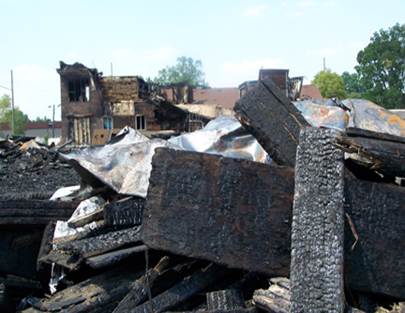
The
insurance company must give ten days’ notice to the mortgagee if it cancels the
policy for non-payment of premium or 30 days advance notice if the cancellation
is for any other reason. It must also notify the mortgagee at least ten days in
advance if it decides not to renew the policy.
Related
Court Case:
Oral Notice to Mortgagee Held Not to Satisfy Written Notice
Requirement
6. Policy Period
Covered
loss or damage must begin during the policy period.
NOTE: This is especially important when
property losses persist for several days and potentially result in overlapping
coverage. The insurance policy in effect at the time the loss or damage begins
is the only one that responds.
|
Example:
Marilyn’s policy period was
from January 1, 2024, to January 1, 2025. The insurance limit was $400,000.
The renewal policy period was January 1, 2025, to January 1, 2026, and the
insurance limit was $600,000. A fire began on December 31, 2024, but was not
completely extinguished until January 2, 2025. Only the policy from January
1, 2024, to January 1, 2025, with a $400,000 limit responds to this loss. |
7. Recoveries
Insurance
is intended to indemnify the named insured, not to provide a profit. If the insurance
company pays a covered loss and the lost or damaged property is recovered, or
the party that caused the loss pays for it, the insurance company is entitled
to be a party to such recovery. The following provisions explain how the
recovery process works:
a.
The
named insured must notify the insurance company if they receive payment or
recover the property.
b.
The
insurance company must notify the named insured if it receives payment or
recovers the property.
c.
The
insurance company pays all recovery expenses and any expenses required to
repair the recovered property, subject to the limit of insurance.
d.
The
named insured can decide to keep the recovered property. If it does, the
insurance company and the named insured must agree on the amount of the claim
payment to be returned to the insurance company. However, this amount cannot
exceed the payment the named insured received for the loss.
e. If the claim paid is
less than the agreed loss due to deductibles or other policy limitations,
recoveries are prorated between the named insured and the insurance company
based on their respective interests in the loss.
|
Example: $10,000
worth of cigarettes is stolen from Barney’s Fast Stop Shop. The thief resells
them, and they are not recovered. However, the insurance company recovers
$5,000 (half of the merchandise’s value) from the captured thief, who still
has the money from the resale. The insurance company pays Barney only $9,000
because of the $1,000 deductible that applies to the loss. In this case, the named insured's share of the loss
is 10% (the $1,000 deductible amount), and the company's share is 90% (the
$9,000 it paid). The insurance company pays Barney 10% (or $500) of the
$5,000 cash recovered, as that amount represents Barney’s proportion of the
total loss due to the deductible. |
8. Subrogation
The
insurance company assumes the named insured’s position when settling a property
claim. It also takes on the right to act against any party the named insured
may pursue for recovery related to the claim, up to the amount paid.
The named insured may
not take any action after a loss that would impair the insurance company’s
right of recovery. There is an exception. The named insured may waive its right
to recover from any party in writing before a loss occurs without voiding
coverage.
|
Example:
Harvey's
High-Flying Helicopters
tells its next-door neighbor, Stan's Surface-To-Air Missiles, that it will
not sue for the roof damage to his building caused by a tree that Stan cut
down. Harvey then commits that verbal statement to writing. Coverage could be
void because Harvey waived his recovery rights in writing after a covered
loss occurred. |
There
are exceptions to the prior statement. The named insured may waive its rights
of recovery after a loss if the waiver is with any of the following parties:
a. A person(s), entity, or
organization this policy’s Property Coverage insures
b.
The
named insured's tenant
c.
A
business the named insured owns or controls
d. A business that owns or
controls the named insured
|
Example:
Change the example above
slightly. The reason Harvey told Stan he would not sue is because Stan is
Harvey’s tenant. Due to this relationship, coverage is not voided. |
Related
Court Case:
Broad Subrogation Clause Waives All of Insurer's Rights
9. Suit Against Us
The
two rules of when a lawsuit can be brought against the insurance company are as
follows:
a. All terms of the
Property Coverages must be satisfied.
b. The lawsuit must be
brought within two years after the date the direct loss or damage took place.
This period only
applies if state law permits. If any state law invalidates this provision, the
lawsuit must commence within the shortest period allowed by the law.
|
Example:
Fair
and Square Insurance Company and
Jerry disagree on the value of a claim. Jerry is furious over the amount
offered and decides to sue. However, Fair and Square points out the appraisal
provision must be exercised first. A suit cannot commence until the appraisal
is concluded and all other terms and conditions of the policy are met. If the
appraisal affirms Fair and Square's offer, Jerry can then commence a suit if
he does so within two years after the date of loss. |
10. Vacancy Restriction
The
insurance company does not pay for any loss or damage caused by attempted
theft, building glass breakage, sprinkler leakage, theft, vandalism, or water
damage if the building or structure was vacant for more than 60 consecutive
days prior to the time of the loss. However, sprinkler leakage is covered if
the named insured protected the system against freezing.
The insurance company
reduces the amount it pays by 15% for any loss not otherwise excluded.
|
Example: Vandals break into Ferguson Realty’s
building, which has been vacant for 90 days. The vandals pry open the back
door and spray graffiti throughout the premises before leaving without
closing the door. Scenario 1: The sprinkler
system was unprotected against freezing. The system freezes and starts to
leak because the door was left open. There is no coverage for either the
vandalism or the sprinkler leakage. Scenario
2: The sprinkler system was
protected against freezing. A bird flies in through the open door and crashes
into a sprinkler head, causing it to leak. The vandalism damage is not
covered. However, the sprinkler leakage damage is covered, though it is
reduced by 15%. |
Vacancy
is not the same for all properties.
- A property is considered vacant when the
occupants of a building or structure move out and leave it completely
empty or with only a minimal amount of business personal property
remaining.
- When the named insured owns the building or structure,
it is considered vacant when 30% or less of the total square foot area is
occupied. When the term occupied is used, it means that the space is
occupied as it was intended to be occupied. This means that a retail space
within the building that the owner uses to store building materials
remains a vacant space. The named insured could also be the general lessee
of the building or structure.
|
Example:
The Howe Strip Shopping
Center has five tenants. When the two largest tenants move out, the building
becomes 75% vacant, despite the fact that three tenants remain. As a result,
the building is considered vacant. Howe decides to randomly store some leftover
items in the open spaces, but this does not change the fact the building is
vacant. |
- When the named insured is a tenant, the building or
structure is considered vacant for that named insured only if the rented
area does not contain sufficient business personal property to conduct
business, perform customary activities, or operate.
- Buildings or structures are not considered vacant
while they are under construction or being renovated.
|
Example:
Naylor Realty constructs a
building for its tenant, Dean’s Delicious Donuts, but Dean’s declares
bankruptcy before ever occupying the building. Construction ends on May 1.
When the fire occurs on August 12 and destroys the building, the claim
settlement is reduced by 15% because the building had been vacant for more
than 60 days. |
Related
Court Case: Vacancy Exclusion Held Applicable When Building Was Devoid of Substantial
Warehouse Contents
OPTIONAL PROPERTY COVERAGES
Three Optional Property
Coverages are available and apply only if they are listed in the declarations.
All are subject to the policy’s Common Policy Conditions, Common Policy
Definitions, and Property Coverages, except where a provision within them applies
more specifically.
1. Employee Dishonesty (BP 0816 change)
a. Coverage
Dishonest acts committed by an employee of the named insured can result
in direct loss or damage to the named insured's business personal property, as
well as money and securities. This Optional Property Coverage provides
protection for such losses or damages. It also applies to business personal
property and money and securities for which the named insured is legally
responsible. For coverage to take effect, the dishonest act must occur during
the policy period. These acts can be committed by an individual employee or by
employees acting in collusion with others, including non-employees.
Importantly, the definition of a single occurrence is not limited to a
single action. Instead, it encompasses the total number of related, cumulative
dishonest actions, regardless of the number of separate losses that occur or
the number of individuals involved.
Dishonest acts have the
following characteristics:
- They
must be dishonest or fraudulent
- They
must be done with the intent to cause the named insured to sustain loss or
damage
- The
act must be to obtain financial benefit for any employee, other person, or
organization. It is not necessarily limited to the person who commits the
act. This financial benefit does not include salaries, commissions,
bonuses, fees, profit sharing, or similar employee benefits that have been
earned.
|
Examples:
·
Paul pilfers
money from Scrooge's cash register over a period of months to pay for the operations
his sick child needs. This dishonest act damages Scrooge but benefits Paul's
child and is covered. ·
Peter
behaves unscrupulously by hounding clients. He shows disrespect toward his
employer and makes deals that violate the company’s ethics. Although he is
eventually fired, the money he earned in bonuses and salary cannot be
considered a loss resulting from his numerous dishonest actions. |
The limit on the declarations for this
coverage is the most the insurance company pays for Employee Dishonesty in any
one occurrence, regardless of whether the occurrence spans multiple policy
periods.
|
Example: Four accounting employees devise a
scheme to skim $200,000 over a four-year period. The limit of insurance was
$50,000 for each of the four years that coverage was in force. The most the
insurance company pays is a total of $50,000. |
b. Perils Covered
The Perils Covered
section does not pertain to this Optional Property Coverage.
c. Exclusions
The Additional
Exclusions section does not apply to this Optional Property Coverage.
Only the exclusions for
Civil Authority, Nuclear Hazard, and War and Military Action in the
Businessowners Policy Perils Excluded section apply.
The insurance company
does not pay for loss or damage due to any of the following:
- Actions of the
named insured, its partners, directors, trustees, joint venturers,
members, or managers. The actions are excluded whether they act alone or
act with others.
|
|
Example:
Jake is a partner in the C
H & W law practice. He and his administrative assistant collaborate to
manipulate billings. The act is discovered, and C H & W
submits the loss to the insurance carrier. The carrier denies the loss
because Jake is involved. |
- When
the only proof that a loss has occurred, or the amount of the loss,
depends on an inventory or a profit or loss statement
NOTE: These can be used to
substantiate or document a loss, but not as the only proof that a loss
occurred.
- Actions
of an employee for whom coverage similar to this was previously cancelled
and never reinstated. The cancellation may have occurred with the current
employer or an employer that the named insured acquired.
|
Example:
Martin
worked for Jasmine and Sons. Jasmine discovered that Martin had been stealing
items and submitted a claim for the loss to the company's insurance provider.
The insurance company paid the loss. Martin provided restitution and
continued to work for Jasmine and Sons. Coverage for his actions was canceled
once the loss was discovered. Miller, Inc. subsequently acquired Jasmine and
Sons and retained Martin along with other employees. Martin became
a highly trusted employee of Miller, utilizing his prior talent for thievery
at the company and was quite content with his additional income until an
audit revealed his thefts. The insurance company was about to pay the large
loss when the claims adjuster’s investigation uncovered the previous loss at
Jasmine and Sons. Because of this exclusion, the loss was not paid. |
·
Any loss not discovered within one year after
the policy expires
·
Loss or damage that occurs outside the basic
territory. There is an exception for the coverage that
1. Employee Dishonesty e. Supplemental Coverages provides.
·
Legal expenses or indirect losses. An example
is loss of income.
·
The
theft or other dishonest act by an employee who was known to have committed
theft or dishonest acts prior to this policy’s effective date. This applies
only if the named insured, a partner, director, trustee, joint venture, member
or manager had this knowledge. It does not apply if the one with such knowledge
colluded with that employee.
d. Additional Conditions
The following
Additional Conditions apply along with the other policy terms and conditions:
- The
named insured is required to keep adequate records of covered property.
This is because the insurance company uses those records to verify the
amount of loss.
- As
soon as the named insured or any of its partners, officers, directors,
trustees, joint venturers, members, or managers discover that an employee
committed a dishonest act, this coverage is immediately cancelled with
respect to any action that employee commits after the date of discovery.
The date of the dishonest act does not
affect this cancellation. It could have happened many years earlier and may or
may not have been related to work. The only exception to this condition is when
any of the persons listed in this condition makes the discovery and then acts
in collusion with that employee.
|
Example:
Jerry is a partner in J
& B Construction Company. Someone informs him that Leslie, the newly
hired bookkeeper, bears a resemblance to a bookkeeper convicted of embezzling
from another company. When Jerry confronts Leslie, she admits that it is
true. At that point, Jerry recruits her into his scheme to embezzle from J
& B. Leslie takes action and steals company
property. She is caught, and the investigation reveals her past, as well as Jerry’s
embezzlement scheme. The theft of company property is covered because Jerry
kept her past activities a secret to collude. However, the embezzlement is
not covered because Jerry is a partner, and such dishonest actions are
excluded, even those in collusion with another employee. |
- Member
is defined as a person who has an ownership interest in the named insured
limited liability company.
- Manager
is defined as a person who provides direction to the limited liability
company.
e. Supplemental
Coverages
Three Supplemental
Coverages apply only if this Employee Dishonesty coverage replaces previous
Employee Dishonesty coverage as of its expiration or termination date.
NOTE: This supplemental
coverage does not apply if there is a gap in coverage.
The coverage provided
is not a separate limit. It is part of the Employee Dishonesty limit that
applies.
- Coverage applies
to loss or damage that results from dishonest acts committed by any
employee of the named insured who is temporarily outside the basic
territory for up to 90 days.
|
Example: During a two-week trip to Italy, an
employee trades samples of merchandise for cash and claims that the airline
lost the samples. Coverage applies because the employee was outside the basic
territory for less than 90 days. |
- Coverage
applies to losses the named insured sustained before this coverage's
policy period that could have been recovered under the prior insurance,
except that its discovery period ended. This coverage applies if the
effective date of this insurance coincides with the cancellation or
termination date of the prior insurance.
Furthermore, this insurance would have
covered the loss if it had been in effect at the time the act or event causing
the loss occurred. The maximum payment will be the lesser of the limit for
insurance under this Employee Dishonesty coverage as of the effective date of
the prior insurance.
|
|
Example:
Darryl’s Interiors
maintained continuous employee dishonesty coverage for the past three years.
Coverage was written with Honest and Forthright Indemnity during the first
two years with a $50,000 limit of insurance. For the current year, coverage
is now with More Honest Mutual, with a $100,000 limit of insurance. Darryl discovers a loss two years after
it occurred and one year after Honest and Forthright's discovery period
ended. The coverage provided by both companies applies to the loss. More
Honest's policy paid the loss, but only up to the $50,000 limit in Honest and
Forthright's policy. |

- There is coverage
for direct loss or damage to business personal property and money and
securities when a covered loss is partly covered by this Employee
Dishonesty coverage and partly covered by prior insurance issued by the
same insurance company or any of its affiliates. The most paid is the
greater of the amount that can be recovered under this Employee Dishonesty
coverage or any prior coverage cancelled or terminated (and the insurance
company or any of its affiliates issued to the named insured).
|
Example: Referring to Darryl’s Interiors,
instead of coverage being with Honest and Forthright, it was with Little
Honest Mutual, an affiliate of More Honest Mutual. Consequently, the $100,000
insurance limit is available to cover the loss. |
2. Money and Securities
a.
Coverage
This Optional Coverage
applies specifically to money, securities, and lottery tickets that the named
insured does not hold for sale. The named insured may own these items, be
legally responsible for them, or simply hold them for the coverage to apply. This
coverage protects against disappearance, destruction, or theft. Theft is
defined as any act of stealing and includes, but is not limited to, burglary
and robbery.
|
Examples of covered losses:
|
b. Condition
This Optional Coverage
has an additional condition: the named insured must keep adequate records of
the covered property. This is important because the insurance company uses
these records to verify the amount of loss.
c. Perils Covered
The Optional Property
Coverage section applies only to theft, disappearance or destruction of money,
securities and lottery tickets (not held for sale). Therefore, the Perils
Covered section is not applicable.
d. Exclusions
In the Perils Excluded
and Additional Exclusions sections, only the following exclusions apply to this
Optional Coverage:
- Under
Perils Excluded,
only the following exclusions apply: Civil Authority, Earth Movement,
Nuclear Hazard, and War and Military Action.
- Under
Additional Exclusions, only the following exclusions apply: Criminal,
Fraudulent, Dishonest or Illegal Acts, and Voluntary Parting.
The following loss or
damage is also excluded:
- Errors
or omissions resulting from inaccurate arithmetic computations or
accounting.
- If
loss or damage is caused by any device that operates on money, such as a
vending machine, this situation is considered an exclusion. However, this
exclusion is not limited to vending machines alone. The exclusion does not
apply if the device continuously records the money, such as an ATM.
- Loss
or damage resulting from property left in an unattended vehicle. However,
there is coverage if there is evidence of forced entry into a securely
locked compartment within the vehicle.
e.
Exceptions
The provisions outlined in the following do not
apply:
·
Under “How Much We Pay”
o
7. Automatic Increase
o
8.
Seasonal Increase
f.
Coverage Limits
·
Inside
Premises
The limit listed on the
declarations is the most paid for loss occurring inside the premises or inside
a bank or savings institution.
·
Outside
Premises
The limit listed on the
declarations is the most paid for losses at other locations.
These limits apply to
the actions of an individual person or multiple persons who commit either a
single act or a series of acts.
|
Examples: ·
Melanie
robs Happy Hippo. This action is subject to one limit. ·
Melanie
and her friend Bob rob Happy Hippo. Two persons are involved, but this is a
single act, and only one limit applies. ·
Melanie
and Bob rob Happy Hippo. They later return with the keys they took during the
robbery and steal additional cash and some securities from the back of the
store. There are two actions, but they take place in a series, so only one
limit applies. |
3. Outdoor Signs
a.
Coverage
This
Optional Coverage covers outdoor signs the named insured owns or has in its care,
custody, or control. The signs must be located on a described premises, and the
loss or damage must be caused by a covered peril. This coverage applies to signs
attached to the building or not attached to the building.
b. Perils Covered
The
Perils Covered section of the policy does not apply to this Optional Property
Coverage. For this section, Outdoor Signs, unless the peril is excluded, the
loss is covered.
c. Exclusions
In the Perils Excluded
and Additional Exclusions sections, only the following exclusions apply to this
Optional Coverage:
- Under
Perils Excluded,
only the following exclusions apply: Civil Authority, Earth Movement,
Nuclear Hazard, and War and Military Action.
- Under
Additional Exclusions, only the following exclusions apply: Electrical
Currents, Mechanical Breakdown, and Wear and Tear.
The following loss or
damage is also excluded:
- Any loss resulting
from contamination or deterioration. Examples include corrosion, rust,
decay, fungus, mold, mildew, rot, or any quality, fault, or weakness in
property that causes it to damage or destroy itself.
However, coverage
applies if deterioration or contamination causes a specified peril or causes
the building glass to break, the resulting loss or damage is covered.
d.
Coverage Limit
This Optional Coverage
replaces any and all limitations in the Businessowners Policy applying to
outdoor signs. Furthermore, the most paid for loss in any one occurrence is
limited to the amount stated in the declarations for Outdoor Signs.
|
Examples: Scenario 1: A brush fire causes $10,000 in damage
to Cynthia's Healthy Fitness sign. The limit for Optional Coverage–Outdoor
Signs is $7,500. You've Gotta Be Kiddin' Insurance Company pays only $7,500
because the limit for this Optional Coverage supersedes and replaces the
additional coverage for signs limit. Scenario 2: This time, Cynthia selects a $10,000
limit to apply to Optional Coverage–Outdoor Signs. Cynthia has three signs on
the premises, each valued at $10,000. A windstorm causes $17,000 in damage to
all three signs. You've Gotta Be Kiddin' pays only $10,000 because the limit
of insurance applies per occurrence, and the same occurrence damaged all
three signs. |
COMMERCIAL LIABILITY COVERAGES
This
section provides definitions, descriptions of coverage, exclusions,
limitations, and conditions specifically related to the liability coverages
offered by the AAIS Businessowners Policy.
ADDITIONAL DEFINITIONS
The
following definitions apply to the Commercial Liability Coverages and are in
addition to the Common Policy Definitions.
NOTE: The
Editors added titles to enhance clarity.
1. Advertisement
An
advertisement must be public and can take various forms, such as print, verbal,
or electronic announcements. Its main purpose is to promote the goods,
products, or services of the named insured to:
a. Prospective clients,
patrons, customers, or buyers, encouraging them to purchase, rent, lease, or
engage in other business activities.
b. Potential supporters,
so they may consider or promote these offerings.
For
websites, only sections that specifically promote the named insured’s goods or
services to the above-mentioned audiences in a. and b. are
considered advertisements.
2. Auto
a.
Is a
land-based motor vehicle designed for use on public roads. It includes trailers
and semi-trailers. Any machinery or equipment attached to the aforementioned
vehicles is also considered part of the definition of an auto.
b. Land-based vehicles
subject to any type of financial responsibility, mandatory insurance, or
similar motor vehicle insurance laws are classified as autos. These laws vary
by state, so this definition relies on the regulations of the state where the
vehicle is primarily garaged or licensed.
It
is important to note the term "auto" does not encompass mobile
equipment.
3. Bodily Injury
Bodily harm, sickness,
or disease sustained by a person is considered bodily injury. When death
results from any of these, death is bodily injury. Mental or emotional injury,
suffering, or distress is considered bodily injury only when it is a direct
result of a physical injury.
|
Example:
A ceiling fixture falls on
Bobby while he is shopping at Lighting, Inc. His injuries are extensive, and
he requires special rehabilitative services in addition to regular medical
care and lost wages for time away from work. Bobby sustained bodily injury. Sally
was across the street when the accident happened and heard about it from her
neighbors. Because of this information, she will not enter a room with a
ceiling fixture. Her mental distress is not considered bodily injury. |
4. Coverage Territory
The following make up
the coverage territory:
a. The basic
territory, as defined in Common Policy Definitions, which includes the United
States of America, its territories and possessions, Canada and Puerto Rico.
b.
International
waters or airspace. This definition is limited to bodily injury, property
damage, or personal and advertising injury that occurs in such waters or
airspace while traveling between places within the basic territory.
c.
Other
parts of the world. This definition is limited to bodily injury, property
damage, or personal and advertising injury arising out of one or more of the
following:
- Products the named
insured made or sold in the basic territory.
- Activities
of a resident of the basic territory who is temporarily away for short
periods while conducting business for the named insured.
- Personal
and advertising injury that arises from offenses committed through
electronic communication or the Internet.
Damages are paid only
in cases where the suit is tried in the basic territory or if the insurance
company decides to settle with the claimant.
|
Example:
HiFalootin Clothing Store
in New York City sells a blouse labeled as flame retardant to Gretchen during
her visit from Germany. After returning to Germany, she wears the blouse to a
party, and it suddenly bursts into flames when a cigarette touches it.
Gretchen suffers third-degree burns and files suit against HiFalootin in
Germany. Garment Guaranty Insurance Company denies coverage because Gretchen
did not bring the action in the basic territory. |
5. Covered Contract
NOTE: Many contracts attempt
to transfer liability from one party to another. The exclusions section in the
Businessowners Policy excludes such assumed liability. One exception to the
exclusion broadens coverage to apply to only liability assumed in a covered
contract. This definition explains the exact amount of contractual liability
coverage available.
a. This means
the following:
- Leases of premises
- License
or easement agreements. However, agreements related to construction or
demolition operations within 50 feet of a railroad are excluded.
- Duties
an ordinance imposes to indemnify a municipality. This excludes work done
for the municipality.
- Sidetrack
agreements
- Elevator
maintenance agreements
- The
part of other contracts or agreements whereby the named insured assumes
the tort liability of another. However, this is only when that liability
is for damages due to bodily injury or property damage to a third party.
This type of contract includes indemnification agreements with a
municipality provided in conjunction with work done for the municipality.
Tort
liability refers to liability imposed by law, as opposed to liability imposed
by contract. Contracts where the named insured assumes another party’s contractual
liability are excluded.
b.
Covered
Contract does not include the part of any contract or agreement:
- That compensates a
railroad for bodily injury or property damage. However, this is only when
such compensation arises from construction or demolition operations
conducted within 50 feet of any railroad property. Such operations must
affect railroad bridges, trestles, tracks, roadbeds, tunnels, underpasses,
and/or crossings.
- That
compensates an architect, engineer, or surveyor for injury or damage resulting
from preparing or approving maps, drawings, opinions, reports, surveys,
change orders, designs, or specifications. This also includes failing to
prepare or approve such documents. Additionally, it includes providing or
failing to provide directions or instructions, which is the primary cause
of the injury or damage.
- When
the insured is an architect, engineer, or surveyor and assumes liability
for injury or damage resulting from providing or failing to provide
professional services, including the services listed above, as well as any
supervisory, inspection, or engineering services.
- When
a person or organization compensates for damage by fire to any premises
rented or loaned to the named insured.
6. Damages
This constitutes monetary compensation for an
organization or individual who claims to have incurred an injury.
7. Designated Insured
This
is anyone listed in 12.a. in this section’s definition of insured. It also
includes employees authorized to provide or receive notice of occurrences or
claims.
8. Employee
This
term includes leased workers, but does not include temporary workers.
9. Executive Officer
This
refers to an individual in an officer role defined by the charter,
constitution, by-laws, or another comparable governing document of the named
insured.
10. Impaired Property
This
cannot be the named insured’s product or work. It is tangible property that
meets the following criteria:
- It must be less
useful, or it cannot be used at all, because it includes the named
insured’s products or work. That product or work must be considered either
deficient or dangerous.
- It
must be less useful, or it cannot be used at all, because the named
insured failed to complete the terms of a contract or agreement.
- It must be capable
of being rendered useful again if the products or work of the named
insured are repaired, replaced, adjusted, or removed, or if the named
insured adheres to the terms of its contract or agreement.
|
|
Example: Circuit Board, Inc. distributes
a part included in the circuit board in a refrigerator’s thermostat. The part
malfunctions, causing the refrigerator to shut down. This is an example where
the refrigerator is impaired property.
|
11. Indemnitee
This term refers to an
organization or person and is used when an insured assumes that organization or
person’s liability for damages due to bodily injury or property damage under a
covered contract.
12. Insured
There
are several types of insureds.
a. This first group is
based on entries on the declarations. If the entity is:
Individual
This
includes the named insured and the named insured's spouse. However, insured
status is limited to the conduct of the business the named insured solely owns.
Partnership
or Joint Venture
This
includes the named insured and all its partners or members, as well as their
spouses. However, insured status is limited to the conduct of the named
insured's business.
Limited
Liability Company
This
includes the named insured and all its members. However, insured status is
limited to the conduct of the named insured’s business. The named insured’s
managers are also insureds, but only when they are carrying out their duties as
managers.
Trust
This
includes the named insured and all trustees. However, insured status applies only
when trustees act within the scope of their duties as trustees.
Organization
This
is not a partnership, joint venture, or limited liability company. It is the named
insured, its executive officers and its directors. However, this insured status
is only while they exercise their duties as executive officers or directors.
Stockholders are also insureds, but only for their liability as stockholders.
b. The second group has a
relationship with the named insured:
- The named
insured's real estate managers are insureds. A real estate manager can be either
a person or an organization, but is considered an insured only while
performing work in the capacity of a real estate manager. However, an
employee or volunteer who acts as a real estate manager for the named
insured is not an insured. That insured status is defined below.
- If
the named insured is an individual and that individual dies during the
policy period, someone must carry on for that individual, at least
temporarily. To ease the transition, two different persons or groups of
persons are insureds under limited circumstances:
o
The
person or organization appointed as the legal representative is an insured, but
only while carrying out the duties of a legal representative. The legal
representative has all the named insured’s rights and responsibilities.
o
Persons
or organizations with temporary custody of insured property at the time of
death are also insureds, but only with respect to liability resulting from
maintaining or using the property. This status ends once the legal
representative is appointed.
- The
named insured's employees are insureds for acts they perform within the
scope of their employment. Both employees and volunteer workers are
insureds but only while performing duties as a part of conducting the
named insured’s business.
Managers
of limited liability companies and executive officers of organizations that are
not partnerships, joint ventures, or limited liability companies are not
considered insureds under this part of the definition of insured. This is
because they are insureds under part a. of this definition.
Employees
and volunteer workers are not insureds for the following:
a. Bodily injury or personal and advertising injury:
·
To
the named insured, its partners, or its members.
·
To
a fellow employee while performing duties related to the named insured’s
business or while in the course of employment with the named insured.
·
To
a fellow volunteer while that volunteer performs duties related to the named
insured’s business.
|
Examples: Scenario 1: Jesse, Frank, and Sherry are working
in the backroom. Jesse throws a box from the top shelf, striking both Frank
and Sherry. Jesse is not an insured for that action because Frank is in the
course of his employment, and Sherry is a volunteer performing duties related
to the named insured’s business. Scenario 2: Frank had already clocked out but is
still in the store to purchase some items to take home. Jesse throws a box to
Frank, which knocks him out. Jesse is an insured because Frank was not on
duty at the time of the accident. Scenario 3: Sherry comes into the store to
confront Jesse about some private issues. Jesse pushes Sherry to get away
from her, and Sherry falls. Because Sherry was on the premises for her own
purposes, Jesse is considered an insured for the accident. |
- To reimburse a
third party for damages described in the three items immediately above or
for the item described in b. below. This applies even when there is an
obligation for such reimbursement.
- When
the bodily injury or personal and advertising injury arises from an
employee or volunteer providing or failing to provide professional health
care services.
b. Consequential injury
claims by the child, spouse, parent, brother, or sister of any person described
in the first three items of paragraph a. above because of an injury to that
described person.
c. Property damage to
property owned or controlled in any way by the named insured, its employees,
volunteers, or any of its partners or members.
No
person or organization is an insured with respect to any current or past
partnership, joint venture, or limited liability company not listed on the
declarations as an insured.
13. Leased Worker
This
is a person the named insured leases from a labor-leasing firm under a contract
or agreement. The contract or agreement details the duties the person performs with
respect to the conduct of the named insured's business.
Leased
workers are not the same as temporary workers.
14. Loading or Unloading
a.
Loading is handling property. It begins when the property is
moved from the place where it is accepted for transit in an auto, aircraft or
watercraft. It continues as the property moves in or on the mode of
transportation. It ends when the property is removed from the transporting mode
of transportation at the point of final delivery.
b. It includes movement of property by mechanical devices.
However, mechanical devices are limited to either hand trucks or devices attached
to the transporting vehicle.
|
Example:
Louie places a pallet of lumber at the end
of the loading dock. Loading begins when the Anchor Transport driver begins
to lift the pallet to place it on the truck. |
15. Mobile Equipment
a. This is any machinery
or equipment attached to any land vehicle that meets any of the following
criteria:
- Used only on the
named insured’s owned or rented premises. Premises includes all adjoining
ways.
- Designed
for use primarily off public roads, some examples include bulldozers, farm
machinery, and forklifts.
- Travel
on crawler treads
- Provide
mobility for permanently attached power cranes, shovels, loaders, diggers,
drills, graders, scrapers, rollers, and other road construction or repair
equipment. This equipment may be self-propelled or non-self-propelled.
- Any
land vehicle that does not meet any of the criteria above and is not
self-propelled but provides mobility for air compressors, pumps, and
generators. Such items may also provide mobility for spraying, welding,
and building cleaning equipment, geophysical exploration, lighting, and
well servicing equipment, or cherry pickers and similar devices used to
raise and lower workers.
- Any
land vehicle that does not meet any of the criteria above but is kept for
reasons other than to transport persons or cargo.
b. Self-propelled vehicles
that meet the criteria above may still not be considered mobile equipment. A
vehicle with any of the following permanently attached equipment is considered
auto, not mobile equipment:
- Snow removal,
street cleaning, or road maintenance equipment. However, this exclusion
does not apply to equipment used for building or resurfacing roads.
- Devices
mounted on an automobile or truck chassis and used to raise or lower
workers.
- Air
compressors, pumps, and generators, along with any spraying, welding, or
building cleaning equipment.
- Equipment
utilized for geophysical exploration, lighting, and well servicing.
Mobile
equipment does not include land vehicles subject to financial responsibility or
similar compulsory or motor vehicle insurance laws, which are state-specific.
This means the laws of the state where the vehicle is licensed or principally
garaged must be reviewed to determine their status. Such vehicles are
considered autos and should be covered as autos.
Related
Article:
ISO Business Auto Coverage Form Overview
16. Occurrence
This is an accident
involving continuous and repeated exposures to similar conditions.
|
Example: Joan hits Mary. This is a single occurrence. Joan
hits Mary several times. This is also a single occurrence. |
17. Personal and Advertising Injury
This
means injury resulting from one or more of the following offenses. This
definition also includes bodily injury resulting from such offenses.
a.
Publishing
any material that slanders or libels a person or organization, disparages the
goods, products, or services of a person or organization, or violates any
person’s right of privacy. The publication can be verbal, written, or
electronic.
NOTE: Slander is an oral or
spoken offense, while libel is the same offense committed in writing.
b. False arrest, detention,
or imprisonment
|
|
Example: Carmen thinks she sees a woman
shoplifting and asks her to stop. When the woman continues walking, Carmen
follows her and confronts her. Carmen gets the answer she needs in less than
a minute and lets the woman leave. Even though the incident lasts less than a
minute, Carmen is considered to have detained and imprisoned the woman. |

c. Deliberately harmful or
malicious prosecution
|
Example:
Raymond files a claim
against his neighbor for stepping on his lawn. The claim is denied. He files
a second claim, and it is also denied. Raymond eventually files seven claims,
and each is declined. Raymond's neighbor then sues Raymond for malicious
prosecution. |
d.
The
named insured's advertisements that use advertising ideas of others without
their permission
e.
The
named insured's advertisements that use copyrighted information, slogans, or
trade-dress of others without their permission
f.
Any
entry into, eviction from, or invasion of privacy related to a room, dwelling,
or premises a person occupies is an offense. However, this applies only if
committed by the landlord, owner, or lessor or by those acting on their behalf.
18. Products/Completed Work Hazard
a. Products Hazard
This
is bodily injury or property damage that arises from products. However, this is
only after the named insured physically releases the product(s) to others. In
addition, the injury or damage must occur away from premises the named insured
owns or rents.
There is an exception.
If the business of the named insured includes the sale of products consumed on
the premises, those consumable items are considered products even when the
injury or damage occurs on the premises. The requirement that the item must
have been released to others remains.
|
Example: ·
Paul
chokes on a bone in the chicken salad sandwich he is eating at Danny’s
Delicatessen. This is an example of a products hazard exception. ·
John
works as a salesman at J & J Appliances. During a demonstration of the
latest dishwasher, it shorts out and shocks a customer. While this incident
doesn't pose a products hazard for J & J since it happened on their
premises, it would be considered a products hazard for the appliance
manufacturer. |
b. Completed Work Hazard
This
is bodily injury or property damage that occurs at premises other than ones the
named insured owns or rents. The injury or damage must result from the named
insured’s work. This does not include work not yet completed or work that has
been abandoned. Work is considered completed when one of the following first
occurs:
- All work in the
named insured’s contract is completed
- All
work at a specific job site is completed. This applies even if other work
under the named insured’s contract that includes work at two or more sites
is not completed.
- When any person or
organization puts that part of the work at a job site to its intended use.
This does not apply if the only party that puts the work to use is another
contractor or subcontractor performing work at that same jobsite.
|
Example: J & J Appliances
contracts to install high-definition televisions at its customers’ three
high-rise apartment buildings. When work is completed at one building, the
employee assigned to the project moves on to the next one. When an installation job at the first
building causes a fire, it is a completed work hazard. The worker makes the
same mistake at the second building, but the fire occurs before he leaves the
site. The incident at the second site is not a completed work hazard. |
Work requiring further
service, maintenance, correction, repair, or replacement because of a defect or
deficiency that is otherwise complete is still considered completed.
|
Example:
J & J’s high-definition
television contract requires them to periodically service the units. The
repair technician cleans the unit and leaves. The television then shocks an
apartment tenant. This is a completed work hazard. The work is complete, and periodic
maintenance is all that remains. |
c. Transportation of
Property
Products hazard and
completed work hazard does not include bodily injury or property damage occurring
when property is being transported. However, this does not apply if an insured
is loading or unloading a vehicle the named insured does not own or operate,
and a condition in or on the vehicle causes the injury or damage. It also does
not include bodily injury or property damage caused by tools, uninstalled
equipment, or unused material.
|
Example:
Jerry decides to leave his
welding equipment at Kelly’s house after completing a job for her. His plan
is to drop by and pick it up the next day. Kelly’s son attempts to use the
equipment but burns down the house. This is not a completed work hazard. |
19. Products
a. Any good or product the
named insured manufactures, sells, handles, disposes of, or distributes. It
also includes goods and products of others who trade under the named insured’s
name. In addition, goods or products manufactured, sold, handled, disposed of,
or distributed by persons or organizations whose business or assets the named
insured acquires are also products.
b. The definition of
products includes the following:
- Any warranty or
statement addressing the products’ quality, fitness, durability,
performance, or use, regardless of when such warranties or statements were
made.
- Items
associated with or related to the product, such as containers, materials,
parts, and other equipment furnished. A vehicle is not considered a container.
- Any warnings or
instructions provided or should have been provided but were not.
|
|
Example: Shirley purchases a Shelving Made Easy
kit from Do It Yourself retail store. She carefully follows the instructions
that accompanied the kit, but the bookcase collapses when she places her vast
collection of books on its shelves. This is a products loss
because Do It Yourself retail store failed to provide her with the weight
restrictions information sheet. |
c. Products does not
include the following:
- Any property
rented to others or placed for their use but not sold. An example is a
vending machine.
- Real
property. This includes buildings, structures, and dwellings, even if they
are not specifically listed on the policy.
20. Property Damage
a.
This
is physical injury to tangible property and the resulting loss of use of that
damaged property. Physical injury includes destruction of the property. Loss of
use is understood to occur at the same time as the physical injury that caused
it.
b.
Property damage also includes the loss of use of tangible
property that is not physically damaged. Loss of use is understood to occur at
the same time as the occurrence that caused the loss.
Data records are not
considered tangible property under Commercial Liability.
|
|
Example: Norm’s Nursery has a shed with
unlabeled chemicals that catch fire due to an employee's negligence,
releasing harmful fumes and particulates. A hazardous materials team
evacuates the area for three days to assess the danger. Neighboring businesses must
close and undergo cleaning, suffering property damage and loss from the
shutdown. The particulate matter also causes financial damage to businesses
that are not physically harmed, but must close for three days. |
21. Short-Term Rented Premises
This
is any location or premises an insured rents for seven days or less. This
definition includes the contents of the premises.
22. Suit
This
is not limited to only civil or administrative proceedings where damages are
alleged for covered bodily injury, property damage, or personal and advertising
injury. It also includes alternative dispute resolution and arbitration
proceedings. These are either of the following proceedings:
a. Any insured must submit
to comply with a law or regulation.
b. Any proceeding the insured
submits to, as long as the insurance company agrees.
23. Temporary Worker
This is a person an outside company furnishes to the
named insured.
These workers substitute for employees on leave or who are used to meet
seasonal or short-term workloads.
NOTE:
The
keyword is temporary. Also, note that no time period is specified. If an
employee is on a leave of absence due to illness or military service, the time
period could be lengthy.
24. Volunteer Worker
This
is a person who gives their time or services. The following applies to them:
a. They act at the named
insured’s direction, and within the scope of duties it determines.
b. They do not receive a
salary, fee, or any other remuneration or compensation. However, they may be
reimbursed for out-of-pocket expenses.
Employees,
leased workers, and temporary workers cannot also be volunteer workers.
NOTE:
The
volunteer may derive benefits for the service provided, such as public notice
or recognition by the company or agency represented. However, they are not
directly remunerated for the service provided.
25. Your Work
a. This term includes all
work or operations the named insured performs. It also includes the work or
operations others do on behalf of the named insured. Materials, parts, and
equipment necessary for the work or operation are also considered your work.
b. This term also includes any warranty or statement provided
with respect to the work’s quality, fitness, durability, use, or performance
and any warnings or instructions that should be provided, regardless of whether
they were actually provided.
|
Example:
Magnificent Draperies makes
and installs window coverings, including draperies, blinds, and hardware. Its
crews typically consist of four employees, but the company often utilizes
subcontractors for more specialized installations. The work the crews and the
subcontractors perform, including the ladders, hammers, drills, and other
tools used, are considered Magnificent Draperies' work. Instructions and
information concerning blind pulls and other hazardous situations are also
considered part of Magnificent Draperies’ work. |
COVERAGE L–BODILY INJURY LIABILITY AND PROPERTY DAMAGE LIABILITY
1. Insuring Agreement
a. The insurance company
pays those amounts an insured is required to pay as damages resulting from
bodily injury or property damage this insurance covers. The insurance company has
the right but also the duty to defend suits seeking damages. This right and duty
does not exist if coverage does not apply.
The
insurance company has the right to investigate occurrences and to settle claims
or suits as it sees fit. It is not required to consult with the named insured or
obtain its consent or approval to do so.
b. The insurance company
pays amounts as damages based on provisions in the How Much We Pay section.
c. The insurance company is
not obligated to provide a defense after the policy’s limits of insurance has
been exhausted through the paying of judgments, written settlements, or medical
expenses.
The
Supplemental Payments section describes the payments that the insurance company
will pay while investigating or settling a claim or defending a suit.
d. The insurance company
may choose to defend the insured in a lawsuit or pay for their defense, but
later it may determine that the policy does not cover the allegations made in
the lawsuit. In such cases, the insurance company has the right to be reimbursed
for the defense costs incurred when no coverage exists.
However,
there are limitations to the insurance company's right to seek reimbursement.
The insurance company must provide written notification to the named insured,
indicating that there is a possibility of coverage not being available, and
explain that it is continuing the defense under a reservation of rights. Only
defense costs incurred after this written notification has been issued are
eligible for reimbursement.
e. Coverage applies to bodily injury or property damage that
occurs during the policy period and is caused by an event that takes place
within the coverage territory. However, there is an exception: bodily injury or
property damage is not covered if it is a continuation, resumption, or change
of an injury or damage that was known to a designated insured prior to the
start date of the policy. Please refer to the Knowledge of Bodily Injury or
Property Damage Condition for clarification regarding this exception.
|
|
Example: An employee's negligent act at 11:00
p.m. causes a fire at the local drug store. This is one hour before Leslie’s
insurance policy takes effect. At 1:00 a.m., as a result of the fire, one of
the building walls falls and kills a bystander. Coverage applies, even though
the fire started before the policy inception date, because the occurrence
that caused the bodily injury (the wall falling) occurred after the policy
was in effect. On the other hand, property
damage caused by fire to an adjoining business is not covered because the
occurrence (the fire) that caused the property damage is considered part of the
entire fire event that began before the inception date. |
f. Bodily injury or
property damage that occurs during the policy period is covered, including any
continuation, resumption, or change of that injury or damage that occurs after
the policy period ends.
However,
there is an exception: coverage does not apply if the bodily injury or property
damage is a continuation, resumption, or change of an injury or damage that was
known by a designated insured prior to the start date of the policy. Please
refer to the Knowledge of Bodily Injury or Property Damage Condition for
further details on this exception.
Related
Court Case:
Known Injury or Damage Not Excluded in Continuous or Progressive
Damage Loss
g. Damages due to bodily
injury extend beyond the definition of bodily injury, encompassing damages that
any person or organization claims for care, loss of services, and death
resulting from the bodily injury at any time.
NOTE:
These
may not be the only items included, as the policy does not specify that damages
are limited to these alone.
2. Exclusions
NOTE: The Editors added titles to enhance clarity.
a. Professional Services
The
insurance company does not pay for bodily injury or property damage that arises
from either of the following:
- Rendering or failing to render professional services
- Negligence on the
insured’s part for hiring, training, or supervising of another who
rendered or should have rendered professional services.
NOTE: This exclusion does not
specify who the party is rendering service or should have rendered the service.
As a result, it applies to all professional services.
Related
Court Case:
Adjuster's "Damaging Statements" Not Covered by
Businessowners Policy
b. Employment-related Practices
There
is no coverage for bodily injury to any person resulting from a refusal to
employ that person or from the termination of that person's employment.
Coverage also does not apply if bodily injury is caused by malicious
prosecution, coercion, demotion, performance evaluations, reassignment,
disciplinary actions, defamation, harassment, humiliation, discrimination,
sexual misconduct, or other similar employment-related practices, policies,
acts, or omissions directed at that person.
Furthermore,
there is no coverage for bodily injury to any immediate family member of the
person mentioned above, if such injury results from the aforementioned
employment-related practices.
The
timing of the injury does not affect the application of this exclusion. The
injury is excluded whether employment-related practices occurred before,
during, or after that person’s employment.
This
exclusion applies regardless of the relationship between the insured and the
injured party, and it remains in effect even if the insured is obligated to
reimburse a third party.
NOTE:
Only bodily injury is excluded. Property damage due
to employment-related practices would be covered.
Related
Article:
BP 0623–Employment Practices Liability–Claims Made Basis
c. War and Warlike Action
There
is no coverage for any loss or damage caused directly or indirectly by any of
the following:
- War: This
encompasses any war, including civil war and undeclared war.
- Warlike
action by any military force. Actions to stop or hinder the actual or
expected warlike action are also excluded. The military force must be part
of a governmental, sovereign, or other authority that uses military
personnel or agents.
- Insurrection,
rebellion, revolution, and usurped power. This exclusion also applies to
responses by a governmental authority to hinder or defend against these
actions.
d. Intentional Acts
Bodily
injury or property damage the insured expects, directs, or intends is excluded.
There is also no coverage if the insured performs an intentional, malicious act
causing bodily injury or property damage.
The exception to this exclusion covers bodily injury resulting
from the use of reasonable force to protect persons or property.
NOTE: There is no exception
for property damage caused by such reasonable force.
Related Court Case: Intentional
Damage Exclusion Barred Claims against Liability
|
Example:
Pat observes Paul attempting
to set Pat's building on fire. Paul is about to strike the match when Pat
jumps on him, struggles briefly, and manages to end his attempt. Paul sues
Pat for the injuries he suffered in the scuffle and for his ruined leather
jacket. The insurance company defends Pat because his actions to keep the
fire from being set were reasonable under the circumstances. However, the
defense and any settlement will not apply to the damaged jacket. |
e. Contractual Liability
There
is no coverage for bodily injury or property damage the insured assumes in a
contract or agreement.
This
exclusion does not apply to liability for damages under any of the following
circumstances:
- When an insured
would have been liable even if there was no such contract or agreement
- When the liability
is assumed in a covered contract as this policy defines. However, this
applies only if the contract was entered into prior to the occurrence of
such bodily injury or property damage.
Damages
due to bodily injury or property damage with respect to liability assumed in a
covered contract include litigation costs and attorney fees an indemnitee
incurs but only if both of the following apply:
- The same covered
contract that assumed the liability also assumed the cost of its defense.
- The costs and fees
are to defend the indemnitee against legal proceedings alleging damages
this insurance covers.
Litigation
costs and attorney fees must be both necessary and reasonable.
NOTE: This portion of the
exception covers defense costs. However, it places the fees for the indemnitee’s
defense within the limit of insurance. This means every dollar paid for defense
reduces the limit of insurance available to pay for the loss.
On the other hand,
these defense costs can be paid without reducing the liability limits if the
requirements in Supplemental Payments, item 3.b. are met.
|
Example: Mary and Peter enter into an agreement
in which each agrees to accept the other’s liability in the event of a
liability issue arising. This agreement meets the definition of a covered
contract. An accident occurs, Mary is sued, and Peter is brought into the
action. According to the contract, Peter turns to Mary’s insurance for
coverage. The insurance company defends the suit. The limit of insurance
available is $300,000. Scenario 1: The contract did not address defense
costs. The insurance company defends Mary outside the policy limit, but Peter
must pay for his entire defense. The case is settled for a total of $300,000.
Mary is made whole; however, Peter must still pay his defense costs of
$25,000. Scenario 2: The contract addresses defense costs.
However, Peter does not meet the requirements in Supplemental Payments. The
insurance company defends both Mary and Peter. Mary’s defense costs are
outside the limit, but Peter’s defense costs of $25,000 are inside the limit.
This means that only $275,000 is available to pay the $300,000 settlement. Scenario 3: The contract addresses defense costs,
and Peter meets the requirements under Supplemental Payments. The insurance
company defends both Mary and Peter. However, both Mary’s and Peter’s defense
costs are outside the limits. The entire $300,000 limit is available to pay
the settlement. |
f. Mobile Equipment Racing
There
is no coverage for bodily injury or property damage caused by mobile equipment
being used in racing or similar events. Coverage also does not apply when the
bodily injury or property damage caused by the mobile equipment occurs during
any practice or preparation for such events.
NOTE: Mobile equipment is
covered when used for its intended purpose. It is not covered for racing, speed,
pushing, pulling, demolition, stunts, contests, or other activities.
|
|
Example: George uses his bulldozer at work and
runs over a child’s wagon. The property damage to the wagon is covered. George takes the same
bulldozer to the fairgrounds, enters a bulldozer-pulling contest, and runs
over a child’s wagon. This property damage to the wagon is excluded. |
g. Mobile Equipment Transportation
There is no coverage
for bodily injury or property damage that is caused when mobile equipment is
being transported. However, this exclusion does not apply when the transporting
auto is not owned by, or rented or loaned to, an insured.
|
Example:
Gloria rents a truck to tow
her bulldozer on her trailer. The trailer strikes a large pothole, causes the
trailer to upset, and the bulldozer falls off. Several vehicles swerve attempting
to avoid the bulldozer and are damaged. None of this damage is covered.
However, if Gloria hired Marty to tow the bulldozer and the same damage
occurred, coverage applies to any liability against Gloria because of the
mobile equipment. |
h. Auto, Watercraft, and Aircraft
Coverage
does not apply to bodily injury or property damage arising from the following:
- Any insured owning, renting, operating, occupying,
maintaining, supervising, entrusting, using, loading, or unloading any
auto, watercraft, or aircraft. This applies only if that insured owns,
operates, rents, or has been loaned the auto, watercraft, or aircraft.
- Negligent hire, training,
or supervision. This applies if any person who is owning, renting,
operating, occupying, maintaining, supervising, entrusting, using,
loading, or unloading any auto, watercraft, or aircraft causes bodily
injury or property damage. This applies only if an insured owns, operates,
rents, or has been loaned the auto, watercraft, or aircraft.
Related
Court Case:
Business Liability Policy Cannot be Construed as Automobile Policy
This
exclusion does not apply to bodily injury or property damage that arises
from any of the following:
1)a) The following
equipment included in the definition of mobile equipment but only for bodily
injury or property damage that is a result of its operation:
- Devices that are mounted on automobile or truck
chassis and used to raise or lower workers
- Air compressors,
pumps, and generators and any spraying, welding, or building cleaning
equipment
- Equipment used for
geophysical exploration, lighting, and well servicing
While
these vehicles are considered autos the operations of the equipment are covered.
1)b) Bodily injury or
property damage due to the operations of equipment or machinery attached to a
vehicle subject to financial responsibility or similar compulsory or motor
vehicle insurance laws. These laws are state specific. This means the laws of
the state where the vehicle is licensed or principally garaged must be reviewed
to determine their status.
NOTE: The two exceptions
above apply only to damages related to the equipment being operated. This means
damages related to owning, occupying, renting, using, entrusting, loading, and unloading
are excluded. In addition, only the equipment’s operation is covered, not the
operation of the land vehicle to which it is attached.
2) Parking autos on premises
or immediately adjoining the premises when the named insured owns, rents, or
controls the premises, provided the autos are not owned by, rented to, or
loaned to the insured.
|
Example:
Folksy Restaurant provides valet
parking. Phil, one of the valets, strikes Sally while driving a customer’s
vehicle. Folksy’s is covered if the accident takes place on its premises. It
is not covered if Phil uses the customer’s vehicle to make a side trip to the
next block to purchase a candy bar. |
3)
When
liability is assumed under a covered contract with respect to owning,
maintaining, or using aircraft or watercraft.
4) When watercraft is on
shore and on a premises owned, rented or controlled by the named insured.
NOTE: It's important to
understand that watercraft must be on shore and the premises at the same time.
5) Watercraft the named
insured does not own. However, this provision applies only if the watercraft is
less than 51 feet in length and is not used to carry persons or property for a
fee.
i. Liquor Liability (BP 0816 change)
There
is no coverage for bodily injury or property damage for which any insured may
be liable due to any of the following:
- Caused or
contributed to a person becoming intoxicated
- Furnished
alcoholic beverages to a person who was already intoxicated
- Furnished
alcoholic beverages to a person under the legal drinking age
- Violated
any regulation or law that regulates using, selling, distributing, or giving
alcoholic beverages
- Negligence or
misconduct related to the hiring, monitoring, retaining, or training of
individuals that leads to bodily injury or property damage, whether it
contributed wholly or partially.
- Any action or
failure to act when providing or failing to provide transportation,
detaining or failing to detain, or assisting or failing to assist any
person who is or was intoxicated, that results in bodily injury or
property damage due to any of the above actions, regardless of whether it
contributed fully or partially.
This exclusion applies only to businesses that
manufacture, distribute, furnish, sell, or serve alcoholic beverages. There
has been confusion as to businesses that allow customers to bring alcohol to
the premises, but that business itself does not sell, serve, or distribute any
alcoholic beverages.
Wording
has been added to clarify that this exclusion does not apply in such circumstances. This applies even when a license is required
to operate this way or if the named insured charges a fee for the beverages to
be consumed on the premises.
NOTE: A business that is not
technically in the alcohol business may still be subject to this exclusion due
to the amount of alcoholic beverage activities conducted at the business.
Related
Court Case:
270_C045, Liquor Liability Exclusion Held Applicable to Nonprofit VFW Post
j. Pollution
This
exclusion has five parts. Four have significant exceptions.
1)
Bodily
injury or property damage arising from the actual, alleged, or threatened
transfer or leakage of a pollutant is excluded.
The
following explains where it is excluded and the exceptions that apply at that
location:
a)
At or
from any location or site any insured ever possessed. This part of the
exclusion has three exceptions:
·
Bodily
injury or property damage due to heat, smoke, or fumes from a hostile fire.
·
Bodily
injury (this does not include property damage) caused by smoke, soot, fumes, or
vapors from heating, cooling, or dehumidifying equipment, or from equipment
used to heat water for the building’s occupants, is covered. This exception
applies only if the injury occurs in the building where the equipment is located.
·
Bodily
injury or property damage when all the following apply:
o
The
named insured is a contractor.
o
The
named insured is liable to the owner or lessee of the premises.
o
The
owner or lessee of the premises is an additional insured on the policy for the
operations of the named insured.
o
No
insured other than the additional insured can have at any time possessed the
premises.
b)
At any
site, premises, or location that has ever been used for the management of waste
in any manner.
NOTE: This completely deletes
coverage. Any location that involves waste is excluded, regardless of how an
insured might be held liable. There is no exception.
c)
If the
insured or another party for whom the named insured is legally liable ever managed
waste in any way at any time.
NOTE: This provision
continues to completely delete coverage for any pollution involving waste, with
no exceptions.
d)
If an
insured party, contractor, or subcontractor brings pollutants to the premises,
job site, or location, coverage will not apply if those pollutants are
associated with the work being conducted there.
However,
this exclusion includes three exceptions:
·
Bodily
injury or property damage due to heat, smoke, or fumes from a hostile fire.
·
Bodily
injury or property damage resulting from the unintended release of fuels,
lubricants, or other fluids from mobile equipment. It also applies only when
their discharge was from the part of the vehicle designed to contain, store, or
receive the fluids. However, it does not apply if the fluids are brought onto
the site with the intent to discharge or release them.
|
Examples:
|
·
Bodily
injury or property damage caused by materials brought into the building, when
those materials release gases, vapors, or fumes. This applies only if the
materials were intended for the named insured’s operation or for the operations
of a contractor or subcontractor working on behalf of the named insured.
Additionally, the bodily injury or property damage must occur inside the
building where the materials were brought.
e)
When
the insured is required to test for, mitigate, respond to or assess the
effects of pollutants in any way. This applies to any premises, site, or
location where any insured or anyone on the insured's behalf is working.
2)
There
is no coverage for any loss, cost, or expense due to the following:
a)
When
the insured or others must address the effects of pollutants, such as through
testing or mitigation, this requirement can arise from a demand, a request, or
even a statute, order, or regulation.
b)
When any governmental authority files a claim or suit
that deals with the effects of pollutants, such as testing for, abating,
monitoring, cleaning up, removing, containing, treating, detoxifying, or
neutralizing.
However,
the exclusion does not apply to liability for property damage the insured would
have incurred regardless of any request, demand, order, statute, regulation, or
claims or lawsuits initiated by any governmental authority.
k. Workers Compensation
There
is no coverage for the following:
- Bodily injury to
the insured’s employee when the injury arises from and occurs during their
employment or while performing duties related to the insured’s business.
- Consequences
of an injured employee's bodily injury for an immediate family member.
This
exclusion is absolute and applies regardless of whether the insured is liable
as an employer or in any other capacity. It also applies when there is an
obligation to reimburse another for damages as described above.
This exclusion has an exception for liability the insured assumes under a
covered contract.
|
Example: Emily is a sales clerk at Sweet Things
Bakery. While working, she samples a cookie from a freshly made batch. She
begins to feel ill and then starts convulsing. She is rushed to hospital and
the cookies she still has with her are taken away from her to be analyzed.
The lab discovers that bleach was inadvertently added to the cookies. Emily sues Sweet in its capacity as a
cookie maker, but Sweet Things Bakery’s insurance company denies coverage
because of this exclusion. Emily’s husband must take time away from work to
help Emily and he sues Sweet Things for his consequential loss of income due
to Emily’s injury. Coverage is denied again because of this exclusion. |
NOTE: Coverage should be
obtained through a workers compensation policy.
Related
Article:
WC 00 00 00 C–Workers Compensation and Employers Liability Insurance
Policy Analysis
l. Employee Benefits
The
insurance company does not cover bodily injury if the insured provides workers
compensation, disability benefits, occupational disease, unemployment
compensation, or any similar benefits. This exclusion also applies if the
insured is required to provide such benefits but fails to do so.
m. Owned, Occupied, or Rented Property
There
is no coverage for property damage to property the named insured owns,
occupies, or rents. Expenses incurred by the named insured or anyone else to
improve, repair, or maintain the property are also excluded, even if the reason
for such expenses is to avoid injuring a person or damaging non-owned property.
There is an exception to this exclusion. Property damage to premises rented
on a short-term basis is covered. This exception is subject to the short-term
rented property limit in How Much We Pay item 5.
|
Example:
The steps at
the entrance to Priscilla’s Place tend to ice over.
Priscilla decides to install heat elements in the steps to keep her customers
from slipping. She submits the cost to her insurance company because this is
a loss prevention expense. The company denies the claim because of this
exclusion. |
n. Alienated Premises
There
is no coverage for property damage that occurs at a premises previously owned
or occupied by the named insured, even if that property has been sold, given
away, or abandoned. However, there is one exception: property damage coverage
does apply if the premises is considered part of the named insured's work. This
exception is limited and only applies if the named insured never occupied,
rented, or offered the premises for rental.
NOTE: The insurance company’s obligation ends
when the named insured is no longer involved with a premises or location. This exclusion
caused problems for homebuilders because it eliminated coverage for the actual
work they completed. As a result, the exception was developed specifically for
them.
|
Example:
Old Town Builders
constructs five houses. It decides to lease two of them and sell the other
three. Property damage liability coverage does not apply to the two leased
properties but does apply to the three sold houses. |
o. Loaned Property
Coverage
does not apply to property damage to property loaned to the named insured. There
are two exceptions.
Coverage
applies to the following:
- Liability assumed in a sidetrack
agreement.
- Property damage to
premises rented on a short-term basis. This exception is subject to the
short-term rented property limit in How Much We Pay item 5.
p. Care, Custody, or Control
There is no coverage for property damage to
either business or non-business personal property in the insured's care,
custody, or control. There are two exceptions.
Coverage
applies to the following:
- Liability assumed in a sidetrack
agreement
- Property damage to
premises rented on a short-term basis. This exception is subject to the
short-term rented property limit in How Much We Pay item 5.
Related
Court Case:
Care, Custody, or Control Exclusion Held Applicable
q. Property Being Worked On
When the named insured works on real property, there
is no coverage for property damage to the specific part of the real property
being worked on if the named insured’s work causes the damage. This exclusion
applies whether the named insured performs the work or if a contractor or
subcontractor working on the named insured’s behalf does so.
There is one exception.
This exclusion does not apply with respect to liability assumed under a
sidetrack agreement.
|
Example:
Larry is hired to fix
Maggie’s front door. While working on the door, his hammer falls out of his
tool belt and breaks a basement window. This damage is covered because Larry
was not working on the window when the damage occurred. Coverage would not
apply if he had been working on the window. |
r. Faulty Workmanship
There is no coverage for property damage to the specific
part of the property that must be replaced, restored, or repaired because the
work performed on it was faulty. However, this exclusion has two exceptions.
Coverage
applies if either of the following applies:
- The
products/completed work hazard covers the property damage
- Liability is
assumed in a sidetrack agreement
|
Example: John
is hired to install four windows in a house. Scenario 1: One pane in a window breaks while John is
installing it. John’s Businessowners Policy does not cover the cost to
replace the pane of glass. Scenario 2: The windows are installed. However, during a heavy
rainstorm, the property owner notices water pouring into the house from
beneath one of the newly installed windows. Coverage could apply under the
Businessowners Policy’s Products/Completed Work Hazard. |
s. Defective Products
The insurance company
does not cover property damage to products if the damage is caused by the
product itself or any part of it.
|
Example:
Tip-Top Tables sells a line of round tables
with Lazy Susans inserted in the middle. One of Rita’s children decides to
see how fast it can spin. The centrifugal force causes it to separate from
the table, causing the table to collapse and dinnerware to crash to the
floor. Rita and two of her children go to the hospital and are treated for
cuts and bruises they sustained in the accident. The property damage to the
table is excluded, but coverage applies to the resulting bodily injuries and
property damage. |
t. Defective Work
Property
damage to the named insured’s work is excluded if the reason for the damage is
the work itself or any part of it. This applies only if the damage is within the
products/completed work hazard.
|
|
Example: Ken is redoing Barbie’s kitchen. He
installs the flooring first and then the cabinets and counters. While
installing the counters, water leaks on the flooring before it is fully
cured. Six months after the installation is
complete, Barbie informs Ken that the flooring is buckling. There is no
coverage because the buckling is due to the water that leaked on the floor
and it is part of the products/completed work hazard. |
This exclusion has one
exception. Coverage applies if a subcontractor working on the named insured's
behalf causes the damage.
|
Example:
Continuing
the example above, instead of Ken
doing all the work, he installs the floor and hires Otto to install the
cabinets and counters. Otto causes the water damage, and the floor buckles
six months later. The property damage to the floor is covered because of this
exception to the exclusion. Ken’s carrier will subrogate against Otto for his
negligence in causing this loss, but Barbie’s kitchen will be repaired, and
Ken will not have to pay for it. |
u. Impaired Property
This
is more of a loss of use property damage exclusion than a physical damage
exclusion. There is no coverage
for property damage (think loss of use) to property that has not been
physically damaged or that is impaired. This applies if the loss of use
property damage is because of either of the following:
- The named insured, or a party acting on its behalf,
delaying or failing to execute a contract or agreement according to its
specifications
- The named
insured’s product or work is defective, inadequate, deficient, or just
unsafe
|
|
Example: Ollie's
Oyster Bar Restaurant purchases a hot
water heater from Archibald’s Appliances. He pays to have it delivered and
installed. The hot water heater is delivered, but no one shows up to install
it. Ollie’s downtime because he
cannot operate without hot water is not a covered property damage loss under
Archibald’s Businessowners Policy. Continuing
the example above, the
contractor arrives, installs the hot water heater, and leaves. When Ollie
inspects the work, he discovers that the release valve was not installed. This leaves the hot water heater in an
unsafe condition to the extent that it cannot be used. Ollie’s downtime
because he cannot operate without hot water is not a covered property damage
loss. |
This exclusion has an
exception. The named insured’s work or product may be put to its intended use and
then sustain sudden or accidental physical damage. In that case, any loss of
use to other property is covered.
|
Example:
Changing the second example
above, Ollie does not notice that the release valve was not installed and
uses the water heater. An incident occurs three months later, the pressure
builds up, and the water heater ruptures because it does not have a release
valve. Ollie must close the restaurant until the water heater is repaired
because he cannot use his dishwasher. This loss of use is covered property
damage under Archibald’s Businessowners Policy. |
v. Product Recall
The
insurance company does not pay the following expenses, losses, or costs that
the named insured (or others) incur as they relate to the named insured's
products, work, or impaired property:
- Loss of use
- Disposal
- Withdrawal
- Recall
- Inspection
- Repair
- Replacement
- Adjustment
- Removal
This
exclusion applies when any organization or person recalls or withdraws the
product, work, or impaired property from use because it has an actual or
suspected defect, deficiency, or unsafe condition. This could include a
voluntary recall.
NOTE: This is usually
referred to as product recall or warranty coverage.
w. Personal and Advertising Injury
Coverage
for bodily injury that arises out of personal and advertising injury is
excluded.
NOTE: Coverage P – Personal
and Advertising Injury Liability covers consequential bodily injury resulting
from personal and advertising injury.
x. Electronic Data Records (BP 0816 change)
There
is no coverage for loss, cost, expense, or damages resulting from corrupted,
damaged, altered, or manipulated data records. Additionally, this policy does
not cover any losses or damages that occur when data cannot be accessed or
utilized.
This exclusion does not apply to bodily
injury.
NOTE: The definition of data records states
that this is only electronic data records when stored on any type of media.
|
Example: Jeremy counts on Merris Tax Service to
prepare his taxes every year. Jeremy does not keep copies of the records for
himself. The Internal Revenue Service (IRS) contacts Jeremy about a tax
audit. Jeremy contacts Merris and finds out that its records have been
corrupted. Merris attempts to recreate the records,
but it will take a while. Jeremy misses his audit deadline, is fined, and
submits the fine to Merris to pay. Merris does not have coverage for this
loss because it is due to corrupted data records. |
y. Information Distribution and Recording Violations
Coverage
does not apply to property damage or bodily injury that is due to actual or
alleged direct or indirect violations of any of the following:
- The Telephone Consumer Protection Act of 1991 (TCPA)
- The CAN-SPAM Act
of 2003
- The Fair Credit
Reporting Act (FCRA)
- Similar local,
state, or federal ordinances, statutes, laws, or regulations that pertain to,
prohibit, or restrict any of the following as they relate to information
or material:
o
recording
o
collecting
o
transmitting
o
communicating
o
sending
o
disposing
of
o
distributing
- Amendments to any
of the specific acts above and any similar federal, state, or local laws
or regulations are also excluded.
COVERAGE M–MEDICAL PAYMENTS
1. Insuring Agreement
a. Medical expenses are
covered when bodily injury due to an accident occurs on premises the named
insured owns or rents, or on ways adjacent to it. Such expenses are also
covered when the bodily injury is caused by the named insured’s operations.
NOTE: It is not required that anyone be
legally liable for the expenses. Additionally, the term accident is used but not
defined. Unexpected or undesirable events are typically considered accidents.
|
Example:
Sam is having a really bad
day. His hat almost blows off as his cell phone rings, so he does not notice
as he walks headfirst into the closed exit door at Bob’s Guns and Sports. He
is knocked unconscious, and the store manager calls an ambulance, which transports
him to the hospital. All expenses incurred are covered, even though Sam was
the only one negligent. |
b. Medical expenses are
paid without regard to fault, subject to the following three conditions:
- The accident resulting
in medical expenses must occur within the coverage territory and during
the policy period.
- The
expenses must be incurred and reported to the insurance company within one
year of the accident date.
- The
injured party must agree to medical examinations by doctors the insurance
company chooses. The party must agree to the exams when the insurance
company requests them, if the requests are reasonable.
c. The How Much We Pay section
describes the amount the insurance company pays towards medical expenses.
d. The following medical
expenses are covered only if they are considered both necessary and reasonable:
·
Medical,
surgical, x-ray, and dental services, which include prosthetic devices and
eyeglasses.
·
Ambulance
services, hospital stays, and professional nursing care.
·
Funeral
services.
·
Any
first aid provided at the time of the accident.
|
Example: Continuing the example above, Sam demands
to be transferred from the first hospital to another closer to his home. The ambulance
ride's expense to the second hospital is not covered because it is not a
necessary expense. |
NOTE: This coverage is quite limited. It does not extend to lost wages, pain
and suffering, or damage to personal property that is worn or carried. Medical
expenses are confined to those typically offered within the medical field,
which means that any unconventional expenses will require prior approval
through consultation with the insurance company’s doctors.
2. Exclusions
The insurance company
does not pay the following medical expenses:
a.
Medical expenses for bodily injury that Coverage L–Bodily
Injury Liability and Property Damage Liability excludes.
b.
Bodily injury to any insured. However, this
exclusion does not apply to volunteers.
NOTE:
This
exclusion applies because coverage only extends to injuries to third parties.
Volunteers are exempt because even though they are insureds, they are not being
compensated.
c.
Medical expenses resulting from bodily injury to any
person hired by an insured or to any individual who works for an insured or an
insured’s tenant.
d.
Medical expenses for bodily injuries sustained by
individuals on the part of the premises owned or rented by the named insured,
which the injured person typically occupies.
NOTE: The important word is occupies. The
injured person may not have a written agreement with the named insured, may not
be a tenant, and may even occupy the premises without permission.
|
Example:
Billy is a tenant at
Eddie’s Apartments. His friend, Joe, moves in with him, but his name is not
on the lease. Joe falls in the apartment and breaks his arm. His medical
expenses are not covered. |
e.
Medical expenses for bodily injuries incurred by any
individual participating in, training for, or teaching any sports or athletic
activities sponsored by the named insured.
NOTE:
Athletic
activity remains a broad and open-ended term, subject to various
interpretations.
f. If the bodily injury is caused by a hazard associated with the Products
or Completed Work Hazard.
NOTE: Medical payments
coverage is primarily premises-oriented. However, it can be confusing in some
cases, such as a restaurant or any operation that involves consumption on the premises.
|
Example:
Lindsay walks into Gino’s
restaurant and trips on her shoelaces. Medical expense coverage applies.
However, coverage does not apply when Lindsay chips her tooth on a piece of
bone in a hamburger because that would be part of the products/completed work
hazard. |
g.
Medical expenses for bodily injury to club members
if the named insured is a club.
h.
Medical expenses for bodily injury to guests of a hotel, motel, or other
lodging facilities the named insured owns and/or operates. This exclusion also applies
if others operate the hotel on the named insured’s behalf.
i.
Medical expenses for bodily injury when benefits are
required under workers' compensation, non-occupational disability, occupational
disease, or similar laws, or that are actually provided, even if doing so is
not mandatory.
NOTE: The named insured is not required to
provide the coverage, nor does it state that the benefits must be mandatory.
However, there is no coverage if the benefits are required to be provided, and
there is also no coverage if the benefits are actually provided.
|
|
Example:
Freddy works for Fanny’s
Florists and delivers flowers to Doug’s Drive-In. He spills some water from
the flowers, slips on it, and falls. Doug’s Drive-In is not required to
provide medical expense coverage for Freddy’s injury because Fanny’s Florists
should provide workers compensation coverage for Freddy. |
j.
Medical expenses for bodily injury to the following:
·
Students
or campers enrolled in a program at a facility the named insured owns or
operates.
·
Patients
or inmates being treated or detained in a facility the named insured owns or
operates.
COVERAGE O–FIRE LEGAL LIABILITY
1. Insuring Agreement
a. Coverage applies to
those amounts an insured is legally required to pay as damages when fire or
explosion causes property damage to buildings the named insured rents from
others. This applies to the building as well as to its parts and any fixtures
permanently attached. It also applies to buildings loaned to the named insured.
NOTE: This coverage is
needed because Coverage L–Bodily Injury Liability and Property Damage Liability—2.
Exclusions—m. Owned, Occupied, or Rented Property excludes property damage to
property rented to the named insured.
Related
Court Case:
Hotel Property Damage Held Covered Only Outside Room
Similar to Coverage
L–Bodily Injury Liability and Property Damage Liability, the insurance company
has both the right and duty to defend the insured against any suit demanding damages
this coverage may insure. There is no duty to defend if coverage does not
apply. The insurance company controls claims and decides how and when it
investigates an occurrence and settles claims or suits.
|
Examples:
|
b. How Much We Pay—6. Coverage
O describes the limit and amount paid for damages.
Related
Court Case:
Fire Legal Liability Limit Specified in Form
c. The insurance company is not obligated to provide a defense after it has
exhausted its insurance limits by paying judgments, written settlements, or medical
expenses.
The
Supplemental Payments section describes the payments that the insurance company
will pay while investigating or settling a claim, or defending a suit.
d. The insurance company
may defend the insured against a suit or pay for its defense, but later
determine the policy does not provide coverage for the types of allegations
brought in the suit. The insurance company has the right to be reimbursed for
the defense costs it incurred when no coverage existed.
There
is a limitation on the insurance company’s right to be reimbursed. The
insurance company must, in writing, notify the named insured there is a
possibility coverage does not exist and explain it is proceeding with the
defense under a reservation of rights. Only defense costs incurred after the
written notification has been provided are reimbursable.
e. For coverage to apply,
the property damage must result from an occurrence that takes place within the
coverage territory and occurs during the policy period.
2. Exclusions
NOTE: The Editors added titles to enhance clarity.
The
insurance company does not pay for the following:
a. Contractual
Property
damage liability an insured assumes under a contract or agreement to indemnify
others for fire damage to the premises.
NOTE: This contractual limitation appears to
mean the insured cannot assume legal obligation of another.
|
Example:
Roger’s lease requires that
he assume the property damage liability if a fire of any kind starts anywhere
in the building. When a fire in the building occurs on another floor, from
another tenant, the property damage loss is denied because of this exclusion.
|
b. Professional
Property
damage may result from either the act of providing, or failing to provide,
professional services, or from negligence by the insured in hiring, training,
or supervising another person tasked with delivering those professional
services.
NOTE: This exclusion does not
specify the party that rendered or should have rendered the service. As a
result, it applies to all professional services.
Related Court Case: Policy Does
Not Cover Suit against Law Firm
|
|
Example: Kermit, a professional firefighter,
rents space in the Grand Building. When a fire breaks out, Kermit decides not
to assist in fighting the fire. The Grand Building sues
Kermit for the property damage caused because he did not provide professional
services to fight the fire. Coverage is denied. |
c. Intentional Acts
Property
damage the insured expects, directs, or intends to occur is excluded. Additionally,
there is no coverage for property damage resulting from the insured's
intentional and malicious acts.
COVERAGE P–PERSONAL AND ADVERTISING INJURY LIABILITY
1. Insuring Agreement
a. The insurance company
pays those amounts an insured is required to pay as damages resulting from
personal and advertising injury, which this insurance covers. The insurance
company has the right but also the duty to defend suits seeking damages. This
right and duty do not exist if coverage does not apply.
The
insurance company has the right to investigate offenses and to settle claims or
suits as it sees fit. It is not required to consult with the named insured or
obtain its consent or approval.
b. The insurance company
pays for damages according to the provisions outlined in the How Much We Pay
section.
c. The insurance company
is not obligated to provide a defense after the policy’s limits of insurance have
been exhausted through the paying of judgments or written settlements. However,
Supplemental Payments may provide additional coverage in addition to the limit
of insurance listed on the declaration.
The
Supplemental Payments section outlines the payments the insurance company will
provide while investigating or settling a claim, or defending against a suit.
d. The insurance company
may defend the insured against a suit or pay for its defense, but later
determine the policy does not provide coverage for the types of allegations
brought in the suit. The insurance company has the right to be reimbursed for
the defense costs it incurred when no coverage existed.
There
is a limitation on the insurance company’s right to be reimbursed. The
insurance company must, in writing, notify the named insured there is a
possibility coverage does not exist and explain it is proceeding with the
defense under a reservation of rights. Only defense costs incurred after the
written notification has been provided are reimbursable.
e. The personal and
advertising injury must result from an offense. The offense must be committed
in the course of the named insured's business and take place in the coverage
territory during the policy period.
NOTE: Offenses cause
personal and advertising injury. The policy does not define the term, but one
dictionary definition states that an offense is an annoyance or resentment
brought about by a perceived insult to or disregard for oneself or one's
standards or principles.
2. Exclusions
Many
of these exclusions apply to the insured’s intentional and premeditated acts,
some of which are criminal in nature. Others may have social or moral implications
or may constitute transgressions of the law.
NOTE: The Editors added titles to enhance clarity.
a. Professional Services
Property
damage may result from either the act of providing, or failing to provide,
professional services, or from negligence by the insured in hiring, training,
or supervising another person tasked with delivering those professional
services.
NOTE: This exclusion does not
specify the party that rendered or should have rendered the service. As a
result, it applies to all professional services.
b. Employment-related Practices
There
is no coverage for any person’s personal or advertising injury resulting from a
refusal to employ that person or from the termination of that person's
employment. Coverage also does not apply to any employment-related misconduct,
or employment-related practices, policies, acts, or omissions directed towards
that person, which causes the personal and advertising injury.
In
addition, there is no coverage for personal and advertising injury to the
following:
·
An
immediate family member of the person described above, resulting from an
employment-related practice injury.
·
Regardless
of when the injury occurs, the injury is excluded if employment-related
practices occurred before, during, or after that person’s employment.
·
Regardless
of the relationship the insured has to the injured party, the exclusion applies
even if the insured has an obligation to reimburse a third party.
Related Court Case: Wrongful
Termination Covered, Defamation Excluded
Related
Article:
BP 0623–Employment Practices Liability–Claims Made Basis
c. War and Warlike Action
There
is no coverage for any loss or damage caused directly or indirectly by any of
the following:
- War: This
encompasses any war, including civil war and undeclared war.
- Warlike
action by any military force. Actions to stop or hinder the actual or
expected warlike action are also excluded. The military force must be part
of a governmental, sovereign, or other authority that uses military
personnel or agents.
- Insurrection,
rebellion, revolution, and usurped power. This exclusion also applies to
responses by a governmental authority to hinder or defend against these
actions.
d. Intentional Acts
Personal
or advertising injury that the insured expects, directs, or intends is
excluded. This exclusion applies if the insured either committed the act or
directed others to commit the act, and the insured knew the act would result in
personal or advertising injury.
e. Criminal Acts
Coverage does not apply
when a criminal act is committed or directed by the insured that causes
personal and advertising injury.
|
Example:
Lyle and Pat, business
partners, decide to stage a kidnapping as a joke on one of their competitors.
With Lyle in the driver’s seat, Pat grabs Felix as he walks by. Lyle and Pat
then call Felix’s office and demand that it issue a statement to the effect
that Lyle and Pat’s business is superior to theirs as a precondition to
releasing Felix. After being released, Felix sues Lyle and Pat. Coverage does
not apply because kidnapping is a criminal offense. |
f. Contractual Liability
No
coverage applies for personal and advertising injury liability assumed in a contract
or agreement by the insured, except in cases where coverage would have existed
without the contract or agreement.
g. Publication of False Information and Publication Prior to the Policy Period
No coverage applies if information an insured
knew was false is published, either orally or in writing, by that insured or at
their direction.
|
Example: Millie is a paper sales representative
who visits both Clay’s Copy Center and Liston Book Binding, Inc. During her
visit to Clay's office, she informs Rita (the office manager) that Jennifer
(an employee of Clay’s) is interviewing for a position at Liston’s. As a result of this information, Clay fires
Jennifer after Rita tells him about the interview. Subsequently, Jennifer
files a lawsuit against Millie and Millie's company. The insurance company
denies coverage once it discovers that Millie was aware that Rita was not
actually interviewing anyone. |
Additionally, coverage does not apply to material published orally or in
writing before the policy period.
|
Example: Let’s change the example from above: While at Clay's, Millie informs Rita
that Jennifer is interviewing at Liston’s. Clay terminates Jennifer after
Rita reveals the interview details to Jennifer's boss. Consequently, Jennifer
sues both Millie and her company. In this instance, Rita is truthful.
However, the insurance company declines coverage upon discovering that Millie
had previously communicated this information to Jennifer’s boss four weeks
prior, but this conversation occurred during the prior policy period. |
h. Breach of Contract
Coverage does not apply
if a breach of contract causes a personal and advertising injury. The single
exception is when it is a breach of an implied contract that relates directly
to the named insured's advertisement.
|
Example:
Preston has a great idea
for an advertisement and mentions it to Willis at a party. Willis agrees with
Preston's assessment. Two years later, Preston sees an advertisement using
his great idea. He discovers that Willis now works at the company using the
advertisement and sues it for breach of contract. Coverage applies since the
contract was, at most, implied. |
i. Quality of Goods, Products, or Services
Claims
alleging that products, services or goods do not conform to the named insured
advertised quality or performance are not covered.
Related
Court Case:
Advertising Injury Coverage Held Not Applicable to Misleading
Investment Advice
j. Excluded Business Operations
The
insurance company does not pay for personal and advertising injury arising from
offenses committed by an insured engaged in any of the following businesses:
- Telecasting, broadcasting, publishing, or advertising
- Coordinating,
developing, or designing website content belonging to other parties
- Providing content,
access, service, or search capabilities for the Internet
However,
this exclusion does not apply to the following offenses:
- False arrest, detention,
or imprisonment
- Malicious
prosecution
- Any
entry into, eviction from, or invasion of privacy related to a room,
dwelling, or premises a person occupies is an offense. However, this is only
if the landlord, owner, lessor, or another party acting on behalf of the
insured commits the offense.
Placing advertisements and
related materials on the Internet does not necessarily mean the insured is in
the business of advertising or publishing.
k. Incorrect Pricing
There
is no coverage if the named insured’s advertisement states the incorrect prices
of goods, products, or services.
l. Pollution
This
is a total pollution exclusion, which does not include any exceptions found in
the corresponding exclusion under Coverage L – Bodily Injury Liability and
Property Damage Liability. Personal and advertising injury arising from the
actual, alleged, or threatened discharge, dispersal, seepage, migration,
release, escape, or emission of pollutants is excluded. In addition, there is
no coverage for loss, cost, or expense for either of the following:
- Because of any requirement that the insured or others
must test for, abate, monitor, clean up, remove, contain, treat, detoxify,
neutralize, or in any other way address the effects of pollutants.
- Any governmental
authority's claim or suit that involves testing for, abating, monitoring,
cleaning up, removing, containing, treating, detoxifying, neutralizing, or
addressing the effects of pollutants in any way.
NOTE: Although it is
difficult to imagine personal or advertising injury arising from pollutants,
the pollution exclusion is included in case there is any way to exploit the
coverage.
Related
Court Case:
Pollution Exclusion Not Applicable to Personal Injury Claim
m. Infringement of Intellectual Property Rights
Coverage does not apply to personal and advertising
injury that arises out of violating intellectual property rights of others.
Examples of such rights include trademarks, trade secrets, patent rights, and
copyrights; however, this exclusion is not limited to just these specific
examples.
There is an exception. Coverage applies when such
infringement takes place within the named insured’s advertisement.
n. Internet Social Media Sites
There is no coverage for personal and advertising
injury arising from electronic chat rooms, bulletin boards, gripe sites, blogs,
social networking sites, or other electronic forums the insured manages or
controls.
NOTE: This exclusion does not apply to an
insured who makes comments on another party’s forum.
|
|
Examples:
Scenario
1: Kirby sells musical instruments. To
encourage customer loyalty and instill a sense of community, he sets up a
chat room for customers to discuss music. While Kirby monitors the chat room,
he allows it to be fairly open. In one of the forums, a user utters some
defamatory statements about another company. The defamed company sues Kirby for
setting up the chat room where the remarks were made. There is no coverage in
this case. Scenario 2: Instead
of Kirby controlling the site, his friend Martin controls the site. One day, Kirby
makes some defamatory statements about a competing company. That company sues
Martin and Kirby. The insurance company will defend Kirby.
|
o. Other Names and Products
Coverage does not apply if names or products of others are
listed on the named insured's website without permission. There is also no
coverage if the named insured uses those names or products in its e-mail
address, domain name, or metatags with the intent to mislead potential
customers of others.
NOTE:
Getting
a website on the Internet is easy. Getting customers to that website is the
hard part, but there are many ways to do so legally.
Related
Court Case:
Carmaker's Website Features Qualify As Advertising Injury
p. Information Distribution and Recording Violations
Coverage
does not apply to personal and advertising injury due to actual or alleged
direct or indirect violations of any of the following:
- The Telephone Consumer Protection Act of 1991 (TCPA)
- The CAN-SPAM Act
of 2003
- The Fair Credit
Reporting Act (FCRA)
- Similar local,
state, or federal ordinances, statutes, laws, or regulations that pertain
to, prohibit, or restrict any of the following as they relate to
information or material:
o
recording
o
collecting
o
transmitting
o
communicating
o
sending
o
disposing
of
o
distributing
material
- Amendments to any
of the specific acts above and any similar federal, state, or local laws
or regulations are also excluded.
SUPPLEMENTAL PAYMENTS
1. Covered Expenses
The
insurance company pays certain costs and expenses when it investigates or
settles claims or defends suits against an insured. They are as follows:
a. Costs related to a suit
taxed against the insured. However, attorney fees and expenses are specifically
not covered.
NOTE: These are not the
attorney fees of those defending on behalf of the insurance companies. These
are the fees and expenses the court hearing the case specifically taxes against
the insured.
b. All expenses the
insurance company incurs.
c. Up to $250 per day in lost
earnings when the insured must be away from work at the insurance company's
request.
NOTE: The insurance company
must request that the insured take time off. It does not pay anything if the
person voluntarily takes time off or if another party requests that the insured
take time off.
d. Reasonable and necessary expenses the insured incurs when
the insurance company requests it to assist in investigating the claim or
defending the suit.
|
Example:
D&L sues Craig’s Fine
Menswear. The insurance company that represents Craig’s Fine Menswear asks
Craig to testify at the trial. Craig lives just minutes away from the
courthouse, but decides to stay at a plush hotel adjacent to the courthouse
the night before. The $300 room bill he submits to the insurance company will
probably be denied because it was unnecessary. If the trial were at a distant
location, the company would probably pay the bill, along with Craig's
transportation expenses. |
e. Pre-judgment interest against the insured that is awarded on the part of the
judgment the insurance company pays is covered. If the insurance company offers
to pay its full limit, it does not pay pre-judgment interest for the period of
time after it makes the offer.
f. Interest
that accrues on the entire amount of a judgment, not just the insurance
company’s portion of it. This accrual begins when the judgment is entered and
ends when the insurance company pays its portion of the judgment, even if the
other parties have not yet paid their portion.
g. Appeal bonds and bonds
to release attachments are common requirements in court proceedings. The
insurance company pays the costs of such bonds, but only up to the limit of
insurance. The company is not required to supply the bonds.
h. Up to $500 toward the cost of a bail bond required for an insured. This
applies only when an accident or traffic violation arises out of using a
vehicle that is covered for bodily injury under Coverage L. The company is not
required to supply the bonds.
|
Example: Michael and Norman work at an ice
skating rink. They are feeling bored and hungry, but the roads are icy. To
solve their dilemma, they decide to drive the Zamboni machine, which is used
to clear the ice rink, to a local fast food restaurant's drive-thru. After
successfully making it to the drive-thru, they place their orders and receive
their food. However, on their way back, they collide with an oncoming car. As
a result, they are arrested, and their boss has to post bail to release them
from jail and to retrieve the Zamboni. The cost of the bail bonds is covered.
|
2. Payments
The payments made in
this section are in addition to the limits for the Commercial Liability
Coverages.
3. Indemnitees
This supplemental
payment item explains the circumstances under which the insurance company pays
the defense costs for an indemnitee as part of Supplemental Payments.
a. The insurance company will do all the following:
- Defend the
indemnitee.
- Pay attorney fees
it incurs to defend the indemnitee.
- Pay necessary
litigation expenses it incurs.
- Pay necessary
litigation expenses the indemnitee incurs at the insurance company’s
request.
b. However, the insurance company performs the acts in
paragraph a. above only if all the following conditions are met:
- The suit that
demands damages against the indemnitee involves a covered contract.
- This policy covers
the liability the insured assumed.
- The insured
assumed the obligation or cost to defend the indemnitee in the same
covered contract in which the liability was assumed.
- There is no
apparent conflict between the insured’s interests and the indemnitee’s
interests in the suit’s allegations based on what the insurance company
knows about the occurrence.
- Both the insured
and the indemnitee must do the following:
o
Ask
the insurance company to conduct and control the indemnitee’s defense against
the suit
o
Agree
to let the insurance company assign the same counsel to defend both the insured
and the indemnitee
- In addition, the
indemnitee must agree to all the following:
o
Cooperate
with the insurance company as it investigates, settles, or defends the suit.
o
Send
the insurance company copies of anything it receives related to the suit immediately.
This includes, but is not limited to, demands, summonses, notices, and legal
papers.
o
Notify
any other insurance company that insures the indemnitee.
o
Cooperate
with the insurance company to coordinate any of the indemnitee’s other
available insurance.
o
Give
the insurance company written approval to obtain records related to the suit.
o
Give
other information related to the suit to the insurance company.
o
Give
the insurance company written approval to conduct and control the indemnitee’s
defense in the suit.
Such payments are not
considered damages for bodily injury and property damage and do not reduce the
limits if these conditions are met, regardless of the provisions of Coverage L
Exclusion 2.e.2.
The insurance company’s
obligation to both defend an insured’s indemnitee and to pay its costs of
defense and litigation as Supplemental Payments ends when either of the
following takes place:
- The company pays
an amount equal to the limit that applies based on a judgment or
settlement.
- When one of the
requirements under b. above is no longer met.
NOTE: If an indemnitee does not agree to the
terms in this section, the insurance company is still obligated to defend it.
However, all costs the insurance company incurs are within the limits of
insurance. This means the costs reduce the amount available to pay for
coverage.
WHAT MUST BE DONE IN CASE OF LOSS
The
following are the obligations of the named insured in the event of a loss.
1. Notice
a. The named insured is
responsible for making sure the insurance company is aware of any occurrence or
offense that could potentially result in a Commercial Liability claim. As soon
as an insured becomes aware of a situation that may result in a Commercial
Liability claim, the named insured is also responsible for notifying the
insurance company.
The
named insured is not obligated to provide excessive notification but must do so
as soon as practicable. Informing the agent is equivalent to notifying the
insurance company.
b. A notice is not a
complete loss explanation. Instead, the notice must provide sufficient
information for the insurance company to begin its investigation. It should
include the policy number, the name of the insured, and the names and addresses
of all known and potential claimants and witnesses. Additionally, it must
provide details about the incident, including the time, place, and
circumstances surrounding the occurrence or offense, along with any situation
that might give rise to a claim.
Related
Court Case:
Ten Year Delay of Claim Relieved Insurer of Defense and
Indemnification of Housing Authority
2. Cooperation
Cooperation
is required not only from the named insured but also from all other insureds
involved in an offense or occurrence. This cooperation with the insurance
company is required during the investigation, settlement, and defense of a
suit.
Related
Court Case:
Insured Did Not Fail to Cooperate
3. Volunteer Payments
If the named insured makes any
payments or incurs expenses without the insurance company's express approval,
it does so at its own expense. The only exception is for first aid
administered to others at the time of bodily injury.
NOTE: While the insurance
company does not reimburse the named insured for voluntary payments it made, it
also does not void coverage because the named insured made such payments.
4. Other Duties
When
a claim is made or a suit is brought against any insured, the named insured and
that insured involved in the claim must do all of the following:
a. Send copies of all
legal papers, demands, and notices to the insurance company. Only those related
to a particular claim or suit must be sent, but they must be sent promptly.
b. Provide the insurance
company with written authorization to obtain records and any other information
that is legally available based on this authorization.
NOTE:
The
material available may vary based on state law. Authorization is not required
until the insurance company requests it.
c. Cooperate with and help
the insurance company when they ask for help in doing the following:
- Claim settlement
- Attend
trials, hearings, and other proceedings and actions as the insurance
company investigates claims and participates in various legal procedures
and hearings.
- Enforce
the rights the named insured and other insureds have against other parties
for injury or damage this insurance covers.
- Obtain
and provide evidence.
- Ensure
all witnesses are present at proceedings.
HOW MUCH WE PAY
This
section explains how the limits of insurance are paid.
NOTE: The Editors added titles to enhance clarity.
1. Limits
The
limits of insurance on the declarations are the most paid for loss, regardless
of the number of insureds, parties that sustain injury or damage, claims made,
or suits brought.
When the insurance
company pays claims under Coverage M–Medical Payments, it cannot be interpreted
as an admission of liability under other coverages.
|
|
Example: Clevon was retrieving his dog from the
vet’s office when he slipped and fell on the sidewalk leading into the
Veterinary Clinic. The clinic's insurance company pays Clevon’s medical
expenses under Coverage M. Clevon then sues the clinic. The insurance company investigates and
informs Clevon that his fall was due to his tripping over his own shoelaces,
not because of the clinic’s negligence. As a result, the company does not pay
more than the medical expenses already paid. |
2. General Aggregate Limit
The
General Aggregate Limit is the most paid for all non- products/completed work
hazard losses. This is the sum total of the following:
- Damages under Coverage
L–Bodily Injury Liability and Property Damage Liability
- Medical expenses
under Coverage M–Medical Payments
- Damages under
Coverage P–Personal and Advertising Injury Liability
NOTE: Once the General Aggregate Limit is exhausted,
no limits remain for any additional claims or suits related to covered
occurrences or offenses during the policy year, except for losses covered under
the Products/Completed Work Hazard.
|
Example:
Genesse's General Aggregate
Limit is $600,000. Two personal and advertising injury liability offenses
amount to $400,000, and a medical expense loss adds another $10,000 to the
total. $190,000 remains to apply to any additional losses during the policy
year ($600,000 - $400,000 - $10,000 = $190,000). |
3. Products/Completed Work Hazard Aggregate Limit
The
Products/Completed Work Hazard Aggregate Limit is the maximum amount paid for
all losses related to products or completed work that occur during the policy
year. Once this aggregate limit is exhausted, there will be no remaining
coverage for any additional claims or lawsuits regarding products or completed
work that arise during that policy period. However, all other coverage limits
will remain unaffected.
Related Court Case: Aggregate
Limit Held Applicable to Products and Completed Operations Injuries Combined
|
Example:
In
the example mentioned earlier, Genesse's Products/Completed Work Hazard
Aggregate Limit is set at $600,000. The company receives a demand for
$300,000 due to a products loss. Since this is the first products/completed
work loss of the year, the full $600,000 limit is available. However, if
there is another loss during the policy period, only $300,000 will be
available to cover it.
|
4. Each Occurrence Limit
The Each Occurrence
Limit is subject to the General Aggregate Limit and the Products/Completed Work
Hazard Aggregate Limit. It represents the maximum amount paid for all damages
due to a single bodily injury or property damage occurrence, including medical
expenses under Coverage M. Additionally, it encompasses all damages resulting
from personal and advertising injury to a single person or organization.
|
Example:
Genesse's occurrence limit
is $300,000. When a $500,000 judgment due to a personal and advertising
injury is awarded, the most the insurance company pays is $300,000. However,
the amount of its liability is further capped, as shown above in the first
example, since only $190,000 of the General Aggregate Limit remains. |
5. Property Damage to Short-Term Rented Premises Limit
The limit for property
damage to short-term rented premises is $50,000 for each occurrence. However,
any payment made is subject to the Each Occurrence Limit. Higher limits are
available. This limit does not apply to damages covered under Coverage O–Fire
Legal Liability.
|
|
Example: Magnificent Miles rents out the
ballroom at the Hotel Grand for an evening of celebration. Unfortunately, a
battle of wills turns into a terrible occurrence. Fifteen clients are injured,
and flying debris damages the ballroom walls, ceiling, and floors. The hotel presents a claim
for $25,000, which is well within the coverage limit, but the bodily injury
claims have already exceeded the occurrence limit. As a result, this claim is
denied. |
6. Coverage O–Fire Legal Liability Limit
The most paid for
property damage covered under Coverage O–Fire Legal Liability is $50,000.
However, any payment made is subject to the Each Occurrence Limit. Higher
limits are available. An unusual feature is that while Coverage O limit is
subject to the each occurrence limit, it is not
subject to the General Aggregate Limit or the Products/Completed Work Hazard
Aggregate Limit.
|
Example:
Genesse sustains a $30,000
fire legal liability loss. While the General Aggregate Limit has been exhausted
by paying prior claims, this loss is covered and paid in full because Fire
Legal Liability is not subject to the General Aggregate Limit. |
7. Coverage M–Medical Payments Limit
The Coverage M –
Medical Payments Limit is the most paid under Coverage M for all medical
expenses resulting from bodily injury sustained by any one person. It is
important to note that Coverage M does not state that it is subject to either
the Occurrence Limit or the Aggregate Limit.
|
Example:
Chris asks Chrissie to
marry him just as the flaming Cherries Jubilee arrives at their table. When
Chrissie jumps up to hug Chris, the flaming dessert tips over onto both of
them. Chris and Chrissie each have the entire medical payments limit
available to pay for their injuries. |
8. General Aggregate Limit and Products/Completed Work Hazard Aggregate Limit
The General Aggregate Limit and the
Products/Completed Operations Hazard Aggregate Limit are annual aggregates that
apply separately for each consecutive 12-month period, starting from the
policy’s inception date. They also apply to any policy period that is shorter
than 12 months, unless the Commercial Liability Coverage was extended after it
was originally written. In such cases, the extension will be considered part of
the previous period when determining the applicable aggregate limit.
|
Example:
Genesse's policy is for a
three-year term, running from January 1, 2022, to January 1, 2025. The losses
in the examples occurred during the period from January 1, 2023, to November
1, 2025. The full aggregate limits are restored and are available for new
losses as of January 1, 2025. |
ADDITIONAL CONDITIONS
These
apply to both the named insured and the insurance company in the event of loss.
1. Bankruptcy
The
insurance company is not relieved of its obligations if an insured declares
bankruptcy or becomes insolvent.
2. Insurance under More Than One Policy
These
conditions apply to all coverages except Coverage M–Medical Payments.
a. This coverage is
primary, subject to the exceptions in 2. c. below. The insurance company's
liability is not reduced because excess coverage is available.
b. If other insurance policies are also primary, the insurance companies
share the loss in one of two ways. The first method is called contribution by
equal shares. In this approach, each insurance company pays an equal amount
alongside all other companies that provide coverage on the same basis until
either the lowest limit of any one policy is exhausted or the total loss is
fully paid.
Once the lowest limit is reached, the remaining companies will share the
remaining part of the loss equally until the next lowest limit is depleted, or
the total loss is paid. This process continues until all policy limits have
been exhausted or the entire loss is fully compensated.
|
Example: Company A's limit of insurance is
$300,000, Company B's is $200,000, and Company C's is $100,000. Each policy
is written on a primary basis, and Company A’s policy requires contributions by
equal shares. The covered loss amount is $500,000. Each company pays $100,000
for a total payout of $300,000. At this point, Company C is
no longer involved because its limit is exhausted. Company A and B then each
pay an additional $100,000 to complete the loss payment. This results in the following payments of
each insurance carrier: ·
Company
A pays a total of $200,000 ·
Company
B pays a total of $200,000 ·
Company
C pays a total of $100,000 |
If contribution by
equal shares is not required, the companies share based on the proportion that
each company’s limit bears to the total limits available to pay the loss.
|
Example: How
to calculate company share based on proportion: From
the example above, use the total policy limit available for
each company and add together as shown below: Company A ($300,000) + Company B
($200,000) + Company C ($100,000) = $600,000 To
determine each company’s contribution, divide the totaled
liability limits of $600,000 by each company’s liability limit, then multiply
by the amount of the loss as follows: ·
Company
A pays 300/600 X 500,000 = $250,000 ·
Company
B pays 200/600 X 500,000 = $166,667 ·
Company
C pays 100/600 X 500,000 = $ 83,333 |
c. This insurance is
excess over any other insurance in very specific situations:
- When other
insurance, whether primary, contingent, excess, or on any other basis,
provides any of the following:
o
Fire,
extended coverage, builders risk, installation risk, or other coverage for the
named insured’s work
NOTE: Extended coverage is an
old insurance term that refers to certain specified perils.
o
Fire
insurance when fire or explosion causes property damage to buildings or
building parts rented or loaned to the named insured
o
Any
insurance the named insured purchased specifically to protect against property
damage to short-term rented premises
- When
other insurance covers loss or damage from an aircraft, auto, or
watercraft, this insurance also covers
- When
the named insured is an additional insured on another primary policy for
its liability due to premises or operations or products and completed work,
the other policy is primary, and this coverage is excess.
d. If
this insurance is excess:
- The insurance company is not obligated to provide a
defense if another carrier has that responsibility. However, it may choose
to defend if the other company fails to do so. If the insurance company
does offer a defense that it is not required to provide, it is entitled to
the insured’s rights against the other company that declined the defense.
- This insurance
does not pay until the amount of loss exceeds the total limits available
from all primary insurance. Primary insurance includes payment of deductibles
and self-insured retentions. If the primary insurance does not respond for
any reason, this coverage still does not pay until the amount of loss
exceeds that limit.
e. The insurance company will share the remaining loss with any other insurance
not described in section 2.c. and not specifically purchased as excess coverage
of limits to this liability coverage.
Related
Court Case:
Other Insurance Clauses Do Not Cancel Each Other Out
3. Knowledge of Bodily Injury or Property Damage
It
is important to know exactly when an insured is considered to be aware of
bodily injury and property damage because the timing of such knowledge
determines the policy that responds to a loss. Coverage under this policy does
not apply to any bodily injury or property damage loss that occurred and was
known to have occurred before the policy period. A loss is considered known at
the earliest of the following:
- When any
designated insured receives suit papers, a claim, or a damage demand
related to an alleged bodily injury or property damage.
- When
any insurance company receives a report from any designated insured about
bodily injury or property damage.
- When any
designated insured first becomes aware of or learns about anything that
suggests that bodily injury or property damage either has occurred or is actively
occurring.
|
|
Example:
Golden Hill Flour’s policy
period is January 1, 2024, to January 1, 2025. Jill purchased flour on
October 15. She uses the flour starting that day and finishes using it with
her Christmas cookie baking. Jill gives cookies to many friends and
is surprised when she is notified of illnesses that appear to be related to
the cookies. They are tested, and it is discovered that the flour was
contaminated. Jill notified the grocery store where
she purchased the flour on December 27, but they did not notify Golden Hill until
January 2. Because Golden Hill’s first notice of bodily injury is January 2,
the current policy period will respond. Had the notice been received on
December 31, only the prior policy period would have responded. |

4. Premium
When
the premium on the declarations is a deposit, it is considered only an estimate,
which means it is not final. At the end of the audit or policy period, the
insurance company will perform an audit and then calculate the final premium.
The audit period, if not the policy period, must be on the declarations or stated
on a separate endorsement.
When
the calculated premium is more than the deposit premium, the insurance company
bills the named insured for the difference. However, it returns the difference
to the named insured when the calculated premium is less.
The
insurance company relies on the named insured to provide the information needed
to complete the audit. As a result, the named insured must maintain needed records.
The named insured is required to send copies of the records to the company at
the end of the audit period or when the insurance company requests them. When
additional premium is due, an invoice will be sent to the named insured, and
the date on the invoice is the due date.
5. Separate Insureds
The
policy may have many different insureds, but coverage applies equally and
separately to each one. Also, the number of insureds does not affect the limits
in How Much We Pay.
6. Subrogation
The
insurance company has the right to require an insured to assign its rights of
recovery to the company after it pays a loss. The insured must not take any
action after the loss that would impair those rights. Coverage M–Medical
Payments is not subject to this condition.
NOTE: An insured can waive
their right to recover against others in writing before a loss occurs, but they
cannot do so after the loss.
|
Example: Ben owns a building that has numerous
tenants. Paula, the primary tenant, causes a fire. Since Ben and Paula do not
have a written lease, there is no cross waiver of subrogation clause, as found
in most written leases. However, they have always had an unwritten
understanding that neither would sue the other. Because they do not have a
written agreement, the insurance company has the right to pursue a cause of
action against Paula, and Ben could lose his coverage if he does anything to
impede such an action. |
7. Suit against Us
No
lawsuit may be brought against the insurance company unless both of the
following apply:
- All Commercial Liability Coverage terms are complied
with
- A trial has
resulted in a final judgment against an insured, or there is a written
agreement between the claimant, the insurance company, and the insured
The
insurance company does not pay for any injury or damage that Commercial
Liability Coverage does not insure or that exceeds the limit of insurance that
applies. Additionally, the insurance company cannot be brought into any action
taken to determine the liability of an insured.
NOTE: This means the insurance company cannot be named as a party in any court
action alongside an insured party.
NUCLEAR ENERGY LIABILITY EXCLUSION
This
exclusion has two parts. The first part is the exclusion, and the second part is
eight definitions used only with this exclusion.
1. Exclusion
a. There is no coverage
for the following bodily injury or property damage:
- If an insured is
also an insured under a Nuclear Energy Liability policy issued by Nuclear
Energy Liability Insurance Association, Mutual Insurance Association,
Mutual Atomic Energy Liability Underwriters, Nuclear Insurance Association
of Canada, or any of their successors. This applies if there would be coverage
under any such policy except for the policy being terminated because
limits are exhausted.
- That
results from the hazardous properties of nuclear material with respect to
any person or organization required to maintain financial protection, as
explained in the Atomic Energy Act of 1954, or any
subsequent amended laws.
- That results from
the hazardous property of nuclear material, and that the insured would,
without this policy existing, be entitled to indemnity from the United
States of America because of agreements between the United States of
America and any person or organization.
|
Example: Lillian wants to build on a site
formerly used to enrich uranium. The United States Government previously
removed all nuclear material waste and cleaned the site, but Lillian is still
concerned. She enters into an agreement where the United States government
agrees to indemnify her for any liability that results from the nuclear
aspects of the property due to abandoned nuclear material. The parents of children who played near
the site for 20 years sue her for their alleged injuries due to the nuclear
properties. This policy does not respond, and Lillian turns the case over to
the United States government. |
b. Coverage M–Medical
Payments does not apply to bodily injury resulting from the hazardous
properties of nuclear material and arising from any person or organization
operating a nuclear facility.
c. There is no coverage
for bodily injury or property damage resulting from the hazardous properties of
nuclear material if:
- The nuclear
material is at a nuclear facility an insured owns or operates, or that
others operate on its behalf, if the material was discharged or dispensed
from such a facility
- The
nuclear material is contained in spent fuel or waste and an insured, or
others on its behalf, possessed, handled, used, stored, processed,
transported, or disposed of it at any time
- The
bodily injury or property damage results because an insured furnishes
services, materials, parts, or equipment as part of planning, constructing,
maintaining, operating, or using any nuclear facility. If the facility is
located within the United States of America, its territories or
possessions, or Canada, this exclusion applies only to property damage to
the specific nuclear facility and any property at that facility.
2. Definitions
The
following eight definitions apply only to this Nuclear Energy Liability
Exclusion:
a. Hazardous Properties
This includes, but is not limited to, radioactive, toxic, or explosive properties.
b. Nuclear Material
This is source, special nuclear, or by-product materials. These
are all defined terms within the Atomic Energy Act of 1954.
c. Source Material, Special Nuclear Material, and By-product Material
The definitions of these terms are as specified in
the Atomic Energy Act of 1954 or any subsequent amended laws.
d. Spent Fuel
This is any solid or liquid fuel element or component used or
exposed to radiation in a nuclear reactor.
e. Waste
This material is classified as waste because it
contains by-product material. By-product material does not include tailings or
waste generated from the extraction or concentration of uranium or thorium from
any ore that is primarily processed for its source material content.
Additionally, waste encompasses any material produced when an individual or
organization operates any nuclear facility, as defined in the section below
regarding nuclear facilities.
f. Nuclear Facility
This is a nuclear reactor and equipment designed or
used to separate uranium or plutonium isotopes or for spent fuel processing,
utilization, or waste handling, or processing or packaging. It also includes
equipment or devices used in special nuclear material processing, fabricating,
or alloying.
This
is subject to the total amount of such material at any time consisting of (or
containing not more than) 25 grams of plutonium or uranium-233 (or any
combination thereof) or more than 250 grams of uranium-235. It also includes any
structure, basin, excavation, premises, or place prepared or used to store or
dispose of waste. This includes sites where all such operations are conducted,
and all premises used for such operations.
g. Nuclear Reactor
This device maintains nuclear fission in a
self-sustaining chain reaction and contains a critical mass of fissionable
material.
h. Property Damage
These are all types of radioactive contamination
affecting property.
NOTE: The Nuclear Energy
Liability Exclusion is a comprehensive exclusion of all incidents related to
nuclear energy. It aims to exclude bodily injury or property damage covered by
nuclear liability insurance and removes coverage for companies mandated to maintain
financial protection under federal nuclear laws. This exclusion encompasses all
medical payments and excludes nuclear discharges, leaks, waste, and work at
nuclear facilities.
It
is unlikely that many businesses eligible for the AAIS Businessowners Policy
will be involved with or exposed to any nuclear issues, with the possible
exception of medical offices and laboratories.
BP 0100–BUSINESSOWNERS STANDARD POLICY ANALYSIS
This
section of the analysis identifies only the differences between BP 0200–AAIS
Businessowners Special Policy and BP 0100–AAIS Businessowners Standard Policy
Property Coverages. Everything else is identical in both policies.
PROPERTY COVERAGES
ADDITIONAL DEFINITIONS
BP
0100 does not define Specified Perils since it is not included in the policy.
This is because BP 0100 is a named peril policy.
ADDITIONAL PROPERTY EXCLUDED AND LIMITATIONS
This section is not in
BP 0100. This is because BP 0100 is a named peril policy.
ADDITIONAL COVERAGES
BP 0100 does not
include the following:
·
Collapse
·
Lock
and Key Replacement
·
Tearing
Out and Replacing
All other coverages are identical except
Limited Fungus and Related Perils coverage in BP 0100 does not include collapse,
hidden decay causes.
EXTENSIONS OF COVERAGE
BP 0100 is nearly
identical to BP 0200, except where exclusions are removed that do not apply to
BP 0100. This neither broadens nor restricts coverage but simply matches the
coverage to the policy.
·
Accounts Receivable – BP 0100 does not include Voluntary Parting.
·
Business Personal Property - Off Premises – BP 0100 does not
include theft from unattended vehicles.
·
Valuable Papers and Records – BP 0100 does not
include Voluntary Parting or the Item c. under Defects, Errors or Omissions.
COVERAGE C–LOSS OF INCOME
BP 0100 is nearly
identical to BP 0200. However, BP 0200 has an additional restriction that
eliminates perils that apply only to computers. BP 0100 does not have any
perils that apply only to computers.
Additional Loss of Income Coverages
Destruction of Data Records and Programs
·
Item
1. The terms “computer virus” or “computer hacking” are included in BP 0100 but
not BP 0200 since BP 0100 is a named peril policy.
·
Under
Restrictions, because the BP 0100 is a named peril policy, it does not include
the limitations for “computer virus,” “computer hacking,” and the Additional
Coverage for Collapse.
PERILS COVERED
BP 0100 covers risks of
direct physical loss or damage caused by named perils. In contrast, BP 0200
provides coverage for risks of direct physical loss or damage on an open peril
basis. The only losses not covered by BP 0200 are those that are limited or
excluded. This is the key distinction between the two. BP 0100 covers 12
perils, as follows:
1. Explosion
Coverage applies when
an explosion causes loss or damage. Gas or fuel in a firebox, combustion
chamber, or flue that explodes is considered an explosion, though there are
many other types of explosions. Loss or damage resulting from a pressure
release device rupturing, bursting, or operating is not covered, even if it may
resemble an explosion. Additionally, when water causes contents within a
building or structure to expand to the point of rupture or bursting, that is
also not covered under this peril.
2. Fire or Lightning
Coverage applies when
fire or lightning causes loss or damage.
3. Riot or Civil Commotion
Loss or damage
resulting from a riot or civil commotion is covered. Looting and pillaging that
take place simultaneously and in the same location as the riot or civil
commotion are also included. Additionally, coverage extends to loss or damage
caused by employees striking against either the owner or a tenant of the
designated premises.
4. Sinkhole Collapse
Loss or damage caused
by a sinkhole collapse is covered.
The definitions section
of the Businessowners Policy specifies that sinkhole collapse excludes the
land's value, the expenses related to filling the sinkhole, or sinkhole
collapses from man-made cavities, instead of those that form naturally.
Consequently, there is no coverage for a structure that collapses into an
abandoned coal mine, since a coal mine is categorized as a man-made cavity.
5. Smoke
Only sudden and
accidental loss or damage caused by smoke is covered.
6. Sonic Boom
Loss or damage caused
by sonic boom is covered.
7. Sprinkler Leakage
Four types of sprinkler
leakage loss or damage are covered:
- Leakage
or discharge of water or other substances from within the system.
- Collapse
or the falling down of a tank that makes up part of the system.
- Costs
associated with repairing or replacing the system if it is damaged by
freezing or breakage.
- Expenses
for removing or replacing sections of a covered building as necessary to
repair the system.
This peril defines a
sprinkler system to encompass both automatic fire protection systems and
non-automatic fire protection equipment supplied by the sprinkler system.
8. Transportation
Loss or damage to
insured property during transit is included in coverage. The loss or damage
must result from events such as collisions, derailments, or overturning of
vehicles, as well as stranding or sinking of vessels, or the collapse of
bridges, culverts, piers, wharves, or docks.
9. Vandalism
Damage to or
destruction of the described premises that is willful and malicious is covered.
Theft, however, is excluded. Coverage does include intentional damage caused by
burglars when they break into or out of a building.
10. Vehicles and Aircraft
There is coverage for loss
or damage caused by physical contact of aircraft, objects falling from aircraft
or vehicles, or objects thrown by vehicles with covered property. Aircraft is
broadened to include spacecraft and self-propelled missiles. The one exception
is that vehicle damage caused by the named insured’s owned or leased vehicles or
by vehicles operated in the course of the named insured's business is not
covered.
11. Volcanic Action
Coverage applies to
loss or damage caused by volcanic action. All losses occurring within a
168-hour time period are considered one loss.
12. Windstorm or Hail
Loss or damage caused
by windstorm or hail is covered, subject to three exceptions. There is no
coverage for the following:
- Loss
or damage caused by frost, winter weather, ice (except hail), sleet, or
snow, regardless of whether it is driven by wind.
- Loss
or damage to the interior of the building or its contents caused by dust,
rain, sand, sleet, snow, or water—regardless of whether it is driven by
wind. However, coverage applies if the wind or hail first creates openings
in the building that allow the elements to enter.
- Loss
or damage to fabric or slat constructed awnings, canopies, or their
supports.
PERILS EXCLUDED
This section of BP 0100
mirrors BP 0200, with exceptions specified in BP 0200. BP 0200 exempts
computers from exclusions related to Earth Movement, Fungus or Related Perils,
Utility Failure, and Water, while BP 0100 does not. Additionally, BP 0200
excludes collapse due to hidden decay from the Fungus or Related Perils
exclusion, which BP 0100 does not.
BP 0100 does not cover
item 10.—Weather. Weather is not included since the named perils form is not
intended to provide coverage for weather-related issues.
ADDITIONAL EXCLUSIONS
BP 0100 has 14
exclusions, while BP 0200 has 22. However, this doesn't indicate that BP 0100
offers broader coverage. In fact, BP 0200 provides broader coverage, which
requires additional exclusions to clarify the specific coverage it includes.
Out of the exclusions, BP 0200 has ten that are not present in BP 0100, whereas
BP 0100 has three exclusions that are not found in BP 0200.
a. The following exclusions are included in the BP 0200, but
not the BP 0100:
·
Animals
·
Collapse
·
Freezing
·
Pollutants
·
Seepage
·
Settling,
Cracking, Shrinking, Bulging or Expanding
·
Smog
·
Temperature/Humidity
·
Voluntary
Parting
·
Wear
and Tear
NOTE: Freezing, Missing Property, and Smog
were listed as exclusions in the BP 0100 01 04 edition but removed in the 06 12
edition.
b. The following exclusions are in both policies, but with
some differences:
- Boiler Explosion
This is Explosion
in BP 0200. BP 0100 does not include loss or damage caused by gas or fuel in a
firebox, combustion chamber, or flue that explodes.
- Contamination or
Deterioration
BP 0100 does not
include the exception found in BP 0200. This exception addresses loss or damage
resulting from a covered peril that impacts the air conditioning system
servicing the computer system, leading to either contamination or
deterioration.
- Electrical
Currents
BP 0100 does not have
BP 0200’s exception for computers.
- Mechanical
Breakdown
BP
0100 does not have BP 0200’s exception for computer hardware.
- Smoke, Vapor, Or
Gas
BP 0100 does not have
BP 0200’s exception for computers.
c. The following additional exclusions are in only BP 0100.
- Rupturing Or
Bursting
If water pipes that are
not part of a sprinkler system burst or rupture, coverage does not apply to any
resulting loss or damage. However, coverage does apply to bursting or rupture
caused by a covered peril.
- Water Damage
If water or steam
discharges or leaks because a system or appliance cracks or breaks, coverage
does not apply to the resulting damage unless a covered peril causes the
cracking or breaking. This does not apply if the sprinkler system cracks or
breaks.
OPTIONAL PROPERTY COVERAGES
BP 0100 and BP 0200
both offer three optional coverages. BP 0100 does not include Money and
Securities Optional Coverage. Instead, BP 0100 provides Burglary and Robbery
Coverage. The other Optional Coverages, Employee Dishonesty and Outdoor Signs,
remain identical.
Burglary and Robbery Coverage
NOTE: It is important to remember that BP 0100
does not cover theft. As a result, this Optional Coverage is used to provide
burglary and robbery coverage for money and securities as well as business
personal property.
a. Definitions
The following
definitions apply only to Burglary and Robbery Optional Coverage:
- Burglary
involves the unlawful taking of property by an individual who enters or
exits the specified premises using force. There must be clear evidence,
such as visible signs of forced entry or exit.
- Messenger
refers to the named insured, any partner, or an employee responsible for
the custody of the property when it is outside a described building.
- Robbery
involves the unlawful taking of property from an individual who possesses
it, using force or intimidation.
- Safe
burglary refers to the illegal act of taking property from within a locked
safe or vault inside the described building. The perpetrator must either
forcefully enter the safe or vault or remove the entire safe from the
premises. The exterior of the safe or vault must show visible signs of
forced entry.
b. Coverage
Coverage applies to
direct physical loss to the named insured's business personal property due to
burglary, robbery, or safe burglary occurring within the described building. It
also extends to incidents of robbery involving a messenger outside the building.
NOTE: The word is building, not premises.
There is an important difference.
c. Property Not Covered
Under Property Not
Covered, section 8.—Money and Securities—does not apply to this optional
coverage, this means money and securities is included for this Optional
Property Coverage.
d. Extensions of Coverage:
- Armored Motor
Vehicle Company
The named insured’s
business personal property under an armored vehicle carrier’s control is
covered for burglary or robbery as though it is still in the described
building.
- Lock and Key
Replacement
In case of a covered
burglary loss, the insurance company pays the necessary expense to repair or
replace exterior or interior door locks and keys. However, only the doors and
locks at the premises where the loss occurred are covered. There must be actual
property damage or the named insured’s keys must have been stolen. Payment is
limited to $1,000. There is no deductible.
e. Exclusions and Limitations
- Furs
Coverage
is limited to a $2,500 limit in any one occurrence that involves theft of furs
or fur garments.
NOTE: Furs are subject to the
same limitation in BP 0200.
- Jewelry,
Watches, Jewels, Pearls, Precious Stones, or Metals
Coverage is limited to a
$2,500 limit in a single occurrence that involves theft of jewelry, watches,
watch movements, jewels, pearls, and precious or semi-precious stones. This
limitation also applies to bullion, gold, silver, other precious alloys or
metals, or items that consist primarily of precious metals. It does not apply
to jewelry or watches worth $100 each or less.
NOTE: This property is subject to the same
limitation in BP 0200.
- Lottery
Tickets, Money, and Securities
There is no coverage for
lottery tickets, money, or securities lost or damaged in an actual or attempted
burglary within the described building.
NOTE: This means money and securities lost in
a robbery in the building is covered but not a burglary.
- Patterns,
Dies, Molds, Models, or Forms
Coverage is limited to a
$2,500 limit in any one occurrence that involves theft of patterns, dies,
molds, models, or forms.
NOTE: This property is subject to the same limitation in BP 0200.
- Unattended
Vehicles
There is no coverage if
property is lost from an unattended vehicle unless there are visible signs of
forced entry into a securely locked compartment in the vehicle.
NOTE: This same limitation applies to
off-premises property in BP 0200.
f. Coverage Limit
The Burglary and Robbery coverage limit
on the declarations is the most paid for loss caused by actual or attempted
burglary, robbery, or safe burglary, as this Optional Coverage provides.