AG 0100–AGRIBUSINESS PROPERTY
AND INCOME COVERAGE PART ANALYSIS
(February 2025)
|
Optional
Income Expense Deductions Additional
Property Not Covered Or Subject To Limitations |
INTRODUCTION
AG 0100 (01 01 edition)
opens with a table of contents that details how it is organized to expedite
locating certain sections. It refers to endorsements and schedules issued at
inception and identified on the declarations. It also refers to the definitions
section for words and phrases with special meanings.
AGREEMENT
The insurance company
agrees to provide coverage in return for the named insured's premium payment.
The coverage form describes the coverage provided and states that it is subject
to the coverage form’s terms. The declarations is considered part of the
coverage form, as are the conditions that relate to assignment, transfer of
rights, cancellation, changes, inspections, and examination of books and
business records that are in CL 0100–Common Policy Conditions.
DEFINITIONS
Defined words are used
throughout the coverage part. Restricting their meaning to the definition in
the coverage part provides the means for all parties involved to understand the
coverage intended. Twenty-eight terms are defined.
1. You and your
These are the parties
identified on the declarations as the insured.
Related Court Case: Seller of
Restaurant Held Not Entitled to Policy Proceeds Despite Security Agreement with
Buyer
2. We, us, and our
This is the insurance
company that provides the coverage.
3. Computer
Hardware the named
insured owns or has in its care, custody, or control. Software is also computer
but without the restrictions applying to the hardware. Computerized equipment
is not considered computer.
4. Computer hacking
An intrusion into the named insured's hardware, software, or computer
network that is not authorized. The intrusion can be caused by an individual or
a group of individuals. The individual(s) may or may not be employees of the
named insured. Examples of damage the intrusion may cause are provided, but these
are only examples and do not limit the definition. The examples are:
- Software
that is generated, modified, destroyed, or deleted
- Software
integrity, quality, or performance that is altered, contaminated,
corrupted, degraded, or destroyed
- Data
that is observed, scanned, or copied
- Hardware
that is damaged, destroyed, degraded, or corrupted, that functions
incorrectly, or that becomes inadequate. This includes similar damage to processing,
recording, or storage media used with the hardware.
- An
inability of others to access the named insured’s hardware or computer
network. It is also the inability of services to come from the named insured's
hardware, computer network, or web site.
5. Computer virus
Malicious, self-replicating, or similar code introduced into a computer. It
includes the following forms of damaging code but is not limited to just these:
- Software
that is modified, destroyed, deleted, or generated
- Software
whose quality, performance, or integrity is altered, contaminated,
corrupted, degraded, or destroyed
- Hardware
that is damaged, destroyed, degraded, or corrupted, that functions
incorrectly, or that becomes inadequate. This includes similar damage to
processing, recording, or storage media used with the hardware.
- An
inability of others to access the named insured’s hardware, computer
network. It is also the inability of services to come from the named
insured's hardware, computer network, or website.
6. Covered location
Any premises or
location listed and described on the declarations.
7. Data
There are
three parts to this definition. The first part is the actual information,
instructions, and programs. The second part is how the first part is stored. It
must be stored on media or microprocessors. The third part is that the first
part must be used with hardware.
|
Examples: ·
Instructions written
on paper are not data because they are not stored or used with hardware. ·
Information stored
on a disk and used with computerized equipment is data because, while
computerized equipment is not considered a computer, there is no equipment
exclusion in the hardware definition. |
8. Declarations
This is the common
policy declarations, supplemental declarations,
and schedules used with this coverage part.
9. Dependent locations
Any location owned or operated by others and on which the named insured’s
operations depend. The
following are examples of dependent locations, but the list is not limited to
just these:
- Contributing
locations - supply the named insured with materials or services. They may
also supply others on the named insured’s behalf. This does not include
water, telecommunications, Internet, or power providers.
- Recipient
locations - receive the named insured’s products. They include customers
and clients.
- Leader
locations - activities or businesses that attract customers to the named
insured’s business. Some examples are shopping centers, museums, amusement
parks, or educational institutions located near the named insured’s
business.
- Manufacturing
locations are businesses under contract with the named insured to make
products to be delivered to their
customers.
10. Fine arts
Works of art with a
rare or historical nature or other artistic merit. Paintings, etchings,
pictures, sculptures, tapestries, and art glass windows are examples. However,
to be considered fine arts, there must be some verification through experts
that these items are actually fine arts and not just furnishings.
11. Finished stock
Stock that the named
insured manufactures and is ready to be packed, shipped, or sold.
12. Hardware
This is a four-part
definition. It starts with electronic machine components that are networked.
The next requirement is that these components must have the capability to
receive instructions and information. In addition, these components must be
able to process the received information following the received instructions. Finally,
a result must be produced.
Note: Some examples of hardware are computers,
computer networks, printers, phone systems, security systems, photocopiers,
calculators, cell phones, tablets, and laptop computers.
13. Limit
This is the
amount of coverage that applies.
14. Mobile equipment
The following is considered mobile equipment:
- Equipment
that is mobile in nature. Contractors’ equipment and farm machinery and
equipment are examples, but this extends to any similar type of equipment
designed to move from place to place.
- Self-propelled
vehicles that have been designed to carry mounted equipment. The carrying
of the mounted equipment must also be the primary use of the vehicle.
- Unlicensed
vehicles that are designed for highway use but that are not operated on
public roads.
In addition, any equipment or vehicles that are specifically listed on
the declarations are mobile equipment even if they do not meet the requirements
listed above.
Note:
Contractors' equipment is not specifically defined
but is usually understood to include bulldozers, cranes, graders, shovels,
dredges, mining equipment, logging machinery, and well drilling equipment, including
offshore drilling equipment. Types of vehicles that carry mounted equipment
include cherry pickers, welding trucks, and towed compressors.
However, logging trucks with cranes to load and
unload lumber and Ready-Mix trucks are not mobile equipment because their
primary use is to transport product. Similarly, a flatbed designed to carry a
bulldozer is not mobile equipment because the bulldozer is not permanently
attached to it. On the other hand, self-propelled cranes are mobile equipment.
Dump trucks, snowplows, farm-type tractors, and
other vehicles used to service the premises or the building site are considered
mobile equipment if they are not licensed. A licensed dump truck used only on
the job site and transported to the job site on a flatbed trailer is not
considered mobile equipment unless it was never designed for road use.
15. Money
Currency, bullion, coins, and bank notes but
only that which is in current circulation. Travelers checks, register checks,
and money orders that are held for sale to the public are also considered
money.
16. Pollutant
Any contaminant or
irritant that is gas, liquid, radioactive or thermal. Examples are chemicals,
smoke, acids, fumes, alkalis, vapor, soot, and waste, but these are not
limiting examples. The term “waste” does not mean only items to be disposed of but
is broadened also to be material that is to be recycled, reclaimed, or
reconditioned. Visible or invisible electrical or magnetic emissions and sound
emissions are also considered pollutants.
Note: Electrical or magnetic emissions are not
defined but could include stray voltage, microwave radiation, excessive light
from lamps, and high-tension wire radiation. Sound emissions are also not
defined but could include loud music, machinery noise, and damage resulting
from excessive vibration due to sound.
17. Perishable stock
Stock that is kept
under controlled conditions because it is susceptible to loss if the controlled
conditions change.
Note: The most common perishable stock is
refrigerated property, but this term also applies to other property. Glass and
molten metals that could be damaged because of temperature fluctuations during processing
are perishable stock. In addition, mushrooms and other edible fungi that
require high humidity to thrive, as well as textiles that could be damaged by
excessive humidity, may be considered perishable stock.
18. Public health authority
Any governmental
authority with jurisdiction over the named insured’s operations. The
regulations to be enforced must relate to health and hygiene standards with the
goal of protecting the public.
19. Rents
Rents is the sum of the
named insured’s loss of the following items:
- The
rental income from a covered location. This amount must be reduced by the
amount of any non-continuing expenses.
- The
fair rental value of any part of a covered location the named insured
occupied during the time the named insured cannot occupy it. The value
must be reduced by the amount of any non-continuing expenses such as water or other utilities that can be
discontinued after a loss.
- Tenant obligations the named insured must
assume following a loss
|
Example: Rudolph manufactures animal feed from farm crops.
He owns the building his business occupies and rents part of it to a machine
shop. Rudolph negotiates for electric power supply at an attractive rate for
both businesses. However, the arrangement cannot be discontinued for any
reason except total destruction of the property. A fire completely destroys
the machine shop and moderately damages Rudolph's operation. The machine shop
operator decides to take his insurance proceeds and retire. The following are
considered rents: ·
The income from the
machine shop Rudolph would have received if it was not destroyed ·
The fair rental
value of the space Rudolph occupied ·
The cost of the
machine shop’s electric supply |
20. Restoration period
Note: This is a very important definition because it significantly shapes the
business income coverage.
Restoration period is:
- The
reasonable amount of time the named insured needs to resume normal
business activities at a covered location. The period begins on the date that
a covered peril causes direct physical loss or damage. It ends when the
property should have been rebuilt, repaired, or replaced or when business
resumes at a new permanent location. The restoration period is not subject
to the expiration date.
Note: The important word is
“should.” If the names insured takes 90 days, but the insurance company can
prove that it should have taken 60 days, the period of restoration is 60 days.
·
For dependent locations under the Supplemental
Income Coverages, the period is the reasonable amount of time the named insured
needs to resume normal business activities at a covered location. It begins on
the date that a covered peril causes direct physical loss or damage to property
at a dependent location. It ends when the property at the dependent location
should be rebuilt, repaired, or replaced or when business resumes at a new
permanent location. The restoration period is not subject to the expiration
date.
Note: Some confusion may occur under the dependent location
coverage because the term “business” could apply to either the named insured’s
business or the dependent property’s business.
The restoration period does not include the increased time needed to
comply with enforcing any ordinance, law, or decree that requires or regulates any
of the following:
- Any property’s construction, use, repair, or
demolition
- Testing, evaluating, observing, or recording
the existence, level, or effects of pollutants
- Cleaning up, removing, containing, treating,
detoxifying, or neutralizing pollutants
However, an entry on the declarations can eliminate this restriction.
Note: Under direct damage coverage, an exclusion is required to eliminate
ordinance or law coverage, but under business income coverage, ordinance or law
coverage is eliminated within this definition.
21. Securities
Negotiable and
nonnegotiable instruments and other contracts that represent money or property.
Actual money is not securities.
Tokens,
tickets, and evidences of debt that are with credit cards are all considered
securities, as are revenue and other types of stamps. Stamps that are not in
current circulation are not considered securities.
22. Sinkhole collapse
Earth suddenly collapsing
into voids below the surface of the ground. The voids must be created by water action
on limestone or other rock formations. The cost of the land and the cost to
fill the sinkhole is not part of this definition.
23. Software
There are two parts to this
definition. First is the data. All items included within the definition of data
are also considered software. The second part is the media used in an
electronic data processing operation. Tapes, disks, cards, films, drums,
cartridges, or cells are examples of media, but are not limited to them.
24. Specified perils
These are aircraft,
civil commotion, explosion, falling objects, fire, hail, lightning, riot,
sinkhole collapse, smoke, sonic boom, vandalism, vehicles, volcanic action,
water damage, and windstorm. The term also includes leakage from fire
extinguishing equipment and weight of ice, snow, or sleet.
Falling objects is
further defined to exclude loss or damage to personal property in the open. It also
excludes damage to the interior of a building or personal property in it unless
the falling object first damages the building’s exterior walls or roof.
Water damage is also limited.
Coverage applies only if the water or steam discharge or leakage was sudden or
accidental. Cracked or broken water or steam systems or appliances must cause
the discharge or leakage.
Note: Examples of systems and appliances are
water pipes, heating pipes, water heaters, sprinkler systems, water boilers,
dishwashers, ice makers, and freezers that defrost.
25. Terms
These are all
provisions, limitations, exclusions, conditions, and definitions that apply
with respect to this coverage form.
26. Theft
This is burglary, robbery, or any other act of
stealing.
27. Valuable papers and records
These are
written, printed, or inscribed documents, manuscripts, and records. It also
includes the same items stored on electronic or magnetic media.
28. Volcanic action
This is airborne
volcanic blast, ash, dust, or particles and shock waves. It also includes lava
flow. The cost to remove ash, dust, or other material from undamaged property
is not considered volcanic action.
PROPERTY COVERED
The insurance company
does not cover all damage to all property. The only types of property covered
are as this coverage form describes. These types are subject to the limitations
and descriptions in the coverage form. However, for a type of property to be
covered, a limit must be shown for it on the declarations.
The only damage covered
is direct physical loss to the described property.
Building Property
Building property consists
of all the buildings and structures at the covered location. There are two
exceptions. Property can be listed on the declarations as excluded from
coverage. Other property may be specifically scheduled on the declarations.
Note: The values of the
excepted property should be removed from the limit of insurance for building
property on the declarations.
|
Example: There are five buildings on the premises of Respected
Grain Company. One of them is vacant and scheduled to be removed. It is
listed as excluded on the declarations. In addition, a large statue at the
location is specifically scheduled on the declarations as fine arts. The
vacant building and the statue are not considered covered property. |
The
following is also building property but only when located on the covered
location or within 1,000 feet of it:
- Completed
additions to existing buildings and structures
- Permanently
installed fixtures, machinery, or equipment. However, this applies only when
they are part of a covered building or structure.
Related
Court Case:
"Fixtures Pertaining To The Service Of The Building" Defined
By Court
- Bins
that are integrated into a covered building or structure. Platforms are
property only when attached to a covered building or structure.
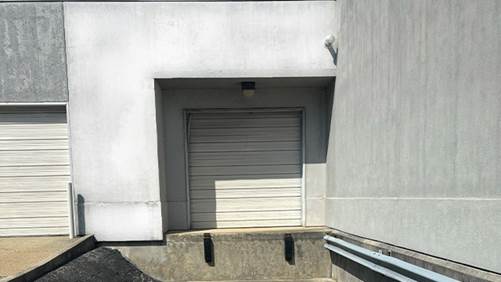
|
Loading Dock |
|
|
Outdoor fixtures
Personal property the named insured owns and uses to maintain or service covered buildings, structures, or its premises. Examples are air conditioning equipment, fire extinguishers, sprinkler systems, and floor coverings, as well as refrigeration, cooking, dishwashing, and laundering equipment.
However, this is not
the only property. It could also include garden tractors, snow removal
equipment, and even water hoses.
Note: This term does not include portable
property. It means permanent property such as fountains, streetlights,
sprinkler irrigation systems, and other fixed property.
Building glass
Note: This
usually includes glass building blocks, windows, and glass in exterior or
interior doors. Glass objects, glass dials on equipment not related to the
building, and stocks of glass are not building glass.
Radio and television towers, antennas, and satellite dishes
Their lead-in wiring, support wires, and foundations
are also property, as is any other property permanently attached to any of these
items.
Awnings and Canopies
Fences
However, this does not include pasture and
field fences
Note: The coverage form does
not explain or clarify when a fence is no longer a covered fence and becomes a pasture or field fence.
Signs
Signs attached to a covered building or
structure, and free-standing signs
Buildings Under Construction Or Being Repaired Or Renovated
Note: They are not covered if other insurance
covers them, or if the Builders’ Risk section of this coverage form applies.
When covered as building, the covered property
includes:
·
Equipment,
materials, supplies, and non-permanent structures (tents or sheds as examples).
This applies only when these items are on or within 1,000 feet of a covered
location and only when used in construction, alterations, or repairs to
buildings or building additions.
·
The
named insured’s contractual obligation for the interest of contractors and subcontractors
in the types of property described in the above paragraph.
Builders’ Risk Property
Builders' Risk Property is any building or
structure being constructed at a covered location. Coverage applies only if
there is a limit of insurance on the declarations for Builders' Risk Property. Such
an entry moves coverage for such buildings and structures out of building and
into builders risk property. The following property is covered and considered
builders’ risk property but only if it is on a covered location or within 1,000
feet of it:
- Scaffolding
and other building materials.
- Supplies
and materials that are to become a permanent part of the described
building or structure
- Excavations,
grading, filling, foundations and attachments
- Permanent
fencing
- Permanent
fixtures
- Temporary
fencing, construction forms, and scaffolding but only while at the covered
location
- Temporary
structures while at the covered location and not covered by any other
insurance.
Computers
Computers may be
covered as personal property or may be specifically scheduled as a computer.
When computers are scheduled they are not covered as personal property. Specific
computers can be scheduled with a limit of insurance, or all computers can be
scheduled using a single blanket limit. Computers may also be specifically
scheduled as excluded.
Mobile Equipment
Mobile equipment may be
covered as personal property or may be specifically scheduled as mobile
equipment. When mobile equipment is scheduled, it is not covered as personal
property. Specific mobile equipment items may be scheduled with a limit of
insurance or all mobile equipment may be scheduled using a blanket limit.
Mobile equipment may also be specifically scheduled as excluded.
Personal Property
Personal property of
the named insured that is at the covered location or within 1,000 feet of the
covered location is covered. The following are not included as personal
property:
- Stock
- Computers
- Mobile equipment
- Specifically
scheduled personal property
- Personal property
scheduled as excluded
Personal property includes all the
following:
·
The
named insured’s use interest in improvements to a building it occupies as a
tenant. The improvements must have been acquired or made at its expense but
cannot not be legally removed. Improvements are fixtures, alterations,
installations, and additions.
|
Example: False
ceilings, internal walls, light fixtures, improved wiring, telephone
switching systems, cooking equipment, HVAC improvements, carpeting, built-in
shelving, and even new roofs a tenant installs with a long-term lease can be
considered improvements and betterments. |
·
Leased
property, but only if the named insured’s lease contract requires that it provide
the insurance. Some examples are computers, photocopiers, printing equipment,
machine tools, and diagnostic equipment. Leased mobile equipment can also be
covered as business personal property. Lease is not a defined term and can be
of any duration.
·
The
named insured may provide labor, material, and/or services for repair,
modification, or improvements in personal property of others. If it does, the
value of that labor, material or service is considered the named insured’s
interest in that property. That interest is covered as personal property.
·
Personal
property of others that is in the named insured's care, custody, or control.
Payment for any covered loss to this property is for the benefit of the
property owner, not the named insured.
·
Household
personal property is covered only if there is an entry for it on the
declarations. This coverage applies to personal property in residences and is
available for only a named insured residing in a dwelling at a covered
location.
·
The
named insured has the option to extend this coverage to include property a
guest or domestic employee owns or uses. However, this option applies only
while the guest or domestic employee is on the named insured’s residential
property.
The named insured can
also include this coverage for others who live in dwellings on the covered
location. This option does not require that the dwelling be the named insured’s
residence.
Specifically Scheduled Property
Property may be specifically
listed and described on the declarations as covered property along with a separate
limit of insurance. Any property such listed is not subject to any of the excluding
or restricting terms in Property Not Covered section.
Stock
Stock must belong to
the named insured and be at a covered location or within 1,000 feet of it. It
includes property such as grain, seed, and other agricultural products as well
as raw materials, goods in process, finished goods, and goods held in storage
or for sale. Stock of others in the named insured's care, custody, or control is
considered stock, as are supplies used in packing or shipping.
Note: The word “includes” is used to describe
stock. This means more items could be considered stock. Stock does not include
any property specifically scheduled or excluded on the declarations.
PROPERTY NOT COVERED
The following property
is excluded. However, some have exceptions where some coverage applies. Each
must be examined carefully to determine the nature and extent of any coverage
provided.
1. Airborne or Waterborne Property
Property that is being
transported by water or air is not covered, but there are exceptions. The
airborne or waterborne property is covered if the transport is by a regularly
scheduled ferry or airline service. There may also be coverage for the property
in the Supplemental Coverages.
2. Aircraft and Watercraft
Aircraft and watercraft
are not covered if they are operated primarily away from a covered location.
This applies to the craft and its accessories, motors, and equipment. There are
two exceptions:
·
Coverage
does apply to crafts the named insured manufactures, processes, warehouses, or
holds for sale.
·
Rowboats
and canoes that are out of the water at a covered location are covered.
In addition,
Supplemental Coverages may provide some coverage.
3. Animals
Animals are not
covered. Examples of animals are livestock, poultry, birds, fish, insects and
worms, but this exclusion is not limited to just these. Coverage for specific
animals or classes of animals can be endorsed to this coverage form.
Related Articles:
4. Automobiles and Vehicles
Conveyances designed
and used to transport people and/or cargo over the road are not covered. Some
examples of such conveyances are trucks, tractors, and trailers. There is one
exception. Property considered mobile equipment is covered if there is a limit
for it on the declarations.
5. Contraband
Goods that
are illegal to possess, or legal to possess but in the process of illegal
transportation.
|
Example:
John and Bob legally purchase $50,000 of cigarettes
in Kentucky. They then transport the cigarettes to New York to sell them to
avoid New York cigarette tax. Doing this is illegal. Coverage does not apply
to any damage to those cigarettes. |
6. Crops
Crops that are growing
are not covered.
Note: A
crop-hail or multi-peril policy covers growing crops.
7. Exports and Imports
Exports and imports are
excluded only when coverage is provided for them under an insurance policy,
such as ocean marine cargo insurance, that was purchased to cover them.
Related Article: Ocean Marine
Cargo Insurance
8. Fences
General fences are
covered as building property. However, field and pasture fences are
specifically not covered.
9. Fine Arts
Fine arts, as defined
later in this policy, are not covered. Supplemental Coverages does provide a
limited amount of coverage.
10. Foundations
Foundations of either
buildings or machinery that are below the lowest basement are not covered. If
there is no basement, foundations that are below ground are not covered. There
is an exception for foundation coverage if the property is scheduled as
Builders’ Risk Property.
11. Furs
Furs and fur garments
are not covered property. A limited amount of coverage is provided in
Supplemental Coverages.
Note: This exclusion is more absolute than the
corresponding exclusion in most commercial property coverage forms and
policies. They usually cover the fur and fur garments for the same causes of
loss as are on the rest of the policy. The fur and fur garments are then
subject to a limitation that reduces coverage to a sublimit but only for the
theft cause of loss.
12. Guns
Guns are not covered
except for a limited amount provided in Supplemental Coverages.
13. Hay, Straw, and Fodder
Hay, straw, or fodder
held for sale is covered, but all else is not. AG 0136–Hay, Straw, and Fodder may
be attached to the policy to cover this property for the perils of fire,
lightning, windstorm, hail, vehicles, vandalism, and theft.
14. Jewelry, Watches, Jewels, Pearls, Precious Stones, and Metals
Watch movements,
semi-precious stones, gold, silver, other precious metals, and property that
consist primarily of precious metals are not covered. This applies without
regard to the property’s value. However, Supplemental Coverages may provide
some coverage.
Note: This exclusion is more absolute than the
corresponding exclusion in most commercial property coverage forms and
policies. They usually cover these items for the same causes of loss as are on
the rest of the policy. The items are then subject to a limitation that reduces
coverage to a sublimit but only for the theft cause of loss.
15. Land, Water, and Cost of Excavation
Three types of property
are excluded:
- All land. Even the
land where the covered property is located is not covered.
- Water that is on
the surface or that is below the surface.
- The costs to
excavate, fill, or grade land
16. Money and securities
Money and securities is
not covered. Consult the definitions section for listing of the types of
property that are considered money and securities.
17. Newly Acquired and Newly Constructed Buildings
Buildings or structures
the named insured builds or acquires after this coverage form’s inception date
are not covered. However, exceptions to this exclusion can be found in the
Builders’ Risk Property and the Coverage Extensions.
18. Property More Specifically Insured
Property that would be
covered under this policy but that is more specifically insured elsewhere is
not covered under this policy. However, this policy will provide excess coverage
over the amount available under the more specific coverage.
19. Property of Others
Property of others that
is the named insured’s responsibility because it is acting as either of the
following is not covered:
- A carrier for hire
- A business that
arranges transportation. Some examples are car loaders, consolidators,
brokers, freight forwarders, or shipping associations.
However, Supplemental
Coverages may provide some coverage.
Related Articles:
AAIS Motor Truck Cargo Legal
Liability Coverage Form
ISO Motor Truck Cargo Carriers
Coverage Form
20. Property You Have Sold
Property the named insured sells after
it is delivered is not covered. The only exception is when the property is sold
under an installation agreement, and the agreement requires the named insured
to be responsible for the property until the buyer accepts it.
|
Example: Amish Wares manufacturers and installs cabinets.
Grand Ideas buys the cabinets under an agreement that Amish Wares is
responsible for the cabinets until they are installed. A tornado occurs when
the cabinets are on Grand Ideas’ premises but not yet installed. This policy
covers the cabinets because of this exception. |
21. Silverware, Goldware, and Pewterware
Precious metal ware and precious metal plated ware is not covered. However, Supplemental
Coverages may provide some coverage.
Note: This exclusion is more absolute than the
corresponding exclusion in most commercial property coverage forms and
policies. They usually cover these items for the same causes of loss as are on
the rest of the policy. The items are then subject to a limitation that reduces
coverage to a sublimit but only for the theft cause of loss.
22. Trees, Shrubs, Plants, and Lawns
Outdoor trees, shrubs,
plants and lawns are not covered but when the items are indoor, there is
coverage. In addition, a Coverage Extension may provide some coverage for the
property while outdoors.
23. Underground Pipes, Flues, and Drains
24. Valuable Papers and Records
The cost to reproduce, replace, or restore lost
information on lost or damaged valuable papers and records is not covered. However,
Supplemental Coverages may provide some coverage.
ADDITIONAL COVERAGES
These coverages provide
additional amounts of insurance and are subject to the coverage deductible.
However, exceptions apply that will be stated within the particular additional
coverage. These limits are not used when calculating the coinsurance penalty
and are not subject to any coinsurance penalty.
1. Consequential Loss
This coverage insures the loss in value of covered undamaged stock because
a covered peril causes loss or damage to other covered stock. Stock is
considered to have lost its value if it cannot be marketed.
This additional coverage is part of the limit for stock under Property
Covered, not in addition to it.
Note: “Marketed” or
“marketable” is not defined or explained. This coverage applies only if the
stock is not marketable. There is no coverage if the undamaged stock loses
value but can still be marketed when the other stock is damaged.
|
Example: Peaches, Inc. sells dining room sets. Each set
consists of six chairs and a table made of the same wood. A tornado damages
the building warehousing the tables but the building with the chairs is
undamaged. The complete set is sold for $5,000. As individual
items the table would sell for $1,000 and each chair would sell for
$300.Therefore the per set value of the consequential loss is $2,200. The question is whether or not the chairs are
considered to be marketable. If they are, there is no coverage. If they are
not, the loss is $2,200 times the number of damaged tables. |
2. Debris Removal
Debris removal can be a
significant part of loss recovery because rebuilding cannot take place until
the debris is off the premises. The cost to remove debris of covered property
after a covered loss is limited to 25% of the amount paid for the direct loss.
An additional limitation is that the combined debris removal expense plus the
direct physical loss cannot exceed the damaged property’s limit of insurance.
If either of these limitations is met,
the Additional Debris Removal Expense on the declarations can be added to the
available debris removal limit.
|
Examples: Green’s limit is $1,000,000. The Additional Debris
Removal Expense limit on the declarations is $30,000. Scenario 1: The fire loss is $900,000. The debris removal
expense is $200,000. The debris removal expense limit is calculated as
follows: ·
$900,000 X .25 =
$225,000 + $30,000 = $255,000. This is the maximum debris removal expense
limit available. ·
$900,000 + $200,000
= $1,100,000 is the value of the claim. Recovery can be no more than the limit of $1,000,000
plus $30,000 additional debris removal expense. This means only $130,000 is
available for the debris removal expense. Scenario 2: The fire loss is $500,000. The debris removal
expense is $300,000. The debris removal expense limit is calculated as
follows: ·
$500,000 X .25 =
$125,000 + $30,000 = $155,000. This is the maximum debris removal expense
limit available. ·
$500,000 + $155,000
= $655,000 which is less than the potential recovery limit of $1,030,000. Recovery can be no more than $155,000 which is the
maximum debris removal expense limit. |
Debris removal expense
does not include costs to extract pollutants from land or water or the costs to
remove, restore, or replace polluted land or water.
A very important condition
is that debris removal expenses must be reported to the insurance company in
writing within 180 days after the direct physical loss to covered property.
Note: Covered expenses include demolition, using
a wrecking ball, transporting debris, blasting a damaged structure to the
ground, and removing damaged inventory or equipment.
3. Emergency Removal
The insurance company
pays for the loss of the named insured's property that is being moved or stored
at a location away from the covered location to protect it from an anticipated covered
peril. Coverage applies for up to 30 days after the property is first moved but
does not extend past the expiration date. There is no additional insurance
because this is merely moving property from one location to another temporarily.
Note: No exclusions apply to this
property while in transit or at the location to which property is removed. However,
the peril that threatens the property being removed must be a covered peril.
|
Example: The
wildfire gets out of control. The Furrows remove as much stock as they can
fit in rented vans and trucks and move it to a vacant warehouse out of the
wildfire’s range. Ten days later, torrential rains cause a mudslide that
destroys the warehouse and all the property Furrow moved into it. The loss
the mudslide causes, normally an excluded peril, is covered because the stock
was removed because of fire, a covered peril. |
4. Emergency Removal Expense
The insurance company
covers the named insured's reasonable expenses to move and to store property to
protect it from a covered peril. It pays the limit on the declarations for Emergency
Removal Expense. Coverage applies for up to 30 days after the property is first
moved but does not extend past the expiration date.
This Additional Coverage is not subject
to a deductible.
|
Example: Continuing the example above, the Furrows spend
$1,000 to rent the transporting vans and truck and pay $3,000 to the warehouse
owner for the one-month rental. These expenses are covered but only up to the
limit for Emergency Removal Expense on the declarations. |
5. Fire Department Service Charges
This coverage applies only if the named insured has a written contract or agreement with a fire department. It pays for assumed fire department service charges in a written contract or agreement but only when the response is for the fire department to protect covered property from a covered peril. The maximum payment is the limit on the declarations for Fire Department Service Charges. This Additional Coverage is not subject to a deductible.
|
Example: Kell’s combine falls into a
ditch. The only vehicle with the towing power needed to pull it out is a fire
department engine. The fire department sends him a bill for services that he
submits to his insurance company. The company denies the claim because this
situation does not involve covered property threatened by a covered peril. |
6. Glass Repair or Replacement Expense
Damaged or broken building glass may
involve additional costs that are not considered part of the glass loss. This
Additional Coverage handles most costs that the named insured incurs. It covers
expenses to install temporary plates or boards before the actual glass is
replaced. The cost to repair or replace the frames that encase the damaged
glass is covered. The cost to remove or replace items that must be moved for
contractors to gain access to the glass to repair or replace it is also
covered.
|
Example:
The Framington building has a large
octagonal window between its 2nd and 3rd stories. The heat from a fire on the
2nd floor causes the window to distort and break. The following expenses are
paid in addition to the cost of the window:
|
This is not additional insurance coverage. It is part of the limit for
either Building Property or Builders’ Risk Property.
7. Inventory and Appraisals Expense
The insurance company
pays reasonable expenses the named insured incurs in conducting an inventory
and obtaining an appraisal. There is a significant restriction on these
expenses. They are paid only if the insurance company has requested the
inventory and appraisal to establish the value of a covered loss. In addition,
the company does not pay:
- Any public
adjusters’ fees
- Any appraisal
costs that arise from Other Conditions–Appraisal
The most paid is the
limit on the declarations for Inventory and Appraisals Expense but it is not
subject to a deductible.
8. Pollutant Clean Up and Removal
There is coverage for
expenses the named insured incurs to extract pollutants from land or water at a
covered location under specific circumstances. The most paid is the Pollutant
Clean Up and Removal limit on the declarations.
The insurance company
pays only if a covered peril that occurs during the policy period causes the
pollutants to discharge, disperse, seep, migrate, release, or escape. However,
it only pays expenses that are reported to it within 180 days from the date the
covered peril occurred.
The limit on the
declarations is per location aggregate limit. This means that it is the most
paid for all covered pollutant clean up expenses at a location in a single
12-month policy period.
The costs to test for
pollutants while they are being extracted are also covered. However, there is
no coverage for any other costs to test for, evaluate, observe, or record the
existence, level, or effects of pollutants.
This Additional Coverage is not subject
to a deductible unless there is one on the declarations.
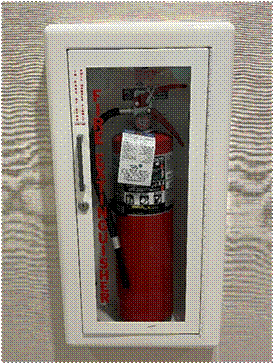
9. Recharge of Fire Extinguishing Equipment
This Additional
Coverage pays expenses the named insured must pay to recharge both automatic
and handheld fire extinguishing equipment because it was discharged. Coverage
applies only if it was the discharged to fight a fire or the discharge occurred
because of a covered peril. Because hydrostatic testing is a part of recharging
an automatic system, that expense is also covered. The most paid is the
Recharge of Fire Protection Equipment limit on the declarations.
The insurance company
has the option to replace the equipment instead of recharging it if it is less
expensive to do so.
There is no coverage
when the discharge results from testing or during installation.
This Additional Coverage is not subject
to a deductible.
|
|
Example: Vandals broke into Green’s Farm. They discovered
the handheld fire extinguishers and discharged them inside and outside the
building. The cost to recharge them is covered under this Additional
Coverage. |
COVERAGE EXTENSIONS
A Coverage Extension
applies only when there is a limit for it on the declarations. Coverage
Extensions apply only to direct physical loss or damage that a covered peril
causes. This means that while the direct damage loss may be covered, any loss
of income or extra expense would not be.
The coverage is part of
the applicable limit for coverage described under Property Covered, not in
addition to it.
Coverage Extensions are not subject to
coinsurance. However, they are subject to the deductible that applies, unless
stated otherwise.
|
Example: The limit of insurance is $1,000,000. The Fraud or
Deceit limit is $50,000. Only $1,000,000 is available to apply to a total
loss that involves both a standard peril and Fraud or Deceit. The $50,000
Fraud and Deceit sub-limit is not added to the $1,000,000 limit. |
1. Fraud or Deceit
The named insured, its agents,
customers, or consignees may be fraudulently induced to part with covered property.
Such losses are treated as theft. The inducement must be by persons who falsely
represent themselves as the proper persons to receive the property or through
the acceptance of bills of lading or shipping receipts that are fraudulent.
The limit on the
declarations for Fraud or Deceit is the most paid in a single occurrence. This
limit is a sub-limit. It is not an additional amount of insurance.
|
Example: Grady Trucking provides
a bill of lading for 1,000 cases of wine to the warehouseman at Amicable
Wineries. The name on the bill of lading is George’s Restaurant, a regular
customer. The order is filled and Grady Trucking leaves the premises. George calls Amicable
when he receives the invoice for the 1,000 cases of wine, denies any
knowledge of the transaction and refuses to pay. Grady Trucking and the wine
is never located. Amicable’s loss is covered up to the limit for
Fraud and Deceit on the declarations. |
2. Newly Acquired Computers
This extension applies
when there is a limit on the declarations schedule for computers. If the named
insured acquires new computers during the policy period, then they are covered
up to the limit on the declarations for Newly Acquired Computers limit on the
declarations. Coverage for those computers ends on the expiration date of the
policy period during which they were acquired.
The limit on the
declarations for Newly Acquired Computers is the most paid in a single
occurrence. This limit is a sub-limit. It is not an additional amount of
insurance.
3. Newly Acquired or Constructed Buildings
This Coverage Extension
extends the building limit of insurance at a covered location to the following:
- Buildings and
structures being newly built at an existing covered location
- Buildings that
exist at a location that the named insured acquires during the policy
period
A major limitation on this extension is
that such buildings or structures are covered only if the building use is
similar to how other buildings on the policy are used or for warehousing.
|
Example: Prado is an egg producer. All buildings at all
locations are related to egg production. Prado buys a convenience store in
town. This extension does not provide coverage for that new acquisition
because its use is not similar Prado’s other buildings. |
The limit on the declarations for Newly
Acquired or Constructed Buildings is the most paid in a single occurrence. This
limit is a sub-limit. It is not an additional amount of insurance. Coverage
ends on the expiration date.
|
Example: Prado has five buildings at its location. The limit
for the location is $2,000,000. The limit for newly acquired or constructed
buildings is $300,000. A new hatchery building valued at $250,000 is built on
the location after the policy period begins. Only $2,000,000 is available to
pay for all six buildings if a fire destroys them all, not $2,000,000 for the
five building plus $250,000 for the newly constructed building. |
4. Newly Acquired Mobile Equipment
This extension applies
when there is a limit on the declarations schedule for mobile equipment. If the
named insured acquires new mobile equipment during the policy period that
equipment is covered up to the limit on the declarations for Newly Acquired
Mobile Equipment. This limit is a sub-limit. It is not an additional amount of
insurance. Coverage ends on the expiration date.
5. Personal Effects
Personal effects of the
named insured, its partners, its members, managers, and its employees are
covered while on a covered location or within 1,000 feet of it. This coverage
applies only if this coverage form does not provide such coverage elsewhere.
The limit on the
declarations for Personal Effects is the most paid in a single occurrence. This
limit is a sub-limit. It is not an additional amount of insurance.
Note: The named insured can decide whether or
not to extend this coverage to other parties. It may decide not to because doing
so would reduce the limit available to pay for its business personal property.
6. Personal Property–Acquired Locations
Personal property at a location
the named insured acquires during the policy period is covered if that location
is used similarly to a covered location or for warehousing. This Coverage
Extension does not apply to personal property at exhibitions or fairs and only
applies during the policy period when the location is acquired.
The limit on the
declarations for Personal Property–Acquired Locations is the most paid in a
single occurrence. This limit is a sub-limit. It is not an additional amount of
insurance. Coverage ends on the expiration date.
7. Property Away From a Covered Location
This Coverage Extension
insures covered personal property or stock that is temporarily away from a
covered location. Coverage does not apply to property in the following
circumstances:
- In or on vehicles,
aircraft, rail cars, or other conveyances
- In the named
insured’s salesperson’s care, custody, or control
- At exhibitions or
fairs
- At locations that
are outside this coverage form’s territorial limits or that are in transit
between such locations
The limit on the
declarations for Property Away From a Covered Location is the most paid in a
single occurrence. This limit is a sub-limit of the limits for personal
property or stock. It is not an additional amount of insurance.
8. Stock–Acquired Locations
Stock at a location the
named insured acquires during the policy period is covered if that location is
used similarly to a covered location or for warehousing. This Coverage
Extension does not apply to stock at exhibitions or fairs and applies only
during the policy period when the location is acquired.
The limit on the
declarations for Stock–Acquired Locations is the most paid in a single
occurrence. This limit is a sub-limit. It is not an additional amount of
insurance. Coverage ends on the expiration date.
9. Trees, Shrubs, Plants, and Lawns
This Coverage Extension
extends the building limit to cover the named insured’s trees, shrubs, plants,
and lawns that are outdoors and that are not stock. Coverage applies only to loss
or damage that fire, lightning, explosion, riot, civil commotion, or falling
objects causes.
The limit on the
declarations for Trees, Shrubs, Plants, and Lawns is the most paid in a single
occurrence. This limit is a sub-limit of the building limit and includes costs
to remove debris of covered property. It is not an additional amount of
insurance.
SUPPLEMENTAL COVERAGES
Supplemental Coverages apply only when there
is a limit for the supplemental coverage on the declarations. The limit applies
to only those involved in direct physical loss or damage caused by a covered
peril causes. The limit for a Supplemental Coverage is additional insurance and
is subject to the deductible. Supplemental Coverages are not subject to any
coinsurance conditions that otherwise apply.
|
Example: The limit on the declarations for Stock is
$1,000,000. The Brands and Labels Expense limit is $50,000. If there is a
total loss and the named insured wants to remove all labels from potential
salvage, the $1,000,000 limit pays the loss and $50,000 is available for its expenses
to remove the labels. |
1. Accounts Receivable
This Supplemental
Coverage insures certain losses or expenses the named insured incurs because of
loss or damage to its records of accounts receivable that a covered peril
causes. Only the following are covered:
- Amounts due from
customers that cannot be collected
- Interest charges
on loans that the named insured must take to offset the loss of funds
until the claim is paid
- Additional
expenses for collections that result from and are necessitated by the loss
- Reasonable
expenses the named insured incurs to reconstruct accounts receivable
records
The limit on the
declarations for Accounts Receivable is the most paid in a single occurrence.
This Supplemental Coverage is not subject to a deductible.
2. Brands or Labels Expense
Two types of coverage
are provided.
The first type is
really an agreement. The insurance company agrees that after a covered loss,
all labels and branding can be removed from salvageable covered stock as long
as the stock is not damaged and that it is relabeled as required by law. This
significantly reduces the value of the salvage, but it protects the reputation
of the named insured’s brand.
The second type of
coverage pays for the expense incurred by the named insured to remove the
labels and brands and to relabel as the law requires.
The limit on the declarations for Brands
or Labels Expense is the most paid for expenses incurred in a single
occurrence. This Supplemental Coverage is not subject to a deductible.
|
Example: Megan’s Tomatoes is an organic produce supplier.
She sustains damage to her stock from a small but very smoky fire. The
insurance company takes the salvage and gets an offer to purchase from an
animal feed manufacturer. Because of this coverage Megan can demand that she
be allowed to remove all labeling so that her brand is not associated with animal
feed. The expenses she incurs to have the tomatoes removed from printed
packaging and labels removed from the tomatoes before having them repackaged
into plain brown sacks and boxes is paid under this coverage. The tomatoes in
brown sacks are then sold to the animal feed manufacturer. |
3. Carrier Liability
Property Not Covered 19.
Property of Others excludes coverage for property of others if the named
insured operates as a carrier for hire. This Supplemental Coverage is the
exception to that exclusion. It covers the named insured's legal liability for
loss to property of others. The legal liability must be imposed by the shipping
documents the named insured provides as a common or contract carrier for hire.
Coverage applies to direct
physical loss or damage to property of others in transit and in the named
insured's care, custody, or control. The property must also be in a vehicle the
named insured owns or leases.
Coverage also applies
to the named insured's earned freight charges from the point of shipment to the
point where the loss or damage occurs. This is subject to the charges not being
paid and not collectible from the shipper or that the shipper is required to
refund because of a covered loss.
However, there is no
coverage for any fees, fines, penalties, costs, expenses, or damages that
result from the named insured violating any law or regulation that relates to
any delay in denying, paying, or settling any claim.
The limit on the declarations for
Carrier Liability is the most paid in a single occurrence.
|
Example: Jeremy transports his own goods on his own truck
from Evansville to Indianapolis. Rather than return to Evansville with an
empty truck, he has contracted with three companies in Indianapolis to bring
their products to Evansville. When an accident occurs, this coverage pays for
his legal liability to those products of others. |
4. Fine Arts, Furs, Guns, Jewelry, and Metals
Property Not Covered 9.
Fine Arts, 11. Furs, 12. Guns, and 14. Jewelry, Watches, Jewels, Pearls,
Precious Stones, and Metals excludes coverage for this property. This
Supplemental Coverage is the exception to those exclusions. It covers direct
physical loss or damage to fine arts, furs, fur garments, guns, jewelry and
related property, and precious metals.
Coverage for fine arts
applies while at a covered location, at temporary exhibit locations, or in
transit between the two. The limit for Property in Transit and the limit for Property
on Exhibition cannot be combined with this limit to increase the limit of insurance
available to pay losses.
The limit on the declarations for Fine
Arts, Furs, Guns, Jewelry, and Metals is the most paid in a single occurrence.
|
Example:
A theft loss occurs at Plantation Grains. In addition to stock and personal
property, three statues, five guns and three gold bars are stolen. The
maximum payment for the sum of the value of statues, guns and gold bars is
the limit on the Fine Arts, Furs, Guns, Jewelry and Metals limit on the
Declaration. The payment does not reduce the limit available to pay for the
stock and personal property loss. |
5. Loss of Use of Dwellings
This coverage is like personal
lines loss of use coverage. The limit of insurance on the declarations for Loss
of Use of Dwellings is the most paid in a single occurrence.
Coverage is provided for increased living costs
the named insured incurs because of a covered loss to a covered location but
only if the named insured resides in the covered property or was a tenant and
the contents were covered property. The costs are only those needed to bring
the household to the same standard of living that existed prior to the loss.
If
the named insured so chooses, coverage can be provided for others who reside at
the covered location. The increased living costs that are incurred because a
covered loss causes their principal residence to be unfit to live in are
covered. The expenses paid are only the amount needed to maintain the normal
standard of living of their household. Remember that payment for loss of use
for others reduces the amount of coverage available to the named insured for
his or her personal loss of use, if part of the same occurrence, because there
is only one loss of use dwelling limit.
|
Example: Hagel Farms has three dwellings on the premises. A
wildfire overruns the premises and damages all three. ·
The Hagel family
home has 5 bedrooms, 2 baths, and a built-in swimming pool. ·
The cook has a small
home on the property with two bedrooms and 1 bath. ·
The manager has a
four-bedroom, two-bath home with standard amenities. The Hagel family calculates that its increase in
living expenses will be $10,000 per month, the cook’s at $1,000 per month,
and the manager‘s at $5,000 per month. The limit for Loss of Use of Dwellings
is $50,000. The
Hagels are paid $10,000 per month until the limit is exhausted, or the
dwelling is restored. They can choose if they want to share the limit and
extend coverage to apply to the cook's and manager’s dwellings loss of use. |
Expenses are paid until the property can be
occupied again, the family is permanently relocated, or the limit is exhausted,
whichever comes first. Policy expiration does not impact the time of coverage.
If a neighboring premises has a covered loss
and the civil authorities refuse to allow the residents on the named insured’s
location to stay in their homes, there is coverage for those residents’
additional living expenses for up to two weeks.
6. Ordinance or Law–Increased Costs
Perils Excluded 1. a.
Ordinance or Law excludes coverage for all loss or additional costs incurred because
of ordinances or laws imposed on a damaged building being rebuilt. This Supplemental Coverage is the exception
to that exclusion. It provides multiple coverages but there is only one limit
of insurance. This limit applies to the total of all covered loss in a single
occurrence which this Supplemental Coverage provides.
Related Court Case: Insured Had
Right To Appraisal Regarding Ordinance And Law Coverage
a. Increased Cost to Repair
Coverage is provided for the increased
costs that occur because ordinances or laws that had been grandfathered are
enforced following a covered loss. For these costs to be covered, the ordinance
or law must be in place at the enforced time due to the occurrence of a
significant covered loss. Coverage applies to both damaged and undamaged
covered property.
|
Example: A windstorm damages the main building at
Peppering’s Plantation. According to city ordinances, Peppering must increase
the width of the hallways and the entrances and add a sprinkler system in the
meeting area. Coverage for the additional expense applies because the laws
were in effect at the time of loss, but compliance was not required until a
loss occurred that damaged more than 50% of the building’s total area. |
If prior to a loss the insured was notified of
noncompliance to an ordinance or law and chose to ignore it, there is no
coverage for the increased cost of repair due to that ordinance or law
following a loss. To have coverage the repairs must be made and must be
completed within two years.
b. Cost to Demolish and Clear Site
Coverage also
applies to the cost to demolish and clear the site of undamaged parts of the
covered building or structure that a covered peril damages. The demolition
required must be due to an ordinance, law, or decree in force at the time of
the covered loss to the covered building or structure.
|
Example: Grendel’s Hog Farm sustains extensive fire and
smoke damage. The contractors apply for the required building
permit but learn that the building must be demolished and moved. Because the property sustained more than 55%
damage, a city ordinance is invoked that no longer permits such operations
within city limits. The coverage outlined in ‘Increased Cost to Repair’
above pays the increased costs to rebuild in another area. Costs to ‘Demolish and Clear Site’ coverage applies
to the cost to demolish the undamaged part of the building. |
The value of any
undamaged part of a building that must be demolished is not covered. 4.
Ordinance or Law–Undamaged Part of a Building under Other Coverages addresses
this exposure.
c. Pollutants
There is no coverage
for costs that relate to enforcing any ordinance, law, or decree that involves
testing for or assessing the effects of pollutants.
d. What is Paid if Building Repaired or Replaced
The actual costs
incurred or the Increased Costs – Ordinance or Law limit on the declarations,
whichever is less, are paid. The actual costs cannot exceed what it would cost
to construct a building of the same height, area and style for the same
occupancy.
e. What is Paid if Building NOT Repaired or Replaced
The actual demolition
costs plus the amounts that the insured would have spent had the property been
replaced with similar property or the Increased Costs – Ordinance or Law limit
on the declarations, whichever is less, are paid.
Note: Other Coverages 4. Ordinance or
Law–Undamaged Parts of a Building completes this coverage. It covers the value
of the undamaged part of the building that must be demolished.
7. Overseas Transit and Location
This Supplemental
Coverage insures direct physical loss to personal property that is temporarily outside
this coverage form’s Territorial Limits. Coverage also applies to property in
transit to or from such temporary foreign locations. This coverage is subject
to the Overseas Transit and Location limit. The following limits the personal
property coverage provided:
a. Covered Personal Property
Only the following personal
property is covered:
- Owned personal
effects of the named insured, its officers, partners, members, managers,
or employees
- The named
insured's portable computers. Only laptops, palmtops, notebook PCs, other
portable computer devices, and accessories are covered.
- Personal property if
on display or exhibit for only a temporary timeframe
- Samples of the
named insured's stock and containers and similar items of others. These
are covered while in the custody of the named insured, its sales
representatives, and agents and transit between the named insured's
covered location and its sales representatives.
b. General Average Charges
If the named insured
must contribute to a General Average Loss under the York-Antwerp Rules, there
is coverage but only in proportion of the value of the property to the actual
contributory value of the property.
Related Article: Ocean Marine Cargo Insurance
c. Additional Property Not Covered
This item is added to Property
Not Covered but only for this Supplemental Coverage. The following property is
excluded:
- Any property
shipped by mail
- Any property that
an ocean marine cargo or similar policy covers
- Any property for
which the named insured is required to provide a negotiable ocean marine
cargo policy or certificate to a buyer, seller, or bank
- Any property
shipped to or located in a country subject to United States Government
trade embargo, trade sanctions, or other trade restrictions
The limit on the
declarations for Overseas Transit and Location is the most paid in a single
occurrence. and cannot be combined with the limit for Property in Transit, the
limit for Property on Exhibition, or the limit for Sales Representatives
Samples.
8. Property in Transit
Covered personal
property or stock at a covered location is also covered while in transit. Coverage
applies regardless of the number of vehicles, containers, or conveyances
involved in the loss.
Note: This statement does not
state if the limit is per vehicle or per occurrence. This could cause confusion
if a loss occurs.
|
Example: Jamison Foods ships
produce quickly. It loads five different semis and they begin their trips on
the same highway. They start to merge onto the highway when the lead truck
suddenly stops to avoid hitting a passing car. All the other trucks brake
hard. They avoid striking each other, but their loads shift and Jamison’s
produce is all damaged. Is this a single occurrence (with a single limit
applying) or are there five separate occurrences (with the limit applying to
each event)? |
This insurance does not
apply to property in the care, custody, or control of sales representatives.
The limit for this
Supplemental Coverage is not combined with the limits for Fine Arts, Furs,
Guns, Jewelry, and Metals or Property on Exhibition.
9. Property on Exhibition
Covered personal
property or stock at a covered location is also covered while it is being displayed
or exhibited elsewhere. It is required that the property be at the location
there only temporarily and that the named insured must not occupy that
location.
The limit on the
declarations for Property on Exhibition is the most paid in a single occurrence
and cannot be combined with the limits for Fine Arts, Furs, Guns, Jewelry, and
Metals or Property in Transit.
10. Property Sold under Installment Sales Plan
Stock that is sold by
the named insured under an installment sales plan is covered for direct
physical loss while in transit to the purchaser and after delivery to that
purchaser. The physical loss must be due to a covered peril and the installment
sales plan must be either a conditional sale or trust agreement or any type of
deferred payment plan. This coverage is open-ended but is still subject to
rules of indemnity. This coverage is for the benefit of the named insured, not
the purchaser, so coverage is limited to the named insured’s interest in the
property.
The limit on the declarations for this
Supplemental Coverage is the most paid in a single occurrence but it cannot be combined
with the limit for Property
in Transit.
|
Example: Marilee wants to purchase a large table from Wood
Acres Farms but does not know how it will fit and look in her dining room.
She is a good customer so Marty, Wood Acres’ manager, agrees to deliver it to
her on a trial basis. Marilee examines the table in her home for three days
when a fire in her kitchen spreads and damages the table. The Wood Acres Farm
policy covers the damage to the table up to the limit on the declarations for
Property Sold Under Installment Sales Plan. |
11. Sales Representative Samples
This Supplemental
Coverage insures the named insured's sample stock, its containers, and similar
property of others. Coverage applies when the samples are in any of the
following:
- The custody of the
named insured's sales representatives and agents
- The named
insured's custody when it acts as a sales representative
- In transit between
the named insured's covered locations and its sales representatives
The limit on the
declarations for this Supplemental Coverage is the most paid.
Note: The limit does not state if it is per
occurrence or per sales representative. This could be confusing and create
problems if a loss
occurs when multiple sales representative are at the same location.
12. Sewer Backup and Water below the Surface
Note: The Water exclusion in this form is
deleted and replaced by mandatory exclusion AG 0149–Water Damage Amendments.
This exclusion also deletes and replaces this Supplementary Coverage.
Because of this, the
replacing Supplementary Coverage is analyzed in place of the one in the form.
Coverage applies to direct
physical loss from any of the following causes:
- Water and material
within that water that backs up through a sewer, sump system or any other
system that is designed to remove drain water from around the foundation.
- Water or material
within that water and is below the surface of the ground. Some examples of
this are water pressing on, flowing, seeping, or leaking through or into a
covered building or structure, sidewalk, driveway, foundation, swimming
pool, or other structure.
However, there is no
coverage if the damage is due to an insured failing to maintain the sump or
perform normal sewer or drain maintenance.
The limit on the
declarations for this Supplemental Coverage is the most paid in a single
occurrence.
13. Spoilage
Spoilage of the named
insured's perishable stock that is at a covered location is covered. Spoilage
of similar property of others at a covered location is also covered but only
for the named insured’s interest in it.
a. Only
spoilage caused by the following is covered:
·
Breakdown
Any change in
temperature or humidity that occurs because of a refrigeration system mechanical
breakdown, malfunction, or failure. This applies if the breakdown is of the
entire system or the equipment controlling it.
·
Contamination
Only contamination by
the refrigeration system’s refrigerant is covered.
·
Power disruption
Any change in
temperature or humidity that occurs because there is a total or partial lack of
electrical power or there is a fluctuation of electric current. To be covered,
the power disruption must be outside
the named insured’s control.
b. The following exclusions apply to only this Supplemental
Coverage:
·
Loss
that occurs because a power cord is unplugged, or a power switch is turned off
·
Loss
that occurs because glass that makes up a permanent part of the refrigeration
system breaks
·
Loss
that results from an electrical utility doing either of the following:
o
Failing
to provide sufficient power because it does have enough fuel
o
Failing
to provide sufficient power because of a government order
·
Loss
that results from the covered location not being able to generate enough capacity
to meet the demand
·
Any
loss due to business interruption, delay, loss of use, or loss of market unless
so noted on the declarations
|
Example: Gerard Fruits and Vegetables receives power from
the local power company. Gerard also keeps a generator on hand in case of a
power failure. One summer the state ordered a rolling blackout because of
supply problems. Gerard was prepared and had a generator on hand. Unfortunately, the generator was too small to meet
the refrigeration demand. All his frozen produce thawed and spoiled,
resulting in a large loss. When he submitted a claim, it was denied because
the power disruption was due to the government order and his lack of
generating power. |
c. Additional Condition–Refrigeration,
Maintenance, or Service Agreement
The insured is required
to have a refrigeration maintenance or service agreement. Spoilage coverage
ends if the named insured terminates such an agreement or is aware that it has
been terminated or suspended unless notification is provided to the insurance
company within a reasonable time.
Note: The wording doesn’t say what happens
after the insurance company receives such a notification. Would they then have
the option to immediately terminate coverage or would the standard cancellation
rules apply?
Even when spoilage
coverage has been terminated due to the lack of such notification, coverage
continues to apply for spoilage loss due to power disruption but only if the
disruption is due to a disruption off the covered location.
The limit on the
declarations for this Supplemental Coverage is the most paid in a single
occurrence.
14. Surface Water Run-Off
This Supplemental
Coverage insures damage to covered liquid property that is stored in a
permanently installed bulk storage tank that is caused by any surface water
runoff. This supplemental only applies if the bulk storage tank is covered
under this policy.
The limit on the
declarations for this Supplemental Coverage is the most paid in a single
occurrence.
15. Tank Leakage
This Supplemental
Coverage insures damage to covered liquid property stored within an above
ground tank that is caused by leakage. The damage is only covered when the
leakage happens because the tank or its parts suddenly and accidentally break,
failure or malfunctions. This supplemental applies only if the tank is covered
under this policy.
This unusual coverage
also pays for the expenses the named insured incurs to extract the leaked
liquid property from land or water. These expenses are paid only if the named
insured reports the expenses to the insurance company within 180 days of the leakage
date. Coverage does not apply to any of the following:
- Damage to the tank
or its parts
- Damage to other
property caused by the leak
- Loss of liquid
property that is discovered only because of an inventory.
- Repeated seepage
or leakage
Costs to evaluate,
test, record, or observe any aspect of pollutants. However, the costs for tests
that are a part of extracting the covered liquid property from land or water
are covered. This limit may not be combined with the limit for Pollutant
Cleanup and Removal on the declarations.
The limit on the declarations for this
Supplemental Coverage is the most paid in a single occurrence.
|
Examples: #1. A
windstorm rips through Brian’s compound. It rips off the pipes attached to
the anhydrous ammonia tank and the liquid flows out. The loss of the
anhydrous ammonia is covered. #2. Thieves
target Brian’s anhydrous ammonia tank. They pry open the valve, steal a small
amount, and replace the valve to prevent discovery. Brian runs out of
anhydrous ammonia well before his records indicate that his supply should be
exhausted. This loss is not covered because it was only revealed through an
inventory. |
16. Utility Service Interruption
Direct physical loss to
covered property caused when utility service to a covered location is
interrupted is covered. However, in this Supplementary Coverage, property does
not include perishable stock.
The interruption must
occur because of direct physical loss or damage at utility service property that
is not insured under this policy. A utility, a landlord, or another supplier must
own the utility service property. The only utility services covered are those
selected on the declarations.
All the following are
considered utility service property:
- Generating plants
- Substations
- Switching stations
- Power transmission
lines. These can be excluded on the declarations.
- Transmission
facilities for microwave, radio, telephone, television microwave, or other
communications but not satellites.
- Communication
transmission lines. These can be excluded on the declarations.
- Water pumping and
storage facilities
- Water mains
The limit on the
declarations for this Supplemental Coverage is the most paid in a single
occurrence.
17. Valuable Papers and Records–Cost of Research
Property Not Covered 24.
Valuable Papers and Records excludes the cost to reproduce valuable papers and
records. This Supplemental Coverage is
the exception to that exclusion. It covers the costs of research and
other expenses required to reproduce, replace, or restore information that was on
lost or damaged valuable papers and records.
The limit on the declarations for this
Supplemental Coverage is the most paid in a single occurrence.
|
Example: The Fairly Nice Cattle Farm breeds a unique type of
cattle valued for its milk production. It maintains extensive genealogical
records to prevent inbreeding and to ensure that it uses only the healthiest
breeding stock. A fire destroys the office and its breeding records. The only
source to replace the information is its customers’ breeding information. By
contacting each customer, Fairly Nice re-creates nearly 90% of the destroyed
records. This supplemental coverage covers the cost to research the customer
base, contact each one, and obtain the needed information. |
18. Watercraft
Property Not Covered 2.
Aircraft and Watercraft excludes most aircraft and watercraft. This Supplemental
Coverage is an exception to that exclusion. It covers direct physical loss or
damage to watercraft and their trailers, furnishings, motors, and equipment.
The limit on the
declarations for this Supplemental Coverage is the most paid in a single
occurrence.
19. Wrongful Delivery of Liquid Property
This Supplemental
Coverage insures covered liquid property that is damaged, devalued or becomes
unusable because it was pumped into the wrong permanently installed bulk
storage tank.
Note: The value of the
delivered property is covered. The value of the liquid property already in the
tank is not.
|
Examples:
|
INCOME COVERAGE
1. Coverages
Three separate income
coverages are available in four combinations based on entries on the
declarations. The four coverage options are:
a. Earnings, Rents, and Extra Expense
b. Earnings and Extra Expense
c. Rents and Extra Expense
d. Extra Expense only
Under the Earnings,
Rents, and Extra Expense option, Earnings includes rents. Under the Rents and
Extra Expense option, Earnings includes only rents.
2. Coverage Limitations
Coverage applies during
the restoration period. Covered direct physical loss or damage that occurs
during the policy period must totally or partially interrupt the named
insured’s normal business activities.
Coverage is further
subject to either of the following:
- The physical loss
to real property, personal property, or stock occurs on the covered
location or within 1,000 feet of it.
- There is direct
physical loss to covered computers, mobile equipment, or other property
insured on a specific basis.
The insurance company
pays only the loss of applicable
earnings and extra expenses incurred during the 12 months immediately following
the date of direct physical loss or damage to covered property.
EARNINGS
This coverage insures the
named insured's actual loss of net income it would have earned if there was no
loss. The loss must be due to covered direct physical loss or damage to covered
property. In addition to the named insured’s net income, coverage also applies
to its business operating expenses that continue. This includes payroll expense
but is not limited to just it.
Related Court Case: Business
Interruption Insurance Held Not To Indemnify When Net Loss Exceeded Operating
Expenses
The named insured's loss of net income
does not include income it might have earned as a result of business conditions
that arise out of the peril that caused the loss and interrupted the named
insured's business activities.
|
Example:
A hurricane destroys Michael's Green Vegetables processing plant along with
several other businesses in the area. The price of green vegetables increases
25% because of the destruction the hurricane caused. Michael's business
income is based on what it would have earned if there was no loss and does
not include the 25% price increase. |
EXTRA EXPENSE
This coverage insures
the necessary extra expenses the named insured incurs during the restoration
period that it would not have been incurred if there was no loss. The loss must
be due to covered direct physical loss or damage to covered property. It also
covers extra expenses incurred to avoid or reduce interruptions in business
operations such as continuing operations at a replacement or temporary location
and even continuing at the damaged covered location. This coverage also applies
to expenses and costs to relocate, equip, and operate such temporary or
replacement locations.
Coverage also applies
to extra expenses the named insured incurs that reduce the amount of time
operations must be interrupted when they cannot continue.
The following extra
expenses are also covered but for no more than the amount by which they reduce
losses that would have otherwise been payable:
- Expenses to
repair, restore, or replace any property
- Expenses to
replace, restore, or research information on damaged valuable papers and
records
|
Example:
Periwinkles refuses to cease operations
because it does not want to lose customers. As a result, it takes the
following steps after a loss:
|
EXCLUSIONS AND LIMITATIONS
The Perils Excluded
section applies to Income Coverage. The following exclusions and limitations
are in addition to those in the Perils Excluded section and apply to only
Income Coverage.
1. Finished Stock
There is no coverage
for loss of earnings due to damage to finished stock or for time needed to
reproduce that finished stock. Finished stock awaiting sale at a covered retail
location is not subject to this exclusion.
2. Leases, Licenses, Contracts, or Orders
Coverage does not apply
to any increase in loss due to any of these being cancelled, suspended, or lapsed.
However, coverage does apply if they are
the direct result of interruption of the named insured's business operations. Coverage
is limited to the amount of loss within the restoration period.
|
Example: Maple Farms has a contract to supply product with
a cereal manufacture. A fire occurs at the Maple processing building and
Maple is unable to fulfill the contract. The contract lapses and the income
for that contract is covered until operations can resume. Once operations can
resume, the income lost due to suspended contract is no longer paid. |
3. Mobile Equipment Rental Reimbursement
Coverage for rental replacement mobile equipment expense is denied under
the following circumstances:
- Similar equipment is available to the named insured for no
additional expense
- The named insured, with reasonable effort, can repair, replace, or
rebuild the damaged equipment without experiencing down time
- During the first 72 hours following the loss or damage to the mobile
equipment. The number of hours can be changed on the declarations.
|
Examples:
|
|
Muley’s backhoe is
damaged but can be repaired. His son has a backhoe he will loan to him free
of charge. There is no extra expense coverage. Muley’s son needs his
backhoe back, but the repairs to Muley’s backhoe are not completed, and 72
hours have passed. Muley rents a backhoe for the three weeks it takes until the
backhoe repairs are completed. Muley
should be reimbursed when he presents the insurance company with the rental receipt. |
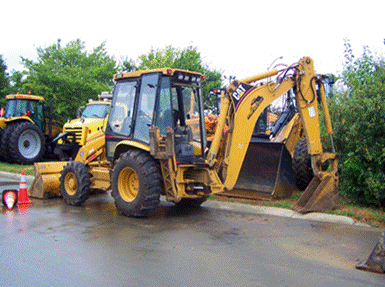
4. Radio and Television Antennas
Loss of earnings or
extra expense due to damage to any radio or television antenna and attachments
is excluded. However, coverage can be provided based on entries on the
declarations.
5. Software
There is no coverage for loss of earnings
caused by loss of or damage to software beyond the longer of the following:
a. Sixty consecutive days from the date of loss unless there
is a different number of days on the declarations
b. The period of time from
the date of loss to the date that other property the same occurrence damaged
could reasonably be repaired, replaced, or rebuilt with similar materials
|
Example: A fire at Logsdon Farms destroys a barn and three
computers in it. The computer software is proprietary and must be recreated.
The barn and computers are replaced and operational within 90 days, but the
software is not yet available. Coverage ends after 90 days because it is the
longer of the two time limitations even though the software is not yet
recreated. |
6. Strikes, Protests, and Other Interference
The insurance company does not cover any
increase in loss due to strikers or other persons who are at the location interfering
with the named insured’s being able to repair, replace, or rebuild the property
and resume operations.
|
Example:
Melter's Veal Products looks forward to
resuming operations after a loss at their processing plant. Scenario 1: Animal activists protest at the insured’s jobsite,
and the contractors doing the work will not breach the protestors. As a
result, the protesters manage to slow reconstruction by three weeks. The
insurance company does not pay for any loss of earnings during those three
weeks. Scenario 2: Animal activists protest at the Contractors office
location. Contractors are in sympathy with the protestors and refuse to work
at the jobsite until the protesters leave their office. The insurance company
would pay for this loss of earnings because the protestors are not at the
insured location. |
INCOME COVERAGE EXTENSIONS
Each Income Coverage
Extension is part of the Income Coverage limit on the declarations. All extensions
are subject to the deductible that applies, unless otherwise noted.
1. Interruption by Civil Authority
Earnings and extra expense coverage can
be extended to include loss sustained when an order by a civil authority denies
access to a covered location or a dependent location. The order must result
from covered direct physical loss or damage to property that is located at
other than a covered location. Coverage ends 30 days after the date of the
order.
2. Period of Loss Extension after Business Resumes
The named insured can
extend earnings coverage to include loss of income that continues after the
property damaged is rebuilt, repaired, or replaced and the named insured resumes
business operations or restores tenability. Coverage applies for the first of
the following that takes place:
·
Up
to 90 consecutive days or a different number of days on the declarations
·
The
date that business operations could be reasonably restored to the level that
existed before the loss or damage
This coverage extension does not apply
to any loss of net income due to unfavorable business conditions that a covered
peril creates.
|
Example:
A tornado cut through
Mainville. Green’s Feed and Seed sustains a loss but is back in business
within 90 days. Scenario 1: Green’s customer base started buying from a
competitor in a neighboring town. It takes 60 days before his business
rebuilds. The Period of Loss Extension coverage pays for loss of income
during those 60 days. Scenario 2: Green’s customer base is devastated and uncertain
about insurance payout and losses. They are not buying anything until they
know. Green will not receive any payment under Period of Loss Extension. |
3. Grain Storage Income
The named insured can extend coverage to include losses sustained when it
cannot complete a contract for grain storage due to a covered peril at a
covered location. The insurance company pays the actual loss of contractual
storage earnings sustained for up to 90 days after the restoration period ends.
The number of days can be changed.
4. Seasonal Coverage
Some operations produce all their annual income based on crops from a single
season. A loss to that seasonal property eliminates income for an entire year.
This unique coverage helps those operations.
The named insured can extend earnings coverage because it cannot obtain,
receive, store, or process seasonal produce due to a covered loss at a covered
location.
The insurance
company pays the actual loss the named insured sustains for the longer of 365
days or the period of restoration. The number of days can be changed.
|
Example: Sweet Bees specializes in producing orange blossom
honey. A fire destroys both the honey processing building and the honey after
it is harvested. Sweet Bees cannot resume operations, even after the
processing building is rebuilt, until the bees collect nectar from the orange
blossoms the following spring. |
ADDITIONAL INCOME COVERAGES
Additional Income
Coverages provide additional insurance limits. They are not subject to or
considered in applying coinsurance provisions in cases subject to coinsurance.
Each is subject to the deductible unless otherwise noted.
1. Newly Acquired Locations, Earnings, and Extra Expense
Earnings and
extra expense coverage extends to cover losses at any location the named
insured acquires during the policy period but only if there is a limit on the
declarations for this additional income coverage. Coverage for the location acquired
ends when the policy period ends. The most the insurance company pays is the
limit on the declarations for newly acquired locations.
|
Example: Perry has a $50,000 limit on the declarations for Newly
Acquired Locations, Earnings, and Extra Expense. The policy period is 01/01/23
to 01/01/24. The renewal policy period is 01/01/24 to 01/01/25. Perry
acquires a new location on 12/15/23. A covered loss occurs on 01/02/25. Neither
policy covers the loss because Perry acquired the location in one policy
period and the loss occurred in the other. Property acquired near the end of the
policy period can be easily overlooked at renewal and lead to gaps in
coverage. |
2. Newly Acquired Locations, Extra Expense Only
Extra expense coverage extends to cover losses at any location the named
insured acquires during the policy period but only if there is a limit on the
declarations for this additional income coverage. Coverage for the acquired
location ends when the policy period ends. The most the insurance company pays
is the limit on the declarations for newly acquired locations.
SUPPLEMENTAL INCOME COVERAGES
Supplemental Income
Coverages apply only when there is a limit on the declarations for that coverage.
A covered peril must cause the loss, unless otherwise stated. The limit is a
per occurrence limit. These coverages provide additional insurance and are part
of any coinsurance consideration. Each is subject to the deductible unless
otherwise noted.
1. Public Health Shutdown
A public health
shutdown can significantly impact the earnings of an operation. This coverage
provides earnings and/or extra expense coverage when a public health authority
suspends or shuts down the named insured’s operations. Coverage applies only if
the authority suspects or has actually discovered harmful organisms in food the
named insured sells, handles, or distributes.
Coverage begins when normal
business operations are first shut down or suspended. It ends on the shorter of
the following time periods:
·
Thirty
consecutive days later
·
When
the authority allows operations to resume
This coverage does not apply when the period of
time before operations can resume is because ordinances, laws, or decrees require
any of the following:
·
Constructing,
repairing, using, or demolishing of any property
·
Testing,
evaluating, observing, or recording any aspect of pollutants
·
Cleaning
up, removing, containing, treating, detoxifying, or neutralizing pollutants
The limit of insurance is on the declarations.
2. Dependent Locations
Earnings and/or Extra Expense coverage
applies when a dependent property sustains direct physical loss that interrupts
the named insured’s operations. This coverage is subject to the limit for
Dependent Locations on the declarations and applies during only the period of
restoration during which the named insured’s business is interrupted. The
covered direct physical loss must occur during the policy period.
|
Example: Cousins Co-op sustains a significant
loss and is unable to accept any produce. Millie’s Farm ships all its produce
to Cousins. Because Cousins cannot accept the produce, Millie sustains a
significant loss of income. However, after 30 days Millie’s can contract with
another group and begins to ship produce to it. This reduces the loss but
there is an extra expense loss that will continue to be paid. |
3. Utility Service Interruption
Earnings and/or extra
expense apply when a utility service property sustains direct physical damage
and interrupts utility service to a covered location. However, in this
Supplementary Coverage, property does not include perishable stock. The covered
direct physical loss must occur during the policy period. The interruption must
occur because of direct physical loss or damage at utility service property
that is not insured under this policy. A utility, a landlord, or another
supplier must own the utility service property. The only utility services
covered are those selected on the declarations.
All the following are considered utility service property:
- Generating plants
- Substations
- Switching stations
- Power transmission
lines. These can be excluded on the declarations.
- Transmission
facilities for microwave, radio, telephone, television microwave, or other
communications but not satellites.
- Communication
transmission lines. These can be excluded on the declarations. Water
pumping and storage facilities
- Water mains
Earnings coverage does not begin until
12 hours after the covered loss to the property that the utility, landlord, or
other supplier owns. However, this waiting period does not apply to any extra
expenses the named insured incurs. Both earnings and extra expense coverage
continues during only the period of restoration.
|
Example: A truck strikes a transformer. This
shuts down the electric service to Colby’s Winery. The accident occurs at
4:00 a.m. two blocks away from Colby’s premises. The electric utility company
works as fast as it can to repair the transformer, but it takes 24 hours to
restore Colby’s electricity. Colby’s payment for its loss of income begins at
4:00 p.m. because coverage begins 12 hours after the time of the accident. |
4. Contract Penalty
This Supplemental
Income Coverage covers contract penalties the named insured is assessed or is
required to pay because it cannot fill an order on time or complete a project
according to contract conditions or terms. However, coverage applies only if
there is a limit on the declarations for this Supplemental Coverage.
The reason the named insured cannot fill
an order on time or complete a project must be due to covered direct physical
loss or damage to covered property at a covered location.
|
Example: Fresh Fruit Farms has a contract to supply
strawberries to My Fine Preserves. The contract penalty for failing to do so
is $10,000. Fresh Fruit cannot meet the contract terms because of a fire at
its premises and it sustains the $10,000 penalty. This supplemental income
coverage pays the penalty amount. |
5. Property in Transit, on Exhibition, or In the Custody of Sales Representatives
Earnings and/or extra expense coverage
applies to the named insured’s loss because its business is interrupted due to
covered direct physical loss to property that is in transit, on exhibition, or
in a sales representative’s custody. However, coverage applies only if there is
a limit on the declarations for Property in Transit, On Exhibition, or in the
Custody of Sales Representatives.
|
|
Example:
Pam usually receives 25% of her orders
during the Beekeepers Association annual meeting. Rather than haul the booth
and exhibition material to the meeting herself, she hires a shipper. The
truck that transports Pam's material is hijacked and there is nothing to
exhibit. This Supplemental Income Coverage insures her significant loss of
earnings. |
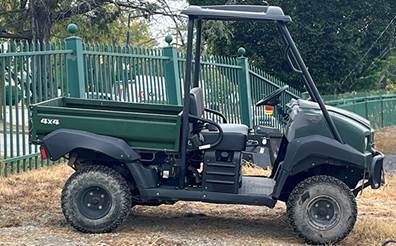
OPTIONAL INCOME EXPENSE DEDUCTIONS
This section allows the named insured to
limit the amount of insurance it must carry to meet coinsurance requirements. Using
either or both deductions significantly reduces the limit of insurance that
must be carried. However, it also means that these items are not covered if a
loss should happen.
1. Ordinary Payroll Expense
Ordinary payroll
expense is a continuing expense that the named insured can control. The named
insured can decide to:
- Not
include any payroll expense. If the exclude ordinary payroll expense box
is checked on the declarations, the named insured can remove ordinary
payroll expense from the limit of insurance. Of course, this means that
there is also no coverage for payroll expenses if a loss should occur.
- Include
ordinary payroll expense for a set number of days. If the payroll
limitation box is checked, the number of days the payroll expense is to
continue must also be entered and the named insured can reduce the limit
of insurance by the amount of payroll expense being removed. If a loss
occurs, the named insured can claim ordinary payroll expense for only the
number of days entered even if employees were kept longer. For coinsurance
purposes, the time period with the greatest ordinary payroll is used to compute
the coinsurance penalty if there is significant payroll expense
fluctuation.
- Include
ordinary payroll expense. The named insured does not make any changes on
the declarations and includes ordinary payroll expense in the limit of
insurance. If a loss occurs, ordinary payroll is included as a continuing
expense.
Ordinary payroll does
not include payroll for officers, executives, department managers, and employees
under contract. It also does not include the payroll for employees within a job
classification or title listed on the declarations and employees specifically
named on the declarations.
Ordinary payroll
expense is the actual payroll but plus any employee benefits, FICA payments,
union dues, and workers compensation premiums.
2. Power, Heat, and Refrigeration Expense
If the declarations
states that power, heat and refrigeration expenses are excluded, there is no
coverage under the earnings for power, heat and refrigeration expenses as part
of the continuing expenses and the value can be excluded from the limit of
insurance without impacting the coinsurance.
PERILS COVERED
Coverage is risks of
direct physical loss or damage unless the loss is limited or is caused by an
excluded peril.
Note: Direct physical loss or
damage does not include loss of use or loss in perceived value of goods in the
marketplace.
PERILS EXCLUDED
1. Primary Exclusions
The first group of exclusions applies whether the loss event results in
widespread damage or affects a significant geographical area or not and are
essentially absolute. Subject to specific exceptions, each is totally excluded,
regardless of any other cause or event that contributes to a loss, either
concurrently or in any other sequence. The insurance company does not pay for
any direct or indirect loss or damage caused by or that results from any of
these events.
Note: The
doctrine of concurrent causation holds that coverage applies to a property loss
that can be attributed to two causes, one excluded and one covered. As a
result, coverage has been found for earth movement, flood, and other
specifically excluded events. These exclusions attempt to avoid concurrent
causation by stating that the event is excluded, regardless of any other causes
that contribute to or aggravate the loss. This approach means there is no
coverage, even if the contributing cause of loss is normally covered.
|
Example: An earthquake damages the wall of Paul’s barn. A tree
limb falls during the tremor and causes a portion of the roof to collapse. Falling
objects are usually covered. In this case, coverage does not apply to either
event because the tree limb falling was a direct result of the earthquake. |
Related Article: Concurrent
Causation–A Discussion
Related Court Case: Building
Code Compliance Held Compensable By Reasonable Expectations of Insured
a. Ordinance or Law
Coverage does not apply
to any increased cost resulting from the enforcement of any building code,
ordinance, or law. The building code, ordinance, or law must regulate
construction, use, or repair of any building or structure, demolishing it, or
removing its debris. There are exceptions under Supplemental
Coverages–Ordinance or Law and Other Coverages - Undamaged Parts of Buildings.
b. Earth Movement or Volcanic Eruption
The insurance company does not pay for loss or damage that earth movement
causes. Earth movement can occur naturally, accidentally, or through artificial
means. Eruption, explosion, or effusion of a volcano can also cause earth
movement. Earth movement includes earthquake, landslide, mudflow, mudslide, mine
subsidence, or the earth sinking, rising, or shifting but is not limited to
just these. Sinkhole collapse is the only earth movement covered.
However, direct loss by
fire, explosion, or volcanic action due to earth movement or eruption,
explosion, or effusion of a volcano is covered.
All volcanic eruptions that
occur within 168 consecutive hours are treated as a single event. The policy’s
expiration date does not affect or limit this time period.
There are numerous
exceptions.
This exclusion does not
apply to the following property:
·
Computers
·
Mobile
equipment
This exclusion does not
apply to Other Coverages–Computer Disturbance coverage.
This exclusion also
does not apply to any of the following Supplemental Coverages:
- Accounts
Receivable
- Carrier
Liability
- Fine
Arts, Furs, Guns, Jewelry and Metals
- Overseas
Transit and Location
- Property
in Transit
- Property
on Exhibition
- Property
Sold Under Installment Sales Plan
- Sales
Representatives Samples
- Valuable
Papers and Records–Cost of Research
Note: These Supplemental
Coverages exceptions are provided because each of them is an inland marine
coverage. The corresponding inland marine coverage forms do not exclude earth
movement.
c. Civil Authority
Loss or damage caused by order of any
civil authority is excluded. Some examples of such loss or damage are seizure,
confiscation, destruction, or quarantine of any property. The exception to this
exclusion is when a civil authority orders that a property be destroyed in an
attempt to prevent a fire from spreading. However, this exception applies only
if a covered peril causes the fire.
|
Examples:
|
d. Nuclear Hazard
Coverage does not apply
to any loss caused by or that results from nuclear reaction, nuclear radiation,
or radioactive contamination. Coverage does not apply if the event is controlled,
uncontrolled, or if natural, accidental, or artificial means causes it.
Loss caused by the
nuclear hazard is not considered loss caused by fire, explosion, or smoke. The
only exception is for direct loss by fire that results from the nuclear hazard.
Note: Coverage for nuclear risks is available
through only nuclear umbrella coverage associations.
e. Utility Failure
There is no coverage
for loss when power or other utility services are interrupted. This exclusion
applies only if the interruption is at a location that is not a covered
location. Some examples of such interruptions are reduced or increased voltage,
low or high pressure, and similar interruptions of normal service.
Power interruption to a covered location
may cause a covered peril to occur. In that case, coverage applies to the loss
or damage that peril causes.
|
Example: The red label adhesives are stored at
65 degrees. The temperature rises to 110 degrees when the power is
interrupted. The adhesives ignite and destroy the building. This loss is
covered. |
There are numerous
exceptions.
This exclusion does not
apply to the following:
·
Computers
·
Mobile
equipment
This exclusion does not
apply to Other Coverages–Computer Disturbance coverage.
This exclusion also
does not apply to any of the following Supplemental Coverages:
- Accounts
Receivable
- Carrier
Liability
- Fine
Arts, Furs, Guns, Jewelry and Metals
- Overseas
Transit and Location
- Property
in Transit
- Property
on Exhibition
- Property
Sold Under Installment Sales Plan
- Spoilage
- Sales
Representatives Samples
- Utility
Service Interruption
- Valuable
Papers and Records–Cost of Research
- Utility
Service Interruption Income Coverage
f. War and Military Action
IMPORTANT NOTE: The war exclusion in
this form is deleted and replaced by a mandatory exclusion AG 0135–Exclusion –
War and Military Action. Because the exclusion is mandatory, the AG 0135 is
analyzed in place of the exclusion in the form.
Loss or damage that is
caused either directly or indirectly by the following activities are not
covered:
- This is any war,
whether declared or undeclared, civil or external.
- Warlike actions
that involve the use of military force. This exclusion applies not only to
the actions of the party initiating the conflict but also to any responses
from governmental authorities that use military forces or other agents.
- Internal actions
such as insurrection, revolution, usurpation of power, and rebellion. This
exclusion applies not only to the internal actions of the party
instigating the hostile activities but also to any governmental responses.
The exclusion outlined
in this endorsement is absolute and supersedes the Nuclear Hazard exclusion
regarding any action that falls within the terms of the endorsement and
involves a nuclear reaction, radiation, or radioactive contamination associated
with the Nuclear Hazard exclusion.
Note: This last paragraph is very important because the Nuclear Hazard
exclusion provides a limited amount of coverage for fire due to specific
nuclear events; however, fire is totally eliminated under this exclusion.
g. Water
Note: The Water exclusion in this form is deleted and replaced
by mandatory exclusion AG 0149–Water Damage Amendments. Because the endorsement
is mandatory, it is analyzed in place of the exclusion in the form.
Loss that is caused by
any of the following is not covered:
- Flood, waves,
tides and overflow of a body of water. The waves may be tidal waves,
tsunami or any other type of waves. This includes:
o
Spray
from any of the above
o
Wind
driven conditions that impact any of the above
o
Surges
and storm tides
- The backing up,
overflowing or discharging from any of the following:
o
Drains
o
Sewer
o
Sump
and all related equipment include the pump
o
Any
system designed to drain off foundation water
- Water when it is
below the surface. This expands to exclude the pressure of the water
against and the water flowing, seeping or leaking into:
o
Basements
o
Openings
such as windows or doors
o
Foundations
o
Floors
or walls
o
Paved
surfaces
o
Structures
such as septic tanks or swimming pools.
- The material that
is contained in or on the water described in any of the above and that is
moved by the water.
When any of the above
results in a fire, explosion or sprinkler leakage loss, coverage is provided.
This exclusion is
absolute and applies regardless of the reason for the water or if the material
in the water is manmade or an act of nature. It applies even if the water or
material travel over, through, or are released from or escape from a water
containment system such as a dam or levee.
Related Court Cases:
Was Surface
Water From Heavy Rains A Flood?
Dueling Exclusions: Is Water
Damage Covered?
There are numerous
exceptions.
This exclusion does not
apply to the following:
·
Computers
·
Mobile
equipment
This exclusion does not
apply to Other Coverages–Computer Disturbance coverage.
This exclusion also
does not apply to any of the following Supplemental Coverages:
·
Accounts
Receivable
·
Carrier
Liability
·
Fine
Arts, Furs, Guns, Jewelry and Metals
·
Overseas
Transit and Location
·
Property
in Transit
·
Property
on Exhibition
- Property
Sold Under Installment Sales Plan
- Sales
Representatives Samples
- Sewer
Backup and Water Below the Surface
- Surface
Water Run-off
- Valuable
Papers and Records–Cost of Research
Note: These Supplemental Coverages exceptions
are provided because each of them is an inland marine coverage. The
corresponding inland marine coverage form does not exclude flood.
*Virus or Bacteria
Note: The Virus or Bacteria exclusion is
added to this form using mandatory exclusion AG 0650–Virus or Bacteria
Exclusion. Because the endorsement is mandatory, as noted in a November
2006 AAIS bulletin, it is analyzed in place as though it is part of the
existing coverage form.
Loss, cost and expense
that are the result of virus, bacteria or similar micro-organisms are not
covered. This applies only when these cause or have the potential to cause
disease, illness or physical distress.
The exclusion applies
to both the contamination and any resulting denial of access to the premises.
An exception to this
exclusion is the limited coverage provided in the Supplemental Income Coverage
1. Public Health Shutdown.
Related Court Case: Virus In
The Wind A Direct Loss
2. Secondary Exclusions
The second group of exclusions applies to loss or damage caused by or that
result from any of the following loss events. Some of these exclusions have
exceptions, conditions, or limitations that should be noted and reviewed
carefully. The insurance company does not pay for any loss or damage caused by
or that result from any of these events.
a. Animals
The insurance company
does not pay for loss or damage that animals cause. This includes animal damage
caused by birds, insects, and vermin.
If any of the above
results in damage that is caused by specified perils or breakage of building
glass, there is coverage for such resulting damage. There is also coverage if a
draft animal pulling a vehicle causes the loss.
b. Collapse
Loss or damage caused
by collapse is excluded but refer to Other Coverages–Collapse for a limited
type of collapse coverage.
In addition, there is
collapse coverage if the collapse causes a covered peril that results in loss
or damage at a covered location.
Related Court Case: Policy Is
Ambiguous About Collapse
There are numerous
exceptions. This exclusion does not apply to the following property:
·
Computers
·
Mobile
equipment
This exclusion also
does not apply to any of the following Supplemental Coverages:
- Accounts
Receivable
- Carrier
Liability
- Overseas
Transit and Location
- Property
in Transit
- Property
on Exhibition
- Property
Sold Under Installment Sales Plan
- Sales
Representatives Samples
- Tank
Leakage
- Valuable
Papers and Records–Cost of Research
c. Computer Virus or Computer Hacking
This exclusion is written as an “or” exclusion, with the lead language
stating the insurance company will not pay for and then lists two items. Each
item is an independent statement that combines with the lead language and any
following language to form a complete sentence.
The first “or” statement eliminates all direct and indirect damage, but it
does not state what direct or indirect damage. The second “or” statement
eliminates loss of access, etc., and explains that computer hacking or a
computer virus must cause it. The last sentence of the second item may be
intended to be following language that applies to both “or” statements.
Editorial Note: As currently written,
this exclusion may be confusing. While Computer Virus and Computer Hacking are
specifically defined in the policy, in our opinion coverage could be
challenged.
d. Contamination or Deterioration
There is no coverage
for loss or damage caused by or that results from contamination or
deterioration. Some examples are bin burn, corrosion, decay, fungus, mold,
mildew, rot, or rust. Change in grade or condition, organic heating of grain,
seed, or other agricultural products, or any quality, fault, or weakness in
covered property that causes it to damage or destroy itself are other examples.
However, coverage
applies if contamination or deterioration causes a specified peril or breakage
of building glass that subsequently causes loss or damage.
Loss or damage to
computers that corrosion, decay, fungus, mold, mildew, rot, or rust causes is
covered. However, coverage applies only if the corrosion, decay, fungus, mold,
mildew, rot, or rust develops because a covered peril caused direct physical
damage to the air conditioning system that services those computers.
This exclusion does not
apply to the following Supplemental Coverages:
·
Carrier
Liability
·
Spoilage
e. Criminal, Fraudulent, Dishonest, or Illegal Acts
Loss caused by
criminal, fraudulent, dishonest, or illegal acts committed by any of the
following is excluded:
·
The
named insured, its partners, officers, directors, trustees, managers, members, or
joint venturers
·
Any
party that has an interest in the property or that is entrusted with property
·
Employees
or agents of any of the above
Such acts are excluded
whether a party acts alone or in collusion with others. Acts of employees and
agents are excluded even when they are not at work at the time they commit the
act.
Employee
destruction of property is covered. Employee theft of property is not.
This exclusion applies to Supplemental
Coverages 3. Carrier Liability but it does not apply to in other circumstances
when covered property is in the custody of carriers for hire.
|
Examples:
Scenario 1:
Disgruntled employee strikers break ten windows in the plant building during
a strike at Smith Grains. This damage is covered. However, there is no
coverage when two employees take advantage of the situation and break into Smith
Grains offices to steal cash and other property from the safe. Scenario 2: Top Quality Animal Feeds hired Good but Not Great Trucking to deliver
products to several stores. Three pallets of feed did not reach their
destinations because of theft by trucking employees. Even though the trucking
company was entrusted with the merchandise and its employees stole it, coverage
applies because Good but Not Great Trucking is a carrier for hire. |
f. Defects, Errors, and Omissions
There is no coverage
for loss that results from one or more of the following:
- Acts,
errors, or omissions that relate to land use, design, specification,
construction, installation, or maintenance of property.
- Acts,
errors, or omissions that relate to planning, zoning, developing, siting,
surveying, grading, compacting, or maintaining property, whether at a
covered location or not.
|
Example: The Smallville City Council decides to delay
performing preventive maintenance on a floodwall. The wall collapses and
floods Healthy Corn Products Manufacturing. Healthy cannot collect for its
damages from this coverage form because the loss is due to the floodwall not
being maintained properly and water damage is excluded. |
- Defective,
weak, inadequate, faulty, or unsound construction materials that were used
in construction or repair, whether at a covered location or not
- Costs
of making good on a design error
- Data
processing or programming errors or giving improper instructions
There is no coverage
for loss to business personal property due to defects or deficiencies in
design, specifications, materials, or workmanship or that result from inherent
or latent defects.
Any of the items listed above may cause
a covered peril to occur. In that case, coverage applies to the loss or damage the
covered peril causes.
|
Examples:
The following
situations are excluded: ·
Property built on
wetlands that must be torn down ·
Inferior roof
supports that cause the roof to bow ·
Weak welds in a
conveyor system that causes it to crack, sending 50 100-pound bags of wheat
flour crashing to the floor |
g. Electrical Currents
Loss that electrical
arcing or electrical currents causes is excluded. Such arcing or currents may
cause a fire. In that case, coverage applies to the damage the fire causes. Coverage
also applies to loss that lightning causes.
Coverage also applies to
direct loss a covered peril causes at a covered location as a result of power
or any other utility service being interrupted.
This exclusion does not
apply to computers. It also does not apply to the following coverages:
·
Supplemental
Coverages 13. Spoilage
·
Other
Coverages 2. Computer Disturbance
·
Other
Coverages 3. Electrical Breakdown
h. Explosion
Explosion of alcohol
stills, steam boilers, steam pipes, steam turbines, or steam engines that the
named insured owns, leases, or operates is excluded. An explosion may cause a
fire or combustion explosion. In that case, the loss or damage that results is
covered. In addition, coverage applies to loss or damage due to gas or fuel
that explodes in a firebox, combustion chamber, or flue.
i. Freezing
When freezing causes water, other liquids, molten material, or powder to
flow or leak from plumbing, heating, or air conditioning systems and appliances
there is no coverage for any loss or damage that occurs. However, coverage does
apply if the named insured took reasonable care to maintain heat in the
building where the freezing occurred or if it drained the equipment when it did
not maintain heat in the building.
This exclusion does not apply to Supplemental Coverages 13. Spoilage and
it also does not apply to freezing of a fire protective system.
j. Increased Hazard
Coverage does not apply
to loss that occurs as a result of any material increase in hazard within the
named insured’s control or knowledge.
Note: A loss does not
necessarily have to be related to the increase in hazard. A claims adjuster can
deny a loss if he or she notices a hazard at the risk that the application did
not disclose. However, this exclusion may be difficult to enforce because there
is no clear understanding or definition of material increase in hazard.
k. Loss of Use
There is no coverage for loss that delay,
business interruption, loss of use, or loss of market causes. Supplemental
Coverages or Income Coverage may provide the exceptions to this exclusion. The
following are examples of losses excluded:
Loss of use is any type of loss sustained
because neither the named insured nor its customers can use the property.
Delay includes the economic benefits lost
because of a missed deadline or a lost sales opportunity. However, it is not
limited to just this.
Loss of market includes loss of both current
and prospective customers. However, it is not limited to just this.
Note: While income coverage
forms cover some of these loss situations, others are economic or market losses
that most standard coverage forms and policies exclude.
l. Mechanical Breakdown
Loss caused by mechanical
breakdown is excluded. Loss that occurs when centrifugal force causes moving
parts of machinery to burst or rupture is also excluded. Any of these events
may cause a specified peril, breakage of building glass, or elevator collision.
In that case, the ensuing loss or damage is covered.
Related Court Case:
"Mechanical Breakdown" and "Corrosion" Interpreted By Court
This exclusion does not
apply to computers. It also does not apply to the following coverages:
·
Supplemental
Coverages13. Spoilage
·
Other
Coverages 3. Electrical Breakdown
|
Examples:
Coverage does not
apply to the
following situations:
Coverage may
apply in the
following situations:
|
m. Neglect
There is no coverage when loss results
from the named insured failing to use available and reasonable means to save
covered property during and after the time of loss. In addition, there is no
coverage when the named insured does not take available and reasonable means to
save and preserve covered property endangered by a covered peril.
|
Examples: Coverage may be denied in the following situations:
·
A tree limb falls on
the roof and creates an opening. The named insured does not do anything to prevent
further damage and waits for the adjuster to arrive the next day. Before the
adjuster arrives, rain from a thunderstorm sends torrents of water through
the hole. The rain damages walls and floor coverings and ruins hundreds of
reams of special paper stock. The damage the falling tree caused is covered.
The insurance company will probably decline the claim on the rest of the
damage. |
Note: These situations
illustrate the problem of defining what a reasonable person should do. The lack
of action in the first example could be explained by the named insured being
afraid of fire of any kind. An argument could be made in the second example in
favor of coverage if the named insured did not know about the approaching storm,
was simply physically unable to take any action, or just did not realize the
extent of the damage.
n. Pollutants
Loss caused due to a pollutant
leaving where it is supposed to be is not covered. There are four exceptions.
·
The
reason the pollutants are released or escape is due to a specified peril.
·
The
pollutant release or escape causes a specified peril which then causes a loss.
That resulting loss is covered.
·
Additional
Coverages 8. Pollutant Cleanup and Removal
·
Supplemental
Coverages 15. Tank Leakage
o. Rain, Snow, Ice, or Sleet
The insurance company
does not pay for loss to personal property or stock that rain, snow, ice, or
sleet causes when the personal property or stock is in the open even if covered
by a temporary covering
This exclusion also
applies to Supplemental Coverages 3. Carrier Liability. However, it does not
apply to covered property in the custody of carriers for hire.
p. Seepage
There is no coverage for loss caused by continuous
or repeated leakage of water or steam over more than a 14-day period.
|
Example: A slow leak goes on for months. It is not
discovered until the sheetrock wall is thoroughly soaked and collapses. There
is no coverage because the seepage occurred over a period of more than 14
days. |
Note: The insurance company
must prove that the leak went on continuously for more than 14 days.
Related Court Case: Seepage over
Long Period Following Pipe Break Held Not Covered
q. Settling, Cracking, Shrinking, Bulging, Expanding, or Wrinkling
Loss caused by
footings, foundations, pavement, walls, roofs, and ceilings settling, cracking,
shrinking, bulging, expanding, or wrinkling is excluded. However, coverage
applies to any resulting loss that a specified peril or breakage of building
glass causes.
This exclusion does not apply to computers
or mobile equipment.
|
The
following situations would be covered: ·
A sinkhole
undermines the foundation causing the exterior walls to bulge. ·
Ice buildup causes a
roof to sag. ·
Rioters roll a car
down into a covered building and crack the building's foundation. |
r. Smog, Smoke, Vapor, or Gas
Industrial firms’
incinerators release harsh acids and chemicals into the air, bleaching or
chipping paint or damaging plastic and rubber products. Agricultural smudging
operations used to deter insects or keep crops from freezing can release greasy
smoke that can discolor paint and do other damage to nearby buildings. Damage
done by smog, smoke, vapor or gas from industrial operations or agricultural
smudging is excluded.
The exclusion does not
apply to computers and mobile equipment.
Related Court Case: Vapor From Chemical
Overheating Held Not Within Scope Of Fire Or Smoke Perils
s. Temperature/Humidity
Damage to personal
property or stock caused by changes in temperature or humidity is excluded.
There are three
exceptions:
·
If
such changes result in specified perils or building glass breakage, damage from
the resulting specified peril or building glass breakage is covered.
·
Damage
to computer caused by physical damage by a covered peril to the air
conditioning unit that services the computer is covered.
·
If Supplemental Coverages, Carrier Liability or Spoilage apply, this
exclusion does not apply to them.
|
Examples:
Coverage applies to the following
situations:
Coverage does not
apply to the
following situations:
·
An employee
accidentally shuts off the freezer's electrical circuit and the fish farm's
entire stock of frozen fish thaws and spoils. |
t. Theft
There is no coverage
for theft of the following property:
·
Building
materials and supplies not yet attached to a building or structure. This
exclusion does not apply to the named insured's specifically scheduled Builders'
Risk Property or to its stock.
·
Property
at a part of the named insured’s residence when it rents that part to others
·
The
following property when away from a covered location:
o
Any
property at a residential premises the named insured or another household
member owns, rents, or occupies
Note: This residential premises is not a
covered location. As a result, a homeowners or similar policy should cover this
property.
There is coverage for
the property the named insured or another member of its household brings while temporarily
residing at the other location. There is also coverage for property of a
resident of the named insured's household while that resident is a full-time
student and the property is in the student's living quarters at school.
·
Trailers.
This also includes their equipment.
·
Campers
or camper bodies
·
Watercraft.
This also includes their furnishings, equipment, engines, or motors.
Personal property
placed for safekeeping in a bank, trust, or safe deposit company, public
warehouse, or dwelling that the named insured or a household member owns,
occupies, or rents is treated as being at a covered location. Therefore,
because it is considered to be at a covered location, it is not subject to the
exclusion and theft coverage applies.
u. Voluntary Parting/Unauthorized Transfer
The insurance company
does not pay for loss due to either of the following:
- Voluntarily
parting with property or title to it because of any false pretense, fraudulent
scheme, or trick
- Property being transferred
to a person or a place that is not at a covered location when the transfer
is based on unauthorized instructions
This exclusion does not apply to
Coverage Extensions 1. Fraud or Deceit.
|
|
Examples:
Coverage does not apply
to the following situations: Scenario 1: A product is sold to a person who bounces a check
and then disappears with the product. Scenario 2: An employee permits a potential customer to test
drive an item of mobile equipment but neither the customer nor the equipment
ever returns. |
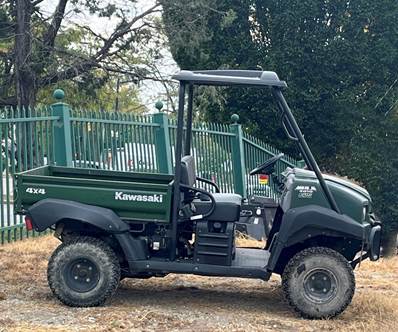
v. Wear and Tear
Loss that wear, tear,
marring, or scratching causes is excluded. If such a loss results in a specified
peril or breakage of building glass occurring, coverage applies to the ensuing loss
or damage.
Note: These losses are more
in the line of costs of doing business.
w. Weather
There is no coverage if weather
conditions contribute in any way to cause loss or damage due to a peril
excluded under 1. Primary Exclusions. However, coverage applies for loss that a
covered peril causes unless the ensuing loss itself is excluded.
|
Examples:
Coverage does
not apply to the following situations: ·
Heavy rain causes
the river to rise and flood the building. ·
Torrential rains
start a mudslide that forces the building off its foundations. ·
A tornado destroys
the power station that supplies power to the named insured’s beef processing
plant and all the meat spoils. |
x. Windstorm or Hail
There is no coverage for loss that windstorm or hail causes to the
following:
- Dairy and farm products but only when outside of any building
- Watercraft and their trailers, furnishings, equipment, and outboard
motors but only when outside a fully enclosed building
Note: The dairy and farm products would be covered if within a three sided or
other type of structure while the watercraft requires a more substantial
building.
ADDITIONAL PROPERTY NOT COVERED OR SUBJECT TO LIMITATIONS
1. Accounts Receivable
Coverage does not apply
to accounts receivable losses that occur as a result of bookkeeping,
accounting, or billing errors. Coverage also does not apply if the only proof
that a loss occurred is a discrepancy discovered in an audit or while taking
inventory.
2. Boilers
This limitation is
about damage to a boiler, steam pipe, steam turbine and steam engine – not the
damage they cause. They are not covered if anything within the equipment causes
the damage, unless there is an explosion caused by fuel or gas in a firebox,
combustion chamber, or flue.
Similarly, damage to
hot water boilers and heaters are not covered if conditions or occurrences
within them cause the damage and this extends to bursting, cracking, or
rupturing.
3. Glassware/Fragile Articles
Breakage of fragile
articles is excluded. However, there is coverage if a specified peril or
breakage of building glass occurs and causes the breakage.
Fragile articles are items
such as glassware, porcelains, statuary, and bric-a-brac.
This exclusion does not
apply to glass that is part of a building. It also does not apply to bottles or
containers held for sale, photographic and scientific instrument lenses, or
fine arts.
4. Gutters and Downspouts
There is no coverage
for loss to gutters and downspouts that sleet, snow, or ice causes.
5. Interior of Buildings
The insurance company
does not pay for loss to the interior of buildings or structures that rain,
snow, sleet, ice, sand, or dust cause. Such damage to personal property or
stock inside buildings or structures is also excluded.
Related Court Case:
"Opening" In Roof As Condition Of Interior Damage Coverage Examined
This exclusion does not
apply in case of either of the following:
- The elements
entered the building or structure through openings that a specified peril
made
- The loss is due to
sleet, ice, or snow on buildings or structures thawing
|
Example: A layer of snow and ice covers
the roof of a barn on the Brown’s farm. The heat from the barn begins to melt
the snow and ice, and water gets trapped. The trapped water seeps into the
barn and drips inside the building. Water damage to the ceiling is covered
because of the exception to this exclusion. |
6. Missing Property
Coverage does not apply
to property that is missing based only on a shortage disclosed through an
inventory, by an accounting or bookkeeping transaction, or by anything else
when there is no physical evidence to suggest what happened to it. This
exclusion also applies to Supplemental Coverages 3. Carrier Liability. It does
not apply to covered property in the custody of carriers for hire.
7. Tobacco Barns
Tobacco barns and their contents are not
covered for fire loss, if the loss is due to an open fire used to cure or dry
tobacco in the barn. The coverage does not apply when the open fire is active
and for five days following the use of the open fire.
8. Valuable Papers and Records
There is no coverage for loss to
valuable papers and records due to errors or omissions in copying or processing
them.
|
Example: Keith copies the genealogical records for his
hogs. While copying them the originals are caught in the photocopier, and
they must be torn to remove them. There is no coverage for that damage. |
OTHER COVERAGES
These coverages do not
increase the limits that apply to covered property.
1. Collapse
a. Collapse must be sudden
and unexpected. All or any part of the building or structure can cave in, fall down,
give way, or fail.
b. Coverage applies to direct physical loss or damage to
covered property caused by or that results from collapse. However, there is
coverage only if the following cause the collapse:
- Specified perils as this coverage form defines them
- Hidden decay of the building or structure's structural members
- Hidden damage to
the building or structure's structural members that insects, rodents, or
vermin cause. Examples of vermin include raccoons, bats, possums, and
skunks.
- Excessive weight
of personal property, stock, or people
- Excessive weight
of rain that accumulates on a roof
- Defective
construction, renovation, or repair materials or methods if the collapse
takes place during construction, renovation, or repair
c. Collapse coverage as described in paragraph b. above does
not apply to any of the following types of property: Antennas, satellite dish
antennas, outdoor awnings, canopies and their supports, fences, gutters,
downspouts, yard fixtures, outdoor swimming pools, piers, wharves, docks, beach
or diving platforms and their appurtenances, retaining walls that are not part
of buildings, walks, roadways, and other paved surfaces.
There are two
exceptions:
- The cause of loss is a specified peril
- A building or
structure sustains a covered collapse loss and property that this
paragraph lists is damaged during that covered collapse.
|
Examples:
The following situations are intended
to clarify the intent of this limitation: ·
The wall of the
building beside a dock collapses during a fire and causes the wharf that
extends 100 feet into the harbor to collapse. This loss is covered. ·
The office building
has satellite dishes and antennas on the roof. The roof collapses due to the weight
of ice and snow, and the satellite dishes and antennas also collapse. This
loss is covered. ·
Weight of ice and
snow causes an antenna to collapse. This loss is excluded. |
d. Personal property or stock that suddenly or unexpectedly
caves in, falls down, gives way, or fails is covered even if the building or
structure does not collapse. The cave in, falling down, giving way, or failure
must result from one of the collapse perils or an event in b. above.
This coverage does not
apply to the types of property listed in c.
above. In addition, there is no coverage if the only loss or damage is
marring or scratching.
Related Court Case: Imminent
Collapse Covered Under Hidden Decay Provision
2. Computer Disturbance
Direct physical loss to
computers that are caused by electrical or power supply disturbances is covered.
Examples of electrical disturbance are electrical or magnetic damage and
disturbance or erasure of electronic recordings. Examples of power supply
disturbance are power supply interruptions, power surge, brownout, and
blackout.
3. Electrical Breakdown
This coverage is not
automatically provided. An entry for Electrical Breakdown Coverage must be
shown on the declarations.
This coverage applies
to direct physical damage to electric motors, generators, and transformers that
is caused when their wiring, windings, or switches accidentally fail. Only
equipment that is specifically described on the declarations is covered. The
description of the equipment on the declarations must include the range of
horsepower for motors and generators and the kilovolt amperes capacity for
transformers.
Conduit, switch, or
fuse cabinets, metering devices, and control equipment are also covered but
ONLY the ones that are used exclusively with the motors and generators described
in the paragraph above.
Loss payment is the
lesser of the actual cost to repair or the cost to replace the damaged
equipment. This coverage is part of the applicable limit for coverage described
under Property Covered, not in addition to it.
The requirement to list
equipment is waived if the limit on the declarations is $1,000. In that case,
the most the insurance company pays per occurrence is $1,000.
4. Ordinance or Law–Undamaged Parts of a Building
This coverage is not
automatically provided. It applies only if an entry on the declarations states
that Ordinance or Law–Undamaged Parts of a Building Coverage is provided.
This coverage comes
into play when a covered peril partially damages a covered building or
structure. It applies if there is an ordinance or law in effect at the time of
loss that regulates building construction or land use and requires demolishing
the building’s undamaged portion.
There is no coverage
for any costs related to enforcing any ordinance, law, or decree that requires
any testing, treating, cleaning up, removing, or any other response to or
assessment of the effects of pollutants.
The limit on the
declarations for this coverage is both of the following:
- A sublimit of the
damaged building’s limit
- The most the
insurance company pays under this coverage’s terms
d. If a limit for Ordinance
or Law–Undamaged Parts of a Building is not on the declarations, this coverage
is part of the applicable limit for the covered building or structure, not in
addition to it.
|
Example:
Percy’s Cannery occupies a two-story metal
building. A tornado destroys more than 50% of it. A current ordinance
requires that Percy demolish the undamaged portion and rebuild it with masonry-noncombustible
construction. This coverage pays for the value of the undamaged part of the
building that must be torn down. However, it does not pay the costs to
demolish the building or to rebuild it as masonry-noncombustible. $100,000 Building replacement cost – coverage
applies $ 55,000 in tornado damage – coverage applies $ 45,000 value of undamaged portion of building $ 25,000 to demolish undamaged portion of building –
not covered $ 5,000
additional cost to replace undamaged portion
of building as masonry-noncombustible – not covered The policy will pay the cost to rebuild Percy’s
building ($55,000 for tornado damage and $45,000 for the undamaged portion). However,
the additional cost to demolish and rebuild as masonry-noncombustible for the
undamaged portion of the building will not be covered. Note: Supplemental
- Coverages 6. Ordinance or Law–Increased Costs If
a limit is listed for this coverage on the declarations, it will pay the
increased cost to demolish and rebuild the undamaged portion of building. |
5. Tearing Out and Replacing
It is very important to
stop water, other liquids, powder, or molten material that leaks from a broken
system or appliance. Locating and gaining access to the break is the first
step. The second is to repair the break. The last step is to repair or replace
the property damaged by the leak. The insurance provided elsewhere in this
coverage form covers the last step.
The named insured is
responsible for the first two steps. This coverage pays for any damages to
otherwise undamaged portions of the building that are part of step one in order
to gain access to the break.
This coverage does not
pay for the damage to the appliance or system from which the substance escaped.
However, it does pay to replace or repair damaged parts of fire extinguishing
equipment if the damage is due to either of the following:
- Discharging any
substance from an automatic fire protection system
- Directly caused by
freezing
|
Examples:
Tearing Out and
Replacing coverage applies to the following situations:
|
6. Theft Damage–Non-owned Property
Coverage applies to
direct physical damage due to theft or attempted theft to either of the
following:
- Buildings the
named insured does not own that contain its stock or personal property
- Personal property
the named insured does not own that it uses to service or maintain the
building, structure, or premises at a covered location
|
Example: Craven
Farms leases a building in town to store extra equipment, packaging
materials, and pallets. The lease states that Craven Farms is responsible for
theft damage. Thieves break in and damage the loading dock door. Craven’s
equipment and the building owner’s cleaning equipment are stolen. This Other
Coverage insures the damage to the building and the cleaning equipment that
was stolen. Other parts of this coverage form cover Craven’s equipment. |
WHAT MUST BE DONE IN CASE OF LOSS
1. Notice
The named insured has
the following obligations if there is a loss:
a. Give the insurance company or its agent prompt notice of
the claim, including a description of the property. It is not required to be in
writing unless the company requests it.
b. Notify the police, but this is required only if the loss is
the result of a crime.
c. Notify the credit card company, but this is required only if
the loss involves a credit card.
Note: AG 0100 does not define prompt
notification. However, any unreasonable delay could allow the company to deny
the claim because of lack of cooperation.
Related Court Case: Does Untimely Notice
Bar Recovery?
2. Protect Property
The named insured must make
reasonable efforts to protect covered property from further damage during and after
a covered loss. Reasonable costs incurred for repairs and emergency measures
taken specifically to protect covered property from further damage by the same
or another covered peril are paid but only if the named insured keeps accurate
records of these costs. Payments made are part of the limit of insurance and
not in addition to it.
The insurance company does not pay for
any repairs made or emergency measures performed on property that a covered
peril did not damage.
|
Examples: The following situations are intended to clarify
the named insured's responsibilities:
|
3. Proof of Loss
The named insured must
submit a signed and sworn proof of loss to the insurance company within 60 days
after the company requests it which includes the following information:
a. The time, place, and circumstances of the loss
b. Details on other insurance policies that may apply to the
loss
c. The names of all parties with an interest in the property.
This includes the named insured’s interests as well as the interests of any mortgagees
and lienholders.
d. Any changes in title to or occupancy of covered property
that occurred during the policy period
e. Detailed estimates to repair or replace the covered
property
f. Inventories of both damaged and undamaged covered property.
The inventory must include detailed quantities, descriptions, costs, the actual
cash value, and the amount of loss. Bills, receipts, and other documents that
substantiate inventory are an important part of the documentation.
Note: The proof of loss is
the most important document the named insured presents to the insurance
company. It should be done carefully and thoroughly. The fact that the named
insured signs and swears to it means that any inaccuracies may be considered
fraudulent and subject to criminal prosecution. This includes federal action if
the proof of loss is mailed.
Related Court Case: Insured
Fails To Produce Required Documents Following Fire Loss
4. Examination
The named insured must
agree to be examined under oath and swear to statements given. The insurance
company can conduct these examinations as often as it wants if the requests are
reasonable. When more than one person is questioned, the insurance company can
request that each person examined be questioned separately to prevent collusion.
Note: The insurance company can deny coverage if the named insured refuses to
be examined this way.
Related Court Case: Insured's
Failure to Cooperate Relieved Carrier of Its Obligation to Pay Claim
5. Records
The named insured must
produce any and all records that relate to the claim’s loss, value, or expense.
It must also let the insurance company make copies or extracts of them as often
as requested but only within reason.
Related Court Case: Church
Financial Records Held Subject To Review by Insurer
6. Damaged Property
The named insured is
required to display the damaged and undamaged property to the insurance company
as often as is requested but only within reason. The insurance company is also
permitted to take samples of both damaged and undamaged property.
The insurance company
may decide to take all or any part of the damaged property at its appraised or
agreed value because the company controls the salvage after a covered loss. Supplemental
Coverages 2. Brands and Labels Expense is an important exception to this condition.
Note: Samples are important
to determine the extent of loss to certain property where the amount of loss
may not be readily apparent or obvious.
Related Court Case: Destruction
of Damaged Property Eliminates Coverage
7. Volunteer Payments
The named insured can
make voluntary payments, assume obligations, pay or offer rewards, and incur
other expenses. However, it does so at its own expense. The insurance company is
not obligated to reimburse any of these unless the named insured did so to protect
the property from further damage.
8. Abandonment
The named insured is
not allowed to abandon property to the insurance company without its consent.
Note: The insurance company
decides what property it takes. The named insured remains responsible for the covered
property that is damaged until the insurance company decides what it will do.
|
Example: Clyde’s older bulldozer falls off a trailer and
tumbles into a ravine. He cannot avoid paying the cost to recover the
bulldozer and clean up the fuel tank spill by abandoning it to the insurance
company. |
9. Cooperation
The named insured must
cooperate with the insurance company in performing all acts this coverage form
requires. Not cooperating with the company’s reasonable requests can lead to
the claim being denied.
10. Intent to Continue Business, Income Coverage
The named insured must
resume all or part of its business operations as soon as possible after a loss
if it intends to remain in business.
VALUATION
1. Actual Cash Value
The valuation basis for
covered property at the time of loss is actual cash value unless replacement
cost is entered on the declarations. This valuation does not apply to stock and
other property specified in paragraphs 3 through 16 below.
Related Court Case: Coffee
Roasting Plant Argues Value Of Damaged Beans
Limited Replacement Cost
valuation for buildings that should be actual cash value is provided if both
of the following apply:
- The cost to repair
the damage the loss caused must be $15,000 or less.
- The building limit
on an actual cash value basis meets the coinsurance requirement.
Limited Replacement Cost
does not include any increased cost due to enforcing any ordinances that
regulate any property’s construction, repair, use, or demolition.
Awnings, canopies, floor coverings,
outdoor furniture, equipment or appliances for refrigerating, ventilating,
cooking, dishwashing, or laundering are not eligible for this limited
replacement cost treatment.
|
Note: AG 0100 does not define the calculation of actual
cash value. It is usually considered to be replacement cost new minus
accumulated depreciation. However, depreciation
is not defined. It could be Internal Revenue Service (IRS) tax table
depreciation, depreciation as used with Generally Accepted Accounting
Principles (GAAP), or something else. Stock does not usually depreciate. However, it can
become obsolete. Brick and cement buildings depreciate more slowly than frame
buildings. Roofs depreciate faster than the rest of the building. Some types
of machinery and equipment are functionally used up or obsolete in months,
while others can be used for many years. Computers depreciate rapidly.
Automobiles depreciate based on age and mileage. Construction equipment and
forklifts usually depreciate more slowly. Actual cash value is not the same as market value.
Market value is the property’s selling price on the open market. |
2. Replacement Cost
When Replacement Cost
is entered on the declarations, the insurance company pays a covered loss
without a deduction for depreciation. This valuation does not apply to stock.
Replacement cost is
limited to the lesser of the following:
- The cost to repair
or replace with materials of similar kind and quality on the same site and
used for the same purpose.
- The amount the
named insured actually spends to repair or replace the damaged property.
This valuation does not
apply until the covered property damaged or destroyed is actually repaired or
replaced. The named insured can first make a claim for the damaged property’s actual
cash value before it is repaired or replaced. It can later request replacement
cost valuation as long as it notifies the insurance company of its intent to do
so within 180 days after the loss.
Certain property is not
eligible for replacement cost valuation and is valued on an actual cash value
basis. This includes the following:
- Property whose age
contributes to its value, such as memorabilia, souvenirs, and collectibles
- Property that is not
properly maintained in good or workable condition
- Outdated or
obsolete property in storage or not used
Related Court Case:
Replacement Cost Valuation Clause Ambiguous: Functional Replacement Allowed
3. Builders’ Risk Property
The valuation of a
covered building or structure listed on the declarations as Builders' Risk
Property is based on its replacement cost without a deduction for depreciation.
Replacement cost is the
sum of the following:
·
The
cost to repair or replace with materials of similar kind and quality on the
same site and to be used for the same purposes
·
Labor,
delivery charges, and reasonable overhead and profit
However, the insurance
company does not pay more than the amount the named insured pays to repair or
replace the property that was damaged or destroyed.
Note: This provision does not
apply to Valuation 7. Pairs or Sets or 8. Loss to Parts.
4. Stated Amount
The following sections
are suspended when Stated Amount is entered on the declarations:
HOW MUCH WE PAY
·
8.
Coinsurance Property Other Than Builders’ Risk Property
·
9.
Coinsurance Builders’ Risk Property
The suspension applies
until the Stated Amount Expiration Date on the declarations.
5. Fine Arts
Fine arts are valued
based on their actual cash value on the date of loss. This valuation does not
apply to items of Fine Art specifically listed and described on the
declarations.
6. Glass
The value of glass that
a covered peril damages or destroys is the cost of safety glazing material but
only as required by an ordinance, law, or decree.
7. Pair or Set
The value of a loss that
involves damage or loss to one part of a pair or set is based on a reasonable
proportion of its value to the entire pair or set. However, the loss to one
part of a pair or set is not considered a total loss.
Note: This recognizes that the value of the whole is
greater than the value of individual parts but the remaining parts still have
value as separates.
8. Loss to Parts
The value of a lost or damaged part of property that
consists of several parts is the cost to repair or replace only the lost or
damaged part.
|
|
Example: Jimmy Ray’s building caught on fire. He grabbed his
valuable clock and ran out of the building. The winder key fell out during
his haste and remained in the building. He was happy to have saved the clock, but it would not work without the
key. So, he wanted the entire clock replaced. The insurance
company denied paying for the clock but paid to replace the key. |
9. Property of Others
Property of others is
valued on its actual cash value when the loss occurs.
10. Stock
Stock is valued at actual cash value, except:
- If
the stock is a type bought and sold on a market exchange (a commodity) and
the prices are posted and quoted, the value is the market price of the
item at the time of loss or the price the named insured is contractually
bound to deliver the stock (less discounts and unincurred expenses),
whichever is less.
- If
not a commodity and the stock has been sold, the valuation is the selling
price less discounts and unincurred expenses.
- Stock
held for shipment is the established shipping value of similar type items.
This applies to stock that is not manufactured by the named insured.
- Stock
manufactured by the named insured is valued at the cost to manufacture
plus transportation costs, if any, to the loss location.
- If
stock is imported and held in bond, the value is the cost of the like kind
and quality stock, plus freight and import duty tax (paid or not).
- Seed
stock can be Foundation Seed or Valued Seed other than Foundation Seed.
Foundation Seed is valued based on the limit per bushel on the
declarations. Valued Seed other than Foundation Seeds is valued based on the
lesser of the limit per bushel on the declaration or the cost to replace
the seed.
|
|
Example:
Nathan stocks a variety of seed in his
distribution operation. Some of the seed he stocks is subject to Valued Seed
and some at Foundation Seed valuation. |
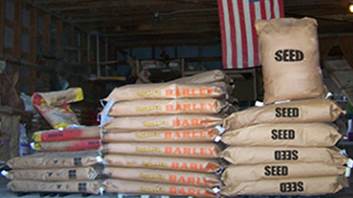
- If
selling price is shown in the declarations, the valuation is what the
stock would have sold for less discounts and unincurred expenses.
- Special valuation
described in the declarations.
If a loss occurs after the commodity market
closes for the day, the value of a commodity item is based on the last closing
price.
11. Tenants’ Improvements
The value of damaged Tenants’
Improvements is actual cash value if they are repaired or replaced at the
expense of the insured within a reasonable time.
Tenants’ improvements
damaged or undamaged but lost due to lease cancellation and not replaced after
a loss are based on how much of the original value to the insured is left based
on the current lease.
The valuation formula
is: A/B x C
Where:
A = Number of days between the date of loss and
the end of the lease
B = Number of days from the date of the
installation to the expiration date of the lease
C = Original cost of the tenants improvements.
(If the lease has a renewal option, use the
last date in the option as the new lease expiration date.)
However, if repairs are
made at the expense of others, there is no payment under this policy.
Related Article: Improvements
and Betterments
12. Installment Sales
Two situations can
arise in installment sales when valuing the property after loss:
·
If
there is a total loss, the remaining balance still owed to the insured will be
paid.
·
If
there is a partial loss and the purchaser refuses to make further payments
because of the loss and the named insured has repossessed the property. This
valuation is a two-step process.
Step 1: determine the amount
of money still due from the purchaser for the item.
Step 2: determine the realized value of the stock.
Ø If Step 1 is less than
Step 2, there is no loss payment under this policy.
Ø
If
Step 1 is greater than Step 2, the carrier will pay the difference between Step
1 and Step 2.
|
Examples: Marty sells his harvester to Larry on January 1.
The sales agreement obligates Larry to pay Marty $500 per month for the next
12 months. A fire in March damages the harvester. Larry informs Marty that he
does not have insurance coverage on the harvester and cannot pay him. Scenario 1: The fire totally destroyed the harvester. The
value is $4,500 ($500 per month X nine months). Scenario 2: The fire did not totally destroy the harvester.
Larry still cannot pay, Marty repossesses the harvester, and has it valued.
The value is $2,000. The insurance company pays only $2,500 because that is
difference between its realized value and the amount Marty owed Larry. Scenario 3: The fire did not totally destroy the harvester.
Larry still cannot pay, Marty repossesses the harvester, and has it valued.
The value is $6,000. The insurance company will not pay because the
difference between its realized value is greater than the amount Marty owed
Larry. |
13. Accounts Receivable
a. The form states this is the value of stock accounts
receivable and is based on the lowest of the following:
·
The
total sum of accounts receivable due is reduced by the following:
o
Records
of accounts receivable not lost but amounts are due
o
When
a different method can establish the amounts due
o
Amounts
due from lost records that were already collected by the named insured.
o
Unearned
interest and service charges
o
Allowances
for bad debts
- The
amount it would cost to reconstruct the accounts receivables.
- The
limit of insurance for accounts receivable coverage.
b.
The named insured may not be able to determine the actual accounts receivable
due at the time of loss. In that case, the amount is determined as follows:
·
Step 1: The values will be calculated using the total of the
average monthly accounts receivable for the 12 months prior to the loss month.
·
Step 2: The sum total from the
calculation in Step 1 will be adjusted for any normal variances in the month
for which the loss occurred.
Editor’s note: The coverage form uses
the term “stock accounts receivable” instead of just accounts receivable for
this valuation. This may be an error, or it could mean this valuation applies to
only accounts receivables for stock.
14. Valuable Papers and Records
Valuable papers and
records are valued based on the sum of the following costs:
- Blank
materials to reproduce them
- Labor
to transcribe or copy them from duplicate copies
Note: Supplemental
Coverages 17. Valuable Papers and Records–Cost of Research covers research
costs.
15. Earnings
The insurance company uses three factors to determine the value of an earnings loss:
a. The named insured's business’ experience prior to the loss
and the expected experience for the period of interruption of earnings if there
was no loss
b. The named insured's continuing operating expenses it incurs
to resume operations at the level that existed before the loss occurred. Ordinary
payroll expense is a continuing expense unless an entry on the declarations
excludes or limits it.
c. Relevant and appropriate documentation. The following are
examples:
·
Financial
records and accounting procedures
·
Bills,
invoices, and vouchers
·
Contracts,
deeds, and liens
·
Feasibility
and status reports
·
Records
that document budgets and marketing objectives and results
The named insured may
be able to resume all or any part of its operations but does not. In that case,
the insurance company does not pay for any increase in loss as a result of the
named insured’s decision. If the named insured does not resume operations when
it should (or does not resume at all), payment is based on the period of time
it should have taken to resume business operations on a timely basis.
A loss of earnings may
be due to a loss at a dependent location. In that case, the insurance company
reduces earnings by the amount the named insured could have saved by resuming
operations using other suppliers or customers.
16. Extra Expense
The salvage value of
all property purchased for temporary use during the restoration period is
deducted from the value of the extra expense claim.
HOW MUCH WE PAY
1. Insurable Interest
The most the insurance company pays is
the named insured’s insurable interest in the property.
|
Example: John and Mary co-own a feed store. Mary buys out
John’s interest but forgets to remove John’s name from the insurance policy. The
store burns down. The claims adjuster advises Mary that she alone is entitled
to the insurance proceeds because John has no insurable interest in the
property, even though he is still listed as a co-owner. |
2. Deductible
The insurance company applies any coinsurance, value reporting, or premium
adjustment terms to determine the amount of the loss. The deductible on the
declarations is then subtracted and any remaining amount is paid up to the
limit of insurance.
The deductible applies
per occurrence. When more than one deductible could apply, only the largest one
is applied.
The insurance company
does not pay any loss until it exceeds the deductible.
3. Peak Season Increase
If a limit and peak
season amount are on the declarations, the only limit used to settle the loss
is the peak season limit if the loss occurred between 12:01 AM on the first day
of the peak season and 12:01 AM on the last day of the peak season.
4. Inflation Protection
The limit of insurance for the described
property automatically increases by the daily pro-rated factor of the annual
percentage entered on the declarations for Inflation Protection.
|
Example: The policy period is 01/01/2025 to 01/01/2026. The
building limit is $1,000,000. The annual Inflation Protection percentage is
8%. The loss occurs on 01/31/2025. The limit available to pay for the loss is
calculated as follows: 31/365 = .085 X .08 = .007 X $1,000,000 = $7,000 +
$1,000,000 = $1,007,000. (Figures are rounded for illustration purposes.) |
5. Loss Settlement Terms
The insurance company
pays the least of the following:
a. The amount determined under Valuation
b. The cost to repair, replace, or rebuild the property with material
of similar kind and quality
c. The limit that applies to the covered property
This is further subject
to other sections in How Much We Pay.
6. Insurance under More Than One Coverage
Two or more coverages in the coverage form may apply to the same loss.
In that case, the insurance company does not pay more than the value of the
actual claim, loss, or damage sustained.
7. Insurance under More Than One Policy
a. The named insured may have other
coverage that follows the same stipulations as this coverage form. In such
cases, this coverage form will only pay its proportional share of the covered
loss. This proportional share is determined by the ratio of its limit of
insurance to the total limits of insurance across all policies that provide
coverage on the same basis.
|
Example: Policy #1 has a $100,000 limit, and Policy #2 has
a $50,000 limit. The loss before applying any deductible is $10,000. Policy
#1 pays 66 2/3% of the loss, and Policy #2 pays 33 1/3% of the loss. |
b. The
named insured may have other coverage that insures the loss other than as
described above. In that case, this coverage form pays only the amount of
covered loss that exceeds the amount due from that other coverage, whether
collectible or not. Any payment is subject to the limit of insurance that
applies.
|
Example: Sadie’s Seeds has a separate Inland Marine Accounts
Receivable Policy with a $25,000 limit with different terms and conditions. With
this coverage form, she also has a $5,000 limit for Accounts Receivable under
Supplemental Coverages. When a covered loss occurs, the separate Accounts
Receivable policy pays its limit of $25,000, while this coverage form pays up
to its limit of $5,000. |
Related Court Case: Other
Insurance Clauses Held To Pro Rata Despite Standard and Super Escape
Differences
8. Coinsurance, Property Other Than Builders’ Risk Property
The
coinsurance terms apply individually to each type of covered property subject
to coinsurance.
When coinsurance
applies to a coverage, the insurance company only pays a portion of the loss if
the coverage limit is less than the percentage of the property's value stated on
the declarations.
The four steps to determine the amount of the loss to be
paid are as follows:
Step 1. The value of the
covered item is multiplied by the coinsurance percentage.
Step 2. The limit of insurance
for the covered item is divided by Step 1.
Step 3. The amount of the loss
is multiplied by the percentage developed in Step 2.
Step 4. Subtract the
deductible from the Step 3 loss amount.
· If step 4. is more than the limit of insurance, the limit of insurance is paid.
·
If
step 4. is less than the limit of insurance, the sum of Step 4 is
paid, and the insured is responsible for the remaining amount.
|
Example:
The building limit is $500,000 and the
coinsurance percentage is 90%. The loss amount is $100,000 and the deductible
is $1,000. The value of the building at the time of the loss is $700,000.
$700,000 X .90 = $630,000. Because $500,000 is less than $630,000, a
coinsurance penalty is applied as follows: Step 1.
$700,000 X .90 = $630,000 Step 2.
$500,000/$630,000 = .794 Step 3.
$100,000 X .794 = $79,400 Step 4.
$79,400 - $1000 = $78,400 The carrier pays $78,400 of the loss, and the
insured is responsible for the remaining $21,600. |
Related Article: Coinsurance
Clause
9. Coinsurance, Builders’ Risk Property
|
This coinsurance is the same as above; however, the
limit of insurance must be 100% of the estimated completed building value. Example:
Betty Lou’s Ranch is building a horse
ring and stable. The estimated completed value and limit of insurance is
$750,000. The deductible is $3,000. One month into the project, Betty Lou decides to increase
the size of the building, and the new estimated value at completion is
$1,000,000. However, the insurance agent is not informed of the change. A tornado strikes the premises a month before
construction is scheduled to be complete and causes $400,000 in damage to the
nearly completed structure. The amount of loss paid is as follows: Step
1. $1,000,000 X 100% = $1,000,000 Step
2. $750,000/$1,000,000 = .75 Step
3. $400,000 X .75 = $300,000 Step
4. $300,000 - $3,000 = $297,000 The carrier pays $297,000 and Betty Lou
is responsible for the remaining $103,000. |
Note: Construction projects should be reviewed
periodically to be certain the limit and the estimated value are the same. This
is because costs can increase more on long-term projects and the 100%
coinsurance requirement is very stringent.
10. Value Reporting, 100% Coinsurance
Value reporting allows
the named insured the benefits of 100% coinsurance without a potential
coinsurance penalty.
The following terms
apply separately to each type of covered property that is subject to Value
Reporting.
a. Other Insurance
This may apply to items
covered in this section. If the other insurance is contributing and written on
the same reporting terms, it is subject to Other Insurance item 7. a. –
proportional sharing.
In contrast, other insurance may be specific
and, therefore, not subject to the same terms. If this is the case, coverage is
subject to Other Insurance item 7. b. – and coverage is in excess.
b. Reporting
This policy requires
monthly reporting. The report is due within 30 days of the last day of each
business month. This means that if a policy is effective 3/1-3/1, the first
report is due on 4/30 for the values reported on 3/31.
The policy can be
amended to weekly reporting or four-week reporting if so noted on the
declarations. Weekly reports must be filed with the carrier at the close of
business each Saturday. Four-week reports must be filed at the close of
business day each four-week period.
Estimated amounts may
be filed and then amended before the end of the reporting month.
c. Premium
The premium at the
beginning of the policy year is a deposit. The final premium is computed at the
end of the policy year. If the declarations states Monthly Adjustment, the premium
is adjusted at the end of each month based on reported values.
·
If
the premium is more than the deposit, the insured pays the carrier.
·
If
the premium is less than the deposit, the carrier returns money to the insured.
·
If
values exceed the limit of insurance, the premium is computed on the limit of
insurance because coverage cannot exceed the limit of insurance.
d. Terms
Reporting terms can be
amended throughout the policy period.
e. First Report Not Received but Loss Occurred
If a loss occurs after the first report
is due but before it is received, loss payment is capped at 75% of the limit of
insurance.
|
Example: The policy period is January 1 to January 1. The
first report is due on or before March 1.
A loss occurs on February 15 before the insurance company receives the
report. The limit of insurance is $1,000,000. As a result, only $750,000 is
available to pay the loss. |
f. Loss Adjustment
Using the latest reported values, the loss is adjusted as follows:
Step 1. The value of the covered property is
established as of the date of loss
Step 2. Deduct the value of
specific insurance, over reporting of specific insurance, and underreporting of
reported values from the Step 1.
Step 3. Divide the lesser of Step 2 or the limit of
insurance by Step 1.
Step 4. Multiply the amount of loss by Step 3
Step 5. Subtract the deductible from Step 4.
Note: The most the insurance
company pays is the sum of step 5. It does not pay any remaining part of the
loss.
|
Examples:
The stock limit is $100,000. The
deductible is $1,000. The last value reported is $90,000 and is the actual
value as of the reporting date. The loss amount is $50,000. Scenario 1: There is no specific insurance. Step 1.
The total stock value on the date of loss is $100,000. Step 2.
This figure is not reduced by any deductions. Step 3.
$100,000 divided by $100,000 equals 100%. Step 4.
$50,000 loss multiplied by 100% equals $50,000. Step 5. $50,000 reduced by the $1,000 deductible equals
$49,000. This is the amount of loss paid. Scenario
2: There is $50,000 of specific insurance. Step 1.
The total value of the stock as of the date of loss is $100,000. Step 2.
$100,000 reduced by $50,000 of specific insurance equals $50,000. Step 3.
$50,000 divided by $100,000 equals 50%. Step 4.
$50,000 loss multiplied by 50% equals $25,000. Step 5. $25,000 reduced by the$1,000 deductible equals
$24,000. This is the amount of loss paid. Note: The insurance company that provides the specific
insurance should pay part of this loss. However, the named insured still pays
the deductible. Scenario 3: The named insured reported values of $75,000
instead of $90,000. Step 1.
The total value of the stock as of the date of loss is $100,000. Step 2.
$100,000 reduced by $15,000 ($90,000 - $75,000) = $85,000. Step 3.
$85,000 divided by $100,000 equals 85%. Step 4.
$50,000 multiplied by 85% equals $42,500. Step 5.
$42,500 reduced by the $1,000 deductible equals $41,500. This is the amount
of loss paid. Note: The
named insured pays $8,500 because of under-reporting and the deductible. |
Related Article: CP 13
10–Value Reporting Form
11. Coinsurance, Income Coverage
Coinsurance terms apply
separately to each Income Coverage Limit on the declarations subject to
coinsurance. Extra expense coverage is not subject to any coinsurance terms.
The value of the net
income plus continuing expenses for the 12 months following the inception date
is calculated at the time of loss. That value is multiplied by the coinsurance
percentage on the declarations. There is no penalty if that calculated value is
less than the limit of insurance and loss is paid based on this coverage form’s
other terms. However, a penalty is assessed against any loss payment if the
calculated value is more. It is calculated as follows:
Step 1. Multiply the net
income plus continuing expense projected value by the coinsurance percentage.
Step 2. Divide the income
coverage limit by Step 1.
Step 3. Multiply the total
amount of loss by Step 2.
Step 4. Subtract the
deductible from Step 3.
The maximum amount the
insurance company will pay is the sum determined in Step 4. It does not pay any
remaining part of the loss.
Certain expenses are
deducted from the total of all operating expenses in order to perform the
calculations above. They are:
- Prepaid outgoing
freight, returns and allowances, discounts, bad debts, and collection
expenses.
- The cost of raw
stock and factory supplies consumed, merchandise sold, and other supplies
consumed. This includes transportation charges.
- The cost of
services purchased from outsiders to resell that do not continue under
contract.
- Power, heat, and
refrigeration expenses that do not continue under contract. However, this
applies only if there is an entry on the declarations that excludes them.
- All ordinary
payroll expense or limited designated payroll. However, the deductions
made are based on entries on the declarations.
12. Premium Adjustment, Income Coverage
This is similar to a
value reporting method, except it is for income coverage and requires only an
annual report. These terms apply separately to each Income Coverage limit on
the declarations, and they are subject to Value Reporting and Coinsurance.
A complete report of
income value for the latest available 12 months operating experience must be
filed with the company when this coverage is requested. At the end of each 12
months, a report of values must be developed for those 12 months and forwarded
to the carrier within 120 days. When the policy expires or is canceled, a
report for the values that have occurred since the last report was filed must
be provided to the company within 120 days of the cancellation or expiration.
If reports are not filed appropriately or income coverage is not applicable,
the carrier will not adjust the premium.
The premium for this
coverage is an advance premium – not a deposit. That means that it is meant to
be a full premium. The limit of insurance is the reported limits times the
coinsurance percentage. The final premium is compared to the advance premium,
and a return premium is provided if the final premium is less than the starting
premium.
If the final premium is
more than the advance premium, there is no additional charge. The insured
could not have collected more than the limit initially reported, so they cannot
be charged premium for coverage not provided.
The loss is adjusted
based on whichever option results in a lower amount:
- The
amount developed by using the coinsurance provisions
- As
long as coinsurance is NOT 125% or greater, the coinsurance percentage is
multiplied by net income plus the projected ongoing operating expenses for
the 12 months following the property damage date.
Note: The coinsurance provision uses the 12
months after the inception or last anniversary of the policy.
- Divide
the last report of values by the actual income values for that same period
times the amount of the loss. (Yes, these should be identical, but when
the insurance carrier inspects the insured’s books, it might be discovered
that the insured decided to be creative and not report appropriately.)
Note: This coverage is
advantageous to the named insured with fluctuating values due to significant
economic changes when it is difficult to accurately project future earnings or
expenses. It allows the named insured to overestimate the limit it needs and
receive a return premium if the estimate is too high. The named insured loses
the excess premium it could have invested in an interest-bearing account
instead of an insurance policy. However, it benefits by having an adequate
limit if a loss occurs during an economic upturn.
13. Maximum Period of Indemnity, Income Coverage
This coverage eliminates the coinsurance
provision for any income item where this coverage is entered on the declaration
and a number of days are shown. The insured receives payment for losses that
occur but for no more than the actual loss and for no longer than the number of
days shown subject to the limit of insurance on the declarations.
|
Example: Kathy’s Kitchen Delectables wants to avoid worrying
about coinsurance and selects the maximum period of indemnity option. Kathy's
limit is $120,000 with a 90-day maximum period of indemnity. A covered loss
halts operations for 150 days. The loss for the first 90 days amounts to
$100,000. The most paid is $100,000 because Kathy selected a 90-day maximum
period of indemnity. |
14. Monthly Limitation, Income Coverage
This coverage allows
the insured to select a monthly percentage limitation. Three or more
percentages can apply in succeeding 30-day intervals. The insured can choose
the percentage and the number of periods. If a loss occurs, the percentage
times the limit of insurance determines the amount of insurance available for
the particular time period. Once the limit is exhausted, the insured is
responsible for the remaining loss.
Note: This is not the same as
the Insurance Services office (ISO) Monthly Limitation.
|
Example:
Joe’s Grapevines selects a $120,000 limit
and monthly limitations of 25%, 50%, 75%, and 100%. A loss occurs, and the restoration period is 55
days. Because the restoration period is less than 60 days, the second
percentage is multiplied by the limit of insurance to determine the most paid
for the loss. $120,000 X
.50 = $60,000 |
LOSS PAYMENT
1. Our Options
The insurance company
decides how to pay a claim, and the policy spells out the four options it can
consider.
- Pay
the insured the value (as determined by the valuation and how much we pay
sections) of the damaged or lost property
- Pay
the insured the cost of repairing or replacing the damaged or lost
property
- Actually
rebuild, repair or replace the property, within a reasonable time with
equivalent kind or quality property. This means that instead of the
insured handling all the arrangements, the insurance company takes all
actions.
- Pay
the insured the appraised or agreed upon value for the property and then
take possession of the property.
The first two options
concern only financial compensation, while the last two require direct
involvement with the property. Once proof of loss is submitted and accepted, the
insurance company has 30 days to inform the insured of which option will be
chosen.
Related Court Case: , Insurer Decision to Repair, Instead of
Replacing a Trailer, Is Not a Breach of Contract
2. Your Losses
Losses are settled with
the named insured. Payments are made to the named insured and/or any loss payee
specified in the policy. An insured loss should be paid within 30 days after
the insurance company receives satisfactory proof of loss and the amount of the
loss is agreed upon in writing or determined through a filed appraisal award.
Note: Other Conditions 1. Appraisal
has details on the appraisal process.
3. Property of Others
The insurance company adjusts
losses with and pays either of the following:
a. The named insured on the property owner’s behalf
b. The property’s owner, subject to its interest
However, the insurance
company pays only one party. If it pays one, it does not pay the other. It also
has the option to defend the named insured against suits the property owner
brings against it. If the company defends, it does so at its own expense.
4. Loss of Use of Dwellings
Loss under Supplemental
Coverages 5. Loss of Use of Dwellings is paid monthly. The named insured must
give the insurance company proof of its higher living costs.
OTHER CONDITIONS
1. Appraisal
The insurance company
and the named insured do not always agree on the value of a covered claim. This
condition provides one method to solve disputed claims.
Either party can
request an appraisal to determine the value of a disputed claim. Once a request
is made, both parties have 20 days to appoint their own independent and
qualified appraisers and provide the names of these appraisers to the other
party. The two appraisers then have 15 days to select a competent and impartial
umpire. If they are unable to agree on an umpire within that time frame, either
party can ask a judge in the court of record in the state where the property is
located to appoint one.
The appraisers then
determine the value of the claim. Any differences are submitted to the umpire. The
amount of loss is established when any two of the three parties agree.
Each party pays its own
appraiser. Both parties share the cost of the umpire and other expenses.
2. Benefit to Others
The insurance provided
does not directly or indirectly benefit any party with custody of the named
insured's property.
3. Builders’ Risk Property
Builders' Risk coverage
for any building identified as such on the declarations ends on the earliest of
the following events:
- This coverage form
is cancelled or expires.
- The purchaser
accepts the covered building or structure.
- The named
insured’s interest in the covered property ends.
- The named insured
stops working on the building or structure with no apparent intent to
return and complete it.
- Construction on
the covered building or structure is complete for over 90 days.
Note: The important point is that coverage
ends on the earliest of any of these dates, especially with respect to coverage
continuing for up to 90 days after construction is complete. If construction on
the building ends the day before the expiration date, coverage ends on the
expiration date. There is no coverage if a loss occurs the day after.
4. Conformity with Statute
Any condition in this coverage form that
conflicts with any applicable law is amended to conform to that law.
5. Control of Property
The coverage provided is not affected by
any act or negligence beyond the named insured’s control.
|
Examples: Scenario 1: Increase in hazard: A crack house moves into the building
adjacent to the named insured's business. Scenario 2: Government action to over-seed rain clouds
produces high winds and damaging hail. |
6. Death
If the named insured
passes away, the individual who has custody of the named insured's property
will be considered an insured until a qualified legal representative is
appointed. Once appointed, the named insured's legal representative also
becomes an insured. Both individuals are insureds, but only in relation to the
property covered by this insurance policy.
Note: This condition applies
only if the named insured is an individual. Individuals die but corporations do
not. Partnerships dissolve immediately when one of the partners dies, and the
surviving partner or partners are absolutely responsible for the partnership’s assets
after another partner dies. Limited Liability Companies dissolve when a member
dies unless the Operating Agreement is amended.
7. Liberalization
If the insurance
company broadens policy coverages without charging an additional premium, and
this change occurs during the policy period or within six months of the
policy's inception date, then the broadened coverage will apply to this policy.
Note: We find the six-months
wording to be confusing and are unsure of the intent.
|
Example: The Agribusiness Property and Income Coverage Form
for Mindy’s Farm is effective 8/1/2025. On 12/1/2025, the insurance company
changed the form to eliminate the need to apply deductibles in cases of total
loss and did not charge an additional premium for this revision. A tornado
completely destroys Mindy’s building on 4/20/2026. The deductible does not
apply to Mindy’s loss because the coverage form was revised during the term
of Mindy’s policy, so the liberalization clause applies. |
8. Misrepresentation, Concealment, or Fraud
Coverage is void for
any insured named on this coverage form if any insured engages in the following
actions before or after a loss:
a. Willfully concealed or misrepresented a material fact or
circumstance relating to the insurance or to the item(s) being insured or to
the named insured’s interest in them
Note: It's important to
understand that a material fact is a crucial piece of information that can
impact the decision to issue a policy. If a fact is deemed material, it means
it could influence an underwriter's decision to approve or deny a policy.
b. Engaged in fraud or false swearing concerning anything that
relates to this insurance
Note: This is an extremely important condition because insurance
coverages and policies are issued in utmost good faith. The insurance company
must be able to believe its customer. Conversely, such instances must be
significant (material). If a minor event occurs that would not have impacted
the underwriter’s decision to offer a policy, then it is unfair to disallow coverage
just because of a technicality.
Note: It is important to note that one
insured’s lies voids coverage for all insureds on the policy, not just for the
one that lied.
Related Court Cases:
Insurer Can Rescind Policy
Based On Insured's Material Misrepresentations on Application
Misrepresentations Voids
Entire Policy
9. Policy Period
The only losses the
insurance company pays are those that occur during the policy period.
10. Recoveries
Communication is an
important part of the recoveries process. When either the named insured or the
insurance company recovers property that was part of an insurance settlement or
receives a payment from whoever was responsible for the loss or damage, the
recovering party has a responsibility to notify the other party.
The recovery expenses
are reimbursed and then the named insured must decide whether to keep the
recovered item or allow the insurance company to keep it. If the named insured keeps
the recovered property, the claim payment must be returned unless both parties
agree that the refund should be less due to damage to the property or other
reasons.
If the claim that was
paid is less than the agreed upon loss, due to deductibles or limitations
within the policy, the recovery amounts are prorated based on the interest of
each party in the loss.
11. Restoration of Limits
The limits provided in
the policy are not reduced when any payment is made. The only exception is
Additional Coverage. 8. Pollutant Clean Up and Removal, which is subject to
aggregate limits.
12. Subrogation
When the insurance
company pays a loss for
the named insured, the insurance company gains
all recovery rights for that loss. This means that if the loss was caused by
someone else, the insurance company can use the named insured’s rights to ask
the negligent entity to reimburse them for the paid loss. The named insured
must not waive their rights or impair them except when in writing under the
following circumstances:
- Prior to the loss.
- After the loss but
only for any of the following:
o
An
insured
o
A
tenant
o
A
business that is owned or controlled by the named insured
o
A
business that owns or controls the named insured
There is an exception. Builders’ Risk
property rights of recovery cannot be waived prior to a loss. In addition, the
named insured cannot waive rights of recovery from an architect, engineer,
contractor, or subcontractor for loss to any building or structure that is
identified as Builders’ Risk property.
|
Examples:
|
Related Article: Transfer of
the Rights of Recovery (Subrogation)
Related Court Cases:
Lease Releases Landlord and Tenant
Subrogation by Landlord's Insurer Barred
Waivers of Subrogation and Definition of
Work to Be Insured Were Ambiguous
Waiver of Subrogation Applies To All Losses
Mutual Subrogation Waiver
Clause Barred Recovery by Property Owners Insurer
13. Suit against Us
The insurance company cannot
be sued unless both of the following criteria apply:
·
All
the coverage form’s terms are met; and,
·
the suit is brought
within two years, of the named insured first knowing about the loss, or;
o
within
the shortest period permitted by any law that invalidates this condition.
|
Example: A hailstorm damages Kathy’s
roof. It also damages the roofs of hundreds of other buildings in the area. She
cannot find a contractor to inspect her damage because there are so many
claims. She decides to wait until the following spring when she contacts a
contractor who verifies the damage and she then submits a claim to the
insurance company. The company
denies the claim because of the length of time between the damage and the
notice. Kathy responds by arguing that she could not file a claim until she
knew that a loss actually occurred. The company
changes its mind and discusses the matter with the contractor. The company
offers $10,000 for the repairs but the contractor insists that the repairs
will cost $25,000. Neither party is willing
to compromise. Kathy sues the insurance company because she satisfied all the
coverage form’s terms and conditions and the two-year time limitation is
approaching. |
14. Territorial Limits
The coverage territory
for covered property is the United States of America, its territories and
possessions, Puerto Rico, and Canada. However, these territorial limits do not
apply to Supplemental Coverages 7. Overseas Transit and Location.
15. Mortgage Provisions
The insurance company
has specific obligations to mortgagees named on the declarations.
·
If
there is more than one mortgagee, each is paid in the order of precedence.
·
Insurance
for the mortgagee’s benefit is not affected and continues, regardless of any
actions by the named insured that may void coverage. It does not continue, however,
if the mortgagee knew about changes in ownership or increase in hazard and did
not tell the insurance company.
·
The
insurance company must give the mortgagee at least ten days notice of
cancellation if the named insured does not pay the premium or 30 days notice
for all other reasons. The insurance company may request that the mortgagee pay
the premium if the named insured does not.
·
The
mortgagee may be paid for a loss in a case where the insurance coverage for the
named insured’s benefit is void. In that case, the mortgagee's right for that
portion of the mortgage debt transfers to the insurance company. However, it
does not affect the mortgagee's right to collect the remaining amount of the
mortgage debt from the named insured.
·
The insurance company may choose to pay
the mortgagee the outstanding principal balance and any accrued interest to obtain a full
assignment of the mortgagee's interest and any other instruments given as
security for the mortgage debt.
Note: This could benefit the
company if it believes it can earn more interest income on the mortgage than on
its current investments or if it can sell the mortgage for a premium.
·
The
insurance company must give the mortgagee at least ten days written notice
before the expiration date of its intent to not renew.
|
Example: The building that Lou’s Compost and Fertilizer occupies is insured for
$500,000. First Guaranty holds a $300,000 mortgage on the building. Lou agrees to a dynamite manufacturing company
moving into an unused portion of the building and an explosion causes a
$100,000 loss. The
insurance company denies Lou’s claim. Because of the mortgage on the
building, the insurance company pays First Guaranty $100,000 and this payment
reduces Lou's mortgage to $200,000. The insurance company then notifies Lou
that he owes it $100,000. |
Related Court Cases:
Cancellation Validated By
Proof of Mailing of Notice
Payment of Policy Proceeds to
Insured Did Not Relieve Insurer of Obligation to Mortgagee
16. Loss Payees
If there is a loss
payee shown on the declarations any covered loss is paid to the named insured
and the loss payee as their interests appear. If there are multiple loss
payees, they are paid in precedence order.
If a loss payee is
actually a Lender’s Loss Payee and is so identified on the declarations, they are
paid as any other loss payee. However, the Lender’s Loss Payee has additional
rights under this policy. If the named insured voids the policy due to acts,
neglect of failure to comply with terms of the policy, the Lender Loss Payee’s
interest remains in effect provided it was not aware of changes in ownership or
increases in hazard without notifying the carrier.
The Lender Loss Payee must be notified as
follows:
·
10
days prior to cancellation if due to nonpayment
o
The
Lender Loss Payee may be requested to pay premium that the named insured has
not paid.
·
10
days prior to expiration for any nonrenewal
·
30
days prior for any other reason
If the insurance
company pays the Lender Loss Payee for a loss that is void to the named
insured, the insurance company takes over the Lender Loss Payee’s rights for
repayment of the debt from the insured and the Lender Loss Payee still has its
rights for debt. If the insurance company wants to consolidate the debt, it can
pay the Lender Loss Payee for its remaining principle and interest and receive
full rights to the named insured’s property.
17. Vacancy
The vacancy condition
restricts coverage.
After the building has been vacant for
more than 60 consecutive days, the following penalties apply:
- All coverage is
denied if the loss is caused by any of the following:
o
Attempted
theft
o
Breakage
of building glass
o
Sprinkler
leakage but only if the named insured did not protect the system from freezing
o
Theft
o
Vandalism
o
Water
damage
All payments are
reduced by 15% if the covered cause of the loss is other than the one listed
above.
The next section of
this condition describes the term vacancy and it varies based upon occupancy
and ownership. Vacancy is based on building or structure, not by location.
A building or structure
the named insured owns is subject to the 30% rule. The building is considered
vacant if less than 30% of its square footage is occupied as intended.
|
Example: Melvin’s Cannery owns four buildings on its
premises and one building in town. The building in town is scheduled on the
policy as a retail location but all stock has been removed. This building is
vacant. |
When the named insured leases a building
or structure, the 30% rule continues to apply, but it is applied only to the
portion of that building leased by the named insured.
|
Example: Melvin’s Cannery leases a small part of a
commercial strip building for a retail location. Its major tenant moves out
and leaves the building 80% vacant. Although the commercial strip building is
vacant for the owner, Melvin, who occupies the leased space as intended,
would not incur a vacancy penalty if a loss occurs. |
Buildings or structures under
construction or being renovated are not considered vacant.
|
Example: If the retail building in the first example in this
section is being renovated, it is not considered vacant even though the stock
has been removed. |
The insurance company
can agree to cover a vacant building or structure. It does so by adding a
Vacancy Permitted time period on the declarations next to the specific building
or structure. Any loss that occurs during that time period is treated as though
the building or structure is not vacant.
Related Court Cases:
Extensive Renovation Qualifies
Property for Vacancy Clause Exception
Sprinkler System Renovation In
Building Did Not Render It Occupied: Vacancy Exclusion Applied